
Choosing between a leveling kit and a lift kit depends on what you want from your truck. If you’re looking for a subtle boost that improves appearance and maintains a smooth ride, a leveling kit is your best bet. But if off-road adventures and bigger tires are your focus, a lift kit will offer better performance and clearance. To get the right fit and learn more about both options, keep exploring further.
Key Takeaways
- Choose a leveling kit for subtle aesthetic upgrades and maintaining ride comfort on daily streets; opt for a lift kit for off-road performance and larger tires.
- Consider terrain and off-road needs; lift kits provide higher ground clearance for rugged terrains, while leveling kits suit moderate off-road and street use.
- Prioritize ride quality and handling; leveling kits preserve factory ride comfort, whereas lift kits may stiffen the ride but improve off-road capabilities.
- Assess installation complexity and budget; leveling kits are easier and cheaper to install, while lift kits require more time, skill, and higher costs.
- Match your vehicle’s purpose—daily driving, towing, or off-road adventures—to determine whether a leveling or lift kit best suits your needs.
Understanding the Basic Differences Between Leveling and Lift Kits
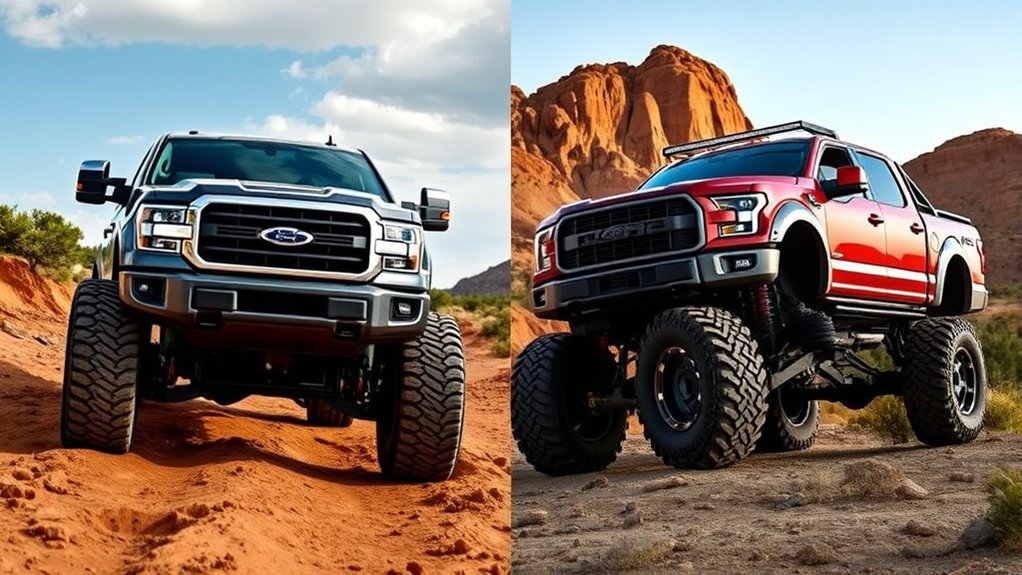
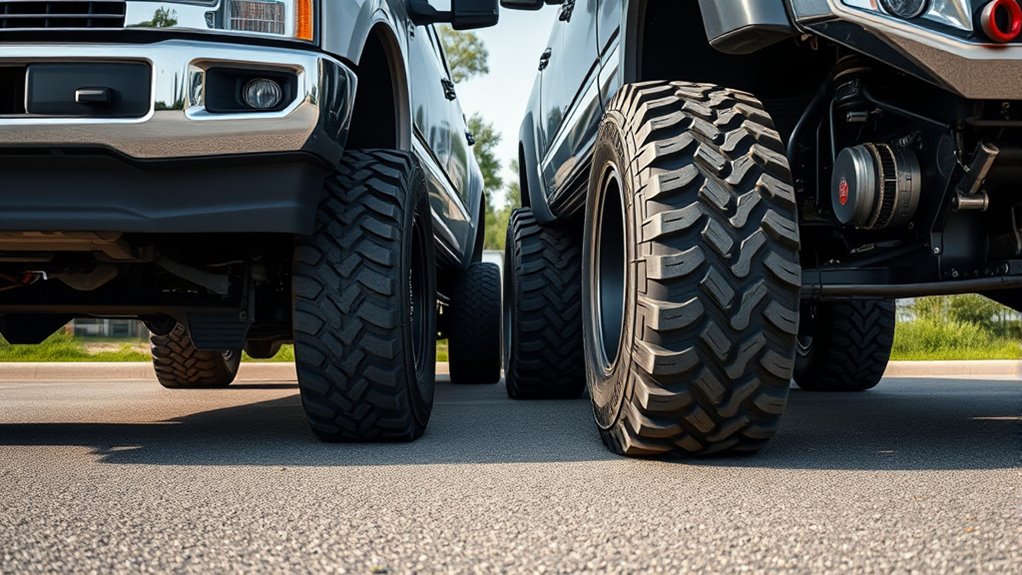
While leveling kits and lift kits both modify your vehicle’s height, they serve different purposes. A leveling kit provides a subtle aesthetic enhancement, balancing the front and rear for a more uniform look without considerable performance changes. It’s popular for improving truck stance and brand preferences often favoring a clean, sleek appearance. Lift kits, on the other hand, elevate your vehicle much higher, offering more ground clearance and off-road capability. They’re suitable if you want a bold, aggressive look or need to fit larger tires. Your choice depends on whether you prioritize aesthetics or performance. Keep in mind that brand preferences can influence quality and compatibility. Both kits alter your truck’s appearance, but their core functions and visual impacts differ considerably. Additionally, understanding the differences between leveling and lift kits can help you make an informed decision based on your specific needs. Recognizing the impact on vehicle handling is also crucial when choosing between the two options. For example, some off-road performance considerations may be affected by your choice, influencing how your truck handles different terrains. Moreover, considering appliance maintenance plans can ensure your vehicle remains in optimal condition during modifications.
The Primary Goals of Each Kit: Aesthetic vs. Performance
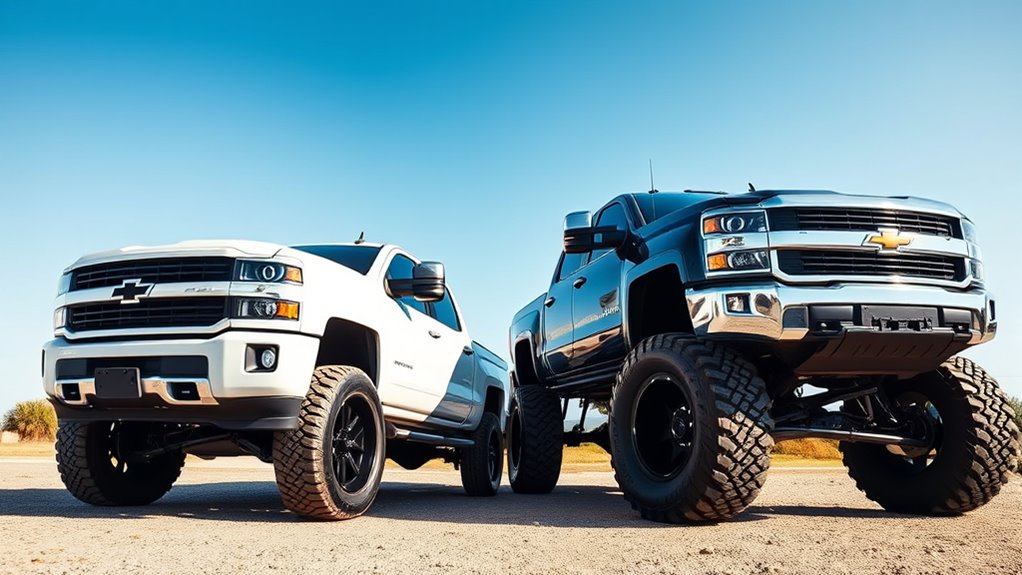
Are you aiming for a vehicle that looks sharp or one that performs better off-road? The primary goal of a leveling kit is often aesthetic enhancement, improving your truck’s visual appeal by creating a more balanced stance. It’s a subtle upgrade that boosts your truck’s appearance without considerably changing its performance. On the other hand, a lift kit focuses on performance, providing increased ground clearance, better off-road capability, and accommodating larger tires. While lift kits do enhance visual appeal, their main purpose is to improve functionality in rugged conditions. Your choice depends on whether you prioritize a sleek, stylish look or enhanced off-road performance. Understanding these primary goals helps you select the right kit to match your vehicle’s intended use. Additionally, the decision can be influenced by global chaos events like outages that affect supply chains, impacting your ability to obtain the necessary parts for either upgrade. Being aware of supply chain disruptions can help you plan ahead and make informed purchasing decisions during uncertain times, especially when seeking performance upgrades that may have limited availability. Recognizing the specialized components required for each kit can also help ensure compatibility and installation success. Furthermore, understanding product specifications can guide you in choosing the right kit tailored to your vehicle’s needs and your personal preferences.
Assessing Your Off-Roading and Driving Needs

To choose the right kit, you need to consider your off-road terrain and how often you’ll tackle tough trails. Think about whether you’ll be towing or hauling heavy loads, which can influence your suspension needs. Don’t forget to factor in daily driving comfort, as your ride should feel good both on and off the road. Additionally, understanding your Free Floating system can help you determine the most suitable suspension modifications for your truck. Recognizing the suspension system type can also assist in selecting the best leveling or lift kit for your specific truck setup. Being aware of suspension modifications can further refine your decision based on your vehicle’s current setup and future upgrades. Furthermore, considering your driving style can ensure your suspension choices align with your overall vehicle use and preferences. Knowing your vehicle’s intended use can help you prioritize features like ride quality versus ground clearance.
Off-Road Terrain Demands
Understanding the demands of off-road terrain is essential when choosing between a leveling kit and a lift kit. Consider the type of terrain you’ll encounter:
- Rocky trails requiring high ground clearance
- Soft sand or mud needing better traction
- Steep inclines demanding approach and departure angles
- Deep water crossings needing increased axle clearance
- Rough terrain for enhanced vehicle aesthetics and brand compatibility
If your off-roading involves rugged, uneven surfaces, a lift kit provides the necessary clearance. For moderate terrain, a leveling kit might suffice, maintaining overall vehicle aesthetics. Think about your driving style and terrain demands—lifting your truck can improve off-road capability but may affect compatibility with certain accessories. Match your off-road terrain needs carefully to ensure optimal performance and style. Additionally, considering durability and weather resistance of your security equipment can be crucial for off-road adventures. Moreover, selecting equipment with proven corrosion resistance can extend the lifespan of your modifications in harsh environments. Evaluating the terrain-specific features of your off-road environment can help determine the most suitable kit for your needs, especially when selecting components that withstand harsh weather conditions and frequent exposure to the elements.
Towing and Hauling Needs
Considering your towing and hauling needs is essential when choosing between a leveling kit and a lift kit, as these modifications can impact your vehicle’s payload capacity and stability. A lift kit can improve your truck’s towing capacity by providing extra clearance for larger trailers or heavy loads, but it may also increase wind resistance, reducing fuel efficiency. Conversely, a leveling kit maintains your vehicle’s factory height, preserving ideal fuel economy and handling while slightly enhancing towing stability. If your primary goal is to maximize towing capacity or haul heavier loads, a lift kit might be the better choice. However, if you need a balance between performance and fuel efficiency for lighter towing tasks, a leveling kit offers a more practical solution. Always consider how modifications align with your specific towing and hauling requirements. Additionally, understanding the impact on vehicle stability can help you make a more informed decision. It’s also important to consider the market options available for different kits to ensure you select the right solution for your needs. Moreover, consulting with professionals or experienced enthusiasts can provide valuable insights into how these modifications might affect your vehicle’s overall performance and safety. Regularly reviewing your vehicle’s load capacity can help prevent overloading and ensure safety during heavy-duty tasks. Furthermore, evaluating the cost implications of each modification can guide you toward a more economically suitable choice.
Daily Driving Comfort
Choosing between a leveling kit and a lift kit can considerably impact your daily driving comfort, especially if you frequently navigate city streets, highways, or uneven terrain. A leveling kit offers a smoother ride by maintaining factory ride height, reducing body roll, and improving stability. Conversely, a lift kit can enhance off-road capability but may introduce a stiffer ride on daily commutes. Consider these factors:
- Aesthetic enhancements that match your style
- Comfort on bumpy city roads
- Handling and stability
- Compatibility with aftermarket accessories
- Overall driving experience
If comfort is your priority, a leveling kit is typically the better choice for everyday driving. It keeps your truck looking sharp while providing a more comfortable ride without sacrificing practicality. Additionally, understanding suspension modifications can help you make informed decisions about your truck’s setup, especially considering how different setups affect ride quality and vehicle dynamics.
Impact on Vehicle Handling and Ride Quality
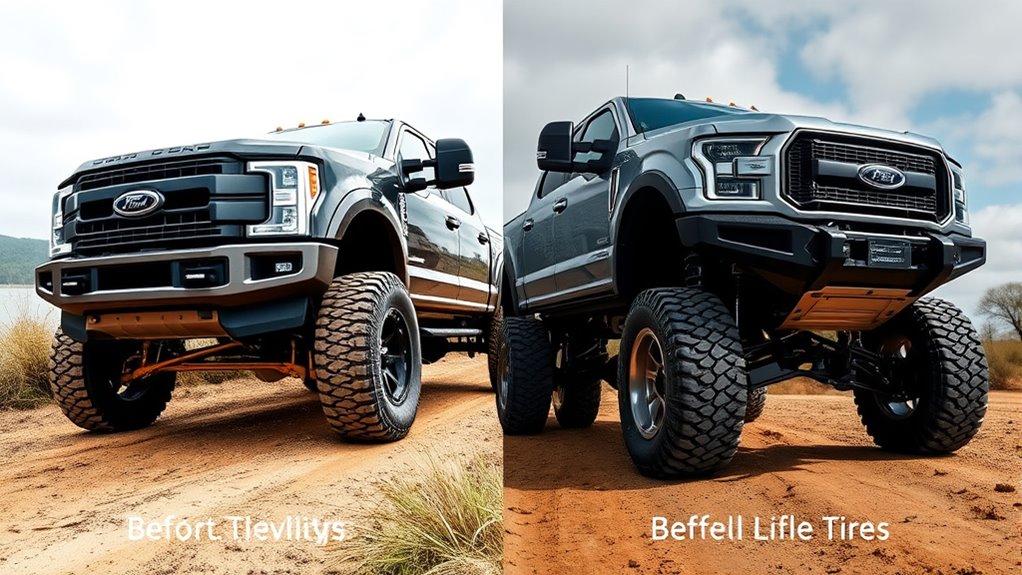
When you install a leveling or lift kit, you’ll notice changes in your vehicle’s suspension dynamics that can affect how it handles. Ride comfort might vary, with some setups feeling stiffer or rougher than stock. These modifications also influence handling and stability, especially during sharp turns or uneven terrain.
Changes in Suspension Dynamics
Both leveling kits and lift kits alter your vehicle’s suspension geometry, which directly affects handling and ride quality. These changes can lead to noticeable shifts in how your truck responds on the road, influencing stability and maneuverability. You might experience:
- Reduced body roll during turns
- Altered weight distribution affecting traction
- Increased ride height for better ground clearance
- Changes in suspension stiffness impacting comfort
- Potential compatibility issues with certain brands or aftermarket parts
While these modifications enhance your truck’s aesthetic appeal and allow for larger tires, they also require careful consideration of brand compatibility. Properly calibrated suspension changes maintain safe handling, but improper installation can compromise ride quality. Understanding these dynamics helps you choose the right kit for your driving style and ensures your vehicle remains safe and capable.
Ride Comfort Variations
Adjusting your vehicle’s suspension with leveling or lift kits can markedly impact ride comfort and handling. A lift kit often results in a stiffer ride, as larger tires and taller suspensions absorb bumps differently, potentially reducing comfort. Conversely, a leveling kit tends to preserve more of your truck’s original ride quality, offering smoother handling on uneven surfaces. Both modifications contribute to aesthetic enhancements, giving your vehicle a more aggressive or customized look. However, keep in mind that altering ride height can change how your truck responds to road imperfections, affecting comfort. Your choice depends on whether you prioritize vehicle customization for appearance or a smoother ride. Carefully consider how each kit influences your daily driving experience before making a decision.
Handling and Stability
Choosing between a leveling kit and a lift kit considerably influences your vehicle’s handling and stability. A lift kit generally raises your truck higher, which can affect center of gravity and cornering performance. It may feel less stable at high speeds or sharp turns, especially if not installed properly. Conversely, a leveling kit offers a modest lift, maintaining better handling and ride quality. Both options impact the aesthetic appeal and visual impact, making your truck look more aggressive or balanced. Consider these points:
- Larger lifts can reduce stability during aggressive maneuvers
- Leveling kits preserve more factory handling characteristics
- Higher stance improves visual impact but may compromise ride comfort
- Proper installation is essential for safe handling
- Aesthetic appeal often balances with stability needs for your driving style
Choose wisely based on your handling priorities.
Installation Process and Cost Considerations
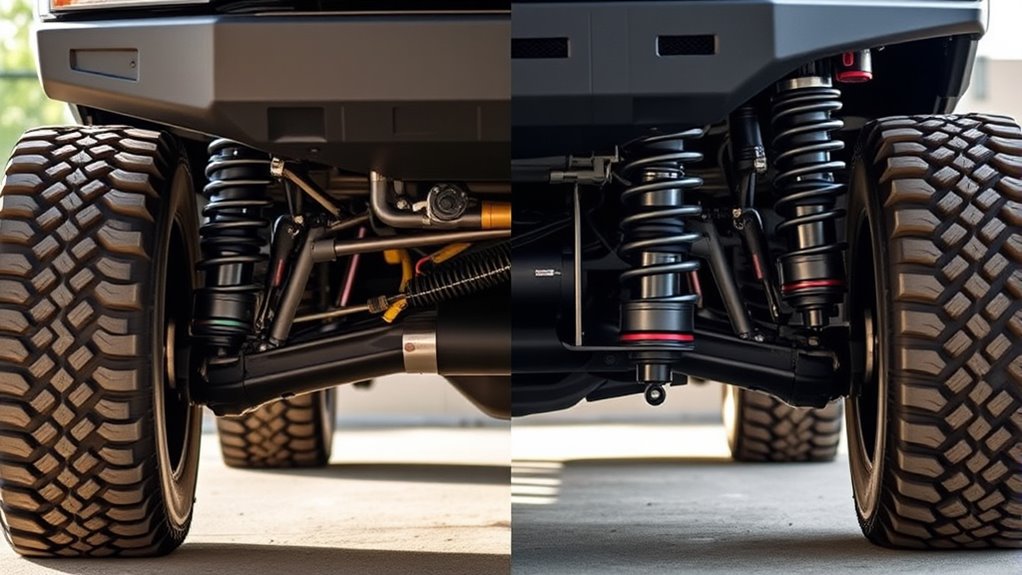
Installing a leveling kit or lift kit involves different steps and cost considerations that can impact your decision. A leveling kit is generally simpler to install, often taking a few hours and requiring basic tools, which keeps installation complexity low. Lift kits tend to be more involved, sometimes requiring modifications to suspension components, which increases both time and skill needed. Cost implications also vary considerably; leveling kits are usually more affordable, with prices ranging from $100 to $500, plus installation if you’re not doing it yourself. Lift kits can cost anywhere from $500 to over $2,000, not including professional installation fees. Keep in mind that more complex installations might also lead to higher labor costs, so consider your budget and DIY experience when choosing between the two.
Compatibility With Tires and Other Modifications
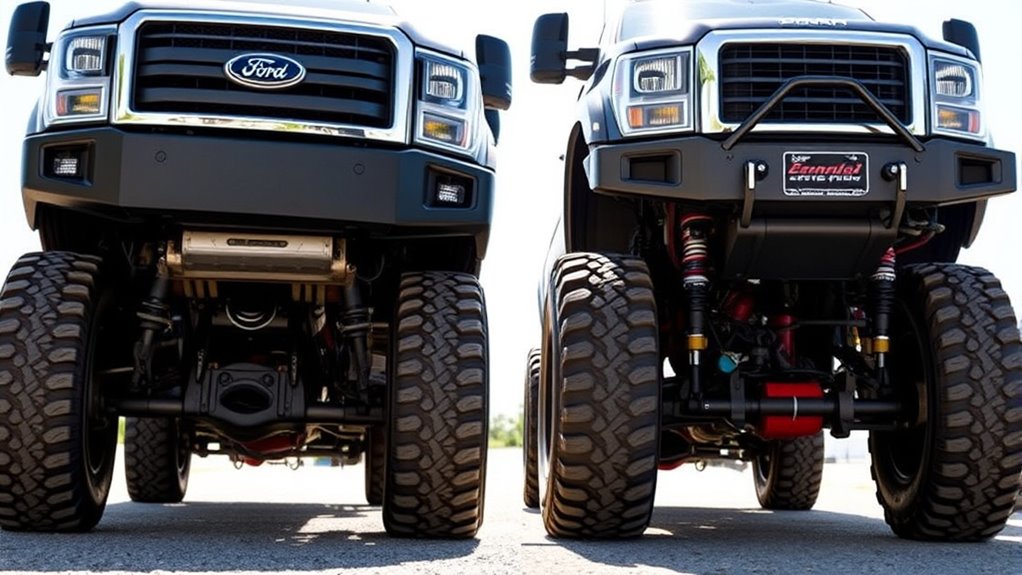
Since compatibility with tires and other modifications varies between leveling and lift kits, it’s important to take into account how each affects your vehicle’s setup. A leveling kit typically allows you to fit slightly larger tires without major changes, but may limit tire size options. Lift kits, on the other hand, provide more room for bigger tires and aftermarket accessories, but require careful consideration of tire compatibility.
- Larger tires may require a lift kit for clearance
- Leveling kits can improve stance but limit tire size
- Aftermarket accessories like fenders or wheel spacers may be needed
- Tire width and diameter should match your kit’s lift capabilities
- Compatibility with suspension components is essential for safety
Long-Term Maintenance and Potential Risks

Long-term maintenance and potential risks are important considerations when deciding between leveling and lift kits. Both options can increase your truck’s vulnerability to corrosion, so proper corrosion prevention measures—like regular washing and applying protective coatings—are essential. Lift kits often require more frequent inspections of suspension components to prevent premature wear or failure. Additionally, installing aftermarket kits may affect your vehicle’s warranty implications, especially if improper installation causes damage or if it violates manufacturer guidelines. Keep in mind that lift kits can alter your truck’s alignment, leading to uneven tire wear if not maintained properly. Regular maintenance, including alignment checks and suspension inspections, ensures longevity and safety, regardless of your choice. Being aware of these risks helps you make an informed decision.
Frequently Asked Questions
Can a Leveling Kit Improve Off-Road Capability?
Yes, a leveling kit can improve off-road capability by enhancing off-road traction and vehicle stability. It helps raise the front of your truck to match the rear, providing better ground clearance and reducing body roll. This improved stance allows you to navigate uneven terrain more confidently, giving you better control and stability. While it’s not a full lift, a leveling kit makes a noticeable difference in off-road performance.
Do Lift Kits Affect Fuel Economy?
A lift kit can decrease your truck’s fuel efficiency, much like a sail catching more wind, by disrupting aerodynamics. You’ll likely see increased drag and resistance, making your engine work harder on every trip. So, while a lift kit gives your truck a commanding stance, it also challenges your vehicle’s ability to glide smoothly through the air, costing you extra at the pump.
Are There Legal Restrictions on Lift Kit Height?
Yes, there are legal restrictions on lift kit height. You need to check your local regulations to guarantee legal compliance, as height restrictions vary by area. Some states or cities limit how tall your vehicle can be, especially for on-road use. Ignoring these rules can lead to fines or your vehicle being deemed illegal. Always verify specific height restrictions to keep your truck street-legal and avoid penalties.
How Do Kits Influence Vehicle Warranty Coverage?
Think of your factory warranty as a shield over your truck’s original design. When you add aftermarket modifications like lift kits, that shield can weaken or crack, leaving your warranty vulnerable. Some kits might even void parts of your factory warranty if they’re not installed properly. Always check with your manufacturer before customizing, so you don’t risk losing coverage just for making your truck stand taller and bolder.
Can I Install a Leveling or Lift Kit Myself?
Yes, you can do a DIY installation of a leveling or lift kit if you have the necessary tools and some mechanical skills. Make sure you have a jack, socket set, wrenches, and possibly a spring compressor. Follow the kit’s instructions carefully, and consider watching tutorial videos for guidance. However, if you’re unsure or uncomfortable, it’s best to seek professional help to guarantee safety and proper installation.
Conclusion
Choosing between a leveling kit and a lift kit depends on your specific needs, whether for looks or performance. Did you know that lifts can increase ground clearance by up to 12 inches? Remember, a lift kit offers more dramatic changes, but it may also require more maintenance. Evaluate your off-road ambitions and driving style carefully. Ultimately, selecting the right kit guarantees your truck looks great and performs reliably for years to come.