Finding the best wheel balancing machines for garages in 2026 means balancing performance, ease of use, and durability. The KATOOL KT-B750 stands out as the best overall choice thanks to its automatic measurement features and reliable build. For those seeking affordability without sacrificing quality, the NYXOVA Portable Bubble Wheel Balancer offers a compact and budget-friendly option. If you need a premium solution with advanced features, the KT-B760-T Wheel Balancer with Laser Indicator delivers precise results for professional shops. Each option involves tradeoffs between complexity, cost, and versatility. Continue reading for a detailed breakdown of these machines and what makes each one suitable for different garage setups.

Get business pricing on garage and car supplies
- Business-only prices and quantity discounts
- Tax-exempt purchasing
- Multiple users, one account, clear invoices
Complete the kit


Key Takeaways
- Top-ranking models combine automatic measurement with user-friendly interfaces to reduce setup time.
- High-end options like the KT-B760-T offer laser alignment and advanced diagnostics, ideal for professional garages.
- Budget-friendly models such as the NYXOVA provide essential features with simple operation, perfect for small shops or hobbyists.
- Build quality and motor power vary significantly, affecting durability and performance over time.
- Versatile combo units that include tire changers can save space but often come with higher costs and complexity.
| KATOOL Wheel Balancer KT-B750 with Automatic Measurement Ruler | 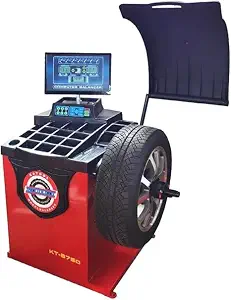 | Best Overall for Versatile Professional Use | Max Wheel Weight: 143 lbs | Rim Width Range: 1.5 to 20 inches | Rim Diameter Range: 8 to 24 inches | VIEW LATEST PRICE | See Our Full Breakdown |
| XK Tire Changers Machine and Wheel Balancer Combo, 110V |  | Best for Heavy-Duty Professional Operations | Power Supply: 110V | Motor Power: 2.0 horsepower | Max Wheel Diameter: 41 inches | VIEW LATEST PRICE | See Our Full Breakdown |
| KATOOL ME 2.0HP Tire Machine and Balancer Combo |  | Best for Home and Small Commercial Garages | Tire Diameter Max: 39 inches | Inside Clamp Range: 14-24 inches | Outside Clamp Range: 12-22 inches | VIEW LATEST PRICE | See Our Full Breakdown |
| NYXOVA Portable Bubble Wheel Balancer, Tire Balancer with Bubble Level |  | Best for DIY Enthusiasts and Light Truck Use | Dimensions: 24″ height, 11.5″ diameter | Base diameter: 11.5″ | Center rod diameter: 0.813″ | VIEW LATEST PRICE | See Our Full Breakdown |
| Mayflower Wheel Balancer Tire Balancer Machine for Car and Motorcycle |  | Best for Wide Range of Vehicle Types and Sizes | Rim Diameter: 10-24 inches | Rim Width: 1.5-20 inches | Modes: Standard Dynamic, Static, ALU 1-3, Motorcycle | VIEW LATEST PRICE | See Our Full Breakdown |
| ME-B600 Wheel Balancer Machine Heavy Duty 0.34HP Motor Tire Balancer for Auto Shops and Home Garages |  | Best Overall for Versatile Heavy-Duty Use | Motor Power: 0.34HP | Rim Diameter Range: 10-26 inches | Rim Width Range: 1.5-20 inches | VIEW LATEST PRICE | See Our Full Breakdown |
| XK Tire Changers Machine and Wheel Balancer Combo, 110V, 580-690 |  | Best Versatile Combo for Professional-Grade Tire and Wheel Service | Tire changer rim clamping outside: 6″-20″ | Maximum tire diameter: 37″ | Max wheel weight: 155 lbs | VIEW LATEST PRICE | See Our Full Breakdown |
| KATOOL KT-T835 Tire Changer Machine and KT-B700 Wheel Balancer Machine Combo |  | Best for Durable, Professional-Grade Tire and Wheel Service | Power: 2.0 HP | Bead Blast Seater Diameter: φ186mm | Warranty: 12 months | VIEW LATEST PRICE | See Our Full Breakdown |
| KATOOL 2.0HP Tire Machine Combo with Wheel Balancer |  | Best for Family Garages and Versatile Tire Service | Outside clamp: 12-22 inches | Inside clamp: 14-24 inches | Motor: 2.0 HP | VIEW LATEST PRICE | See Our Full Breakdown |
| KATOOL ME-T500 2.0HP Tire Changer Machine with 24” Turn Table and ME-B620 Wheel Balancer Machine – Tire Repair and Wheel Changing Garage Equipment |  | Best for Integrated Tire and Wheel Service in Busy Garages | Tire Changer Rim Clamping Range: 14-24″ inside, 12-22″ outside | Wheel Balancer Rim Diameter: 10-24″ | Wheel Balancer Wheel Width: 1.5-20″ | VIEW LATEST PRICE | See Our Full Breakdown |
| KATOOL Tire Balancer KT-B750 Wheel Balancer Machine for Car, Truck, SUV Tires |  | Best Overall for Versatility and Precision | Rim Diameter: <30" | Wheel Width: 3″-12″ | Wheel Diameter: <880mm | VIEW LATEST PRICE | See Our Full Breakdown |
| KATOOL ME Wheel Balancer with Extended Shaft for Home Garage and Shop |  | Best for Larger Rims and Custom Setups | Motor: Copper-wound high-end motor | Shaft Length: Extended shaft | Modes: Multiple specialized modes | VIEW LATEST PRICE | See Our Full Breakdown |
| KT-B760-T Wheel Balancer Machine with Laser Indicator |  | Best for Precise Automatic Measurement and Compact Use | Rim Diameter: <30" | Wheel Width: 3-12″ | Wheel Diameter: <880mm | VIEW LATEST PRICE | See Our Full Breakdown |
More Details on Our Top Picks
KATOOL Wheel Balancer KT-B750 with Automatic Measurement Ruler
The KATOOL KT-B750 stands out for its ability to handle a broad range of wheel sizes and weights, making it a reliable choice for busy workshops. Its automatic measurement ruler speeds up setup times, which is a clear advantage over manual systems like the NYXOVA Bubble Balancer. While it excels in accuracy and speed, its bulk and reliance on standard 110V power can be limiting for smaller or mobile shops. Compared to the heavier XK Tire Changers combo, this model offers more precise balancing for everyday automotive needs but doesn’t include tire changing functions. The tradeoff is that it’s heavier and potentially more cumbersome to move, but for dedicated garages needing flexibility, this model delivers consistent performance.
Pros:- Handles a wide range of wheel sizes and weights
- Automatic measurement for quick and precise setup
- Reliable and accurate balancing
Cons:- Requires standard 110V power supply, limiting portability
- Heavy and bulky design may hinder maneuverability in small workshops
Best for: Professional garages requiring reliable, versatile wheel balancing for various wheel sizes and weights.
Not ideal for: Small mobile repair services or DIY enthusiasts with limited space, due to its weight and size.
- Max Wheel Weight:143 lbs
- Rim Width Range:1.5 to 20 inches
- Rim Diameter Range:8 to 24 inches
- Power Input:110V
Our verdict“This machine is ideal for busy garages seeking accuracy and efficiency across diverse wheel sizes.”
XK Tire Changers Machine and Wheel Balancer Combo, 110V
Compared with the KATOOL KT-B750, this XK combo offers the advantage of including both tire changing and balancing in one robust package, suited for high-volume shops. Its heavier weight and extensive features like multiple balancing modes and a bead blaster make it ideal for demanding environments but also mean it demands significant space and effort to operate. The high initial cost and weight (nearly 400 lbs) might deter smaller shops or mobile units. This model’s multiple balancing modes provide flexibility for different wheel types, surpassing simpler balancers like the NYXOVA. The tradeoff is its size and power requirements, which could be a challenge for some garages.
Pros:- Includes both tire changer and wheel balancer functions
- Multiple balancing modes and accessories for versatility
- Heavy-duty construction with durable powder coating
Cons:- Very heavy, requiring significant space and effort to move
- Limited to 110V power supply, restricting portability
Best for: Large, professional repair shops needing a durable, all-in-one wheel service solution.
Not ideal for: Small garages or mobile mechanics with limited space and budget, due to weight and cost.
- Power Supply:110V
- Motor Power:2.0 horsepower
- Max Wheel Diameter:41 inches
- Max Wheel Weight:155 lbs
Our verdict“Best suited for high-volume garages that need robust, combined tire and wheel balancing capabilities.”
KATOOL ME 2.0HP Tire Machine and Balancer Combo
The KATOOL ME 2.0HP offers a balanced combination of power and versatility suitable for both home garages and small repair shops. Its adjustable clamps accommodate a variety of tire sizes, and the powerful 1.5HP motor ensures efficient operation. Compared to larger professional systems like the XK combo, this machine is more compact and easier to manage without sacrificing essential features. However, its heft and setup complexity might challenge beginners or those with limited space. Its effective wheel balancing improves ride quality, making it a practical choice for everyday use. The main tradeoff is its size and setup, which is less streamlined than lighter, DIY-specific balancers like the NYXOVA.
Pros:- Suitable for both professional and home use
- Adjustable clamps for various tire sizes
- Durable construction with high-quality materials
Cons:- Requires a 120V power supply, limiting regional flexibility
- Heavy and may require ample space for setup
Best for: Small repair shops, home garages, or hobbyists who need a capable wheel balancing solution without professional-grade bulk.
Not ideal for: High-volume professional shops or mobile mechanics seeking maximum portability and speed.
- Tire Diameter Max:39 inches
- Inside Clamp Range:14-24 inches
- Outside Clamp Range:12-22 inches
- Motor Power:1.5 HP
- Voltage:120V/1ph
Our verdict“Ideal for small-scale operations or dedicated DIYers seeking a reliable, versatile wheel balancer.”
NYXOVA Portable Bubble Wheel Balancer, Tire Balancer with Bubble Level
The NYXOVA Portable Bubble Wheel Balancer offers simplicity and portability, making it a practical choice for DIYers or small-scale light truck servicing. Its compact size and built-in bubble level facilitate quick, manual balancing, but it relies more on user skill than automated precision. Compared with digital systems like the KATOOL models, this balancer provides a straightforward, manual approach suited for light-duty tasks. Its limited scope makes it less suitable for high-volume or professional environments, but for small garages or mobile setups, the ease of use and lightweight design are appealing. The main drawback is that manual setup can lead to less precise results, especially for larger wheels.
Pros:- Compact and lightweight for easy portability
- Durable with rust-resistant coating
- Simple, user-friendly bubble level design
Cons:- Designed mainly for light trucks and automobiles
- Requires manual setup, which may compromise precision
Best for: DIYers or small-scale garages focusing on light trucks and autos with minimal space needs.
Not ideal for: High-volume shops or those needing highly precise, automated balancing for larger or more complex wheels.
- Dimensions:24″ height, 11.5″ diameter
- Base diameter:11.5″
- Center rod diameter:0.813″
- Hub diameter:1.495″
- Weight:11 lbs
Our verdict“Best suited for DIY enthusiasts or small garages needing a portable, easy-to-use balancing tool for light vehicles.”
Mayflower Wheel Balancer Tire Balancer Machine for Car and Motorcycle
The Mayflower Wheel Balancer offers a broad compatibility with rim diameters from 10 to 24 inches and multiple balancing modes, including dynamic, static, and aluminum, making it a flexible choice for diverse vehicle types. Compared to the KATOOL KT-B750, it provides more modes tailored to specialized wheels, like motorcycles and aluminum rims, but it lacks detailed technical specs and digital readouts, which could impact ease of calibration. Its 1-year warranty adds reliability, though the limited information on calibration and user interface suggests it may be less user-friendly for beginners. This model is suitable for shops that frequently service a variety of vehicles, but it may not appeal to those seeking more advanced digital features or detailed calibration options.
Pros:- Wide range of rim size compatibility
- Multiple balancing modes including motorcycle support
- Includes a 1-year full warranty
Cons:- Lacks detailed technical specifications and digital interface
- No clear calibration process described
Best for: Garages servicing a mix of cars and motorcycles, especially those needing versatile balancing modes.
Not ideal for: Garages prioritizing digital readouts or those seeking detailed calibration processes for precision work.
- Rim Diameter:10-24 inches
- Rim Width:1.5-20 inches
- Modes:Standard Dynamic, Static, ALU 1-3, Motorcycle
- Warranty:1 Year
Our verdict“Ideal for mixed-vehicle garages that require flexible balancing modes without advanced digital features.”
ME-B600 Wheel Balancer Machine Heavy Duty 0.34HP Motor Tire Balancer for Auto Shops and Home Garages
The ME-B600 stands out for combining high precision with broad rim compatibility, making it suitable for both professional auto shops and serious home garages. Its lab-grade accuracy of ±1g surpasses many entry-level models, and the automatic rim recognition paired with a large LCD simplifies operation—especially compared to simpler analog models like the NYXOVA Portable Bubble Wheel Balancer. However, its size and weight mean it’s less portable, which might be a drawback for smaller workshops or mobile setups. Compared with the KATOOL KT-B750, it offers more advanced calibration but at a higher complexity level. This pick is ideal for those needing precise, durable equipment that can handle a variety of rim sizes with minimal manual input, though beginners may find it challenging to operate without training.
Pros:- High-precision balancing with ±1g accuracy
- Universal fit for rims from 10″ to 26″
- Durable industrial-grade construction
- Automatic recognition and calibration
Cons:- Complex for users without prior experience
- Large and heavy, less portable
Best for: Professional auto shops or experienced DIYers who require high-precision, heavy-duty balancing across a wide range of rim sizes.
Not ideal for: Small garages or hobbyists with limited space and minimal experience, as its size, complexity, and cost may be unnecessary.
- Motor Power:0.34HP
- Rim Diameter Range:10-26 inches
- Rim Width Range:1.5-20 inches
- Max Rim Diameter:50 inches
- Max Load:143 lbs
- Features:Automatic rim recognition, self-calibration, large LCD screen
Our verdict“This machine is best suited for professional environments where precision and robustness justify its size and complexity.”
XK Tire Changers Machine and Wheel Balancer Combo, 110V, 580-690
The XK combo offers a solid combination of tire changing and balancing, supporting a wide range of wheel sizes up to 44″ in diameter, which makes it a strong choice for busy garages needing efficiency. Its pneumatic assistance and quick cycle times (6-9 seconds) boost throughput, especially when compared to manual or less automated setups like the KATOOL KT-T835. However, its weight of 500 lbs and the absence of a motorcycle adapter mean it’s less suited for smaller spaces or motorcycle-focused shops. The support for a broad array of wheel sizes makes it versatile, but the limited power supply (110V) could restrict its use in some settings. This setup is ideal for professionals demanding high throughput and broad wheel compatibility, though it requires space and some familiarity with pneumatic equipment.
Pros:- Supports wheels up to 44 inches in diameter
- Quick cycle time of 6-9 seconds
- Includes essential accessories for convenience
- Supports a wide range of wheel types and sizes
Cons:- Heavy weight makes it less portable
- Motorcycle adapter not included
Best for: Busy auto repair shops or garages with a high volume of diverse wheel sizes and types, needing speed and efficiency.
Not ideal for: Small or home garages lacking space or for shops primarily servicing motorcycles, since motorcycle accessories are not included.
- Tire changer rim clamping outside:6″-20″
- Maximum tire diameter:37″
- Max wheel weight:155 lbs
- Cycle time:6-9 seconds
- Balancing accuracy:-1g to +1g
- Features:Dual turntables, pneumatic assistance, quick release wing nut
Our verdict“This combo is ideal for professional garages that need fast, versatile tire and wheel balancing on a variety of large wheels.”
KATOOL KT-T835 Tire Changer Machine and KT-B700 Wheel Balancer Machine Combo
The KATOOL KT-T835 and KT-B700 combo emphasizes durability with stainless steel components and a reliable pneumatic system, making it a strong choice for professional garages. Its robust construction supports efficient tire mounting and dismounting, with features like a bead blast seater and a comprehensive wheel balancer. Compared to smaller, less heavy-duty units like the Mayflower Wheel Balancer, this combo handles more frequent use and larger wheels with ease. However, the technical nature of its pneumatic system and lack of explicit price details could deter less experienced users or those on a tight budget. This set suits garages seeking long-term durability and professional performance, though it requires some technical competence to operate and maintain.
Pros:- Durable stainless steel components
- Efficient pneumatic system with reliable filters
- Includes both tire changer and wheel balancer
- Designed for professional, heavy-duty use
Cons:- Technical complexity may challenge beginners
- No detailed pricing information
Best for: Established garages or technicians requiring durable, reliable equipment for frequent tire and wheel servicing.
Not ideal for: Beginner hobbyists or small shops with limited space and less frequent tire service needs, due to its technical setup and maintenance requirements.
- Power:2.0 HP
- Bead Blast Seater Diameter:φ186mm
- Warranty:12 months
Our verdict“This combo is best for experienced professionals needing durable, high-capacity equipment for frequent tire work.”
KATOOL 2.0HP Tire Machine Combo with Wheel Balancer
The KATOOL 2.0HP combo offers a well-rounded package for smaller-scale or family-run garages, supporting a variety of tire sizes with adjustable clamps and automatic measurement features. Its durable steel body and high-power motor support consistent performance, and its integrated inflation gauge and assist arm streamline operations. Compared to larger, more complex systems like the KATOOL ME-T500, this setup strikes a balance between capability and ease of use, making it suitable for shops that want reliable equipment without excessive complexity. However, its size and weight mean it’s less portable, and setup might be intimidating for less experienced users. This combo makes sense for those seeking dependable, multi-purpose tire servicing with moderate throughput.
Pros:- Supports a broad range of tire sizes
- Durable steel construction with high-power motor
- Automatic measurement speeds up setup
- Includes both tire changer and wheel balancer
Cons:- Setup may require technical skills
- Heavy and less portable
Best for: Family garages or small repair shops needing versatile, reliable tire and wheel balancing equipment without heavy complexity.
Not ideal for: High-volume professional shops or garages with space constraints, since its size and setup complexity may be overkill.
- Outside clamp:12-22 inches
- Inside clamp:14-24 inches
- Motor:2.0 HP
- Body thickness:3mm steel
- Bead blast seater:Yes
Our verdict“This combo is best for small or family-run garages that need reliable, versatile tire servicing without high-volume demands.”
KATOOL ME-T500 2.0HP Tire Changer Machine with 24” Turn Table and ME-B620 Wheel Balancer Machine – Tire Repair and Wheel Changing Garage Equipment
The KATOOL ME-T500 combo balances a 24″ turntable tire changer with the easy-to-use ME-B620 balancer, designed for efficient, integrated tire and wheel operations. Its adjustable clamps support various tire sizes, while the sturdy cast steel pedals enhance durability under frequent use. Compared to standalone units like the KATOOL KT-T835, this combo emphasizes workflow efficiency in busy settings. Its self-calibration and fault diagnosis features help reduce downtime, yet the lack of detailed power consumption data and complex setup may challenge less experienced technicians. Overall, this combo makes sense for garages that prioritize streamlined, reliable tire and wheel service for a steady flow of vehicles, provided technical setup is manageable.
Pros:- Adjustable clamps for various tire sizes
- Sturdy cast steel pedals for durability
- Self-calibration and fault diagnosis
- Efficient combination for tire changing and balancing
Cons:- No detailed info on power consumption
- Setup may require technical expertise
Best for: Garages needing a comprehensive, integrated solution for tire mounting and wheel balancing with consistent performance.
Not ideal for: Small or infrequent service shops where space and setup complexity outweigh the benefits of integration.
- Tire Changer Rim Clamping Range:14-24″ inside, 12-22″ outside
- Wheel Balancer Rim Diameter:10-24″
- Wheel Balancer Wheel Width:1.5-20″
Our verdict“This integrated system is ideal for busy garages seeking efficient, reliable tire and wheel servicing with minimal downtime.”
KATOOL Tire Balancer KT-B750 Wheel Balancer Machine for Car, Truck, SUV Tires
The KATOOL KT-B750 stands out as the best choice for garages that need a reliable, all-around wheel balancing solution. Its ability to handle a wide range of vehicle types, from cars to SUVs, makes it more adaptable than the KATOOL ME Wheel Balancer, which is focused on larger rims but lacks the same user-friendly interface. The KT-B750 offers ±1g accuracy and quick measuring times, making it suitable for busy shops that value speed without sacrificing precision. However, its requirement for a 120V power source limits portability, which could be a drawback for mobile setups. Compared to smaller, more specialized models, this balancer trades some simplicity for broader compatibility and durability. It’s ideal for garages that prioritize accuracy and versatility over ultra-compact design.
Pros:- Handles a broad range of vehicle types and wheel sizes with ease
- High durability with quality construction ensures long-term reliability
- Fast measuring time of just 7 seconds improves workflow
Cons:- Requires a 120V power supply, limiting use in mobile or remote locations
- More suited for professional use than casual hobbyists due to its complexity
Best for: Professional garages and serious hobbyists needing versatile, precise balancing for various wheel sizes
Not ideal for: Small home garages or mobile technicians who need lightweight, portable solutions without complex setup
- Rim Diameter:<30"
- Wheel Width:3″-12″
- Wheel Diameter:<880mm
- Balancing Speed:180rpm
- Power Supply:120V 1PH
- Balancing Accuracy:±1g
Our verdict“This model is best for garages that need high accuracy and durability across diverse vehicle types.”
KATOOL ME Wheel Balancer with Extended Shaft for Home Garage and Shop
Compared with the KATOOL KT-B750, the KATOOL ME Wheel Balancer makes a strong case for those working with larger or custom rims, thanks to its extended shaft that handles wider wheels without additional adapters. Its advanced motor and multiple balancing modes contribute to more consistent results, especially in complex setups where stability matters. That said, its setup process can be complex, and it’s better suited for dedicated shops or serious hobbyists who don’t mind a learning curve. In contrast, the KT-B750’s straightforward operation may appeal more to casual users. This balancer excels when precision and handling larger rims are priorities, but it involves a steeper initial learning curve and higher investment.
Pros:- Extended shaft accommodates larger and wider rims effortlessly
- Multiple specialized balancing modes enhance accuracy for different rim types
- Stable operation reduces re-balancing needs
Cons:- Setup is more complex, requiring some technical skill
- Primarily designed for professional or dedicated hobby use, not quick setups
Best for: Garage owners or enthusiasts working with custom or oversized wheels needing precision and stability
Not ideal for: Casual DIYers or small home garages that prefer simple, plug-and-play equipment
- Motor:Copper-wound high-end motor
- Shaft Length:Extended shaft
- Modes:Multiple specialized modes
Our verdict“This balancer is ideal for those handling larger rims and requiring advanced calibration, accepting a more involved setup process.”
KT-B760-T Wheel Balancer Machine with Laser Indicator
The KT-B760-T offers a compelling blend of automation and compact design, making it a strong candidate for home garages or small shops. Its laser indicator for automatic measurement ensures precise wheel balancing, which can speed up workflow compared to manual setups like the KATOOL KT-B750. However, its limitation to rims under 30 inches and the optional cost for additional safety features like a wheel guard mean it’s best suited for standard-sized wheels. Compared with the KATOOL ME, which offers more modes for larger wheels, the KT-B760-T prioritizes ease of use and automation. It’s a solid choice for garages that require quick, accurate results on smaller rims without the need for extensive setup or calibration.
Pros:- Laser-guided automatic measurement delivers high precision
- Compact design fits easily into small workspace environments
- Suitable for rims under 30 inches, covering most standard vehicles
Cons:- Additional cost for optional wheel guard can increase overall expense
- Limited to rims under 30 inches, less versatile for oversized wheels
Best for: Home garage owners or small tire shops needing fast, automatic balancing for standard-sized rims
Not ideal for: Garages working with larger wheels or needing extensive calibration features
- Rim Diameter:<30"
- Wheel Width:3-12″
- Wheel Diameter:<880mm
- Power Supply:120V 1PH
- Balancing Speed:180rpm
- Motor Power:0.25KW
Our verdict“This model is best for small shops or home garages seeking quick, automatic balancing on standard-sized rims with minimal fuss.”
How We Picked
These products were evaluated based on core factors that matter most for garage use: measurement accuracy, ease of operation, build quality, motor power, and value for money. We also considered user reviews, reliability, and feature sets to identify models that balance professional performance with practical usability. The ranking reflects a mix of premium features and budget-friendly options, ensuring there’s a suitable choice for different garage sizes and experience levels. Our goal was to highlight machines that can handle frequent, demanding use while also providing intuitive interfaces for less experienced operators.Factors to Consider When Choosing Best Wheel Balancing Machines For Garages
Choosing the right wheel balancing machine involves balancing several factors. First, consider the precision and measurement technology—automatic vs. manual systems can impact setup time and accuracy. Second, evaluate motor power and build quality, which influence durability and ability to handle various wheel sizes and weights. Third, think about ease of use, especially if the shop has multiple operators or less experienced staff. Additional features like laser guides, digital displays, and combo options can provide extra value but may increase cost. Lastly, assess your budget and space constraints to select a model that fits your garage’s specific needs.Measurement Technology and Accuracy
Accurate wheel balancing begins with reliable measurement systems. Automatic models typically save time and reduce user error, making them ideal for busy garages. Manual or semi-automatic units may require more skill but can be more cost-effective. Consider whether the machine offers digital readouts and self-calibration features, which improve precision and ease of use, especially for frequent shop use. Remember, higher accuracy minimizes tire wear and vehicle vibration issues, leading to happier customers and less rework.
Motor Power and Build Quality
Durability hinges on motor strength and construction materials. Heavy-duty motors (around 1 HP or more) handle larger or heavier wheels with less strain, boosting longevity. Cheaper models may use smaller motors that overheat or wear out quickly under constant use. Look for sturdy casings, quality bearings, and corrosion-resistant parts. Investing in a well-built machine reduces downtime and replacement costs, particularly in a commercial setting.
Ease of Use and User Interface
Simplicity in operation can dramatically impact workflow. Digital displays, intuitive controls, and automated features help reduce training time and mistakes. For garages with multiple staff members, machines with clear instructions and minimal adjustments improve efficiency. Conversely, overly complex units may offer advanced features but can slow down routine work or require extensive training, which is a tradeoff to consider based on your team’s experience level.
Additional Features and Versatility
Extra features like laser alignment, bubble levels, and combo units that include tire changers can save space and streamline operations. Laser guides improve precision, especially for high-volume shops. Combo units offer convenience but often come at a higher price and may be bulkier. Assess whether these features genuinely improve your workflow or if they add unnecessary complexity, especially if your primary need is straightforward balancing for standard tires.
Budget and Space Considerations
Finally, align your choice with your budget and available space. Budget machines can serve small or hobbyist garages well but may lack durability or advanced features needed for commercial use. Larger, more feature-rich models occupy more space and typically come at a premium. Consider whether your garage can accommodate a combo unit or if a dedicated balancing machine is more practical. Balancing cost with expected longevity and performance will lead to more satisfying investments.
Frequently Asked Questions
How accurate do wheel balancing machines need to be for everyday garage use?
For most garage applications, accuracy within 1 gram is sufficient to ensure smooth rides and prevent uneven tire wear. Automated, digital systems tend to offer this level of precision more consistently, making them preferable for shops that prioritize speed and reliability. While extremely high-precision machines exist, they are often aimed at racing or specialized applications, so for typical garage work, a good mid-range model will meet your needs without overspending.
Can a beginner operate a wheel balancing machine effectively?
Yes, many modern wheel balancers are designed with user-friendliness in mind. Features like automatic measurement, digital displays, and guided instructions help beginners achieve professional results with minimal training. However, it’s still important to read the manual and understand basic balancing principles. Choosing a model with straightforward controls and clear feedback will make the learning curve much less steep.
Is it better to buy a combo tire changer and wheel balancer or separate units?
Opting for a combo unit can save space and reduce setup time, especially in smaller garages. However, these units tend to be more expensive and may compromise on the performance of either function compared to dedicated machines. Separate, specialized units often perform better in their respective roles and are easier to service or upgrade individually. Consider your workshop size, workload, and budget before deciding if a combo fits your operational needs.
What motor power is ideal for a heavy-duty garage wheel balancer?
For heavy-duty or high-volume shops, a motor of at least 1 HP is recommended to handle larger wheels, trucks, and frequent use without overheating or stalling. Higher motor power contributes to smoother operation and increased longevity, especially when balancing larger or heavier tires. Cheaper models with smaller motors might struggle or require more maintenance, which can impact your workflow and costs over time.
How important are additional features like laser guides or bubble levels?
Features such as laser guides and bubble levels can significantly improve precision and ease of setup, especially for less experienced operators. Laser alignment helps in quickly identifying the correct balancing position, reducing manual adjustments. Bubble levels are more common on portable or budget models but still aid in establishing proper machine setup. While these extras add to the cost, they often save time and reduce errors, making them worthwhile for busy or professional garages.
Conclusion
For most garages, the Best Overall pick is the KATOOL KT-B750 due to its automatic features and reliable performance. Small shops or hobbyists should consider the NYXOVA Portable Bubble Wheel Balancer for affordability and simplicity. For those prioritizing precision and advanced diagnostics, the KT-B760-T Wheel Balancer with Laser Indicator offers premium features that justify the higher price. Beginners will benefit from models with intuitive interfaces, while high-volume or heavy-duty operations should focus on machines with robust motors and durable build quality. Ultimately, your choice should match your shop’s size, workload, and budget to ensure smooth, accurate balancing every time.Fall Picks
fall essentials
As an affiliate, we earn on qualifying purchases.