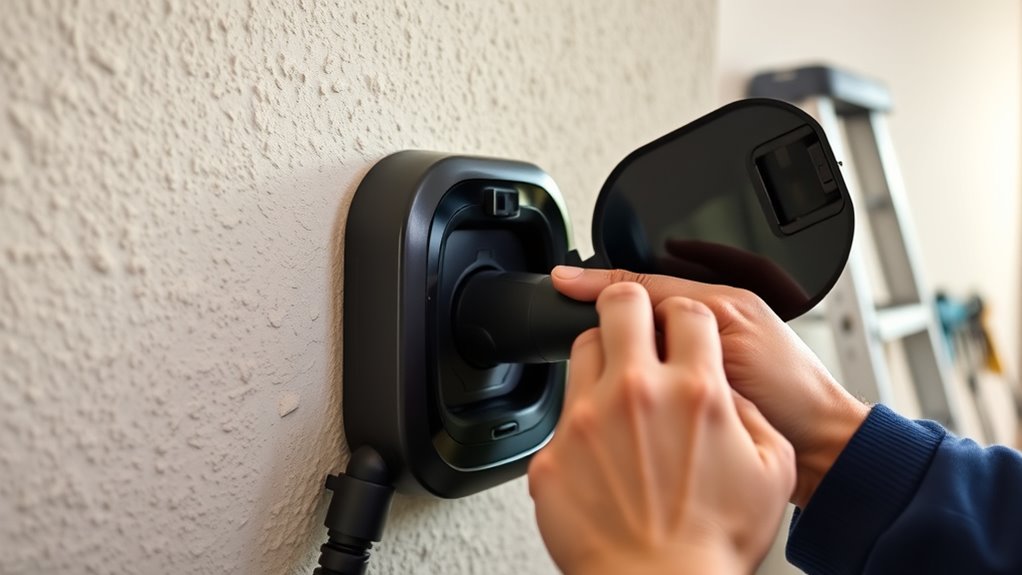

Before installing a home EV charger, assess your electrical system’s capacity and decide if upgrades are needed, like a dedicated 240V outlet or panel upgrades. Choose the right charger type—Level 1 for slow, basic charging or Level 2 for faster results—considering your daily needs and budget. Guarantee safety by following local electrical codes and consulting a licensed electrician. Keep hidden costs in mind, and if you keep exploring, you’ll find helpful tips for a safe, cost-effective setup.
Key Takeaways
- Assess your electrical system’s capacity and upgrade panels or wiring if necessary before installing a higher-capacity charger.
- Choose the right charger type (Level 1 or Level 2) based on your charging needs and budget.
- Hire a licensed electrician to ensure proper installation, safety compliance, and adherence to local electrical codes.
- Install a dedicated circuit for the charger, especially for Level 2, to prevent overloads and ensure safety.
- Regularly inspect and maintain the charger and wiring to prolong lifespan and ensure ongoing safety.
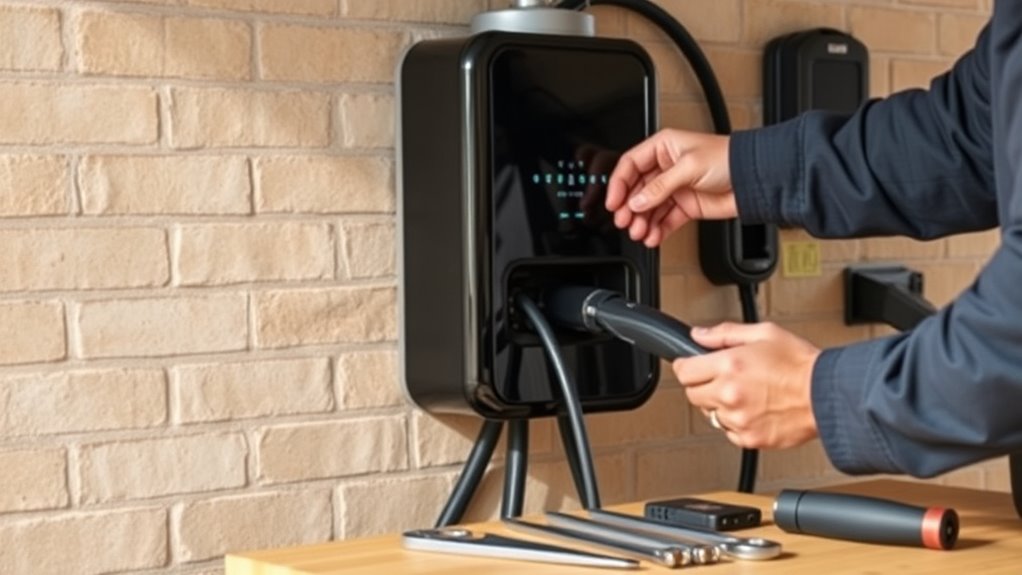
Installing a home EV charger is a smart way to simplify your electric vehicle ownership and make sure you’re always ready to hit the road. Before diving into installation, it’s essential to understand the cost considerations involved. The upfront expense can vary depending on the charger type, your existing electrical system, and whether you hire a professional. Basic Level 1 chargers are typically the most affordable, often included with your vehicle, and use standard household outlets. However, they charge slowly, which might not suit your needs if you want quicker turnarounds. Level 2 chargers, offering faster charging speeds, usually require a dedicated 240-volt outlet and can cost anywhere from a few hundred to over a thousand dollars, including installation. Don’t forget to factor in potential upgrades to your electrical panel or wiring, which can add to the overall expense. While the initial investment might seem high, the convenience of charging overnight at home can offset these costs over time, especially when compared to public charging fees. Additionally, considering power capacity adjustments can ensure your electrical system supports the charger safely and efficiently.
Safety precautions are equally crucial to ensure your installation is secure and compliant. You’ll want to start by evaluating your electrical system’s capacity and consulting with a qualified electrician. Proper grounding, circuit protection, and adherence to local electrical codes are critical to prevent hazards like electrical fires or shocks. Installing a dedicated circuit for your charger minimizes risks and ensures your system handles the load safely. Never attempt to modify wiring or electrical panels yourself unless you have proper training; always rely on licensed professionals. During installation, make sure all components are rated for outdoor use if your charger is installed outside, and verify that the charger itself meets safety standards. Regular inspections and maintenance should be part of your routine to catch any wear or issues early, maintaining safety over the long term. Additionally, keep up with any updates from local codes or manufacturer guidelines to stay compliant.
Frequently Asked Questions
Can I Install a Charger Without Professional Help?
You can attempt a DIY installation, but it’s risky if you’re not familiar with electrical code and safety standards. Electrical code requires proper wiring, grounding, and circuit protection, which are essential for safe operation. Without professional help, you might overlook these details, leading to potential hazards or code violations. For safety and compliance, it’s best to hire a licensed electrician, especially if you’re unsure about your skills.
What Is the Typical Cost of Home EV Charger Installation?
The typical cost estimate for home EV charger installation ranges from $500 to $2,500, depending on various pricing factors. You’ll need to contemplate the charger’s power level, electrical work required, and whether your existing wiring can handle the upgrade. Additional costs may include permits and any necessary upgrades to your electrical panel. To get an accurate estimate, it’s best to consult a licensed electrician who can assess your specific setup.
How Long Does the Installation Process Usually Take?
Think of installing your home EV charger like assembling a puzzle—sometimes it fits quickly, other times it takes longer. Typically, the installation timeline is about 4 to 8 hours, but wiring complexity can extend this. If your home already has a dedicated circuit, it speeds up the process. Expect some variability based on your electrical setup, but most installations are completed within a day.
Are There Government Incentives for Installing a Home EV Charger?
Yes, there are government incentives like rebates and tax credits that can substantially reduce your costs when installing a home EV charger. You may qualify for federal tax credits, which can cover a portion of your installation expenses. Additionally, many states and local governments offer rebates or incentives to encourage clean energy adoption. Be sure to check your area’s specific programs, and consult a professional to maximize your benefits.
Will My Existing Electrical Panel Support a New Charger?
Your existing electrical panel might support a new EV charger if it has enough circuit capacity. Check the panel’s main breaker and current load to see if there’s room for additional circuits. If your panel is full or underpowered, you may need an upgrade. It’s best to consult a licensed electrician who can evaluate your electrical system and determine whether your panel can handle the new charger safely and efficiently.
Conclusion
Now that you know the essentials, installing your home EV charger is a game-changer for your daily drive. With the right preparation, you’ll be charging faster than ever, making long trips feel like a breeze. Just remember, taking the time to plan and understand the process guarantees you’re not left in the dark—this is your home’s new power hub, and it’s about to transform your driving experience forever. Get ready to charge ahead with confidence!