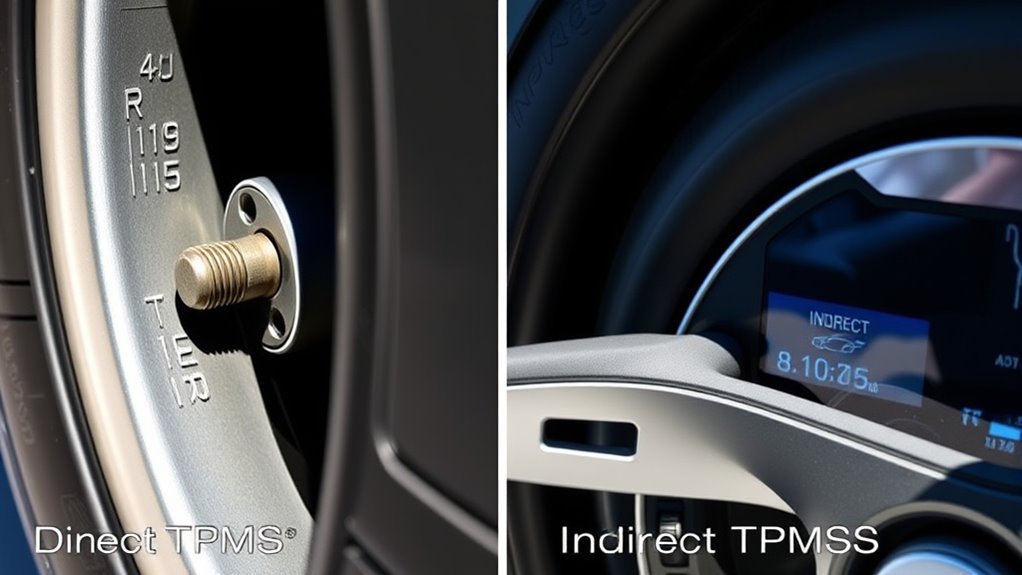

Direct TPMS uses sensors inside each tire to measure air pressure precisely and send real-time data, making it highly reliable. Indirect TPMS relies on existing wheel speed sensors to detect pressure changes through rotational differences, which is cheaper but less accurate. While direct systems provide immediate alerts and fewer false alarms, they are more costly and complex to maintain. Want to understand more about how these systems compare and which might suit your needs?
Key Takeaways
- Direct TPMS uses sensors inside each tire to measure actual pressure, while indirect TPMS relies on wheel speed sensors to infer pressure changes.
- Direct systems offer more precise, real-time pressure readings; indirect systems are less accurate and depend on rotational speed discrepancies.
- Direct TPMS typically involves higher installation and maintenance costs due to dedicated sensors; indirect TPMS leverages existing vehicle sensors, reducing costs.
- Direct TPMS provides quicker, more reliable alerts for underinflation; indirect TPMS may generate false alarms due to uneven tire wear or external factors.
- Installation of direct TPMS is more complex, requiring specialized tools, whereas indirect TPMS is simpler to implement thanks to existing wheel speed sensors.

Have you ever wondered how your vehicle keeps track of tire pressure? It’s a clever system designed to keep you safe and improve fuel efficiency, but not all systems work the same way. When comparing direct and indirect TPMS, understanding their differences helps you see why one might be better suited for your vehicle. The direct TPMS uses sensors installed inside each tire, usually attached to the valve stem or mounted on the wheel itself. These sensors measure the actual air pressure directly within each tire, providing real-time, precise data. This sensor accuracy means you get consistent, reliable readings, which is vital for detecting even slight drops in pressure. Since these sensors are dedicated to monitoring tire pressure, they tend to be very precise and can alert you immediately if a tire is underinflated. However, this accuracy comes with a higher system cost. The sensors themselves can be expensive to produce and maintain, especially since they often need battery replacements over time. Additionally, installing and servicing a direct TPMS can be more costly compared to other systems, due to the need for specialized equipment and expertise. Furthermore, the sensors in direct TPMS systems are often designed with tire pressure monitoring in mind, ensuring they provide accurate data even during extended use.
On the other hand, an indirect TPMS takes a different approach. Instead of measuring pressure directly, it relies on the vehicle’s existing wheel speed sensors—components already used by anti-lock braking systems (ABS). It monitors changes in rotational speed between tires; when one tire’s pressure drops, it typically causes that tire to have a slightly different rolling circumference, making it rotate faster or slower than the others. The system detects these discrepancies and warns you of potential underinflation. While this method is less precise in terms of sensor accuracy, it’s generally more affordable because it doesn’t require installing additional sensors. The system cost is lower since it uses existing hardware and software, making it an attractive choice for many vehicle manufacturers and owners. However, because indirect TPMS depends on interpreting wheel speed data, it might not catch small pressure changes as quickly or accurately. It’s also more prone to false alarms if, for example, tires wear unevenly or if wheel speeds are affected by other factors.
Frequently Asked Questions
What Are the Maintenance Requirements for Each TPMS Type?
You need to regularly check and calibrate both TPMS types to guarantee accurate readings. For direct systems, monitor sensor battery life and replace batteries when needed, as sensors often have limited power. Indirect systems require less maintenance but still benefit from recalibration after tire rotations or replacements. Always follow your vehicle’s manual for proper sensor calibration procedures and schedule sensor or system checks to uphold ideal performance.
Can a Vehicle Switch Between Direct and Indirect TPMS?
You can’t typically switch between direct and indirect TPMS systems easily because of sensor compatibility and system integration. Each system uses different sensors and data processing methods, meaning your vehicle’s electronics are designed for one type. If you want to change, you’d need to replace sensors and reprogram the system, which isn’t practical. It’s best to select the system type suited for your vehicle to ensure proper function and safety.
How Do TPMS Systems Affect Overall Vehicle Safety?
Think of TPMS as your car’s personal tire whisperer, shouting when tire pressure drops too low. This boosts vehicle safety by preventing blowouts, improving handling, and saving you from sudden tire failures. Without it, you’re basically guessing if your tires are safe—risky business, right? Proper tire pressure keeps your vehicle stable and safe, making TPMS an unsung hero in your car’s safety team.
Are There Any Cost Differences in Repairs for Each System?
You’ll find that repair expenses for direct TPMS systems tend to be higher due to sensor replacements, which can be costly. In contrast, indirect TPMS systems usually have a lower cost comparison because they rely on existing ABS sensors and software, making repairs less expensive. Overall, direct systems involve more intricate components, resulting in higher maintenance costs, whereas indirect systems are simpler and more budget-friendly to service.
How Do Environmental Factors Influence TPMS Performance?
Coincidentally, environmental factors often challenge your TPMS performance without warning. Temperature fluctuations can affect sensor sensitivity, causing false alerts or missed warnings. Environmental interference like heavy rain, snow, or debris can disrupt signal transmission, especially for direct systems relying on sensors. You might notice inconsistent readings or delayed responses. To maintain accuracy, confirm sensors are clean and protected from extreme conditions, and be aware that climate changes can impact your TPMS’s reliability.
Conclusion
Understanding the difference between direct and indirect TPMS systems helps you make informed decisions about your vehicle’s safety. Did you know that vehicles equipped with TPMS are involved in 26% fewer tire-related crashes? By maintaining proper tire pressure with the right system, you not only improve safety but also enhance fuel efficiency and tire lifespan. Stay proactive—regularly check your tire pressure and understand your TPMS type to keep your driving safe and smooth.