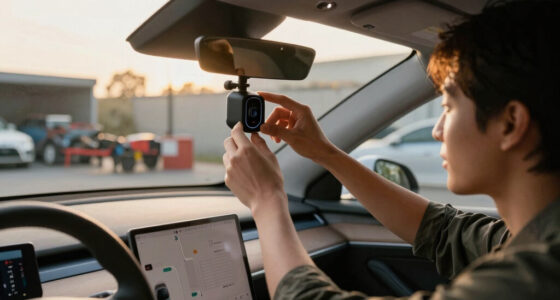
When choosing a dash cam, focus on high video resolution to capture clear images, especially at night. Look for a wide-angle lens to cover more of the road and guarantee good low-light performance with quality night vision. Prioritize impact detection features like a G-sensor for automatic emergency recording. Consider connectivity options and storage, along with easy installation and user-friendly controls. For more detailed features and tips, keep exploring this guide.

Get business pricing on garage and car supplies
- Business-only prices and quantity discounts
- Tax-exempt purchasing
- Multiple users, one account, clear invoices
Key Takeaways
- Prioritize high-resolution video, night vision, and wide-angle lenses for clear, detailed footage in various lighting conditions.
- Look for impact detection and emergency features like G-sensors, automatic recording, and secure storage options.
- Choose models with easy installation, intuitive interfaces, and user-friendly controls to simplify setup and daily use.
- Ensure the dash cam offers connectivity features such as Wi-Fi, Bluetooth, and cloud storage for quick footage access.
- Consider additional safety tools like GPS tracking, real-time alerts, and emergency buttons for enhanced driving security.
As an affiliate, we earn on qualifying purchases.
Video Quality and Resolution
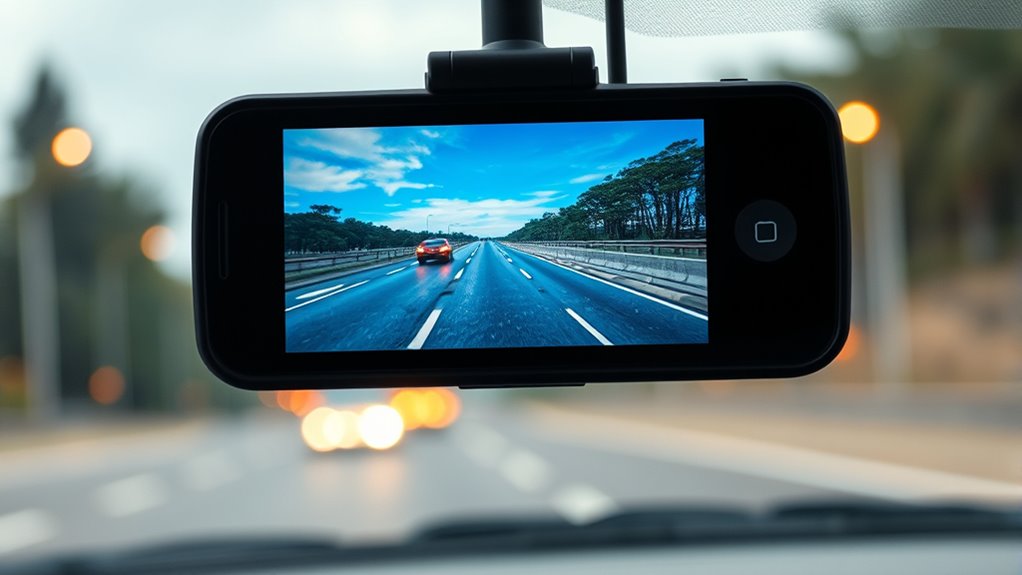
When choosing a dash cam, video quality and resolution are essential factors because they determine how clearly you can see details in your footage. A high-resolution camera ensures sharp images, making it easier to identify license plates, street signs, or other critical details. Pay attention to camera mounting options, as a stable mount prevents shaky footage and improves clarity. Some dash cams also offer audio recording, which can be useful for capturing conversations or environmental sounds during incidents. Clear audio, combined with high-quality video, can provide stronger evidence if needed. Always look for a model that balances resolution with reliable camera mounting and audio features, so your footage is both clear and thorough in any situation. Additionally, considering sensor size and lens quality can significantly impact overall image clarity and low-light performance. Moreover, dynamic range plays a crucial role in capturing details in high-contrast scenes, ensuring that neither shadows nor highlights are lost. Improving your understanding of image sensors can help you select a dash cam that performs well in various lighting conditions. A good lens also helps enhance image sharpness and minimizes distortion, providing more accurate footage. Furthermore, lens aperture can influence the amount of light reaching the sensor, affecting image quality in different lighting environments.
As an affiliate, we earn on qualifying purchases.
Wide-Angle Lens Coverage
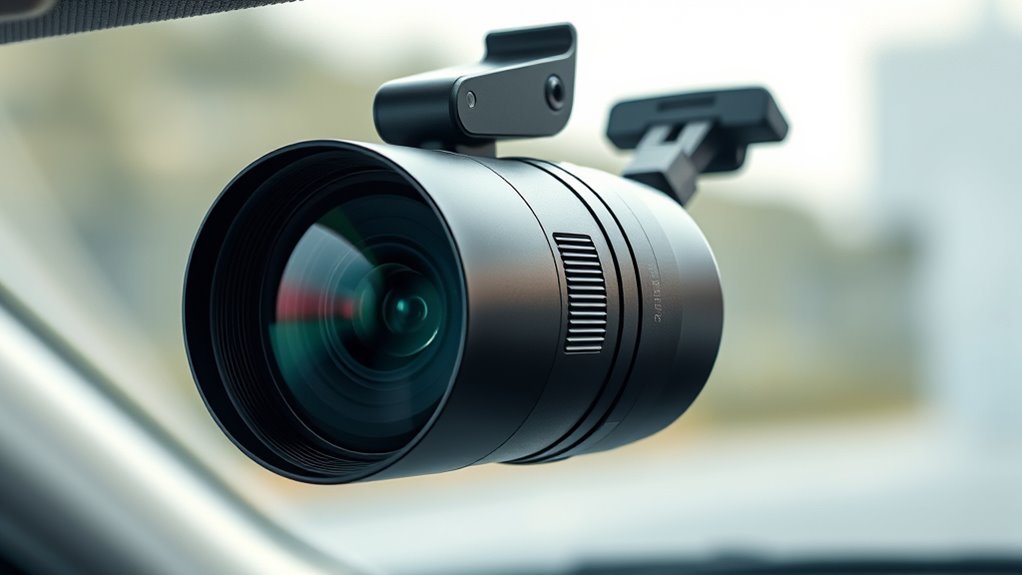
A wide-angle lens is vital for capturing a thorough view of the road ahead, especially in unpredictable driving situations. It helps you record more of your surroundings, providing valuable context during incidents. However, a wider lens can introduce lens distortion, making straight lines appear curved, which may affect the accuracy of your footage. To mitigate this, look for cameras with minimal distortion or software correction features. Some dash cams offer optical zoom, allowing you to focus on specific details without losing clarity as you adjust your view. This ensures you get a clear, comprehensive picture of the scene in front of you, reducing blind spots and increasing your overall safety. Additionally, lens distortion correction features can help maintain accurate footage and improve overall video quality. A well-chosen wide-angle lens maximizes your dash cam’s effectiveness without compromising video quality, especially when combined with wide-angle lens coverage that captures more of your surroundings. Incorporating advanced lens technology can further enhance image clarity and minimize distortion, making your recordings more reliable. Furthermore, selecting a lens with low distortion can significantly improve the fidelity of your footage in various lighting and driving conditions. Paying attention to sensor quality can also greatly impact the clarity and detail captured in your recordings.
As an affiliate, we earn on qualifying purchases.
Night Vision and Low-Light Performance
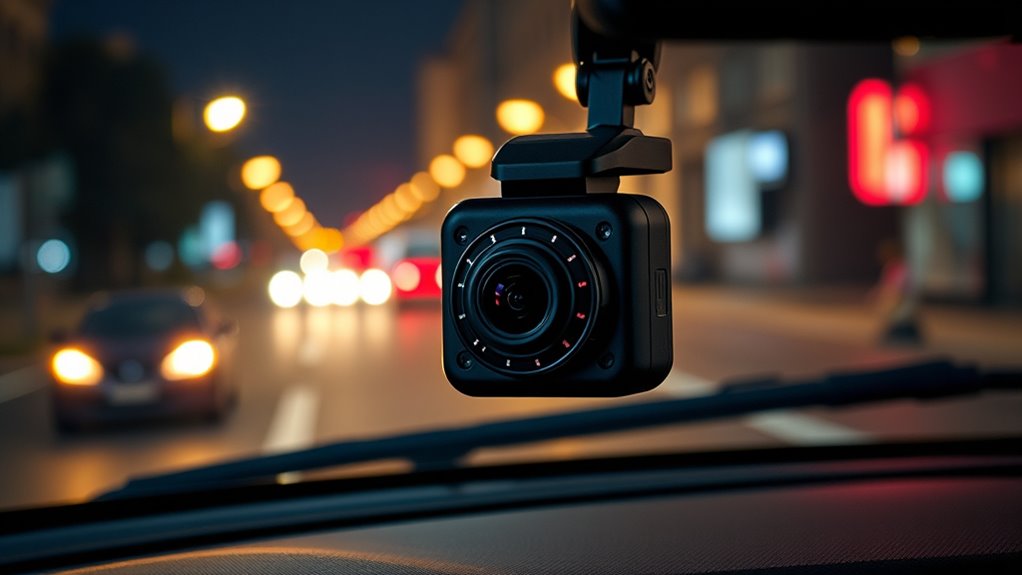
When driving at night, your dash cam’s infrared capabilities and sensor sensitivity become essential for clear footage. High-quality sensors improve image clarity even in low-light conditions, ensuring you capture important details. Understanding these features helps you choose a dash cam that performs reliably after dark. Additionally, some dash cams offer adaptive lighting technology that adjusts exposure dynamically for optimal visibility in varying nighttime conditions. Properly assessing night vision performance can make a significant difference in capturing crucial evidence during nighttime drives. To optimize low-light performance, look for cameras with sensor sensitivity comparable to those used in advanced imaging systems, which can significantly enhance nighttime footage quality. Moreover, selecting a dash cam with advanced imaging capabilities can offer superior performance in challenging lighting environments. Recognizing low-light performance as a key factor ensures you select a device that consistently delivers clear recordings regardless of lighting conditions.
Infrared Capabilities
Infrared capabilities are essential for guaranteeing clear footage in low-light and nighttime conditions. They use infrared illumination to enhance night visibility, allowing your dash cam to capture details even in complete darkness. Look for cameras with built-in infrared LEDs that provide even illumination without washing out images. These features improve overall clarity and help you identify objects or license plates at night.
| Feature | Benefit | Consideration |
|---|---|---|
| Infrared LEDs | Enhance night visibility without visible light | More LEDs mean better coverage |
| IR Range | Determines how far infrared can reach | Longer range offers clearer night footage |
| Power Consumption | Impacts battery life and device longevity | Balance between illumination and energy use |
| Infrared Illumination | Provides consistent lighting in darkness | Ensure the camera’s IR is adjustable |
| Night Mode | Switches to infrared for optimal footage | Look for seamless transition features |
Sensor Sensitivity
Sensor sensitivity determines how well your dash cam captures clear footage in low-light and nighttime conditions. A higher sensor sensitivity allows the camera to detect more light, resulting in brighter, more detailed images during dark hours. However, increased sensitivity can also introduce more image noise, which appears as grainy or speckled footage, reducing clarity. To balance this, look for dash cams with sensors optimized for low-light performance, reducing noise without sacrificing brightness. Good sensor sensitivity ensures you get usable footage in dim environments, helping you identify details like license plates or road signs. Additionally, sensor optimization techniques can improve low-light performance by enhancing image quality without increasing noise. Keep in mind, the goal is to find a dash cam that maximizes sensor sensitivity while minimizing image noise for the clearest possible recordings at night.
Image Clarity at Night
Achieving clear footage at night depends heavily on your dash cam’s ability to perform well in low-light conditions. Look for models with advanced night vision, which use infrared technology to enhance visibility in darkness. Infrared LEDs illuminate the scene without distracting glare, helping you capture sharp images even in complete darkness. Some dash cams combine infrared technology with larger sensors and wider apertures to improve low-light performance naturally. This combination of features ensures your footage remains detailed and clear, providing better evidence if needed. When shopping, check if the camera explicitly lists low-light or night vision capabilities. Investing in a dash cam with effective night vision and infrared technology guarantees reliable image clarity during nighttime drives, giving you peace of mind and valuable footage in any lighting situation. A crucial aspect of low-light performance is sensor quality, which significantly impacts how well your dash cam can record in darkness. Additionally, the sensor size directly influences the camera’s ability to gather light, making larger sensors preferable for superior night recordings.
As an affiliate, we earn on qualifying purchases.
G-Sensor and Emergency Recording Features
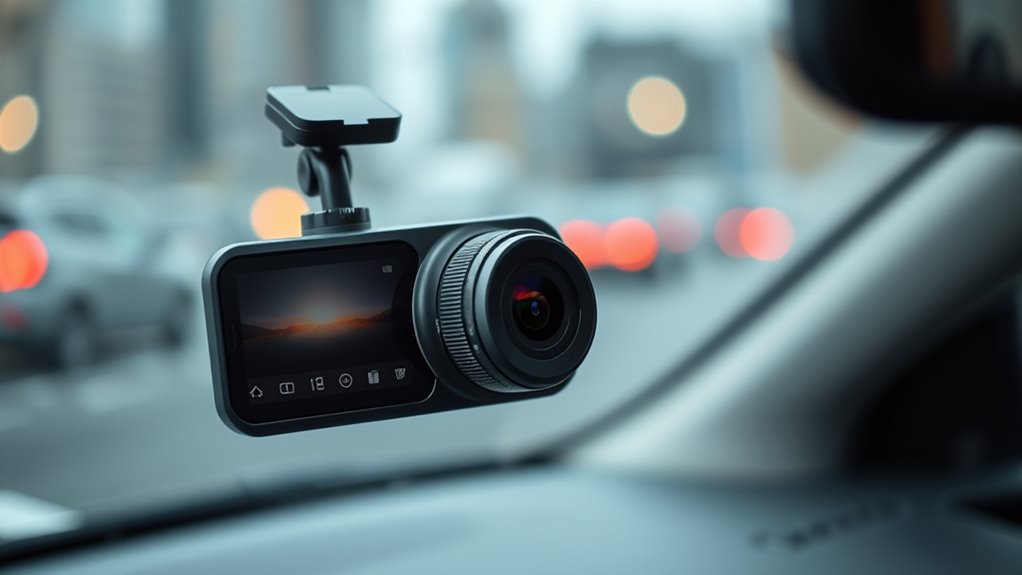
A G-sensor is an essential feature to look for in a dash cam because it automatically detects sudden impacts or abrupt movements, guaranteeing important footage isn’t overwritten. When an accident occurs, the G-sensor triggers event recording, saving critical footage for later review. This automatic process helps you capture and preserve evidence during collisions, preventing loss from automatic overwrites. Many models feature adjustable sensitivity levels, so you can customize how they respond to minor or major impacts. To help you compare, here’s a quick overview:
| Feature | Function | Benefits |
|---|---|---|
| Accident detection | Detects sudden impacts | Ensures critical footage is saved |
| Event triggers | Initiates recording during events | Preserves important moments |
| Emergency recording | Locks footage during impact | Prevents overwriting |
Additionally, sensitivity adjustment allows you to tailor the G-sensor’s responsiveness to various driving conditions, ensuring reliable detection without false alarms. Investing in a high-quality G-sensor system can further enhance the accuracy and dependability of your dash cam’s emergency features, providing peace of mind on the road. Recognizing the importance of automatic protection can help you select a dash cam that reliably safeguards your footage during unforeseen incidents. Understanding how sensor sensitivity works is crucial for customizing your dash cam’s response to different driving environments, helping to avoid unnecessary recordings.
Connectivity and Storage Options

Connectivity and storage options are essential when choosing a dash cam, as they determine how easily you can transfer and access footage. Wireless connectivity allows you to connect your dash cam to your smartphone or Wi-Fi network, making it simple to view or download clips without removing the device. Some models offer built-in Wi-Fi or Bluetooth, streamlining the process. Cloud storage is another valuable feature, enabling automatic uploads of footage to a secure online platform. This protects your videos from theft or damage and ensures quick access when needed. Look for a dash cam that supports both wireless connectivity and cloud storage if convenience and data security are priorities for you. These features simplify footage management and keep your recordings accessible at all times. Incorporating evidence‑informed guidance ensures you select a dash cam with reliable connectivity and storage options that enhance your overall safety and security. Additionally, choosing a device with robust security protocols can further safeguard your footage from unauthorized access or cyber threats. When selecting a dash cam, consider how data encryption can help protect your recordings from potential hacking attempts or breaches.
Ease of Installation and User Interface

Choosing a dash cam that’s easy to install and simple to operate can save you time and frustration. Look for models with clear installation tips—whether it’s mounting options or wiring guidance—that make setup straightforward. A user interface design that’s intuitive will ensure you can navigate menus, access footage, and change settings without hassle. Opt for a dash cam with a responsive touchscreen or minimal buttons, so adjustments are quick and easy. Good installation tips help you avoid common mistakes like improper wiring or loose mounts, while a user-friendly interface keeps daily use hassle-free. Prioritizing these features means you’ll spend less time fiddling with your device and more time focusing on your drive.
Additional Safety and Convenience Features
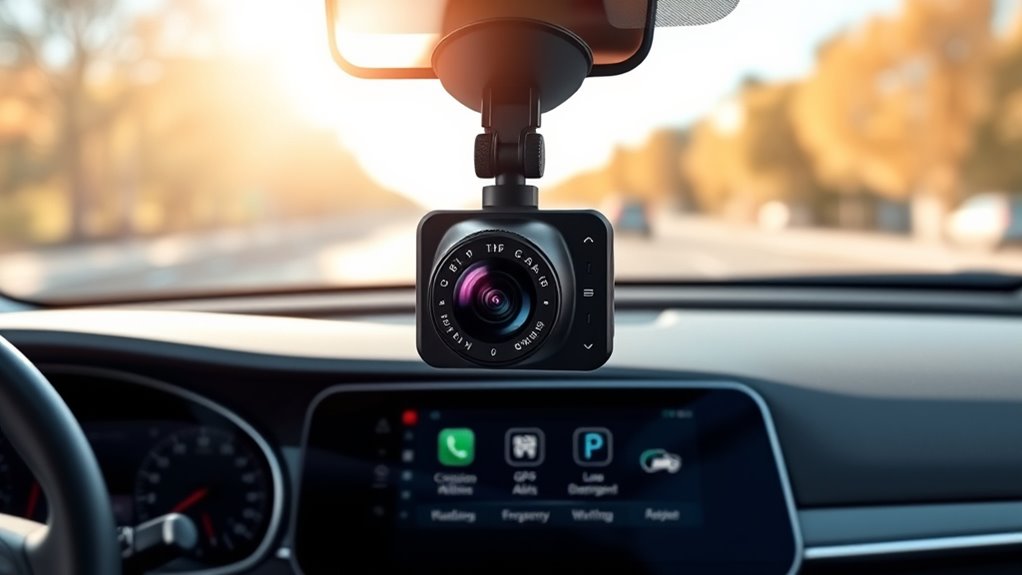
Adding safety and convenience features can make a big difference in your driving experience. Emergency recording, built-in GPS, and easy connectivity help protect you and simplify your journeys. Let’s explore how these features can enhance your dash cam.
Emergency Recording Capabilities
Emergency recording capabilities are vital safety features that make certain critical footage is preserved during accidents or sudden impacts. They automatically save footage when a collision is detected or an emergency alert is triggered, guaranteeing important moments aren’t overwritten. This function helps with accident documentation and provides essential evidence for insurance claims or legal issues. Look for dash cams with reliable G-sensors that activate emergency recording instantly. Some models also include manual emergency buttons for added control. To understand features better, see the table below:
| Feature | Benefit |
|---|---|
| G-sensor detection | Activates emergency recording during impacts |
| Manual emergency button | Allows instant footage save during or after incidents |
| Overwrite protection | Prevents critical clips from being erased |
| Instant save | Ensures footage is saved immediately after trigger |
Built-in GPS Functionality
Built-in GPS functionality enhances your dash cam by providing precise location data and additional safety features. With GPS, you can easily track your route, giving you detailed route tracking for future reference or in case of disputes. It also enables real-time alerts, such as speeding warnings or route deviations, helping you stay aware of your driving habits and surroundings. This feature automatically timestamps videos with your location, making evidence more convincing if you need to report an incident. GPS data can also inform insurance claims and assist with fleet management if you’re a commercial driver. Overall, built-in GPS adds a layer of security and convenience, ensuring you have accurate, real-time information about your vehicle’s journey at all times.
Convenient Connectivity Options
Convenient connectivity options in a dash cam enable seamless integration with your devices and smart systems, enhancing both safety and convenience on the road. Features like wireless pairing let you connect your phone effortlessly, avoiding tangled cords and enabling quick access to footage. Cloud connectivity allows you to upload videos instantly, providing peace of mind if your vehicle is stolen or damaged. Imagine reviewing footage anytime, anywhere, without removing the SD card.
| Feature | Benefit |
|---|---|
| Wireless pairing | Quick, hassle-free device connection |
| Cloud connectivity | Secure, remote access to recordings |
| Smartphone app integration | Easy control and footage management |
These options keep you connected, protected, and in control.
Frequently Asked Questions
What Is the Typical Lifespan of a Dash Cam Battery?
A dash cam battery typically lasts around 2 to 3 years, depending on usage and quality. You should focus on battery longevity and how well the device manages power, as frequent charging or draining can shorten its lifespan. To maximize battery life, look for models with good power management features, such as automatic shutdown or low-power modes. Regularly check and replace the battery if you notice performance declines to guarantee reliable recordings.
How Do Dash Cams Perform in Extreme Weather Conditions?
They say “prepare for the worst,” and that’s true for dash cams in extreme weather. You’ll want a model with high weather resistance and camera durability to withstand scorching heat or freezing cold. Look for features like waterproof housing and temperature-tested components, which guarantee reliable performance. Properly built, your dash cam can perform well no matter the weather, helping you capture vital footage in any conditions.
Can Dash Cams Be Hacked or Remotely Accessed?
Yes, dash cams can be hacked or remotely accessed, posing cybersecurity threats and privacy concerns. You should guarantee your device has strong passwords, firmware updates, and encryption features to protect against unauthorized access. Regularly check for security updates and avoid connecting your dash cam to untrusted networks. Staying vigilant helps safeguard your footage and personal data from potential cyber threats.
Are There Dash Cams With Built-In GPS for Route Tracking?
Yes, many dash cams come with GPS integration for route tracking. With built-in GPS, you can monitor your driving routes, speed, and location history easily. This feature is especially useful for fleet management, insurance claims, or personal safety. You simply activate the GPS function, and the dash cam records your route data alongside footage, providing an extensive record of your drives for added security and convenience.
What Is the Best Way to Ensure Data Privacy and Security?
A stitch in time saves nine, so protect your data early. To guarantee data privacy and security, you should opt for dash cams with strong data encryption and secure storage options. Regularly update your device’s firmware, change default passwords, and avoid sharing access. By taking these steps, you keep your footage safe from hackers, maintaining your privacy on the road and beyond.
Conclusion
Choosing the right dash cam isn’t rocket science, but it does take some know-how. By focusing on video quality, wide-angle coverage, night vision, and handy features like G-sensors, you’ll be well-equipped for any drive. Remember, a little research goes a long way—don’t put all your eggs in one basket. With the right dash cam, you’ll be covered from all sides, making sure you’re not caught off guard when the rubber meets the road.
Halloween Picks
halloween
As an affiliate, we earn on qualifying purchases.