When your check engine light comes on, the code numbers tell you what’s wrong. These codes start with letters and numbers, like P0300 or P0420, indicating sensor problems, emission issues, or engine troubles. Each code points to a specific system needing attention, helping you understand whether it’s a minor fix or something serious. To stay ahead of potential damage or costly repairs, knowing what these numbers mean is essential—learn more below.

Get business pricing on garage and car supplies
- Business-only prices and quantity discounts
- Tax-exempt purchasing
- Multiple users, one account, clear invoices
Key Takeaways
- Check engine codes start with “P0” or “P2,” indicating sensor or emission system issues.
- These codes specify problems like faulty oxygen sensors, mass airflow sensors, or catalytic converter issues.
- Understanding the code numbers helps identify whether the problem is related to sensors, emission controls, or engine performance.
- Decoding the specific trouble code enables targeted repairs, preventing further damage and costly fixes.
- Addressing the codes promptly maintains vehicle efficiency, reduces emissions, and ensures regulatory compliance.
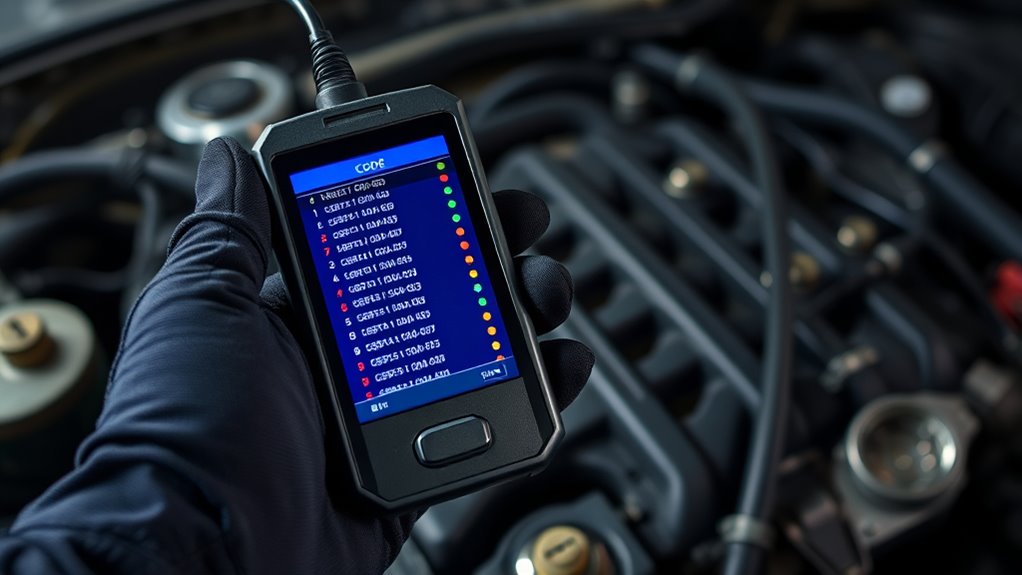
Have you ever wondered what your car’s check engine light really means? That little amber warning can seem confusing, but understanding the basics can save you time and money. When the light pops on, your vehicle’s onboard diagnostic system detects an issue and stores a trouble code. These codes tell you what’s wrong, but interpreting them requires some knowledge. One common cause for the check engine light to come on is a sensor malfunction. Sensors throughout your car monitor everything from engine temperature to oxygen levels, feeding data to your vehicle’s computer. If a sensor isn’t working correctly, it can send false signals or fail to provide accurate information. This can lead to improper adjustments in your emission controls, which are responsible for keeping your vehicle environmentally friendly and compliant with regulations. When sensors malfunction, your engine might run inefficiently, produce higher emissions, or experience sluggish performance. The diagnostic trouble codes associated with sensor issues typically start with a “P0” or “P2,” indicating problems related to sensors or emission controls. Addressing sensor malfunctions promptly is essential because they often impact your vehicle’s fuel economy and emissions output. Ignoring these warnings can cause further damage or lead to costly repairs down the line.
The emission control system is an indispensable part of your vehicle, designed to reduce pollutants and ensure your car meets environmental standards. When the check engine light illuminates due to an emission control problem, it might be because of a faulty sensor, a clogged catalytic converter, or issues with the fuel system. The codes related to emission controls typically fall within specific ranges, such as P0 or P2 series. These codes help technicians pinpoint whether a sensor is sending incorrect data, if a component like the oxygen sensor or catalytic converter has failed, or if there’s a problem with the evaporative emissions system. Because emission control systems are tightly regulated, even minor issues can trigger the check engine light. Fixing these problems not only helps your car run more efficiently but also ensures it stays in compliance with emissions standards. Additionally, the contrast ratio of a vehicle’s emission system components can influence how effectively pollutants are minimized, impacting overall environmental performance.
In many cases, a sensor malfunction that affects your emission controls might seem minor, but it can have significant consequences. For example, a faulty oxygen sensor can cause your engine to run rich or lean, wasting fuel and increasing emissions. Similarly, issues with other sensors, such as the mass airflow sensor, can lead to poor acceleration or stalling. When you see the check engine light, it’s best to get a professional diagnosis to identify the exact trouble code. This way, you can address sensor malfunctions or emission control problems before they escalate into more serious, expensive repairs. Understanding these codes empowers you to take timely action, keeping your vehicle running smoothly and reducing its environmental impact.
OBD2 scanner for check engine codes
As an affiliate, we earn on qualifying purchases.
As an affiliate, we earn on qualifying purchases.
Frequently Asked Questions
How Can I Clear a Check Engine Code Myself?
You can clear a check engine code yourself with a DIY reset using diagnostic tools. First, connect a scanner to your vehicle’s OBD-II port, turn on the ignition, and follow the device’s instructions to erase the codes. Make sure the issue is fixed before resetting, or the warning will come back. With the right tools and a bit of patience, you can easily clear the codes and get back on the road.
Are All Check Engine Codes Serious?
Think of check engine codes as a warning light on your dashboard’s compass. Not all are urgent, but many signal issues that need attention. Using diagnostic tools, you can interpret the codes to gauge their seriousness. Some codes point to minor problems, while others indicate critical repairs. Always consider the context and consult a professional if you’re unsure—proper code interpretation helps you decide if a trip to the mechanic is necessary.
How Often Do Check Engine Codes Appear?
Check engine codes can appear anytime your vehicle’s diagnostic system detects an issue, often triggered by sensors or malfunctions. You might see codes appear during routine driving, especially if the engine is under stress or if there’s a sensor fault. Using diagnostic tools helps you interpret these codes quickly and accurately, so you can address problems promptly. Regular maintenance and code interpretation guarantee your vehicle runs smoothly and helps prevent minor issues from becoming major repairs.
Can a Check Engine Light Turn off on Its Own?
Yes, your check engine light can turn off on its own if the emission system detects that a sensor malfunction has resolved or if the issue was minor. Modern vehicles have self-diagnostic systems that monitor sensor performance and emission controls. When the problem clears, the light may reset automatically. However, it’s wise to get your car checked to guarantee the emission system is functioning correctly and prevent potential future issues.
Do Different Car Brands Have Unique Codes?
You bet some car brands have their own secret language—brand-specific diagnostics—making it feel like you need a translator. But don’t worry, most use universal code systems, so your trusty scanner can usually speak car. Still, luxury brands or specialty vehicles sometimes keep their codes under lock and key, requiring special tools. So, if your check engine light blinks in a foreign tongue, a specialist’s your best bet!
car oxygen sensor replacement kit
As an affiliate, we earn on qualifying purchases.
As an affiliate, we earn on qualifying purchases.
Conclusion
Decoding these codes might seem intimidating at first, but it’s almost like a coincidence—you’re just one step away from understanding what your car needs. By familiarizing yourself with common check engine codes, you’ll catch issues early and save money. So next time your dashboard lights up, remember, it’s not just a random warning; it’s your car speaking. Trust yourself—you’re more capable than you think to keep your vehicle running smoothly.
catalytic converter diagnostic tool
As an affiliate, we earn on qualifying purchases.
As an affiliate, we earn on qualifying purchases.
As an affiliate, we earn on qualifying purchases.
Fall Picks
fall essentials
As an affiliate, we earn on qualifying purchases.