
To safely tap power from your car’s fuse box for accessories, first disconnect the battery to prevent shorts. Use a wiring diagram to locate the correct fuse and remove it with a fuse puller. Then, install a fuse tap adapter to add your new circuit without disrupting the existing one. Make sure all wires are properly insulated and rated for the amperage. If you keep going, you’ll learn more about doing this correctly and safely.

Get business pricing on garage and car supplies
- Business-only prices and quantity discounts
- Tax-exempt purchasing
- Multiple users, one account, clear invoices
Key Takeaways
- Always disconnect the vehicle’s battery before working on the fuse box to prevent electrical shocks or damage.
- Use a fuse tap adapter to add new accessories without disrupting existing circuits.
- Identify the correct fuse for your accessory by consulting the vehicle’s wiring diagram or fuse diagram.
- Ensure the new wire and fuse are rated for the circuit’s amperage to avoid overloads or fires.
- Reassemble and test the circuit after proper connection, keeping wires secured away from heat and moving parts.
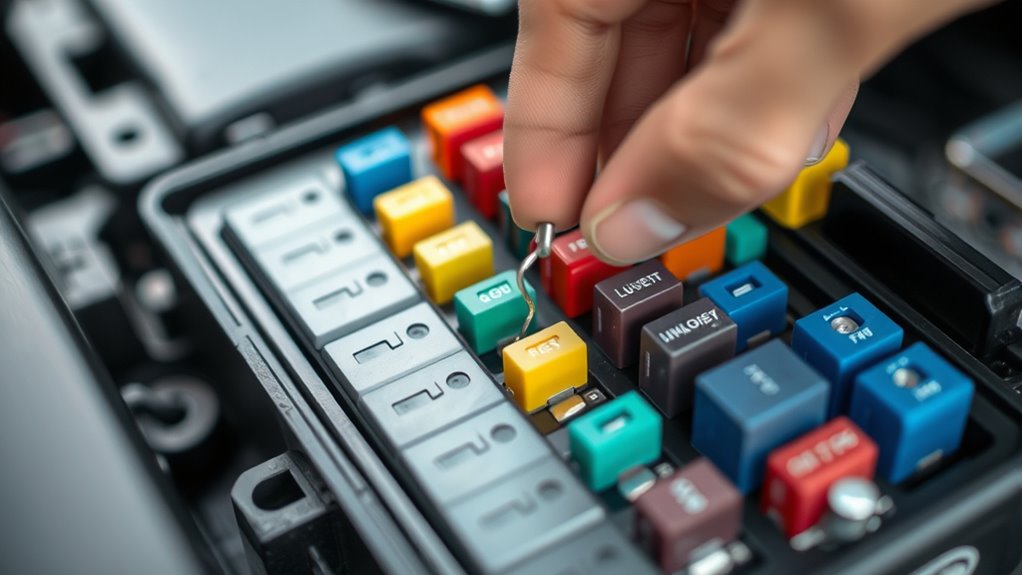
Your car’s fuse box is a critical component that protects your vehicle’s electrical system by preventing overloads and short circuits. When you want to tap power for accessories, understanding fuse types and wiring diagrams becomes essential. Fuses come in different types, such as blade fuses, mini fuses, and maxi fuses, each designed for specific amperage ratings and applications. Blade fuses are most common in modern vehicles, easy to identify by their transparent plastic bodies and metal prongs. Knowing which fuse type to use ensures safety and prevents damage to your electrical components.
To safely tap power, you first need to consult your vehicle’s wiring diagram. Wiring diagrams are crucial because they show the layout of your car’s electrical system, including fuse locations, wire colors, and circuit paths. By referencing the diagram, you can locate the appropriate fuse for the accessory you want to install or power. It’s important to choose a circuit that is rated for the additional load you plan to add. Overloading a circuit can cause blown fuses or even electrical fires, so carefully selecting the right fuse and circuit is essential.
When working with your fuse box, always disconnect the battery to avoid accidental shorts or shocks. Once you locate the correct fuse using the wiring diagram, you can remove it with a fuse puller or pliers. Before installing a tap wire or adding an accessory, ensure your new wire is rated properly and insulated. Use a fuse tap adapter if available; this device fits in place of the existing fuse and allows you to add a new circuit without disrupting the original connection. Make sure the adapter and wire gauge are compatible with the fuse type and circuit load, which you can verify through your vehicle’s specifications. Additionally, understanding circuit capacity is vital to ensure your modifications do not compromise safety.
After connecting your accessory, double-check all connections and secure the wires away from moving parts or heat sources. Reinstall the fuse and reconnect the battery. Turn on your vehicle and test the new accessory to confirm it’s functioning correctly. Remember, working with your fuse box requires caution—if you’re unsure about the wiring diagram or fuse types, it’s best to consult a professional. Proper knowledge of fuse types and wiring diagrams not only makes tapping power safer but also helps maintain the integrity of your vehicle’s electrical system over time. By following these steps carefully, you can add accessories confidently without risking damage to your car.
As an affiliate, we earn on qualifying purchases.
Frequently Asked Questions
Can I Use Any Fuse Slot for Accessories?
You can’t just use any fuse slot for accessories because different fuse types handle varying power levels and circuits. Always choose a fuse slot that matches your accessory’s power source and requirements, ensuring safety and proper operation. Using the wrong fuse can cause electrical issues or damage your vehicle’s wiring. Check your fuse box diagram and consult your vehicle’s manual to identify the correct fuse slot for tapping power safely.
What Tools Are Recommended for Tapping Into the Fuse Box?
You should use a wire tap or fuse splitter designed for automotive use to tap into the fuse box safely. These tools allow you to connect your accessory without damaging the original fuse or wiring. A wire tap attaches securely around the existing fuse, while a fuse splitter provides an additional fuse slot. Make sure you select the right size and type for your vehicle to ensure a safe and reliable connection.
How Do I Identify the Correct Fuse for My Accessory?
To identify the correct fuse for your accessory, first check your vehicle’s circuit diagram, which shows fuse locations and functions. Look for fuses with appropriate ratings that match your accessory’s power needs—usually listed in the owner’s manual. Avoid overloading by choosing a fuse with a similar or slightly higher fuse rating, but never surpass the recommended limits. This ensures safe tapping and prevents potential electrical issues.
Is It Necessary to Disconnect the Battery Before Working on the Fuse Box?
Yes, it’s necessary to disconnect the battery before working on the fuse box to guarantee battery safety. This step prevents accidental electrical shorts or sparks during fuse removal, which could cause injury or damage. Always turn off your vehicle, disconnect the negative terminal first, then proceed with fuse removal carefully. Taking these precautions keeps you safe and protects your vehicle’s electrical system while you work on the fuse box.
What Precautions Should I Take to Prevent Electrical Shorts?
Like walking a tightrope, you must prioritize electrical safety to prevent shorts. Always double-check connections, guarantee proper insulation of wires, and avoid contact with metal parts. Use insulated tools and secure all wiring neatly to prevent accidental shorts. Keep the fuse box dry and work in a well-lit area. By taking these precautions, you safeguard your vehicle’s electrical system and avoid costly damage or injury.
As an affiliate, we earn on qualifying purchases.
Conclusion
Your car’s fuse box is the heartbeat of your vehicle’s electrical system, quietly keeping everything alive. Tapping into it securely is like opening a door to new adventures, fueling your passions without risking chaos. Remember, each fuse is a guardian, protecting your journey. Handle it with care, and you’ll ensure your rides remain smooth and safe. Embrace this knowledge as your guiding light, illuminating your path to confident, empowered modifications—your journey starts here.
As an affiliate, we earn on qualifying purchases.
As an affiliate, we earn on qualifying purchases.
Fall Picks
fall essentials
As an affiliate, we earn on qualifying purchases.