
If you want clearer, louder sound with less distortion, installing a car amplifier can make a big difference. It boosts your audio signal, powers your speakers better, and enhances overall sound quality. You might need one if your music feels muffled, quiet, or uneven across the vehicle. Choosing the right amp depends on your setup, but understanding how amplifiers work can help you decide if upgrading is right for you. Keep exploring to learn more.

Get business pricing on garage and car supplies
- Business-only prices and quantity discounts
- Tax-exempt purchasing
- Multiple users, one account, clear invoices
Key Takeaways
- Car amplifiers boost audio signals, providing louder, clearer sound with less distortion and improved overall audio quality.
- They are essential for powering high-performance speakers and subwoofers, especially in larger or sound-focused vehicles.
- Installing an amplifier reduces strain on factory head units, extending their lifespan and enhancing sound customization options.
- Signs you need an amp include muffled sound, low volume, distortion, and inconsistent audio across the vehicle.
- Proper matching of speaker impedance and amplifier power is crucial for optimal sound quality and system safety.
As an affiliate, we earn on qualifying purchases.
What Is a Car Amplifier and How Does It Work?

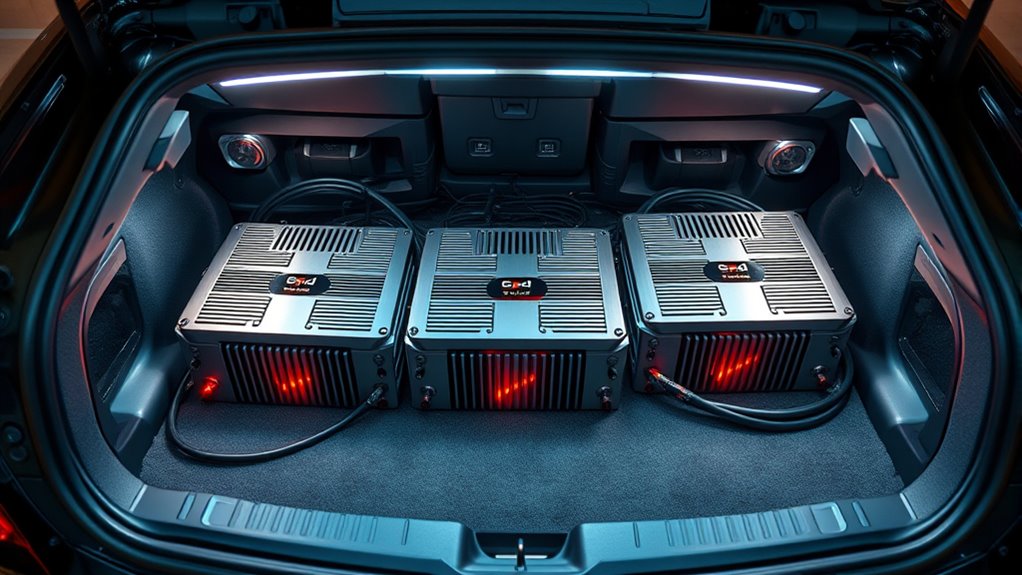
A car amplifier is a device that boosts the audio signal from your head unit to power your speakers and subwoofers. It works by taking the low-level audio signal and increasing its strength through signal processing, so your sound is clearer and more powerful. Understanding speaker impedance is key because it determines how much power your amplifier can deliver without distortion or damage. If your speakers have a low impedance, they draw more current, which the amplifier must handle properly. Advanced signal processing within the amplifier ensures the sound is enriched, with better clarity and minimal noise. Additionally, power handling capacity influences how well your system performs under various listening conditions, helping to prevent damage and ensuring optimal audio output. Proper impedance matching is essential to maximize performance and longevity of your audio system. Recognizing amplifier specifications helps you choose the right equipment for your setup and avoid potential issues. Moreover, understanding the overall system compatibility is crucial for achieving the best sound quality and system durability.
As an affiliate, we earn on qualifying purchases.
Benefits of Installing a Car Amplifier
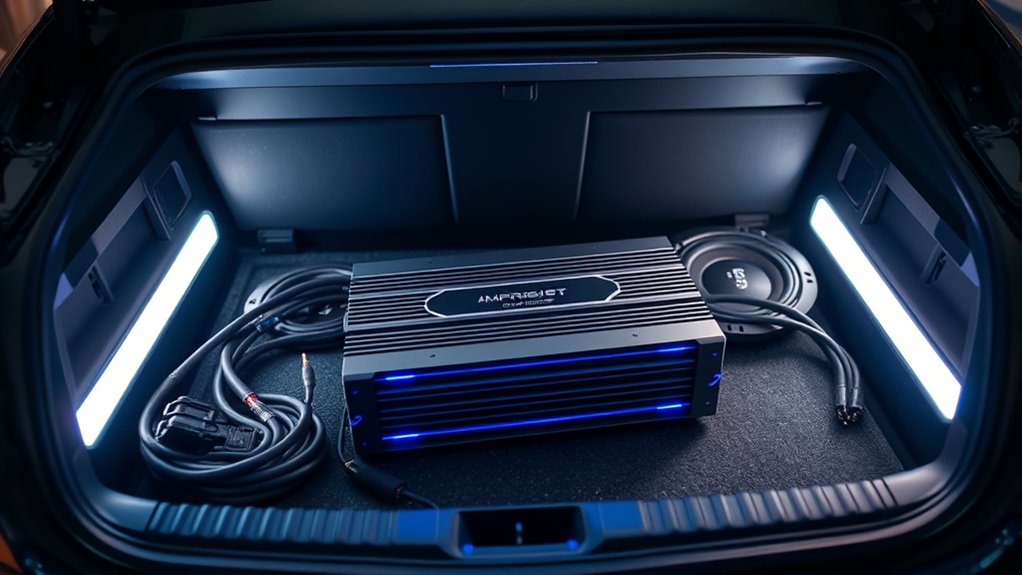
Installing a car amplifier enhances your audio system by delivering more power to your speakers and subwoofers. This boost results in clearer, louder sound with less distortion, making your listening experience more enjoyable. An amplifier improves the overall performance of your existing audio equipment, allowing you to hear details that were previously muffled or lost. Plus, it gives you greater vehicle customization options, letting you tailor sound quality to your preferences. Whether you want deep bass or crisp vocals, a dedicated amp helps you achieve balanced, high-quality audio. Additionally, installing an amplifier can reduce strain on your factory head unit, extending its lifespan. Properly selecting and installing an amplifier also involves understanding investment strategies, ensuring your audio upgrade is both effective and valuable. For many users, a well-chosen amplifier can also enhance vehicle safety by providing clearer audio alerts and communication. Considering the type of amplifier suitable for your setup can further optimize your sound system’s performance. Moreover, understanding the different amplifier classes can help you choose the most efficient option for your needs. Being aware of power handling capabilities and matching them with your speakers is essential for optimal sound quality. Overall, a car amplifier elevates your sound system, providing a richer, more immersive listening experience on the road.
As an affiliate, we earn on qualifying purchases.
Different Types of Car Amplifiers Explained
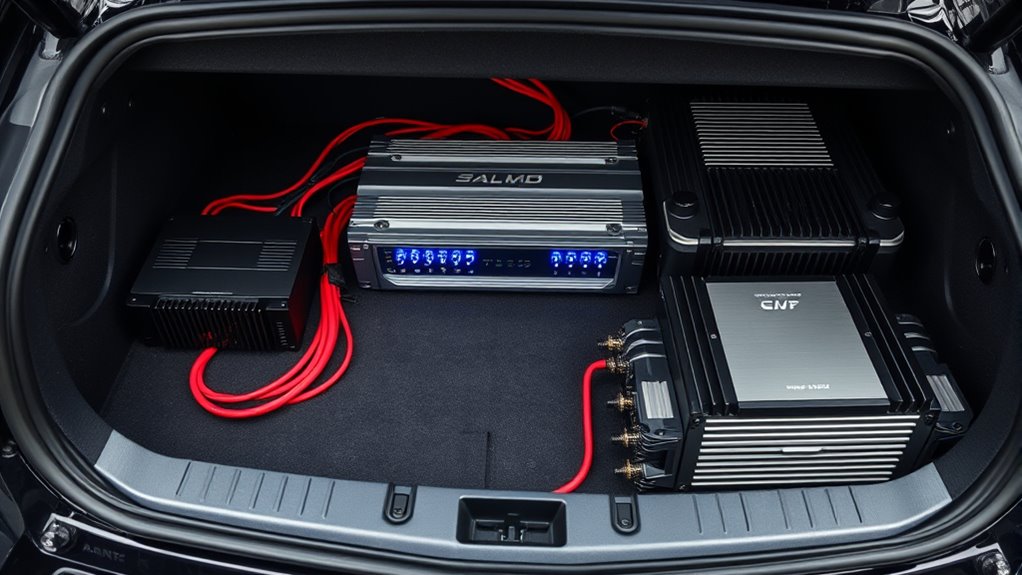
Understanding the different types of car amplifiers is essential to choosing the right one for your audio setup. There are mainly three amplifier classes: Class A, B, and AB, each offering different sound qualities and efficiency. You’ll also encounter Class D amplifiers, known for their compact size and high efficiency, ideal for powering subwoofers. When considering speaker types, some amplifiers are better suited for high-impedance speakers, while others work with low-impedance setups. Wiring configurations vary as well; you might wire a single amplifier in mono for subwoofers or bridge multiple channels for full-range speakers. Selecting the right type depends on your speaker setup, power needs, and space constraints. Impedance matching is crucial for optimal performance and avoiding damage to your components. Proper ventilation and cooling are also important to prevent overheating and ensure longevity of your amplifier system. Additionally, understanding key traits of successful engineers can help you optimize your installation and maintenance practices.
As an affiliate, we earn on qualifying purchases.
Signs You Might Need a Car Amplifier
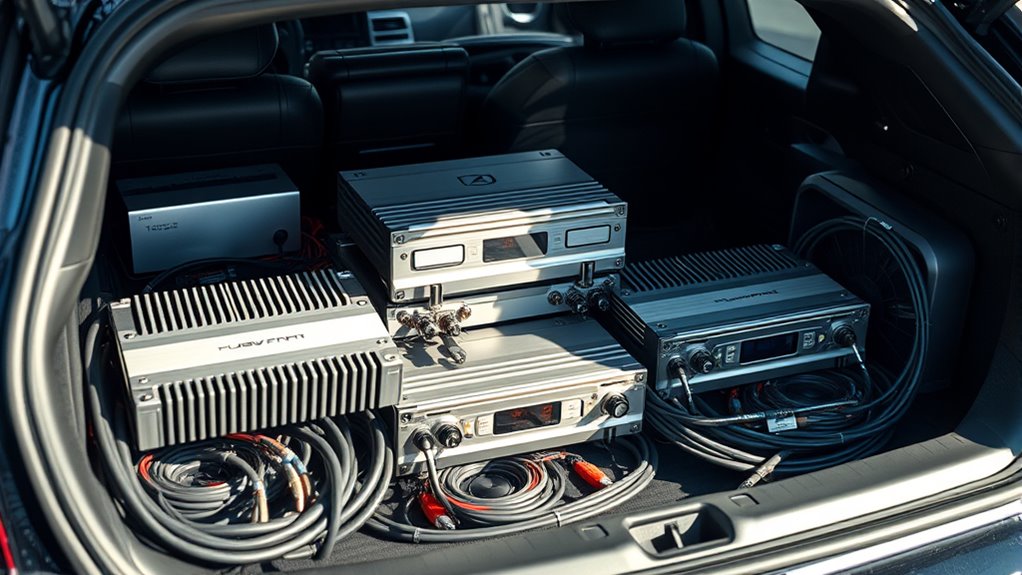
If your music sounds muffled or lacks clarity, it might be time for a car amplifier. When you notice low volume levels or audio that distorts at higher settings, these are clear signs you need extra power. Addressing these issues can markedly improve your listening experience on the road. Additionally, a car amplifier can help enhance overall sound quality by providing the necessary power to drive your speakers effectively. Proper installation and placement of the amp are also important to maximize sound performance and avoid potential damage to your vehicle’s audio system.
Poor Sound Quality
When your car’s audio sounds distorted, muffled, or lacks clarity even at higher volumes, it’s a clear sign that your current setup may not be enough. Poor sound quality often results from inadequate sound dampening or poor speaker placement, which causes vibrations and unwanted noise. If your speakers rattle or produce uneven sound, adding an amplifier can help deliver cleaner, more accurate audio. An amp provides the power needed to push your speakers properly, reducing distortion and improving overall clarity. Proper sound dampening materials can also minimize road noise, allowing your system to shine. If you notice inconsistent sound across different areas of your vehicle, it’s likely time to think about upgrading with a car amplifier for a richer, more balanced listening experience. Free Floating techniques in sound dampening can further enhance audio clarity inside your vehicle, and understanding car audio system fundamentals can help you make the right choices. Additionally, incorporating net worth growth hacks such as investing in quality audio equipment can lead to a more satisfying and long-lasting sound system. Exploring amplifier types can also help you select the best option for your specific needs. Moreover, considering digital audio enhancements can optimize your listening experience even further.
Low Volume Levels
Noticing that your music sounds faint even at high volumes is a clear sign your car’s audio system might need a boost. If you find yourself constantly adjusting the volume control without satisfying sound levels, it’s time to contemplate an amplifier. Your listening environment, like road noise or open windows, can mask audio, but a good amp amplifies the signal enough to cut through. Additionally, understanding navigation and mapping of audio signals can help you optimize your system’s performance. Recognizing the importance of audio signal processing can further enhance sound clarity and power. Incorporating proper personality assessment techniques can also help you choose the right amplifier tailored to your listening habits.
Distorted Audio Output
Experiencing crackling, buzzing, or muffled sound during playback is a clear sign your car’s audio system may need a boost. These distortions often happen when your speakers are pushed beyond their limits or aren’t properly positioned. Poor speaker placement can cause sound to become muddled or uneven, while high ambient noise levels make it harder to enjoy clear audio. If you notice persistent distortion, it’s likely time to contemplate an amp. An amplifier helps manage power distribution, reducing strain on your speakers and improving overall sound quality. Speaker installation and setup can also make a significant difference in achieving a balanced and clear sound experience. Additionally, understanding the power handling capacity of your speakers can help prevent distortion and ensure your system performs optimally.
How to Choose the Right Amplifier for Your Vehicle

Choosing the right amplifier for your vehicle starts with understanding your audio needs and the specifications of your existing system. Consider your speaker placement and how the acoustic environment affects sound quality. If your speakers are positioned close together, a smaller amplifier with lower power might suffice. For larger or more challenging acoustic environments, like open or noisy spaces, you’ll need a more powerful amp to maintain clear sound. Think about the type of music you listen to and the volume levels you prefer. Matching the amplifier’s power output with your speakers’ ratings guarantees ideal performance without distortion. Also, check impedance ratings to confirm compatibility. By evaluating these factors, you’ll select an amplifier that enhances your sound system without overloading or underperforming. Additionally, understanding the importance of proper installation can help ensure your amplifier functions optimally and safely.
Installation Tips and Common Considerations

Proper installation is essential to ensuring your amplifier performs at its best and lasts longer. To achieve this, pay attention to wiring, placement, and compatibility. Keep cables away from heat sources and moving parts, and use high-quality connectors for reliable wireless connectivity if your system supports it. Choose a location that minimizes vibrations and allows for airflow to prevent overheating. Aesthetic integration matters too; hide wires and mount the amp neatly to maintain your vehicle’s clean look.
- Use appropriate gauge wiring for power and ground connections
- Secure the amplifier firmly to prevent movement and noise
- Plan your cable routing for minimal interference
- Test connections before finalizing installation
- Consider the overall aesthetic for a seamless look
Do You Really Need an Amplifier for Better Sound?
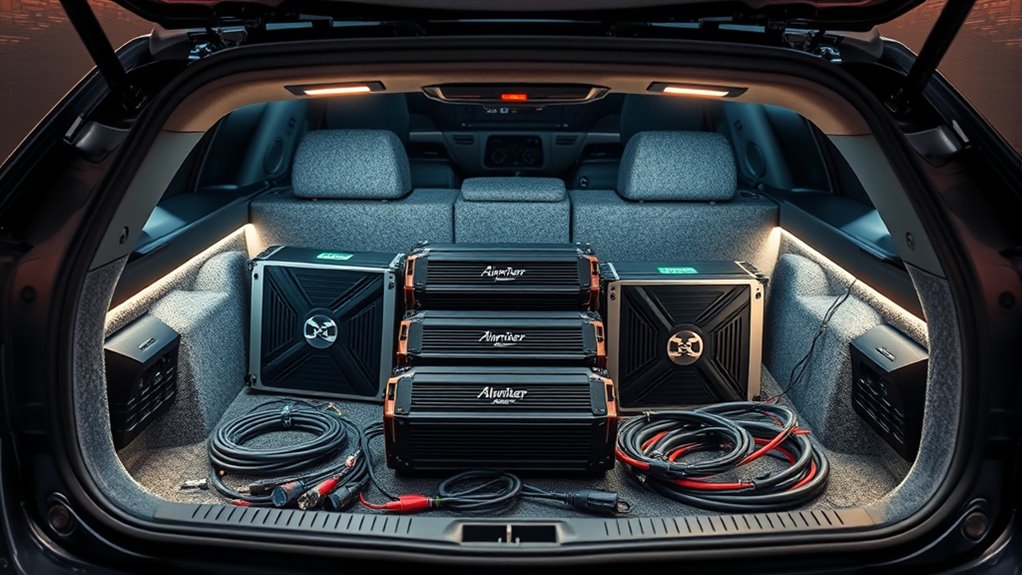
You might wonder if an amplifier is necessary to improve your car’s sound quality. If you want clearer, louder audio, understanding your system’s power needs and compatibility is essential. Let’s explore whether an amplifier truly makes a difference for your setup.
Sound Quality Enhancement
While adding an amplifier can boost overall volume, it doesn’t automatically guarantee better sound quality. To truly enhance your audio, focus on speaker placement and sound staging. Proper positioning allows sound waves to reach your ears clearly, creating a more immersive experience. An amplifier can help maintain clarity at higher volumes, but it’s not a magic fix for poor setup. Consider these points:
- Precise speaker placement for balanced sound
- Creating a realistic sound stage for depth
- Reducing vibrations and rattles
- Upgrading speaker quality for clearer audio
- Tuning your system for ideal frequency response
Power Handling Needs
Have you ever wondered if an amplifier is truly essential to improve your car’s sound? Your speakers have specific impedance ratings, usually measured in ohms, which determine how much power they can handle. If you choose an amp with power ratings that match or slightly exceed your speakers’ capabilities, you’ll get better sound without risking damage. An underpowered amplifier can’t drive your speakers effectively, resulting in poor sound quality, while an overpowered one might blow them out. Knowing your speakers’ impedance and matching it with the right power ratings guarantees your system performs at its best. This balance is vital for achieving the desired volume and clarity without risking damage. So, understanding power handling needs helps you decide if an amplifier is necessary for your setup.
System Compatibility Factors
Deciding whether you need an amplifier depends largely on your current audio system’s compatibility and your desired sound quality. To determine this, consider how your speakers are placed, as poor placement can limit sound clarity without extra power. The size of your vehicle also matters; larger vehicles often require more powerful amplification to fill the space evenly. Ensuring your head unit and speakers match in impedance and power ratings is critical for system compatibility.
- Proper speaker placement enhances sound without extra power
- Larger vehicles typically need more amplification
- Mismatched impedance can cause distortion
- Power requirements depend on the size of your vehicle
- Compatibility between head unit and speakers affects overall sound
Frequently Asked Questions
Can a Car Amplifier Improve All Types of Audio Systems?
A car amplifier can improve most audio systems, but its effectiveness depends on sound quality and system compatibility. If your system is underpowered or lacks clarity, an amp boosts volume and bass, enhancing your listening experience. However, for already high-quality setups, an amplifier might offer marginal gains. Always check your system’s compatibility to make sure the amplifier complements your components, maximizing sound quality without causing distortion or damage.
How Does an Amplifier Affect Overall Vehicle Battery Life?
Think of your car’s electrical system as a delicate balance beam. When you add an amplifier, it increases the electrical load, causing more battery drain. This can strain your vehicle’s power source, especially if the amplifier is powerful or your battery is old. Over time, this additional load might reduce your battery’s lifespan and cause it to work harder, potentially leading to reduced vehicle performance.
Is Professional Installation Necessary for Optimal Performance?
You don’t necessarily need professional installation for your car amplifier, but it’s highly recommended for ideal performance. Professional installers ensure proper wiring, secure mounting, and correct settings, which markedly improve sound quality. Without expert help, you risk poor sound, electrical issues, or damage. Investing in professional installation guarantees your amplifier operates efficiently and safely, letting you enjoy better sound without headaches or hassle.
What Is the Typical Lifespan of a Car Amplifier?
A typical car amplifier lasts around 8 to 10 years, depending on amplifier durability and component longevity. You can extend its lifespan by keeping it well-ventilated and protecting it from moisture and extreme temperatures. Regular maintenance, like checking connections and cleaning dust, also helps. If you notice distortion or overheating, it’s a sign to inspect or replace the amplifier to guarantee superior sound quality and prevent damage.
Are There Any Safety Concerns With Installing a Car Amplifier?
You should be aware that installing a car amplifier can pose some safety considerations. To avoid issues like power surges, guarantee proper wiring and avoid overloading your system. Adequate heat dissipation is essential to prevent overheating, which could damage the amp or your vehicle’s electrical system. Keep your installation professional if unsure, and always follow manufacturer guidelines to maintain safety and enjoy enhanced sound without worry.
Conclusion
If you’re serious about improving your car’s sound, installing an amplifier can make a big difference. Did you know that properly powered speakers can increase sound quality by up to 50%? While not everyone needs an amp, if you crave clearer, louder audio without distortion, it’s worth contemplating. Ultimately, choosing the right amplifier tailored to your needs ensures you get the best listening experience on the road.
Halloween Picks
halloween
As an affiliate, we earn on qualifying purchases.