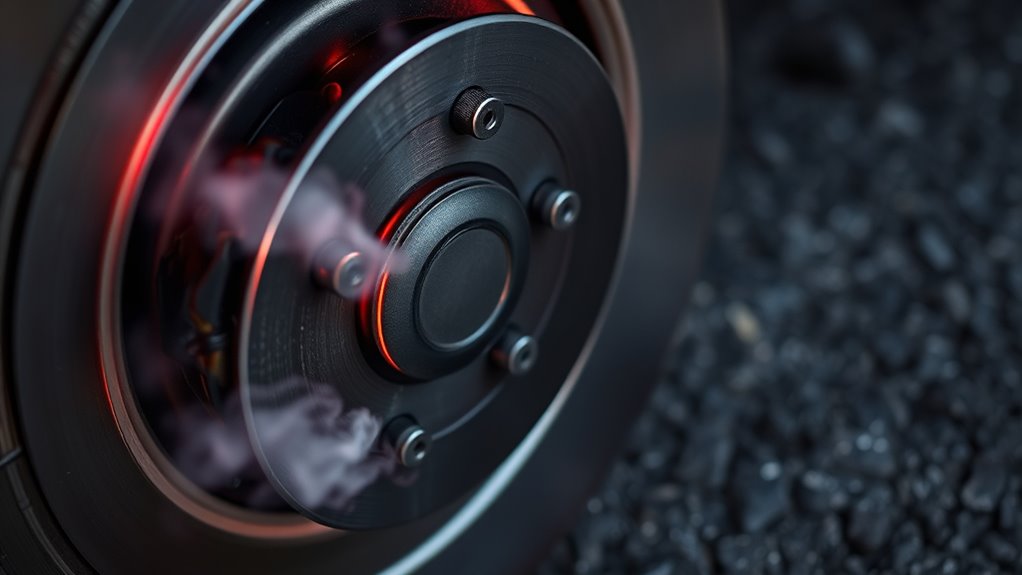
Brake fade happens when your brakes become less effective after heavy or prolonged use because heat builds up, reducing the friction between pads and rotors. This overheating can cause longer stopping distances and diminish your control. To prevent it, you should brake gently, use engine braking, and allow your brakes to cool on long descents. Understanding these causes and prevention tips can help keep your braking system reliable—keep going to learn more about avoiding brake fade effectively.

Get business pricing on garage and car supplies
- Business-only prices and quantity discounts
- Tax-exempt purchasing
- Multiple users, one account, clear invoices
Key Takeaways
- Brake fade occurs when excessive heat from repeated or prolonged braking reduces friction and braking effectiveness.
- Overheating brake components causes pads and rotors to lose their ability to generate stopping power.
- Prevent brake fade by using steady, moderate braking and incorporating engine braking during long downhill drives.
- Upgrading to ventilated or drilled rotors, and maintaining proper brake fluid levels, helps dissipate heat more effectively.
- Regular brake system maintenance and using high-temperature brake pads are essential for preventing brake fade and ensuring safety.
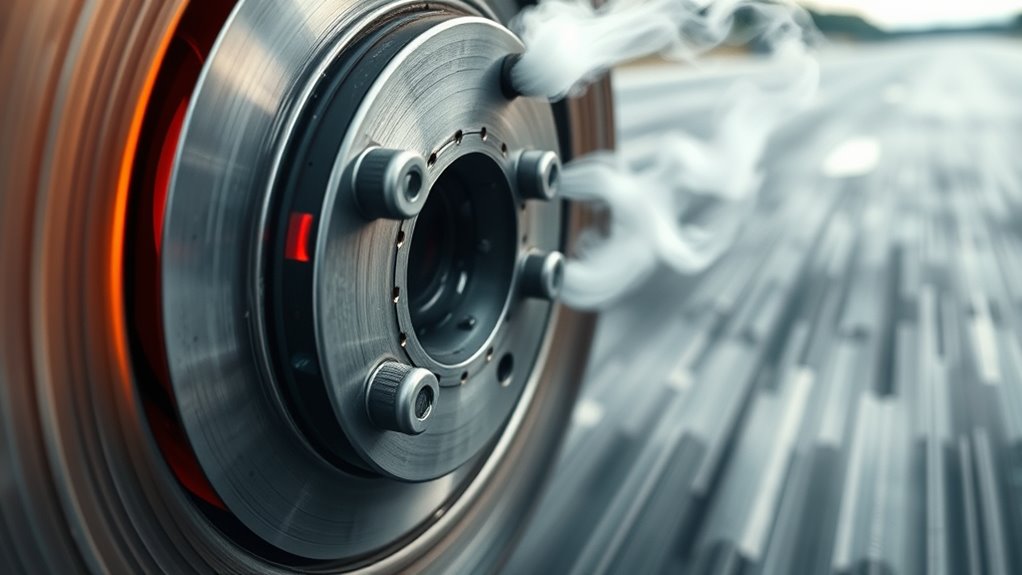
Brake fade occurs when your vehicle’s braking system becomes less effective after sustained or intense use. When you’re driving downhill or braking repeatedly during high-speed driving, heat builds up rapidly in the brake components. This excessive heat can cause the brake pads and rotors to overheat, leading to a condition where friction diminishes. As a result, your braking power diminishes, and you might notice that your vehicle takes longer to stop or feels less responsive. Understanding brake fade causes is essential to prevent it from compromising your safety. Common brake fade causes include prolonged braking, excessive heat buildup, and the use of high-performance brake components that are not adequately cooled during aggressive driving.
To prevent brake fade, you need to be proactive about brake fade prevention techniques. One effective method involves moderate and controlled braking, especially when descending long grades. Instead of riding the brakes continuously, apply steady, gentle pressure to allow the heat to dissipate gradually. Using engine braking—shifting to a lower gear—can also reduce reliance on the brake system, helping to keep temperatures down. Additionally, upgrading your brake system with high-quality, ventilated, or drilled rotors can improve heat dissipation, making brake fade less likely during demanding driving conditions. Regular maintenance also plays a critical role; inspecting brake pads, rotors, and fluid levels ensures your system functions at its best and prevents overheating issues caused by worn or inefficient parts.
Another essential aspect of brake fade prevention involves understanding your vehicle’s limitations. If you’re planning a long downhill drive, plan for intervals of brake cooling by easing off the brakes periodically. Avoiding continuous, aggressive braking not only reduces heat buildup but also extends the lifespan of your brake components. Using high-temperature brake pads designed for racing or heavy-duty use can provide better resistance to brake fade during intense driving. Also, keeping your brake fluid fresh and at the correct level ensures it can withstand high temperatures without boiling or losing its effectiveness, which is another key factor in brake fade prevention. Additionally, being aware of proper brake system maintenance and how it impacts heat management can significantly improve your safety.
As an affiliate, we earn on qualifying purchases.
Frequently Asked Questions
How Does Brake Fade Differ From Brake Failure?
Brake fade differs from brake failure because it’s usually a temporary loss of braking power caused by thermal degradation of the brake components, leading to reduced pedal feel and effectiveness. In contrast, brake failure is a complete loss of braking ability, often due to mechanical or hydraulic issues. With fade, brakes still work but less effectively, whereas failure requires immediate repair to ensure safety.
Can Brake Fade Occur in All Types of Vehicles?
Yes, brake fade can occur in all vehicle types, including cars, trucks, motorcycles, and even aircraft, because it’s tied to brake system variations and how they handle heat. Different vehicle types have different braking mechanisms and materials, which can influence how prone they are to fade. You should always be aware of your vehicle’s brake system and take proper precautions, like avoiding excessive braking, to prevent fade from happening.
What Are the Signs of Imminent Brake Fade?
Think of your brakes as a fire roaring inside a chimney. When brake temperature rises too high, you’ll notice pedal softness and delayed response—like smoke curling from the chimney. These signs warn you of imminent brake fade. If you feel the pedal sinking or it takes more effort to stop, back off and let the brakes cool. Ignoring these cues risks losing braking power entirely, so stay attentive and act early.
How Often Should Brake Systems Be Inspected to Prevent Fade?
You should inspect your brake system at least once a year, especially if you notice reduced braking performance. Regular brake fluid maintenance is essential, ensuring fluid levels are adequate and free of contamination. Follow your vehicle’s pad replacement schedule to prevent brake fade, as worn pads can cause overheating. Consistent inspections help catch issues early, maintaining brake effectiveness and reducing the risk of fade during critical moments.
Are There Specific Driving Techniques to Avoid Brake Fade?
You can considerably reduce brake fade by using proper riding techniques and managing weight distribution. For example, applying gentle, controlled braking instead of harsh presses prevents overheating. Additionally, shifting your weight towards the front during braking helps distribute the heat more evenly across the brake system. Studies show that smooth, progressive braking can extend brake life by up to 30%. Remember, mastering these techniques keeps your brakes effective and your ride safe.
As an affiliate, we earn on qualifying purchases.
Conclusion
Understanding brake fade is like knowing the secret to keeping your cool under pressure. By recognizing the signs and taking proactive steps—like avoiding excessive heat and maintaining your brakes—you can keep your stopping power sharp. Think of it as tending to a delicate garden; with proper care, your brakes will stay vibrant and effective, ready to perform when you need them most. Stay vigilant, and your brakes will serve you faithfully on every journey.
As an affiliate, we earn on qualifying purchases.
As an affiliate, we earn on qualifying purchases.
Fall Picks
fall essentials
As an affiliate, we earn on qualifying purchases.