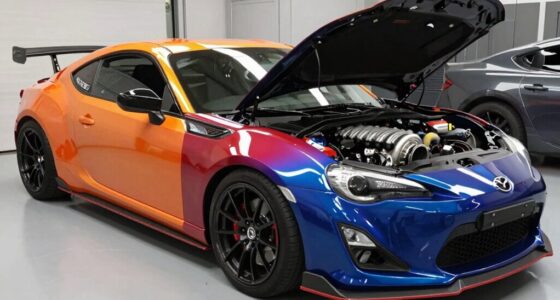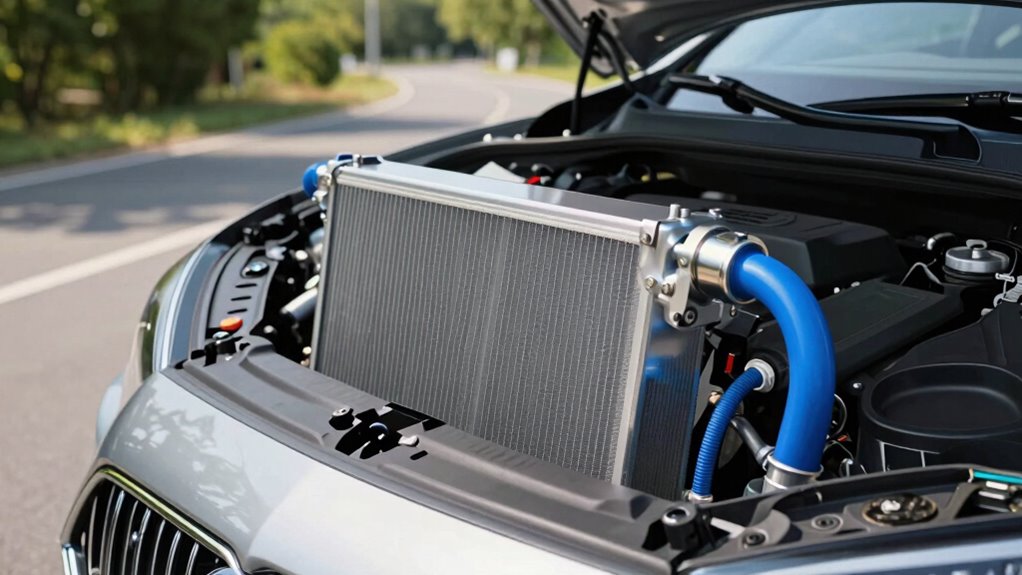

Upgrading your radiator helps during hot summer drives by improving airflow, heat dissipation, and coolant efficiency. A larger surface area or advanced materials like aluminum quickly transfer heat away from your engine, preventing overheating. Enhanced fans and better seals boost overall cooling, especially in stop-and-go traffic or on highways. These upgrades reduce engine stress, extend lifespan, and give you peace of mind. Keep exploring to discover more ways these improvements keep your engine running smoothly in extreme heat.

Get business pricing on garage and car supplies
- Business-only prices and quantity discounts
- Tax-exempt purchasing
- Multiple users, one account, clear invoices
Key Takeaways
- Upgraded radiators improve coolant efficiency, preventing engine overheating during high summer temperatures.
- Enhanced airflow and heat dissipation keep engine temperatures stable under demanding conditions.
- Modern materials like aluminum boost heat transfer, reducing engine strain in hot weather.
- Increased coolant capacity and better seals support reliable cooling during extended, intense driving.
- Overall improved cooling performance enhances vehicle longevity and reliability in summer heat.
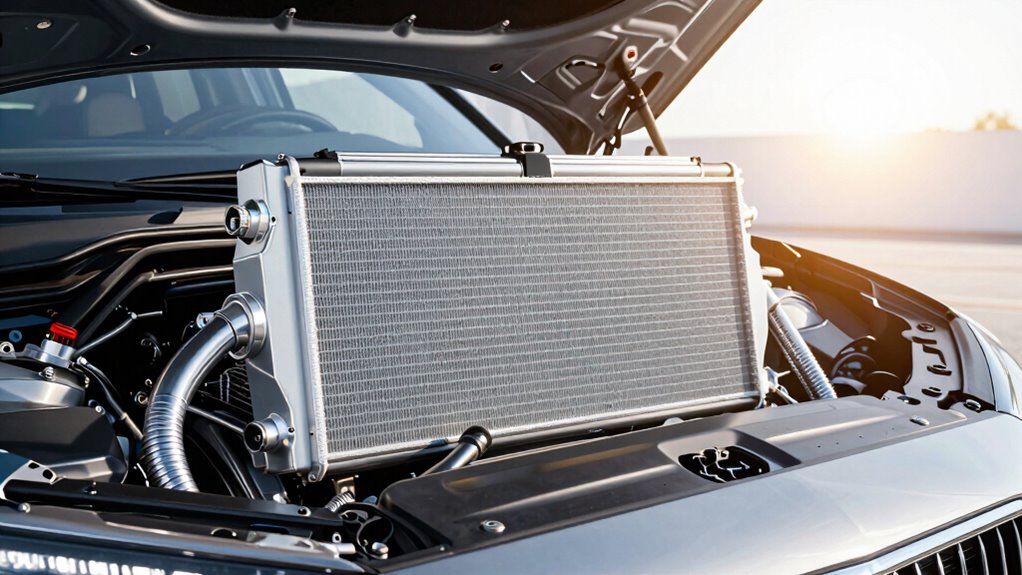
As summer temperatures rise, upgrading your radiator becomes essential to keep your vehicle running smoothly and prevent overheating. When the heat soars, your engine works harder, generating more heat that your cooling system must dissipate. A well-maintained or upgraded radiator improves coolant efficiency, ensuring that heat is transferred away from the engine quickly and effectively. If your radiator isn’t up to the task, you risk engine overheating, which can lead to costly repairs or even engine failure. Upgrading your radiator enhances its ability to circulate coolant more efficiently, maintaining ideal operating temperatures even during the hottest days.
Upgrading your radiator ensures better cooling and prevents overheating during hot summer days.
One of the key benefits of radiator upgrades is airflow enhancement. During summer drives, especially in stop-and-go traffic or on long highway stretches, airflow around your radiator becomes critical. An upgraded radiator often features a larger surface area or improved design to enhance airflow, allowing more air to pass through and carry away heat. Additionally, installing a high-performance fan or additional cooling fans can boost airflow, further preventing heat buildup. When airflow is optimized, less heat accumulates, and your engine maintains a steady temperature, reducing the risk of overheating and engine stress. Proper airflow management is vital for maintaining optimal cooling performance during extreme conditions.
Beyond just improving coolant efficiency and airflow, radiator upgrades can also provide better heat dissipation. Modern radiators come with advanced materials and construction techniques that promote quicker heat transfer. For instance, radiators with aluminum cores are lightweight yet highly conductive, offering superior heat dissipation compared to traditional copper-brass models. This means your engine stays cooler for longer, even under demanding summer conditions. When your radiator effectively manages heat, it reduces strain on your engine’s components, leading to increased longevity and reliability.
Furthermore, an upgraded radiator can support a higher coolant capacity or accommodate more efficient coolant formulations. This means you can maintain a more stable temperature, especially during intense driving conditions such as towing or carrying heavy loads. Upgrades often include better seals and fittings, minimizing leaks and ensuring consistent coolant flow. All these enhancements work together to improve your vehicle’s overall cooling performance, giving you peace of mind during scorching summer days. Additionally, choosing a radiator with better heat dissipation capabilities can significantly improve your vehicle’s cooling efficiency in extreme conditions.
high performance aluminum radiator for cars
As an affiliate, we earn on qualifying purchases.
As an affiliate, we earn on qualifying purchases.
Frequently Asked Questions
Do Radiator Upgrades Improve Fuel Efficiency?
Radiator upgrades can improve your fuel efficiency by enhancing coolant performance, which helps keep your engine temperature steady. When your engine runs cooler and more efficiently, it doesn’t have to work as hard, saving fuel. Upgraded radiators provide better heat dissipation, preventing overheating during intense summer driving. This means your vehicle maintains ideal performance, reduces strain on engine components, and ultimately uses fuel more efficiently, especially in hot weather conditions.
Are Aftermarket Radiators Compatible With All Vehicle Models?
Most aftermarket radiators might seem mighty, but they often aren’t universally compatible. You’ll want to watch for installation challenges that could complicate your upgrade. While some models boast broad compatibility, others are tailored to specific makes and models. Before buying, check the radiator’s specifications and your vehicle’s requirements to guarantee a seamless, straightforward swap, saving yourself time, trouble, and potential trouble down the line.
How Long Does a Radiator Upgrade Typically Take?
A radiator upgrade typically takes 2 to 4 hours, depending on your vehicle and the radiator material. You might need more time if you’re installing a high-performance or custom radiator. The upgrade benefits include improved cooling capacity, better heat dissipation, and enhanced engine reliability during hot summer driving. Choosing the right material, like aluminum, can also make installation smoother and guarantee your radiator lasts longer under intense conditions.
Can Radiator Upgrades Prevent Engine Overheating in Traffic?
Think of your radiator as the heart of your engine’s cooling symphony. Upgrading it improves coolant flow and temperature regulation, acting like a vigilant guardian against engine overheating during traffic jams. A better radiator disperses heat more efficiently, preventing hot spots and maintaining ideal engine temperature. So yes, radiator upgrades markedly help prevent overheating, ensuring your engine runs smoothly through even the most stifling summer traffic.
What Is the Cost Range for a Radiator Upgrade?
The cost for a radiator upgrade typically ranges from $300 to $1,000, depending on your vehicle and the cooling system components. You’ll need to evaluate parts like the new radiator, possible upgrades to the coolant flow system, and labor costs. Upgrading your radiator improves the cooling system’s efficiency, helping prevent overheating during hot summer drives. It’s a worthwhile investment to keep your engine running smoothly and avoid costly repairs later.
As an affiliate, we earn on qualifying purchases.
Conclusion
Upgrading your radiator is like giving your car a heartbeat of resilience, fueling your summer journeys with steady, cool confidence. As the sun blazes and roads stretch endlessly, a well-ventilated radiator acts as your vehicle’s shield, turning potential overheating into a symbol of reliability. With this upgrade, you’re not just driving—you’re mastering the heat, embodying resilience and control. Embrace the upgrade, and let your car’s cooling system be the steady drumbeat of your summer adventure.
cooling fan for vehicle radiator
As an affiliate, we earn on qualifying purchases.
As an affiliate, we earn on qualifying purchases.
As an affiliate, we earn on qualifying purchases.
Halloween Picks
halloween
As an affiliate, we earn on qualifying purchases.