
Choosing between a muffler delete and a performance muffler depends on your sound and performance goals. A muffler delete offers a louder, raw, and aggressive exhaust tone, boosting performance but risking legal issues and increased noise. A performance muffler provides a refined, balanced sound with improved flow and smoother performance, often meeting regulations. Both options can affect fuel efficiency and long-term engine health. To find out which fits your needs best, explore the details ahead.

Get business pricing on garage and car supplies
- Business-only prices and quantity discounts
- Tax-exempt purchasing
- Multiple users, one account, clear invoices
Key Takeaways
- Muffler delete creates a louder, raw, and aggressive exhaust sound, while performance mufflers offer a more refined, balanced tone.
- Muffler deletes typically boost performance more due to increased exhaust flow but may violate noise regulations.
- Performance mufflers improve sound quality and legal compliance, often providing moderate gains without excessive noise.
- Muffler delete can lead to higher emissions and potential engine wear; performance mufflers help maintain environmental standards.
- Choosing between them depends on legal considerations, desired sound profile, daily practicality, and long-term vehicle health.
Comparing the Sound Profiles and Acoustic Impact

When you switch from a stock muffler to a muffler delete or performance muffler, you’ll notice a significant change in your vehicle’s sound profile. Your exhaust tone becomes noticeably louder and more aggressive, creating a sportier feel. A muffler delete typically produces a deeper, more raw sound due to the absence of muffling components, amplifying acoustic resonance. Performance mufflers, on the other hand, are designed to enhance exhaust flow while emphasizing a refined, throaty tone. This results in a richer, more balanced sound that still highlights the engine’s character without excessive noise. Sound modification techniques can further tailor the exhaust note to your preferences. This overall impact on sound quality depends on your choice, but both options clearly intensify the vehicle’s acoustic presence, making your driving experience more exhilarating. Additionally, these modifications can influence the vehicle’s exhaust system performance, affecting overall efficiency and sound dynamics. Incorporating sound level considerations can help you find the right balance between volume and comfort. For optimal results, understanding how different modifications affect acoustic resonance can help you achieve the desired sound profile. Being aware of the sound intensity is crucial for maintaining a comfortable cabin environment while still enjoying the desired sound.
Evaluating Performance Gains and Fuel Efficiency
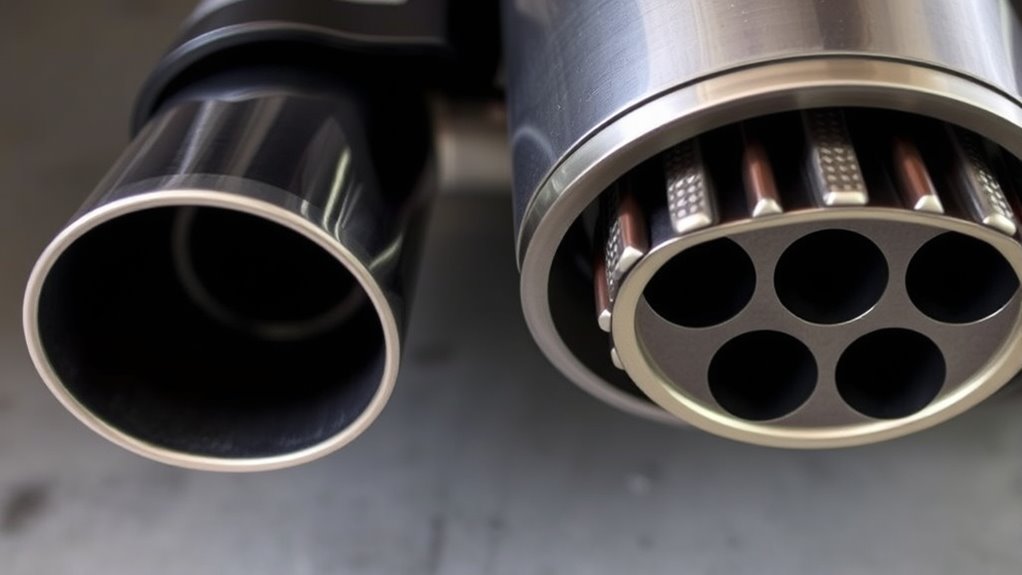
Switching to a muffler delete or performance muffler can directly influence your vehicle’s performance and fuel economy. Improved exhaust flow reduces backpressure, which can boost horsepower and acceleration. A performance muffler typically enhances exhaust flow without sacrificing too much emissions compliance, providing a balance between power gains and environmental standards. However, a muffler delete often results in a more noticeable increase in exhaust flow, which may lead to slight performance improvements. Keep in mind, though, that these modifications can sometimes reduce fuel efficiency if the engine compensates with increased fuel delivery to maintain power. While you might see short-term gains, long-term effects depend on your driving habits and adherence to emissions regulations. Always consider how these changes align with your vehicle’s overall performance goals. Additionally, the type of exhaust system you choose can impact noise levels and compliance with local laws. Proper installation and understanding of emissions regulations are crucial to avoid potential legal issues. Furthermore, understanding exhaust flow dynamics can help you make more informed choices about your vehicle modifications. For example, ventilation efficiency in your exhaust system plays a key role in optimizing performance and compliance. Incorporating knowledge of sound levels can also help you select a system that balances performance with neighborhood and legal noise restrictions.
Considering Practicality, Regulations, and Long-term Effects

Considering practicality, regulations, and long-term effects is essential before modifying your exhaust system. You need to be aware of legal considerations, as many regions have strict noise regulations that could lead to fines or vehicle violations if you exceed allowable limits. A muffler delete often results in louder noise, which might be illegal in your area, while a performance muffler can help you balance sound and compliance. Long-term effects, like potential engine damage or increased wear on other components, should also be considered. Practicality-wise, think about daily driving and whether the modification will be sustainable. Always check local laws and regulations before making changes, ensuring your vehicle remains street-legal and avoids costly penalties. Additionally, understanding water-related factors such as water resistance and environmental impact can influence your choices if your vehicle operates in areas prone to water exposure or flooding. Being aware of regulatory compliance can help prevent legal issues related to vehicle modifications and noise levels. Moreover, considering the material durability of aftermarket parts can ensure your modifications withstand long-term use without frequent replacements. Furthermore, assessing the environmental impact of exhaust modifications can help you make more sustainable choices that align with eco-friendly practices.
Frequently Asked Questions
How Does Muffler Choice Affect Vehicle Warranty Coverage?
Your muffler choice can impact warranty coverage because it may violate manufacturer restrictions or void certain warranty claims. If you opt for a muffler delete or performance muffler, be aware that some manufacturers consider these modifications as alterations that could lead to warranty implications. Always check your vehicle’s warranty policy and consult with the manufacturer before making modifications to avoid potential coverage issues.
Are There Specific Vehicle Models Better Suited for Muffler Deletes?
Certain vehicle models are better suited for muffler deletes, especially those with compatible exhaust systems and fewer model restrictions. You should verify your vehicle’s compatibility before proceeding, as some cars have specific emissions or warranty restrictions. Sports cars, trucks, and older models often respond well, providing a noticeable sound increase. However, always research your model’s restrictions to avoid potential issues and ensure the modification aligns with legal and warranty guidelines.
What Are the Potential Legal Consequences of Removing or Modifying Mufflers?
Removing or modifying your muffler is like opening Pandora’s box—there are legal risks involved. You could face noise violations, fines, or even vehicle impoundment, depending on your local laws. Authorities prioritize noise regulation enforcement, so if your car becomes excessively loud, you might encounter legal consequences. Always check your state or city regulations before making any exhaust modifications to avoid costly penalties and guarantee you stay within legal limits.
How Does a Muffler Delete Impact Resale Value?
A muffler delete can negatively impact your resale value because it’s seen as an aftermarket modification that may raise concerns about legality and noise regulations. Potential buyers might worry about increased emissions or fines, making your vehicle less attractive. If you’re planning to sell, consider how this modification could limit your market and reduce the car’s overall resale value, especially compared to stock or professionally modified options.
Can Muffler Modifications Cause Increased Emissions or Environmental Concerns?
Muffler modifications can cause increased emissions, potentially violating emission standards and raising environmental concerns. When you remove or alter your muffler, exhaust gases may not be filtered or reduced properly, leading to higher pollutant levels. This increases your vehicle’s environmental impact and could result in legal issues if emissions exceed regulatory limits. Always consider local laws and emission standards before making muffler modifications to avoid contributing to pollution.
Conclusion
Choosing between a muffler delete and a performance muffler is like picking between a roaring lion and a sleek cheetah—each offers a different thrill. If you crave raw, untamed sound and a boost in attitude, the delete roars loudly, but beware of the noise and legal pitfalls. For a balanced symphony of performance and practicality, a performance muffler is your steady companion. Whichever you choose, it’s your ride’s personality shining through—just make sure it suits your style and street rules.
Fall Picks
fall essentials
As an affiliate, we earn on qualifying purchases.