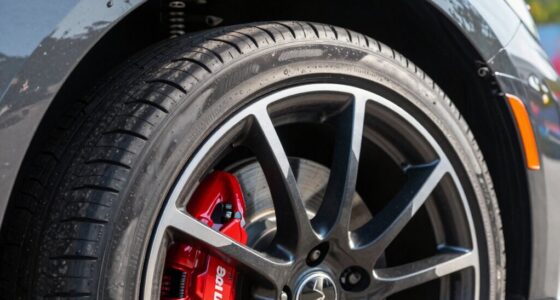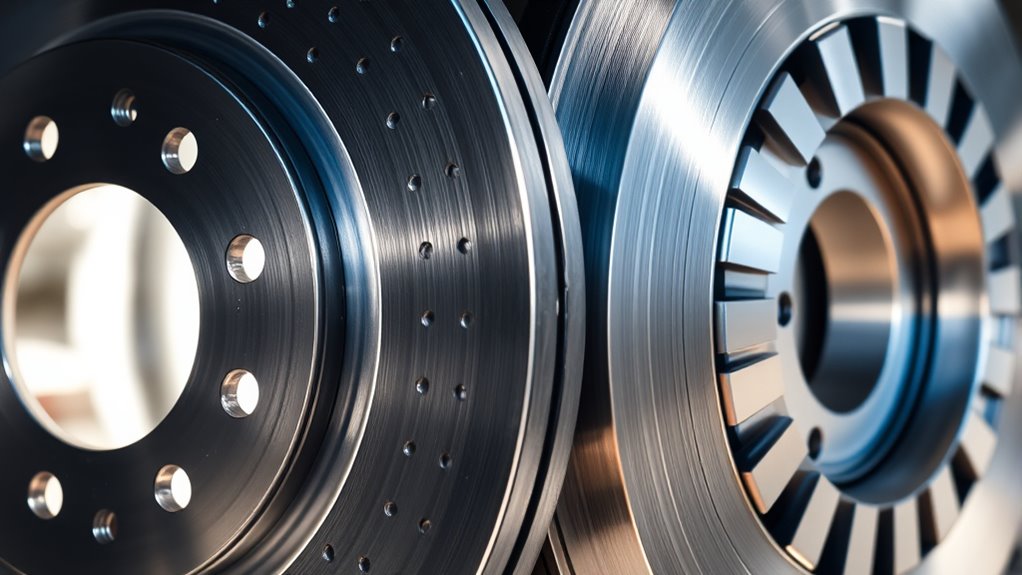

Upgrading to drilled and slotted rotors can boost your vehicle’s braking performance by improving heat dissipation, reducing fade, and providing more consistent stopping power, especially during high-stress driving. They help vent gases, dust, and debris more effectively than stock rotors, which are designed for everyday use. While performance rotors offer enhanced responsiveness, they may require more maintenance. To discover if these upgrades suit your driving style, keep exploring the details ahead.

Get garage and car supplies delivered free — and shop member deals
- Fast, free delivery on millions of items
- Access to Prime Big Deal Days deals on October 6–7
- Prime Video, Amazon Music and more included
Key Takeaways
- Performance rotors improve heat dissipation, reducing brake fade during demanding driving conditions.
- Drilled and slotted designs enhance venting and debris removal for more consistent braking response.
- They are beneficial for high-stress activities like track days but may wear faster under heavy use.
- Stock rotors provide durable, reliable braking suited for daily driving with minimal maintenance.
- Choosing between them depends on driving style: performance rotors for enhanced response, stock for longevity.
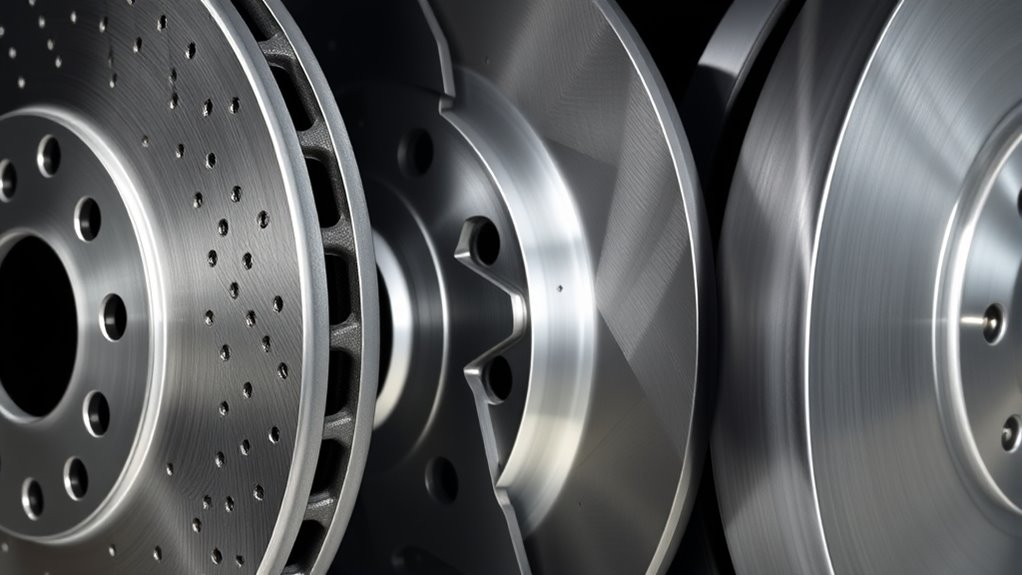
When it comes to upgrading your vehicle’s braking system, choosing between drilled and slotted rotors and stock rotors is a decision that can impact performance and longevity. If you’re seeking better braking performance, especially during demanding driving conditions, performance brake rotors like drilled and slotted types can offer noticeable benefits. These rotors are engineered to improve heat dissipation, reduce brake fade, and provide more consistent stopping power. The drilled holes and slots help vent gases, dust, and debris away from the brake pad surface, maintaining ideal contact between pad and rotor. This means you’ll experience shorter stopping distances and more responsive braking, particularly during high-stress situations like mountain driving or track days. However, it’s crucial to think about rotor durability, as drilled and slotted rotors can sometimes be more susceptible to cracking under extreme heat cycles or heavy use. If your driving style involves frequent, aggressive braking, these rotors might require more frequent inspection and replacement compared to stock options. Additionally, proper ventilation considerations can help extend the lifespan of high-performance rotors by managing heat buildup more effectively.
Stock rotors are designed for everyday driving, emphasizing rotor durability and longevity over high-performance benefits. They’re typically made from cast iron with a solid or vented design that withstands regular wear and tear. While they may not offer the same level of braking performance as drilled and slotted rotors, stock rotors generally provide consistent, reliable stopping power for daily commutes, casual driving, and light hauling. Their durability ensures they can handle prolonged use without cracking or warping, making them a cost-effective choice for most drivers. If your primary concern is durability and minimal maintenance, stock rotors are a solid option. But if you push your vehicle harder or want to improve your braking response, contemplating drilled and slotted rotors might be worth the investment.
performance drilled and slotted brake rotors
As an affiliate, we earn on qualifying purchases.
As an affiliate, we earn on qualifying purchases.
Frequently Asked Questions
Do Aftermarket Rotors Improve Daily Driving Comfort?
Yes, aftermarket rotors can improve your daily driving comfort. They often provide better braking efficiency, so you’ll notice shorter stopping distances and more consistent performance. Additionally, quality performance rotors tend to generate less noise compared to stock rotors, making your drives quieter. While some drilled or slotted rotors might produce more noise initially, choosing well-made options can help reduce noise levels and enhance overall comfort during daily driving.
How Long Do Drilled and Slotted Rotors Typically Last?
Drilled and slotted rotors typically last about 30,000 to 70,000 miles, depending on your driving habits and rotor maintenance. You’ll notice wear patterns that can indicate uneven wear or cracking, especially under high-stress conditions like aggressive braking or racing. While they offer improved heat dissipation, these rotors may require more frequent inspection and replacement to guarantee ideal braking performance and safety.
Are There Specific Vehicles That Benefit Most From Performance Rotors?
Like a tailored suit, performance rotors fit certain vehicles perfectly. You’ll find they benefit sports cars, high-performance vehicles, and those driven aggressively or in demanding conditions. If your vehicle has a powerful engine or you regularly tackle mountain roads or track days, upgrading to drilled and slotted rotors can improve braking. Always check vehicle compatibility and consider your driving conditions to make sure you get the best performance out of your brake system.
Can Upgraded Rotors Reduce Brake Fade During Long Drives?
Upgraded rotors can definitely reduce brake fade during long drives by improving rotor cooling. When your brake system stays cooler, it prevents the brake fluid from boiling and maintains consistent stopping power. Performance rotors, especially drilled or slotted ones, promote better heat dissipation, allowing you to brake harder and longer without experiencing fade. This makes them a smart choice for extended drives or heavy braking situations.
Do Performance Rotors Require Special Maintenance or Break-In Procedures?
Performance rotors do require some special maintenance, like regular rotor cleaning to prevent debris buildup and guarantee peak performance. You’ll also need to follow a proper break-in process, which involves gentle braking for the first few hundred miles to seat the pads and rotors correctly. Skipping these steps can reduce their effectiveness and lifespan, so make sure to adhere to manufacturer recommendations for the best results.
As an affiliate, we earn on qualifying purchases.
Conclusion
Choosing drilled and slotted rotors can improve your braking performance, especially in high-temperature conditions. But did you know that racing cars often use these rotors because they reduce brake fade by up to 30%? While they might be overkill for daily driving, their benefits become clear if you’re pushing your car hard. Ultimately, investing in performance rotors can provide better stopping power and safety when it matters most.
high performance brake rotors for cars
As an affiliate, we earn on qualifying purchases.
As an affiliate, we earn on qualifying purchases.
As an affiliate, we earn on qualifying purchases.
Fall Picks
fall essentials
As an affiliate, we earn on qualifying purchases.