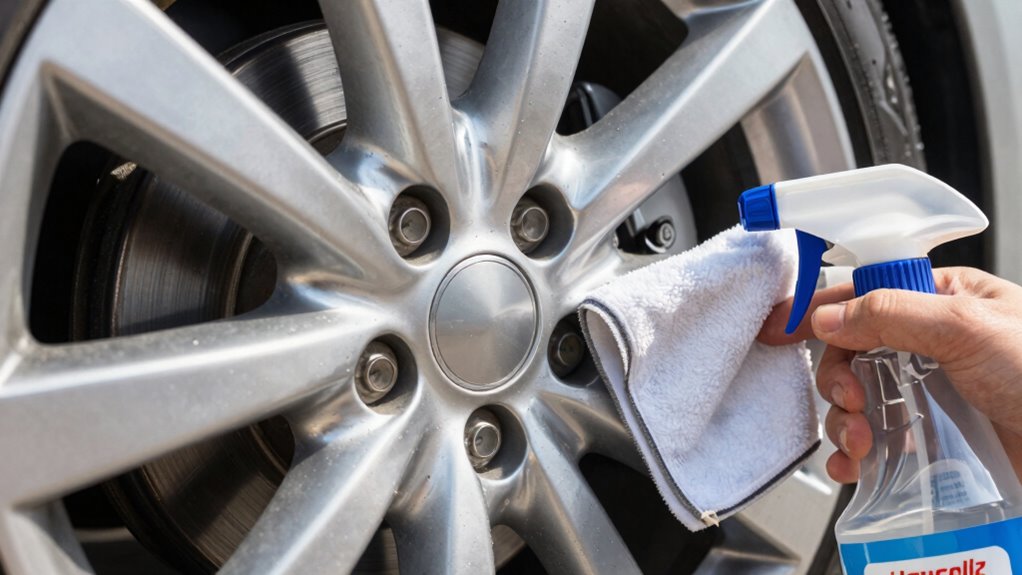

To clean brake dust without damaging your wheels, start by choosing a pH-balanced cleaner designed for automotive finishes and test it on a small area first. Use gentle tools like microfiber cloths or soft brushes, avoiding harsh wire brushes or abrasive pads that can scratch the surface. Regularly remove brake dust with proper techniques to prevent buildup, corrosion, and damage. If you keep these tips in mind, you’ll maintain a clean, protected wheel finish—there’s more to discover if you keep going.

Get business pricing on garage and car supplies
- Business-only prices and quantity discounts
- Tax-exempt purchasing
- Multiple users, one account, clear invoices
Key Takeaways
- Use pH-balanced, automotive-specific wheel cleaners to effectively break down brake dust without harming the finish.
- Avoid abrasive tools like wire brushes; opt for soft microfiber cloths or gentle brushes.
- Test cleaners on small areas first to ensure compatibility with your wheel’s coating.
- Regularly clean wheels to prevent buildup, using proper techniques to avoid scratches.
- Rinse thoroughly and dry with a microfiber towel to prevent water spots and maintain wheel integrity.

Brake dust can quickly accumulate on your wheels, and if left uncleaned, it can cause corrosion and damage your vehicle’s finish. To prevent this, regular cleaning is essential, but you need to be mindful of how you do it. Understanding brake pad materials is crucial because different types produce varying amounts of brake dust, and some are more abrasive than others. For example, ceramic brake pads tend to generate less dust than metallic ones, reducing the risk of scratching your wheels during cleaning. Knowing your brake pad materials helps you choose the right cleaning methods and products, ensuring you don’t damage the finish. Additionally, being aware of the types of brake dust can help you select the most appropriate cleaning techniques for your wheels. Recognizing the abrasiveness of brake dust can also guide you in choosing gentler cleaning tools and methods that do not harm your wheels’ finish. Using the correct cleaning products can also prevent the buildup of harmful residues that may degrade the protective coatings over time.
Understanding brake pad materials helps prevent wheel damage during cleaning and reduces brake dust buildup.
When it comes to cleaning brake dust, using the appropriate wheel cleaning tools makes a significant difference. Soft-bristled brushes, microfiber cloths, and dedicated wheel brushes are gentle enough to remove stubborn dust without scratching the surface. Avoid harsh wire brushes or abrasive scrub pads, as these can easily damage the wheel’s paint or clear coat. Also, choose wheel cleaners designed specifically for automotive finishes—pH-balanced formulas work best because they’re strong enough to break down brake dust but gentle enough to preserve your wheels’ integrity. It’s also helpful to understand safe cleaning practices to prevent accidental damage during maintenance. Always test any cleaner on a small, inconspicuous area first to prevent unexpected damage. Incorporating proper cleaning techniques can further help in protecting your wheels during maintenance. Regular cleaning not only preserves the appearance but also helps in maintaining the protective coatings on your wheels, enhancing their longevity.
pH-balanced wheel cleaner for cars
As an affiliate, we earn on qualifying purchases.
As an affiliate, we earn on qualifying purchases.
Frequently Asked Questions
Can I Use Household Cleaners to Remove Brake Dust?
You shouldn’t use household cleaners to remove brake dust because they often contain harsh chemicals that can damage your wheels. Instead, opt for DIY cleaning methods with gentle, wheel-specific solutions. Chemical solutions designed for brake dust removal are safer and more effective, helping you clean without harming your wheels’ finish. Always choose products formulated for automotive use to guarantee a thorough and safe cleaning process.
How Often Should I Clean Brake Dust From My Wheels?
Cleaning brake dust is like tending a delicate garden—you need to do it regularly to prevent damage. You should ideally clean your wheels every 2-4 weeks, especially if you drive often or in harsh conditions. For wheel maintenance, using chemical alternatives like mild soap or specialized wheel cleaners helps prevent damage. Regular cleaning keeps your wheels shiny and protects your rims from corrosion, ensuring they stay in top shape.
Are There Specific Tools Recommended for Brake Dust Removal?
For effective wheel cleaning, you should use gentle tools like soft-bristle brushes or microfiber cloths to avoid scratching. Tool selection matters—opt for a dedicated wheel brush with soft, flexible bristles to reach tight spots. Avoid abrasive scrubbers which can damage your wheels. A spray nozzle or a gentle pressure washer helps loosen brake dust without harming the finish. These tools make brake dust removal safer and more thorough.
Will Cleaning Brake Dust Damage Painted or Coated Wheels?
Think of your wheels as a delicate canvas—cleaning brake dust carefully won’t damage painted or coated wheels. If you use gentle techniques, your wheel paint and coating durability stay intact. Harsh chemicals or abrasive tools can cause scratches or dullness, risking long-term damage. By choosing the right cleaner and soft tools, you preserve your wheels’ finish, ensuring they stay shiny and protected against brake dust buildup.
What Precautions Should I Take to Avoid Scratching Wheels?
To avoid scratching your wheels, you should use gentle wheel polishing techniques and avoid abrasive cleaners. Always opt for soft brushes or microfiber cloths instead of rough scrubbers. Applying protective coatings before cleaning can also help prevent scratches and make brake dust easier to remove. Additionally, clean wheels regularly to prevent buildup, and be cautious around edges and intricate areas, ensuring you don’t damage the finish during the process.
microfiber wheel cleaning cloths
As an affiliate, we earn on qualifying purchases.
As an affiliate, we earn on qualifying purchases.
Conclusion
Now that you know how to clean brake dust properly, your wheels will shine brighter than a diamond in no time. Just remember, neglecting this task is like inviting a rust invasion — it can cause irreversible damage! With a little effort and the right products, you’ll keep your wheels looking pristine and extend their lifespan. So go ahead, give those wheels the spa treatment they deserve and enjoy driving with confidence and style!
gentle wheel brush for brake dust removal
As an affiliate, we earn on qualifying purchases.
As an affiliate, we earn on qualifying purchases.
As an affiliate, we earn on qualifying purchases.
Fall Picks
fall essentials
As an affiliate, we earn on qualifying purchases.