
To keep your car running smoothly, change your spark plugs regularly, typically every 30,000 to 100,000 miles depending on your vehicle and plugs type. Signs like rough idling, misfires, or poor fuel economy mean it’s time to replace them. Start by ensuring the engine is cool, then use a spark plug socket and ratchet to remove the old ones. Properly gap your new plugs and tighten them correctly. Keep going for more tips on ensuring a smooth replacement process.
Key Takeaways
- Replace spark plugs when experiencing misfires, reduced fuel efficiency, or difficulty starting, typically every 30,000 to 100,000 miles.
- Always consult your vehicle’s owner’s manual for specific spark plug type, gap specifications, and recommended replacement intervals.
- Ensure the engine is cool before removal, then use a spark plug socket and ratchet to carefully extract old plugs.
- Set the new spark plugs to the correct gap, thread them by hand, then tighten to the manufacturer’s recommended torque.
- Reconnect ignition wires or coil packs securely, start the engine, and listen for smooth, misfire-free operation.
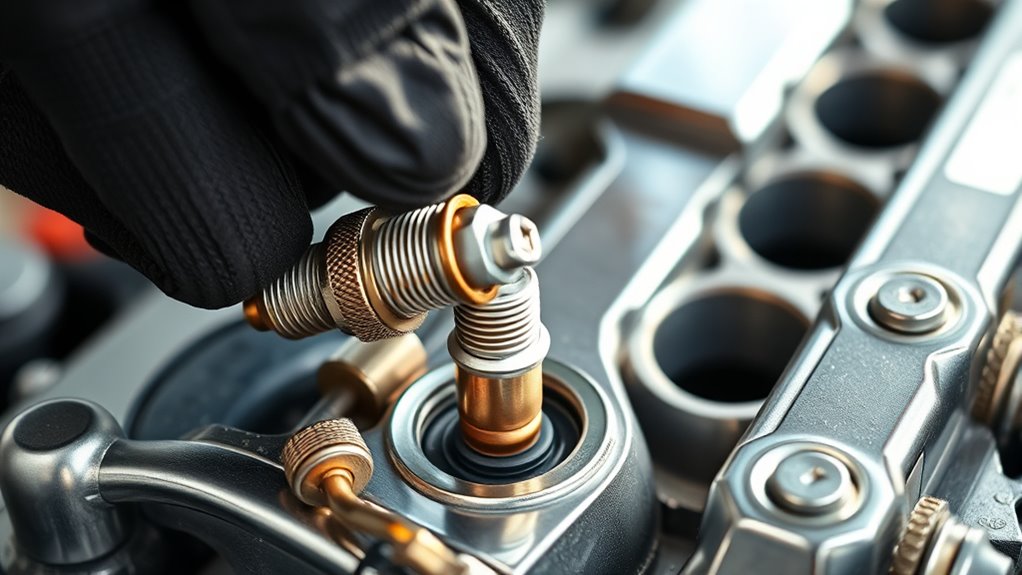
Changing spark plugs is a straightforward maintenance task that can improve your vehicle’s performance and fuel efficiency. Spark plugs play a vital role in the ignition system, igniting the air-fuel mixture in each cylinder. When they start to wear out, your engine may misfire, run rough, or become less efficient, which ultimately impacts your fuel economy. Regularly inspecting and replacing your spark plugs ensures that your ignition system functions properly, helping your engine run smoothly and efficiently.
Replacing spark plugs enhances engine performance and fuel efficiency by ensuring proper ignition and smooth operation.
You should consider changing your spark plugs if you notice symptoms like reduced fuel efficiency, engine misfires, sluggish acceleration, or difficulty starting your vehicle. Over time, spark plugs accumulate carbon deposits, become fouled, or the electrodes wear down, making them less effective at igniting the fuel mixture. This deterioration hampers the ignition system’s ability to produce a strong, consistent spark, leading to incomplete combustion. As a result, your engine has to work harder, consuming more fuel and generating more emissions. By replacing spark plugs on schedule, you keep the ignition system in top shape, which helps maintain peak fuel efficiency.
When it’s time to change your spark plugs, start by consulting your vehicle’s owner’s manual to identify the correct type and gap specifications. Before removing the old plugs, ensure the engine is cool to prevent burns or damage. Use a spark plug socket and ratchet to carefully loosen and remove each plug. Be gentle to avoid damaging the threads in the cylinder head. Once the old plugs are out, check their condition—if they’re covered in carbon, oil, or ash, it indicates underlying issues that may need addressing. Before installing new plugs, set the gap according to your manual’s specifications, as incorrect gaps can cause misfires or poor engine performance. Additionally, understanding the importance of contrast ratio can help you select a more effective projector that complements your vehicle’s lighting system for optimal visibility.
When installing new spark plugs, thread them in by hand to prevent cross-threading, then tighten them to the manufacturer’s recommended torque. Over-tightening can damage the threads or crack the porcelain insulator, while under-tightening can cause leaks or misfires. After installing the new plugs, reconnect all ignition wires or coil packs securely. After completing the replacement, start your engine and listen for smooth operation. A well-maintained ignition system with fresh spark plugs will help your engine run more efficiently, improving fuel economy and reducing emissions.
Frequently Asked Questions
Can I Change Spark Plugs Myself Without Professional Tools?
Yes, you can change spark plugs yourself without professional tools if you have basic DIY maintenance skills. Make sure you have the right spark plug socket, ratchet, and possibly a torque wrench. Follow safety precautions and consult your vehicle’s manual. However, it’s wise to get a professional inspection afterward to verify everything’s correctly installed and functioning properly, especially if you’re new to this task.
How Often Should I Inspect Spark Plugs for Wear?
Think of your spark plugs as the heartbeat of your engine, quietly working behind the scenes. To guarantee their longevity, you should inspect them every 30,000 miles or once a year, whichever comes first. Regular inspection intervals help catch wear before it causes misfires or poor performance. If you notice signs like corrosion or worn electrodes, don’t wait—proactive checks keep your engine running smoothly and extend the life of your spark plugs.
Are There Specific Spark Plugs for High-Performance Vehicles?
Yes, you can choose specific performance spark plugs for high-performance vehicles. These plugs are designed to improve power, acceleration, and fuel efficiency. You’ll find many aftermarket options that cater to your vehicle’s needs, such as iridium or platinum plugs, which offer better durability. When selecting, consider your vehicle’s specifications and driving style to guarantee you get the best performance from your high-performance spark plugs.
What Are the Signs of Faulty Spark Plugs?
Think of your engine as a symphony—faulty spark plugs are like out-of-tune instruments. When spark plugs near the end of their lifespan, you’ll notice misfire symptoms like rough idling, poor acceleration, or increased fuel consumption. These signs point to potential issues. Keep an eye on their lifespan, and if you spot these symptoms, it’s time to replace the spark plugs before performance drops completely.
Do Different Engine Types Require Different Spark Plug Maintenance?
Yes, different engine types require tailored spark plug maintenance due to engine compatibility. For example, high-performance engines might need frequent checks or specialized plugs, while older engines may have different gap settings. You should always follow your vehicle’s manufacturer guidelines for maintenance requirements. Using the correct spark plugs guarantees peak performance, fuel efficiency, and longevity. Regular inspections help you catch issues early, preventing costly repairs down the line.
Conclusion
Regularly changing your spark plugs can boost your engine’s efficiency by up to 30%, saving you money on fuel and repairs. Remember, most spark plugs need replacement every 30,000 to 50,000 miles, depending on your vehicle. Staying on top of this maintenance task keeps your engine running smoothly and prevents costly breakdowns. Don’t wait for trouble—schedule your spark plug replacement and enjoy a more reliable, fuel-efficient ride. Your car will thank you!