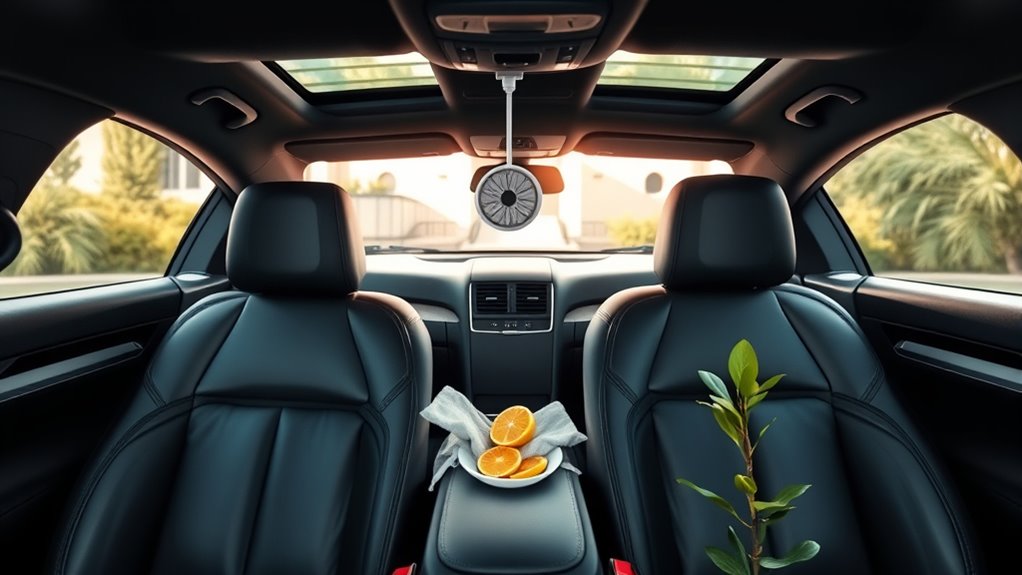

To keep your car interior smelling fresh, regularly clean and vacuum all surfaces, including hard-to-reach spots. Use baking soda or charcoal to absorb lingering odors naturally. Keep your air vents and cabin filters clean and replace them regularly for better airflow. Choose subtle, natural scents or fresheners instead of overpowering artificial fragrances. Proper maintenance and good ventilation help prevent odors from building up—stick with these tips, and you’ll discover even more ways to freshen your car effortlessly.

Get business pricing on garage and car supplies
- Business-only prices and quantity discounts
- Tax-exempt purchasing
- Multiple users, one account, clear invoices
Key Takeaways
- Regularly clean and disinfect interior surfaces, remove trash, and replace cabin filters to prevent odor buildup.
- Use natural odor absorbers like baking soda or charcoal and subtle fresheners for continuous freshness.
- Ventilate the car by opening windows and operating the ventilation system to circulate fresh air.
- Promptly clean spills, eliminate pet and smoke odors, and keep storage areas tidy to prevent persistent smells.
- Maintain clean filters, control interior moisture, and incorporate air purifiers to improve overall air quality and prevent odors.
As an affiliate, we earn on qualifying purchases.
Regularly Clean and Vacuum Your Interior

To keep your car smelling fresh, maintaining regular cleaning and vacuuming of the interior is essential. Start by organizing your dashboard to prevent clutter, which can trap dust and odors. Wipe down surfaces with a damp cloth to remove dust and grime, enhancing overall freshness. Focus on seat hygiene by vacuuming thoroughly to eliminate crumbs, dirt, and hair that can cause odors over time. Use attachments to reach tight spots around the dashboard and between seats, ensuring no area is overlooked. Regular cleaning prevents build-up that can lead to musty smells and keeps your interior looking tidy. Additionally, understanding the importance of proper airflow management can help improve interior air quality and freshness. Proper ventilation can also reduce odor-causing bacteria, contributing to a cleaner and more inviting environment. Incorporating effective filtration techniques, such as using high-quality air filters, can further enhance air purity inside your vehicle. Ensuring good air circulation prevents stale air from lingering, maintaining a fresh atmosphere. Improving ventilation systems can also help remove lingering odors more efficiently. By keeping your dashboard organized and your seats clean, you create a fresher environment that smells inviting every time you get in.
As an affiliate, we earn on qualifying purchases.
Use Baking Soda to Absorb Odors

Baking soda is a simple yet effective way to neutralize unpleasant odors in your car. You can sprinkle it directly onto carpets and fabric seats as a natural carpet deodorizer, absorbing lingering smells. Leave it for a few hours or overnight for best results, then vacuum thoroughly. For added freshness, place an open box of baking soda or odor neutralizers in your glove compartment or trunk to continuously absorb odors. To visualize, consider this table:
| Surface | Method | Result |
|---|---|---|
| Carpet | Sprinkle baking soda | Fresh, odor-free carpets |
| Seats | Use as a light dusting | Neutralized smells |
| Trunk | Place open container | Ongoing odor absorption |
| Mats | Shake and vacuum after | Cleaner smell |
| Air Vents | Keep baking soda nearby | Fresh interior air |
This simple trick keeps your car smelling fresh and inviting. Additionally, maintaining proper air purifier maintenance in your vehicle can further improve air quality and eliminate residual odors.
As an affiliate, we earn on qualifying purchases.
Keep Air Vents and Cabin Filters Fresh

Since air vents and cabin filters circulate air throughout your car, keeping them clean is essential for maintaining a fresh interior. Regular air vent cleaning removes dust, mold, and debris that can cause odors or reduce airflow. Use a soft brush or compressed air to clear out any buildup inside the vents. Cabin filter replacement is equally important; a dirty filter traps odors, allergens, and pollutants, making your car smell musty or stale. Replace the filter according to your vehicle’s schedule or when you notice reduced airflow. This simple maintenance ensures fresh, clean air circulates throughout your car. Additionally, understanding ventilation considerations can help optimize airflow and enhance interior comfort. Incorporating high-quality vacuum features such as HEPA filters and multi-surface capabilities can further improve air quality inside your vehicle. Regular maintenance of these components is a key aspect of interior air quality management. Properly maintaining air filtration systems also helps prevent the buildup of odors and ensures fresh air circulation. Being aware of air quality standards can help you choose the best products and practices to keep your car smelling fresh.
As an affiliate, we earn on qualifying purchases.
Utilize Scented Products Wisely

Using scented products can effectively keep your car smelling fresh, but it’s important to choose and apply them wisely. Scented air fresheners come in various forms, from hanging strips to vent clips, so pick what suits your preference. Avoid overusing them, as too many can become overwhelming or cause headaches. Instead, opt for subtle scents that linger naturally. Essential oils are a great alternative; you can add a few drops to a cotton ball or diffuser to release a fresh aroma without overpowering your space. Always guarantee that scented products are placed where they won’t interfere with your driving or distract you. Proper use of these products helps maintain a pleasant atmosphere without masking underlying odors or causing scent fatigue. Incorporating Natural Pool techniques can also help reduce the need for artificial air fresheners by maintaining a cleaner environment. Regularly cleaning your car’s interior surfaces can also help eliminate odor-causing particles and extend the freshness of your car’s atmosphere. Additionally, understanding the importance of connectivity in home fitness can inspire you to adopt long-term wellness habits that keep your environment fresh and healthy. Maintaining good ventilation and airflow air circulation further enhances the effectiveness of your efforts to keep the interior smelling fresh. Including proper ventilation practices can help prevent the buildup of stale air and odors inside your vehicle.
Prevent Odor Buildup With Proper Maintenance

Regularly inspecting and cleaning your car’s interior is essential to prevent odor buildup before it starts. Here’s how you can maintain freshness:
Keep your car smelling fresh by regularly cleaning and inspecting the interior.
- Clean carpets and upholstery regularly to remove dirt and sweat that cause odors. Utilizing a vacuum with a HEPA filter can enhance the removal of microscopic particles and allergens, contributing to a fresher environment. Incorporating effective cleaning methods can further improve the results and help maintain a consistently pleasant smell. Additionally, choosing cleaning products that are eco-friendly can help minimize chemical residues that may contribute to odors. Using natural cleaning solutions like vinegar or baking soda can also be highly effective and environmentally safe options.
- Use odor neutralizers on surfaces and fabric to eliminate lingering smells. Consider products that are specially formulated to target pet odors or smoke for more effective results.
- Replace or refresh car air fresheners to keep a consistent pleasant scent. Choosing natural options like essential oils can also add a fresh scent without synthetic chemicals.
- Keep vents and air filters clean for excellent airflow and to prevent musty odors. Regularly replacing or cleaning filters ensures optimal performance and air quality.
- Incorporating exfoliation of surfaces can help remove dead skin cells and other debris that contribute to unpleasant smells exfoliation, which is an effective step often overlooked in interior maintenance. Proper maintenance of air quality can significantly reduce the buildup of odors over time.
Frequently Asked Questions
How Often Should I Replace My Car’s Cabin Air Filter?
You should replace your car’s cabin air filter every 15,000 to 30,000 miles, or once a year, depending on your driving conditions. Regular air filter maintenance guarantees ideal cabin air quality and keeps pollutants out. If you notice reduced airflow or bad odors, it’s a good idea to check and replace the filter sooner. Staying on top of this task helps maintain a fresh, healthy environment inside your vehicle.
Can Essential Oils Damage My Car’s Interior Surfaces?
Essential oils can be a double-edged sword if you’re not careful. They might seem like a fragrant breeze, but poor essential oil safety can harm your car’s interior surfaces, especially if they’re delicate or incompatible with oils. Always check interior material compatibility before use. Use a diffuser or dilute oils properly to avoid damage, ensuring your car stays fresh without turning into a battlefield of scents and surfaces.
Are There Eco-Friendly Methods to Keep My Car Smelling Fresh?
Yes, you can keep your car smelling fresh using eco-friendly fragrances and natural deodorizing techniques. Opt for essential oil diffusers or make your own air fresheners with natural ingredients like baking soda and dried herbs. Regularly clean and vacuum your car to remove odors. Ventilate your vehicle often, and avoid synthetic air fresheners that may contain harmful chemicals. These eco-friendly methods guarantee a fresh scent without harming the environment or your car’s interior.
How Do I Remove Stubborn Odors From Fabric Seats?
To remove stubborn odors from fabric seats, start with fabric deodorizing sprays designed specifically for cars. Let the spray sit for a few minutes, then scrub gently with a soft brush. For stronger odors, use odor neutralizers that absorb and eliminate smells at the source. Repeat as needed, ensuring the seats dry completely afterward. Regular cleaning combined with these products keeps your fabric seats fresh and odor-free.
What Are the Best Natural Alternatives to Chemical Air Fresheners?
Did you know that natural air fresheners can be just as effective as chemicals? You can use herbal sprays made from essential oils like lavender or eucalyptus for a revitalizing scent. Baking soda deodorizing is also a great natural alternative—just sprinkle it on your carpets and seats, let it sit, then vacuum. These methods keep your car smelling fresh without exposing you to synthetic fragrances or harmful chemicals.
Conclusion
Keeping your car smelling fresh isn’t just about quick fixes; regular cleaning and proper maintenance truly make a difference. Some believe that baking soda absorbs odors forever, but it loses effectiveness over time—so replace it regularly. By staying consistent with these tips, you’ll create a more inviting space every time you hit the road. Think of it as nurturing your car’s health—small habits that keep your interior smelling great and your drives enjoyable.
Fall Picks
fall essentials
As an affiliate, we earn on qualifying purchases.