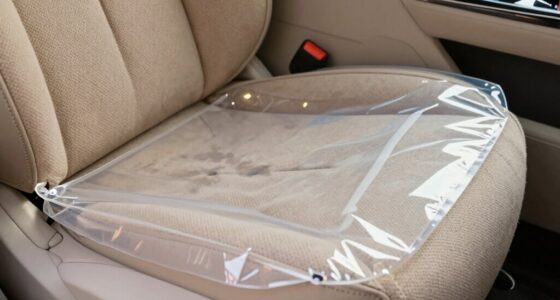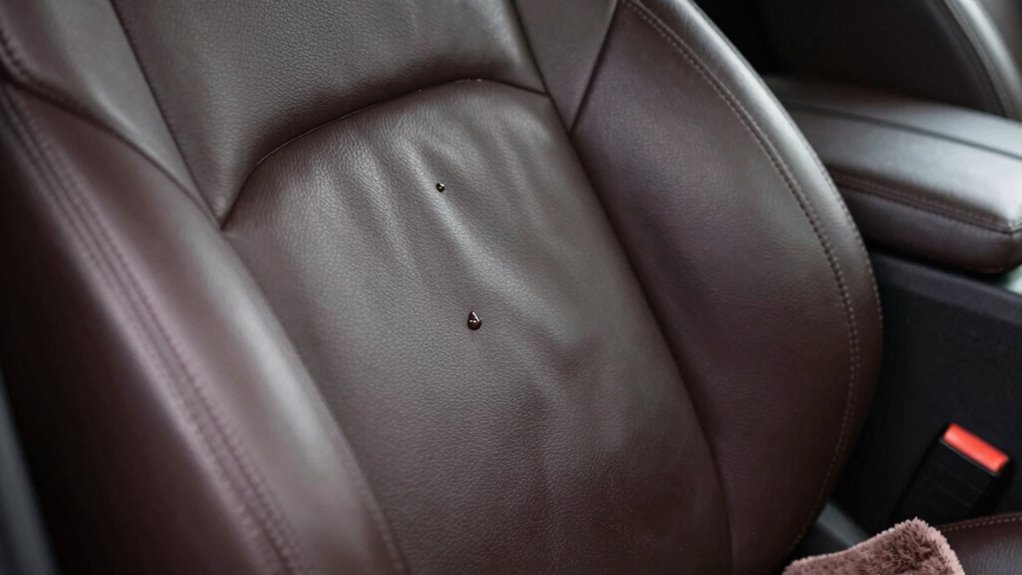

To keep your leather seats from becoming slick and shiny, clean them regularly with a gentle leather cleaner to remove oils, dirt, and sweat. Follow up with a leather conditioner applied in a thin, even layer to restore suppleness without adding grease. Use a protector or sealant for extra defense, and avoid sitting on dirty or greasy clothing. Consistent maintenance helps preserve the natural matte finish and keeps your seats looking fresh—continue on to learn more tips.

Get business pricing on garage and car supplies
- Business-only prices and quantity discounts
- Tax-exempt purchasing
- Multiple users, one account, clear invoices
Key Takeaways
- Regularly clean leather seats with a gentle, leather-specific cleaner to remove oils and dirt buildup.
- Apply a light layer of leather conditioner to maintain suppleness without creating shine.
- Use a leather protector or sealant after conditioning for added defense against oil transfer.
- Avoid sitting on seats with dirty or greasy clothing to prevent grease transfer and slickness.
- Maintain a consistent cleaning and conditioning schedule to prevent residue accumulation and shine.

Have you ever noticed your leather seats becoming slick and shiny over time? It’s a common issue, and it usually happens because of a buildup of oils, dirt, and sweat that accumulate with regular use. When this happens, the leather starts to lose its natural matte finish and takes on a glossy, greasy appearance. To prevent this, you need to pay attention to proper leather cleaning and seat conditioning routines. Regularly cleaning your seats with the right products removes dirt and oils, preventing the slickness from developing. Use a gentle leather cleaner designed for automotive seats, and make sure you wipe away all residue. Avoid harsh chemicals that can strip away the natural oils or damage the leather surface. Once the seats are clean, you should follow up with seat conditioning. Conditioning helps restore and maintain the leather’s suppleness, while also creating a protective barrier that resists dirt and oils from penetrating the surface. When applying a conditioner, use a soft cloth and work it into the leather using gentle circular motions. This not only nourishes the leather but also helps keep it from becoming dry, cracked, or overly shiny. Don’t overdo it—applying too much conditioner can lead to a greasy look, which contributes to the slick and shiny appearance you want to avoid. Instead, apply a thin, even layer, and let it absorb fully before using the seats again. Consistency is key; making leather cleaning and seat conditioning part of your regular maintenance schedule ensures your seats stay looking fresh and matte. You might also consider using a leather protector or sealant after conditioning, which can add an extra layer of defense against oils and dirt. Be sure to test any new product on a small, inconspicuous area first to prevent unwanted discoloration or damage. Additionally, avoid sitting on your leather seats with greasy or dirty clothing, as this transfers oils and accelerates the slick buildup. If you notice your seats starting to shine or feel greasy, it’s a sign you should revisit your cleaning and conditioning routine. Proper backyard transformation techniques, such as maintaining a clean environment, can also help in reducing the transfer of dirt and oils onto your seats. Regular maintenance with the right cleaning products is essential for keeping your leather looking its best. Using appropriate products designed for leather can further prolong the lifespan of your seats and help maintain their natural finish. Over time, consistent care will help you maintain the natural beauty of your leather seats, preventing them from turning slick and shiny. Remember, a clean, conditioned seat not only looks better but also lasts longer, providing a comfortable, luxurious feel every time you sit down. With the right approach, your leather seats can stay soft, matte, and inviting, resisting the shiny, greasy appearance that comes from neglect.
As an affiliate, we earn on qualifying purchases.
Frequently Asked Questions
Can Weather Conditions Affect Leather Seat Shine?
Weather conditions definitely affect your leather seat shine. Excessive heat, humidity, or sunlight can cause leather to become slick and shiny. To prevent this, you should regularly use leather conditioning to keep the material supple, and apply weatherproofing solutions to protect against moisture and UV rays. These steps help maintain the leather’s appearance and prevent it from becoming too slick or damaged due to changing weather conditions.
Are There Natural Remedies to Prevent Leather From Becoming Slick?
Yes, natural remedies can help prevent leather from becoming slick. You should regularly use leather conditioning products that contain natural oils like coconut or almond oil, which nourish the leather without making it greasy. Apply these oils sparingly and evenly to maintain a matte finish. Consistent leather conditioning with natural oils keeps the leather supple and prevents it from becoming slick or shiny over time.
How Often Should I Clean My Leather Seats?
You should clean your leather seats every 3-6 months, unless you enjoy the sensation of sliding around like a slip-and-slide. Regular leather cleaning removes dirt and oils that cause slickness, while seat conditioning keeps the leather supple and shiny without the unwanted gloss. Skipping these steps might turn your car’s interior into a skating rink, so prioritize maintenance to keep your seats inviting and safe.
Do All Leather Types Require the Same Maintenance?
Not all leather types require the same maintenance. For example, delicate or aniline leather benefits from gentle cleaning and regular seat conditioning to prevent drying and cracking. If you’re considering leather dyeing or color restoration, use products suitable for your leather type. Always test any treatment on a small area first. Proper maintenance, including cleaning and conditioning, helps keep your leather seats looking good and feeling soft over time.
What Are the Signs of Leather Deterioration?
Think of your leather seat as a living skin. Signs of deterioration include cracks, dryness, and fading, like a sun-dried leaf. You notice dullness or stiff patches, indicating it needs leather cleaning and conditioning. Regularly nourishing your leather with proper products helps restore its energy. If you catch these signs early, you can save your seats from further damage, keeping them supple and looking fresh.
leather seat conditioner for cars
As an affiliate, we earn on qualifying purchases.
As an affiliate, we earn on qualifying purchases.
Conclusion
By regularly cleaning and conditioning your leather seats, you prevent that slick, shiny look from taking over, much like a painter keeps their canvas fresh and vibrant. Think of your seats as a cherished piece of art—nurture them with care, and they’ll stay soft and inviting for years to come. With consistent upkeep, your leather will remain as smooth and comfortable as a gentle breeze on a warm day, making every drive feel just a little more special.
leather protectant sealant for automotive seats
As an affiliate, we earn on qualifying purchases.
As an affiliate, we earn on qualifying purchases.
gentle leather cleaner for automotive seats
As an affiliate, we earn on qualifying purchases.
As an affiliate, we earn on qualifying purchases.
Fall Picks
fall essentials
As an affiliate, we earn on qualifying purchases.