
Yes, you can often pop out small, shallow dents at home with the right tools and techniques. Using suction cup dent pullers or glue-based kits, you can carefully apply steady pressure to reshape your car’s surface. However, it’s important to know your limits—larger or more complex dents might require professional help to prevent damage. Want to learn the best methods to achieve flawless results? Keep exploring these DIY dent removal tricks.
Key Takeaways
- DIY dent removal can be effective for small, shallow dents with intact paint using suction or glue-based tools.
- Proper preparation and patience are essential to avoid damaging the paint or worsening the dent.
- Suitable for minor dents; larger or complex damages typically require professional repair.
- Using the right tools and techniques increases success chances but has limitations depending on dent size and location.
- When in doubt, consulting a professional prevents further damage and ensures proper repair.
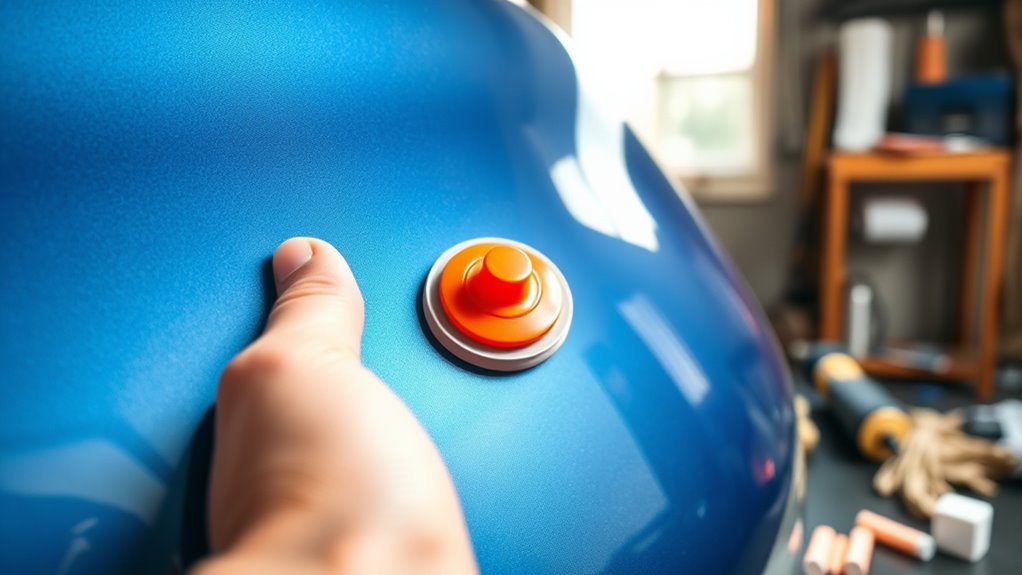
If you’ve ever found a dent on your car and want to fix it yourself, DIY dent removal can be a cost-effective and satisfying solution. Instead of spending hundreds at a shop, you might try paintless repair techniques that utilize specialized dent removal tools to restore your vehicle’s smooth surface. This method is especially appealing for small to medium-sized dents where the paint isn’t damaged. With patience and the right tools, you can often pop out those dings without needing to repaint or take your car to a professional.
To start, you’ll need to gather the essential dent removal tools. These typically include a dent puller kit, glue tabs, a glue gun, a plastic tap, and sometimes a specialized dent lifter. Many kits are affordable and come with detailed instructions, making them accessible even for beginners. The key is to select the right tools for your specific dent. For example, a dent puller with a suction cup works well for shallow dents, while glue-based pullers are better for more stubborn or deeper dings. Before beginning, clean the area thoroughly to remove dirt and debris, ensuring the tools can grip properly.
Gather the right tools like puller kits, glue tabs, and a glue gun, then clean the area thoroughly.
Once you’re ready, the process involves attaching the puller to the dent. For suction-based tools, simply press the cup firmly against the dent until it creates a seal, then gradually pull to pop out the dent. With glue tabs, you apply a small amount of hot glue to the tab, press it onto the center of the dent, and wait for it to set. Then, connect the tab to the dent lifter or puller and gently pull to raise the panel. Patience is critical during this step—apply steady, gentle pressure rather than forcing it, which could damage the paint or create new dents. Understanding the limitations of DIY techniques is important to avoid potential damage and to know when professional help might be necessary.
Paintless repair is a technique that focuses on massaging the metal back into place without disturbing the factory paint finish. When done properly, it leaves no paintwork needed, making repairs seamless and cost-effective. However, for best results, you need to be cautious about the size and location of the dent. Small, shallow dents are easier to fix, but larger or complex dents may require professional intervention. Remember, the success of DIY dent removal depends on your skill and the tools you use. If you notice the paint cracking or the dent not moving, it’s wise to stop and consider professional help to avoid further damage.
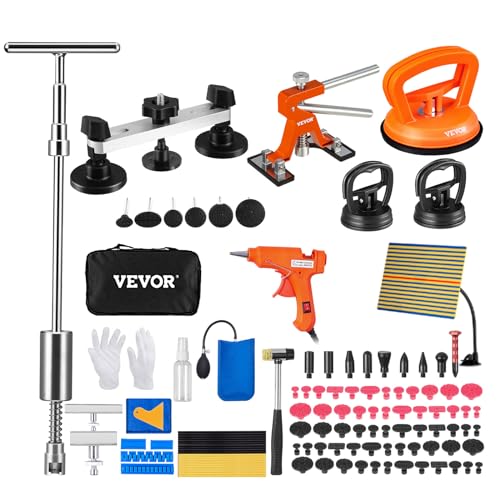
VEVOR 117 PCS Car Dent Puller Kit, Paintless Dent Repair Tool with Lifter, Slide Hammer & Suction Cup for Auto Body Dents, Hail Damage, Door Dings
How to Use It: the page provides video tutorials and electronic instruction manuals; 1. Clean the dent surface…
As an affiliate, we earn on qualifying purchases.
As an affiliate, we earn on qualifying purchases.
Frequently Asked Questions
Are DIY Dent Removal Methods Safe for All Car Paint Types?
DIY dent removal methods aren’t safe for all car paint types. You need to take into account paint compatibility and surface sensitivity before trying any tricks. Some paints can crack, peel, or get damaged if exposed to improper techniques or extreme heat. If you’re unsure about your car’s paint, it’s best to consult a professional. Otherwise, using the wrong method could cause more harm than good, making repairs more costly.
How Much Time Should I Expect to Spend on Each Dent Repair?
You should plan to spend about 30 minutes to an hour on each dent repair, depending on its size and severity. To stay efficient, practice good time management and stick to a repair plan. Larger or more complex dents may take longer, so allocate extra time accordingly. Preparing your tools and evaluating the damage beforehand helps streamline the process, ensuring you don’t waste unnecessary time and get better results.
Can DIY Techniques Fix Large or Deep Dents Effectively?
Certainly, DIY techniques can sometimes tackle large or deep dents, but they often risk damaging paint matching and compromising structural integrity. If you’re dealing with significant dents, it’s smarter to seek specialized solutions rather than risking more harm. Proper tools, patience, and precision safeguard your car’s paint and structure. Remember, sometimes professional help is the best bet to ensure safety, quality, and a flawless finish.
What Are the Risks of Damaging My Car’s Paint During DIY Repair?
You risk damaging your car’s paint during DIY repairs, especially if you’re not careful. You might cause a paint chip, which leads to rust, or create a color mismatch that makes the dent more noticeable. Using improper tools or applying too much force can scratch or peel the paint. To avoid these issues, consider consulting a professional for dents, especially if your car’s paint is delicate or already chipped.
Is Professional Help Necessary for Stubborn or Complex Dents?
For stubborn or complex dents, professional help is usually necessary. You should seek a professional assessment because experts have specialized tools and techniques to handle challenging dents safely. Attempting to fix difficult dents yourself can risk further damage, especially if you’re unfamiliar with the right procedures. A professional guarantees your car’s paint and structure stay intact, providing a more reliable and aesthetically pleasing result that DIY methods might not achieve.

Autodecora Dent Puller,3-Pack Car Dent Puller Kit – Suction Cup Dent Remover Tool,Handle Lifter for Car Body,Glass,Screens,and Objects,Dent Repair Kit for Easy Removal
Effective Dent Removal: This car dent removal kits is an ideal multi-purpose tool,It comes with one large car…
As an affiliate, we earn on qualifying purchases.
As an affiliate, we earn on qualifying purchases.
Conclusion
So, next time a rogue shopping cart dares to strike your car, remember these DIY tricks. With a little patience, you might just turn into a dent-fighting superhero, saving your ride from the depths of despair—without calling in an expensive pro! Sure, it might seem like magic, but with a bit of elbow grease, you could have your car looking pristine faster than you can say “dent be gone.” Who knew at-home fixes could be this powerful?

Tabweld Black Plague PDR Glue Sticks – Paintless Dent Repair – Grey, 10 Pack
As an affiliate, we earn on qualifying purchases.
As an affiliate, we earn on qualifying purchases.

BESTGLOAL 135pcs Dent Puller Kit, Paintless Dent Removal Kit for Dent Repair, Car Dent Repair Kit with T-Bar, Bridge Puller, Golden Lifter, Car Dent Remover for Car Refrigerator Door Ding Repair
135PCS PAINTLESS DENT REPAIR KIT – Ditch the traditional, expensive garage repairs and opt for our car dent…
As an affiliate, we earn on qualifying purchases.
As an affiliate, we earn on qualifying purchases.