When choosing a car cover, consider whether you’ll store it indoors or outdoors. Indoor covers should be lightweight, breathable, and gentle to prevent dust buildup and scratches, often made of cotton or microfiber. Outdoor covers need heavy-duty, waterproof, UV-resistant materials like vinyl or polyester to withstand weather, wind, and debris. Selecting the right material guarantees your vehicle stays protected and preserved. Keep exploring to find out more tips for choosing the perfect cover for your needs.
Key Takeaways
- Select breathable cotton or microfiber covers for indoor storage to prevent dust buildup and moisture retention.
- Use heavy-duty, waterproof, UV-resistant covers made of polyester or vinyl for outdoor protection against weather elements.
- Match indoor covers with lightweight, gentle fabrics that allow moisture to escape, reducing mold and corrosion risk.
- Opt for reinforced seams and elastic hems in outdoor covers to ensure a snug fit and durability against wind and debris.
- Consider storage environment—indoors favors lighter, breathable materials, while outdoors requires rugged, weatherproof fabrics.
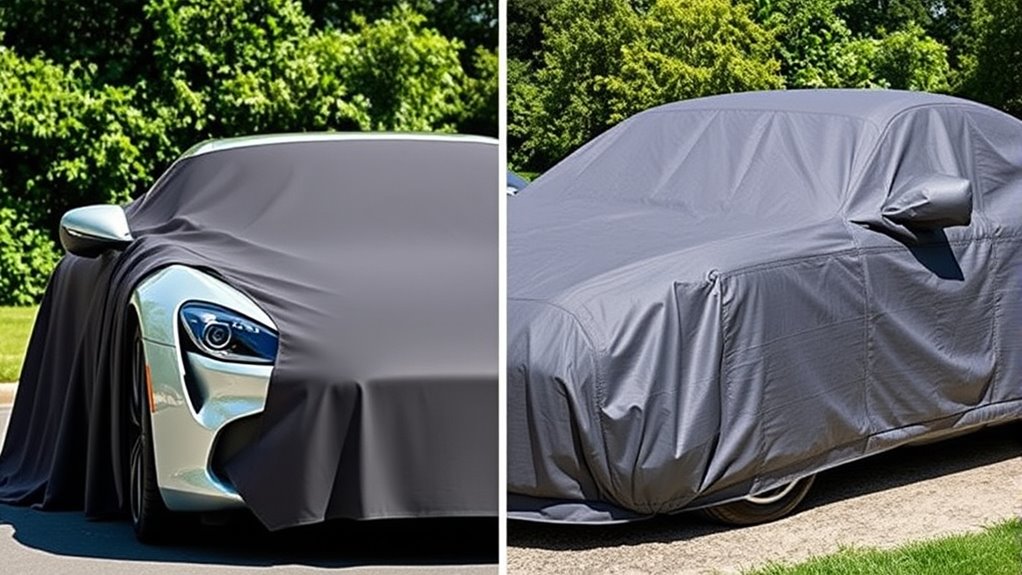
Protecting your vehicle from the elements is essential to maintaining its appearance and value, and choosing the right car cover is a key step in that process. Whether you plan to store your car indoors or outdoors, selecting the appropriate car cover materials can make all the difference. Indoor storage solutions often require lighter, more breathable fabrics that prevent dust buildup and allow moisture to escape, protecting your vehicle from mold and corrosion. Materials like cotton or microfiber are excellent choices for indoor covers because they’re gentle on paint, easy to fold, and don’t trap heat or humidity. If you’re storing your car in a garage or covered area, a lightweight cover that resists dust and scratches is usually sufficient, and you won’t need heavy-duty waterproofing.
On the other hand, outdoor storage demands more robust car cover materials to shield your vehicle from harsh weather conditions. Heavy-duty polyester or vinyl-coated fabrics are popular options because they provide waterproofing, UV resistance, and protection against snow, rain, and debris. These covers are thicker and designed to withstand wind, hail, and sun exposure, ensuring your car stays in good shape despite the elements. When choosing an outdoor cover, look for features like reinforced seams and elastic hems to ensure a snug fit that won’t flap or blow away in strong winds. Additionally, understanding weather-resistant materials helps you select the best protection for outdoor environments.
Understanding the difference between indoor and outdoor storage solutions helps you select the right material for your needs. Indoor covers tend to prioritize breathability and gentle protection, so they’re usually lighter and more flexible. Outdoor covers, however, need to be tough and weatherproof, so they’re often heavier and more resistant to environmental stressors. Keep in mind that even if your vehicle is stored outside, investing in a good-quality outdoor cover can extend its lifespan and keep it looking new longer.
Ultimately, your choice of car cover materials should align with your storage situation. If your car spends most of its time indoors, opt for a lightweight, breathable cover designed for indoor use. If it’s parked outside, prioritize waterproof, UV-resistant options that can handle more extreme conditions. By matching your car cover to your storage environment, you’ll ensure your vehicle remains protected, preserved, and ready to hit the road when you need it.
Frequently Asked Questions
How Often Should I Replace My Car Cover?
You should replace your car cover when its cover material durability diminishes or signs of wear, like tears or fading, appear. Regular cover maintenance, such as cleaning and inspecting, helps extend its life. Generally, check your cover every few months and replace it every 2-3 years if it shows significant damage. Proper upkeep ensures your cover remains effective, protecting your vehicle from dirt, UV rays, and weather elements.
Can a Car Cover Improve Paint Longevity?
A good car cover can definitely improve your paint’s longevity by providing paint protection against environmental damage. It shields your vehicle from UV rays, which cause paint fading and deterioration over time. Look for a cover with UV shielding to guarantee your paint stays vibrant longer. Regularly using a cover not only protects your car but also preserves its value, preventing costly repairs due to sun damage or debris.
Are There Eco-Friendly Car Cover Options Available?
Yes, eco-friendly car cover options are available that can surprise you. You might discover covers made from eco-friendly fabrics or sustainable materials, designed to protect your car while minimizing environmental impact. These innovative options blend durability with sustainability, giving you peace of mind. So, next time you look for a car cover, explore these green choices—your vehicle and the planet will thank you.
How Do I Store My Car Cover When Not in Use?
To store your car cover when not in use, fold it neatly and keep it in a cool, dry place. Use storage bags or containers to protect it from dust and moisture. Regular cover maintenance, like cleaning with mild soap and air drying, helps prolong its lifespan. Follow these storage tips to prevent mold, wrinkles, or damage, ensuring your cover stays in good condition for future use.
Will a Car Cover Affect My Vehicle’s Warranty?
Worried about your warranty? Generally, a well-fitting, compatible car cover won’t affect your vehicle’s warranty, but beware of cover compatibility. If a cover causes scratches or damage, warranty implications could arise. Always choose a cover designed for your car’s make and model, and follow manufacturer guidelines. Keep these precautions in mind, and you can protect your vehicle without risking warranty issues. Don’t let doubt hold you back—cover your car confidently!
Conclusion
So, whether you’re protecting your car indoors or outdoors, choosing the right cover means selecting the right material, fit, and features. Keep your car clean, keep it safe, and keep it covered. By considering your environment and your needs, you make the right choice, protect your investment, and enjoy peace of mind. Remember, the best cover is the one that fits perfectly, feels comfortable, and keeps your car looking its best—day after day, year after year.