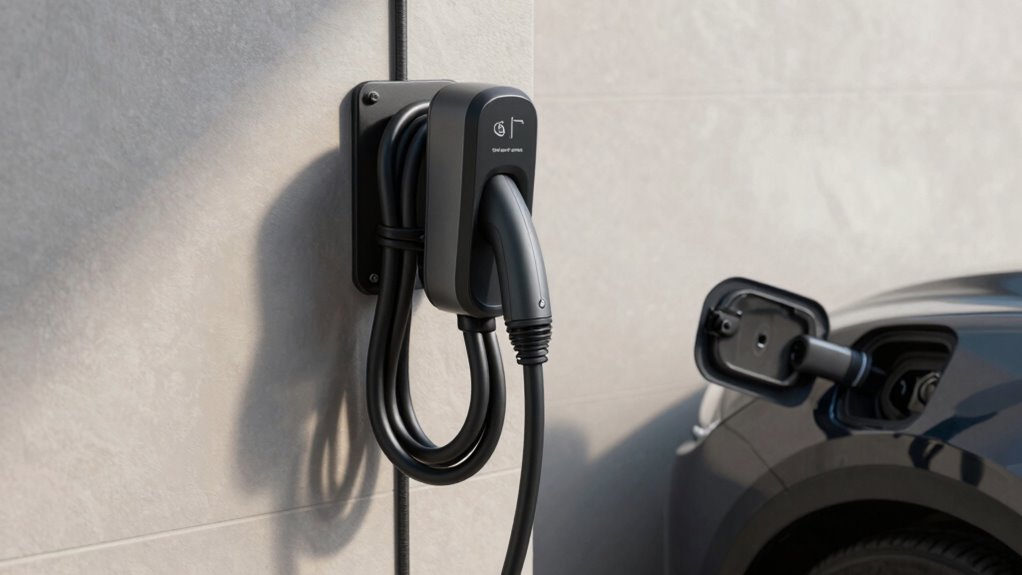

Choosing the right cable length and routing your cables properly is key to keeping your home charging setup safe, organized, and damage-free. A proper length prevents strain and reduces tripping hazards, while well-planned routing protects cables from wear and environmental damage. Organized cables also minimize risks around pets and children, making your space safer. If you want to learn more about creating an efficient and durable charging station, keep exploring these essentials.

Get business pricing on garage and car supplies
- Business-only prices and quantity discounts
- Tax-exempt purchasing
- Multiple users, one account, clear invoices
Key Takeaways
- Proper cable length prevents strain, damage, and tripping hazards during daily charging routines.
- Clear routing minimizes risks from sharp edges, heat, and accidental disconnections.
- Organized cables protect against environmental damage and extend equipment lifespan.
- Thoughtful placement of chargers enhances safety and ensures reliable power transfer.
- Effective cable management reduces wear, repairs, and maintains a neat, safe charging environment.
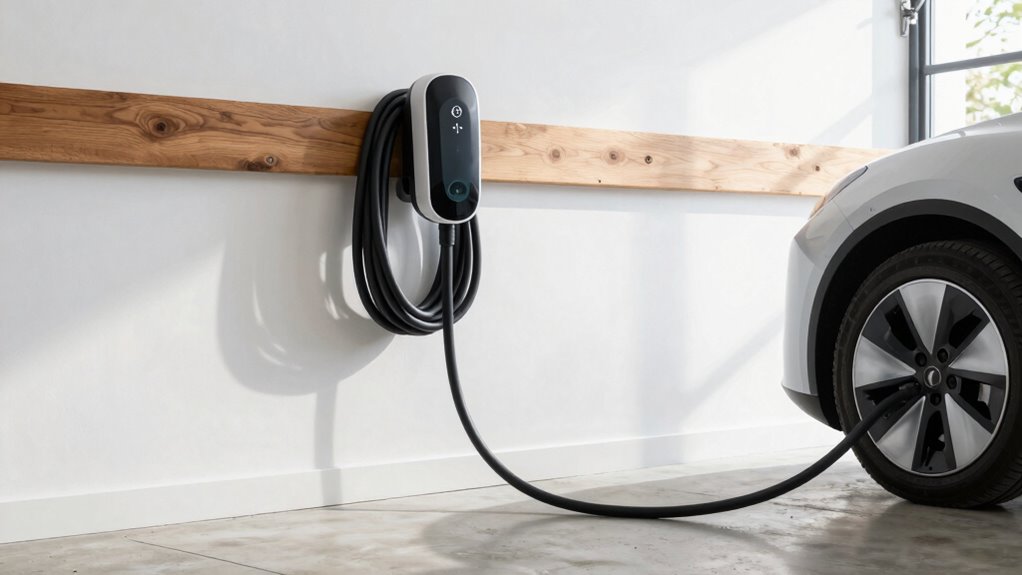
When setting up a home charging station for your electric vehicle, choosing the right cable length and routing path is vital for safety and convenience. The length of the charging cable directly impacts how easily you can connect your car to the power source without straining or risking damage. If the cable is too short, you might find yourself stretching or forcing the connection, which can lead to wear and tear over time. Conversely, a cable that’s excessively long can create clutter, pose tripping hazards, or lead to tangles that complicate daily charging routines. It’s worth measuring the typical distance from your parking spot to the power outlet to select a cable length that offers some slack but doesn’t turn your space into a tangled mess. Many homeowners now opt for wireless charging options or portable chargers for added flexibility, but even these require thoughtful placement to optimize efficiency and safety.
Routing also plays an essential role in maintaining a tidy, safe, and efficient charging setup. You want to plan a clear, direct path for the cable that avoids sharp edges, heat sources, or areas where it could be accidentally pulled or damaged. Proper routing minimizes the risk of tripping or disconnection, especially if you have children or pets around. If you’re using portable chargers or wireless charging pads, positioning becomes even more critical. Portable chargers, for example, should be stored in accessible locations when not in use, yet still out of the way to prevent accidents. Wireless charging pads can be installed on your garage floor or wall, but their placement needs to align with your vehicle’s charging port and your daily parking habits. This ensures seamless power transfer without excess cable clutter or the need for awkward maneuvering. Additionally, cable management plays a key role in prolonging the lifespan of your charging setup and maintaining a neat environment. Proper cable routing also reduces the risk of damage from environmental factors such as moisture or debris, which is a key consideration in weatherproof tool storage. Ensuring the correct cable length and routing can also help prevent unnecessary strain on your electrical connections, further enhancing safety and reliability. Proper planning and organization can prevent damage to cables and extend the overall lifespan of your equipment.
Additionally, cable routing influences how you maintain your equipment over time. Well-planned routes prevent unnecessary bending or twisting, which can damage both traditional cables and wireless chargers. Organizing cables with clips, conduits, or cable ties keeps things neat and protects your investment. Whether you’re using a standard cable, a portable charger, or exploring wireless charging, the right cable length and routing setup contribute to a safer, more reliable charging experience. They reduce wear and tear, prevent accidents, and make your daily routine smoother. Taking the time to measure, plan, and properly route your charging cables ensures your home charging station remains efficient, safe, and easy to use for years to come.
As an affiliate, we earn on qualifying purchases.
Frequently Asked Questions
How Does Cable Length Affect Charging Speed?
Cable length directly impacts your charging speed because longer cables can cause voltage drops, reducing efficiency. When you choose a cable, consider its flexibility and connector compatibility to guarantee smooth, safe charging. A shorter, well-made cable minimizes resistance and maintains peak power flow, helping you charge your device faster. Always select a cable suited to your setup, balancing length with quality to get the best charging performance.
What Are the Safety Considerations for Cable Routing?
You should prioritize safety protocols and guarantee cable durability when routing your home charger cable. Imagine a snake winding safely without risk of biting; that’s how your cable should be managed—secure and tidy. Avoid sharp edges, high-traffic areas, or pinch points that could damage the cable. Proper routing prevents hazards, maintains cable integrity, and ensures safe, reliable charging every time. Take care to keep everything neat and protected.
Can Improper Routing Cause Electrical Issues?
Yes, improper routing can cause electrical issues. Poor cable management increases the risk of electrical hazards, such as short circuits or overheating, by exposing cables to damage or stress. When cables are tangled, bent sharply, or placed near heat sources, it can lead to insulation wear or electrical faults. Ensuring proper cable length and routing helps maintain safe, efficient charging, reducing the risk of electrical hazards and keeping your setup reliable.
How Often Should I Inspect My Charging Cable?
You should inspect your charging cable regularly—at least once a month—to guarantee its durability and safety. Keep an eye out for visible wear, frays, or damage that could compromise performance. Frequent inspections help catch small issues early, preventing potential hazards. By maintaining a vigilant eye on your cable’s condition, you prolong its lifespan and ensure safe, reliable charging every time. Consistent checks keep your connection confident and secure.
Are There Specific Cables Recommended for Long Distances?
Yes, for long distances, you should choose cables known for high cable durability and reliable connector compatibility. Look for heavy-duty cables with reinforced insulation and sturdy connectors designed to withstand frequent use and extended runs. These cables minimize voltage drops and reduce the risk of damage, ensuring safe and efficient charging over longer distances. Always verify the cable’s specifications match your charger and vehicle requirements for maximum performance.
cable management clips for EV charger
As an affiliate, we earn on qualifying purchases.
As an affiliate, we earn on qualifying purchases.
Conclusion
So, next time you’re fussing over the perfect charger placement, just remember—your cable’s length and routing are the unsung heroes of hassle-free home charging. Ironically, the tiniest oversight could leave you stranded, searching for a longer cord or a better route. Who knew such a small detail could cause such a big headache? Keep it simple, plan ahead, and avoid the irony of a perfectly parked car with a painfully short cable.
weatherproof cable organizer for garage
As an affiliate, we earn on qualifying purchases.
As an affiliate, we earn on qualifying purchases.
As an affiliate, we earn on qualifying purchases.
Columbus Day / Indigenous Peoples' Day Picks
long weekend sales
As an affiliate, we earn on qualifying purchases.