If you prioritize maximum storage for bulky gear and long trips, a roof cargo box might suit you best, despite some increased wind resistance and fuel use. However, if you want easier access, better aerodynamics, and smoother handling, a hitch carrier could be ideal, especially for lighter loads and frequent trips. Consider your vehicle setup and travel style, and you’ll find the best choice. Keep exploring to discover more tips for optimizing your road trips.
Open a free Amazon Business account
Business pricing, bulk buying and tax-exempt orders.
As an affiliate, we earn on qualifying purchases.
Key Takeaways
- Roof cargo boxes offer larger storage capacity for bulky items, ideal for long trips requiring maximum space.
- Hitch carriers provide better aerodynamics, resulting in improved fuel economy and less wind noise during travel.
- Hitch-mounted carriers are easier to load and unload, especially for heavier or awkward items, enhancing convenience.
- Roof boxes can increase wind resistance and reduce vehicle performance, while hitch carriers generally have less impact.
- Choose roof boxes for maximum storage and bulky gear; opt for hitch carriers for easier handling and better fuel efficiency on shorter trips.
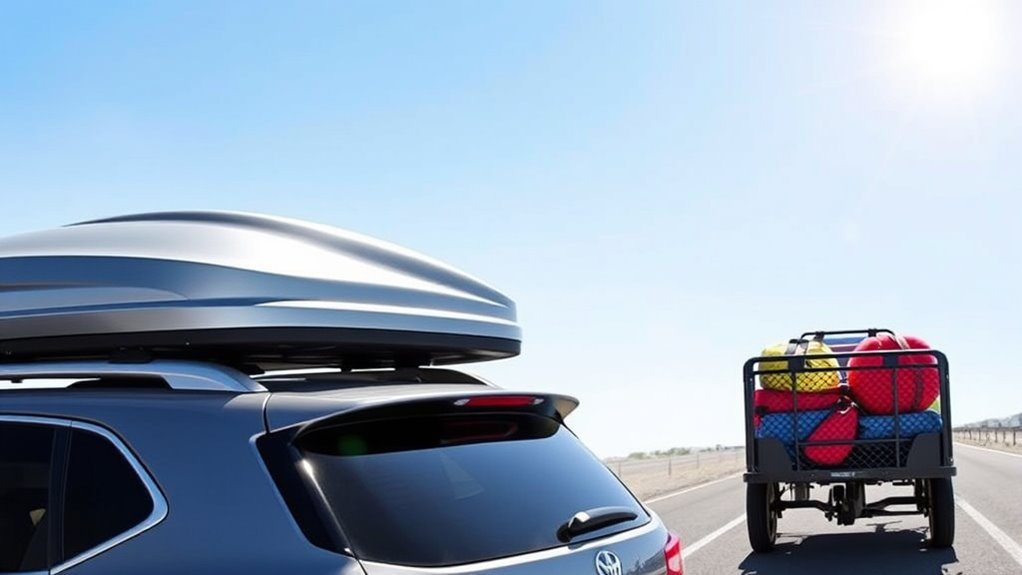
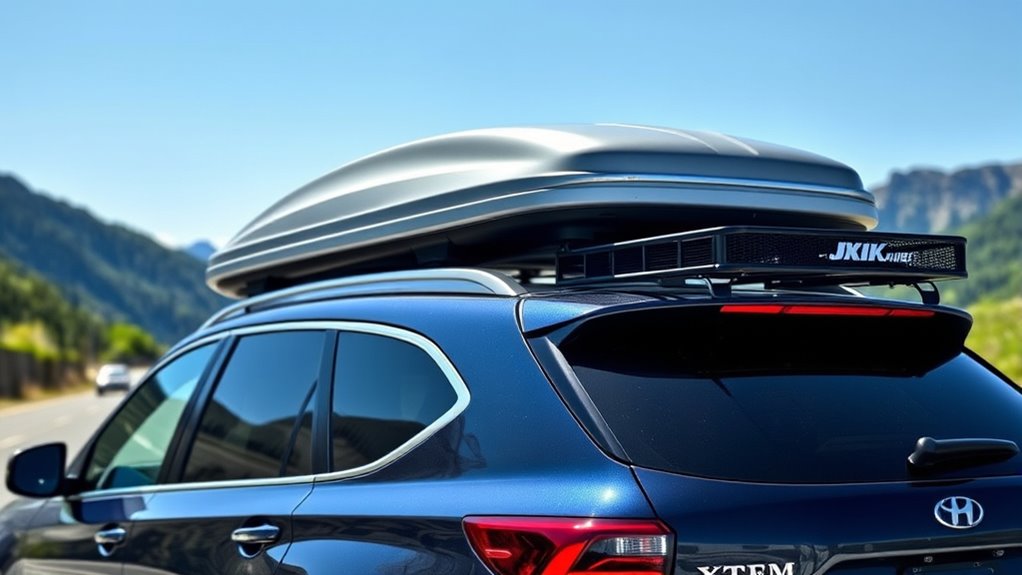
When it comes to adding extra storage space for your vehicle, choosing between a roof cargo box and a hitch carrier can be challenging. Both options expand your vehicle’s storage capacity, but they do so in different ways, each with its own advantages and limitations. A roof cargo box typically offers a larger storage capacity, allowing you to pack bulky items like luggage, camping gear, or sports equipment without sacrificing interior space. Its design maximizes the available space on your roof, giving you ample room for all your essentials. However, with increased capacity comes a concern for aerodynamic efficiency. A well-designed cargo box can be streamlined to minimize wind resistance, but many models still create additional drag. This drag can slightly reduce your vehicle’s fuel economy, especially on long road trips, and may lead to increased wind noise. On the other hand, a hitch carrier usually provides a more compact, lower-profile solution. It attaches to your vehicle’s hitch receiver and often is used for transporting bikes, smaller cargo, or even spare tires. While its storage capacity is generally less than that of a roof box, it offers the advantage of maintaining better aerodynamics. Because hitch carriers sit lower and are often more streamlined, they tend to generate less air resistance, helping you conserve fuel and reduce noise during your journey. Plus, hitch-mounted carriers are easier to load and unload, especially for heavier or awkwardly shaped items, since they are closer to your vehicle’s bumper and at a more accessible height. Additionally, projector technology continues to evolve, offering more efficient and lighter options for travel accessories. When considering which option is better for road trips, think about your specific needs. If you prioritize maximum storage capacity for bulky items and don’t mind a slight hit to fuel efficiency, a roof cargo box might be the way to go. Just ensure you select a model that’s aerodynamic to minimize wind resistance. Conversely, if you want a solution that’s easier to handle, offers better fuel economy, and is suitable for lighter, more frequent trips, a hitch carrier could be more practical. Keep in mind that the overall impact on your vehicle’s performance depends on both the size and design of the carrier you choose. Ultimately, your decision should align with the type of gear you carry, the length of your trips, and your comfort with handling and installation. Both options can serve you well, but understanding their differences in storage capacity and aerodynamic efficiency helps you make an informed choice for your road adventures.
As an affiliate, we earn on qualifying purchases.
Frequently Asked Questions
Which Options Are More Secure Against Theft During Stops?
You’ll find hitch carriers generally more secure against theft during stops because they often feature robust locking mechanisms and theft deterrents like deadbolt locks or alarms. Roof cargo boxes can also be locked, but they’re more accessible and easier to pry open. To maximize security, choose options with advanced locking systems, use additional theft deterrents, and make certain your carrier or box is properly locked whenever you leave your vehicle unattended.
How Do Weather Conditions Affect Each Storage Option?
Weather conditions can substantially impact your storage choice. A roof cargo box offers better rain protection and weather resistance, keeping your gear dry during storms. Hitch carriers may be more vulnerable to rain and snow, which can lead to rust or water damage if not properly sealed. You should consider weather impact when selecting your carrier, especially if you frequently drive through wet or harsh climates.
Can Both Options Be Used Simultaneously on One Vehicle?
Yes, you can use both a roof cargo box and a hitch carrier simultaneously, thanks to dual compatibility on many vehicles. However, consider installation complexity, as mounting both requires extra effort and space management. You’ll need to verify your vehicle’s roof and hitch can accommodate the combined weight safely. Double-check your vehicle’s capacity and follow installation instructions carefully to avoid overloading or damaging your car during your road trip.
Which Is More Aerodynamic and Fuel-Efficient?
A hitch carrier generally has less aerodynamic impact than a roof cargo box, making it more fuel-efficient. When you attach a roof cargo box, it increases wind resistance, which can reduce your fuel economy. For longer trips where saving fuel matters, opting for a hitch carrier is better. It’s sleek and reduces drag, helping you conserve fuel and enjoy more miles without sacrificing storage.
Are There Size or Weight Restrictions for Each Option?
You should check the size and weight restrictions for both options, as vehicle compatibility and installation process vary. Roof cargo boxes often have weight limits based on your vehicle’s roof capacity, while hitch carriers are limited by your hitch’s weight rating. Make sure to verify these restrictions before installation to guarantee safe and secure transport. Always consult your vehicle’s manual and product guidelines to avoid overloading.
As an affiliate, we earn on qualifying purchases.
Conclusion
So, whether you prefer the sleek, aerodynamic roof cargo box or the rugged hitch carrier, it’s funny how both options end up making your road trip just a little more interesting—by adding noise, weight, and a touch of chaos. Ironically, what’s supposed to make your journey easier might just turn it into an adventure. But hey, isn’t that what road trips are all about? Pick your carrier, embrace the chaos, and enjoy the ride!
As an affiliate, we earn on qualifying purchases.
As an affiliate, we earn on qualifying purchases.
Fall yard work Picks
leaf blowers
As an affiliate, we earn on qualifying purchases.