Before running nitrous on a street-strip build, make sure your fuel system can supply enough fuel to match the increased air-fuel mixture, which often means upgrading the pump and injectors. Adjust your ignition timing conservatively to prevent knocking while maximizing power. Proper tuning with real-time AFR and ignition monitoring is essential, and regular maintenance of your nitrous kit helps guarantee safety and performance. If you want to know more, keep exploring the key steps for a safe setup.

Get business pricing on garage and car supplies
- Business-only prices and quantity discounts
- Tax-exempt purchasing
- Multiple users, one account, clear invoices
Key Takeaways
- Upgrade fuel system components like pumps and injectors to prevent lean conditions under nitrous load.
- Adjust ignition timing carefully to maximize power without causing knocking or engine damage.
- Conduct thorough tuning with real-time monitoring of AFR and ignition to ensure safe operation.
- Use high-quality, properly installed nitrous kits and perform regular maintenance for safety and reliability.
- Follow safety protocols, including proper environment, fire extinguishers, and leak inspections, when using nitrous.

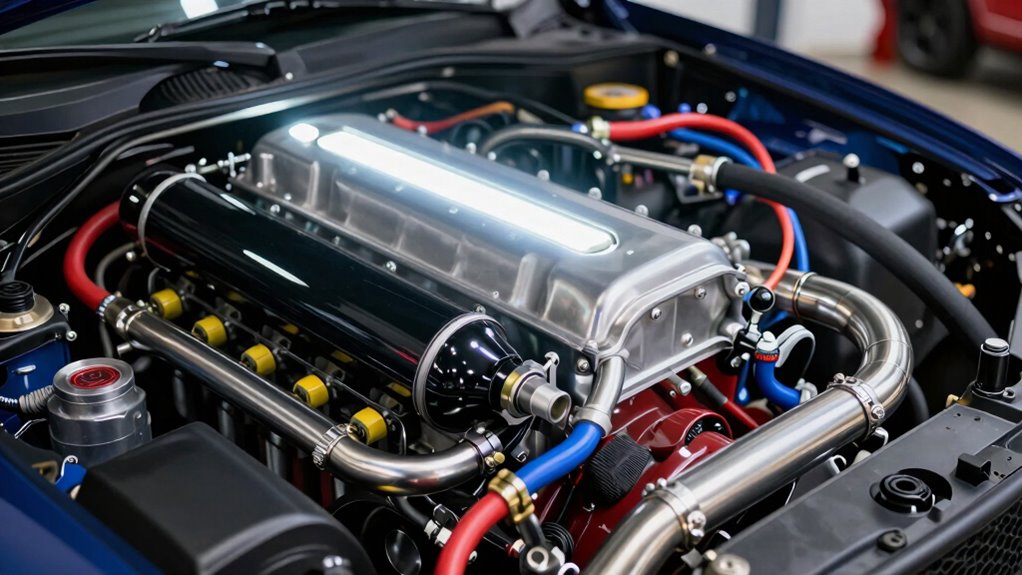
If you’re considering adding nitrous to your street-strip build, it is essential to understand the potential risks and proper setup to maximize performance safely. Nitrous oxide can greatly boost horsepower, but it demands careful planning, especially regarding your fuel system and ignition timing. Your fuel system must be capable of supplying enough fuel to match the increased air-fuel mixture created when you activate nitrous. Upgrading your fuel pump and injectors is often necessary to prevent lean conditions that could lead to engine damage. A lean mix under boost results in higher combustion temperatures, increasing the risk of knocking or even catastrophic failure. Making sure your fuel system is reliable and capable of delivering consistent fuel flow under nitrous conditions is paramount.
Equally important is your ignition timing. When you introduce nitrous, your engine runs hotter and more aggressively, so timing adjustments are essential. Advancing your ignition timing slightly can help maximize power gains, but pushing it too far risks knocking and damage. Many experienced tuners recommend conservative timing increases or retuning your ignition curve specifically for nitrous use. Proper timing ensures that combustion occurs at the ideal moment, which is critical for both power and engine longevity. Remember, the combination of a robust fuel system and correct ignition timing forms the foundation for safe nitrous operation.
Before activating nitrous, you’ll want to conduct thorough dyno testing or road tuning to dial in these parameters. Start with small increments and monitor your AFR (air-fuel ratio) and ignition advance to avoid running too lean or too aggressive. Installing a wideband O2 sensor and a reliable ignition control system can help you keep track of these important variables in real time. It’s also wise to consider the quality of your nitrous kit—using a reputable system designed for street use helps prevent leaks, misfires, or inconsistent delivery. Proper installation and maintenance are key to making sure your setup maintains safety and performance over time.
Additionally, understanding how ADAS sensor calibration can impact vehicle safety when modifying your car is crucial, especially if your build includes advanced driver-assistance systems. Proper installation and maintenance are key to making sure your setup maintains safety and performance over time. Finally, always remember that safety comes first. Have a fire extinguisher nearby, and never run nitrous in an unsafe environment or without proper tuning. Regularly inspect your fuel system, hoses, and connections for leaks or wear. When set up correctly, nitrous can add exciting power to your build, but rushing the tuning process or neglecting essential upgrades can lead to costly failures. By paying close attention to your fuel system and ignition timing, you’ll enjoy the boost without compromising your engine’s health or your safety.
Products Worth Considering

Milwaukee M18 FUEL 18V Lithium-Ion Brushless Cordless 1 in. Impact Wrench Extended Reach D-Handle Kit with Two 12.0 Ah Batteries

Chemical Guys 16-Piece Arsenal Builder Car Wash Kit with Foam Cannon & Bucket

DEWALT 20V MAX Drill and Impact Driver Combo Kit (DCK240C2)
As an affiliate, we earn on qualifying purchases.
Frequently Asked Questions
Can I Run Nitrous Safely on a Daily Driver?
You can run nitrous on a daily driver, but it requires careful nitrous installation and strict safety precautions. Make sure your engine can handle the added power, and always use a quality kit designed for street use. Follow safety measures like proper wiring, secure mounting, and avoiding overuse. Regularly inspect your system, and stay within safe limits to prevent engine damage or accidents. Proper planning makes daily nitrous use safer and more reliable.
How Does Nitrous Affect My Car’s Fuel Economy?
Nitrous can considerably decrease your fuel efficiency because it boosts power by burning more fuel and nitrous oxide. While it’s safe if you follow proper nitrous safety procedures, using it frequently on a street-strip build can lead to higher fuel consumption. You’ll want to monitor your fuel levels closely and tune your engine accordingly, ensuring you don’t compromise your car’s reliability or safety when using nitrous regularly.
What Are the Legal Implications of Using Nitrous on the Street?
Using nitrous on the street can lead to legal risks, including fines, vehicle impoundment, or even arrest, depending on your local laws. Enforcement challenges make it hard for authorities to detect and prove nitrous use, but if caught, you’re liable for penalties. Always check your state or local regulations before using nitrous, as laws vary widely and ignorance isn’t usually a valid defense.
How Often Should I Service My Nitrous System?
Imagine your nitrous system as a finely-tuned engine heartbeat—you need to keep it healthy. You should service your nitrous safety and maintenance schedule every 3 to 6 months, or after every 1,000 miles of street use. Regular inspections, checking for leaks, and replacing worn parts guarantee safe, reliable performance. Staying proactive with maintenance keeps your system ready and reduces the risk of unexpected issues during spirited drives.
Is It Necessary to Upgrade My Transmission for Nitrous Use?
Yes, upgrading your transmission is highly recommended for nitrous use, especially on a street-strip build. Transmission upgrades guarantee it can handle the extra power and prevent failures during high-performance runs. Prioritizing nitrous safety means reinforcing components that are under added stress. A stronger, upgraded transmission helps maintain control, reduces the risk of damage, and ensures reliable performance when using nitrous, making your build safer and more durable.
Conclusion
Before you hit the gas with nitrous on your street-strip build, remember safety and proper tuning are essential. Did you know that improper use can lead to engine failure or accidents? Over 60% of nitrous-related failures happen because of neglecting maintenance or incorrect setup. So, stay informed, follow manufacturer guidelines, and always prioritize safety. With the right precautions, you can enjoy that exhilarating boost while keeping your ride reliable and safe on the streets and strip.