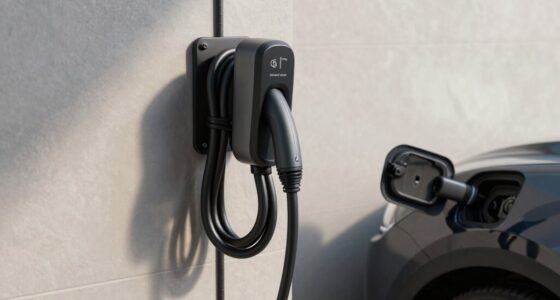

Before choosing a portable EV charger, you need to check its compatibility with your vehicle’s plug type and power needs. Consider its size, weight, and durability for your travel or daily use, and look for safety features for reliable operation. Decide if you want a built-in battery for off-grid charging or if you’ll rely on external power sources like wall outlets. If you want to learn more about selecting the perfect charger, keep exploring your options.

Get business pricing on garage and car supplies
- Business-only prices and quantity discounts
- Tax-exempt purchasing
- Multiple users, one account, clear invoices
Key Takeaways
- Verify compatibility with your vehicle’s charging port type, power needs, and charging speed requirements.
- Consider portability, weight, durability, and whether the design suits your travel or daily commuting needs.
- Ensure the charger has safety features and good power quality for reliable and safe operation.
- Decide between built-in battery models for off-grid use or external power-dependent chargers for stationary charging.
- Match the charger to your typical usage scenarios, such as home, travel, or remote area charging, and ensure standard compliance.
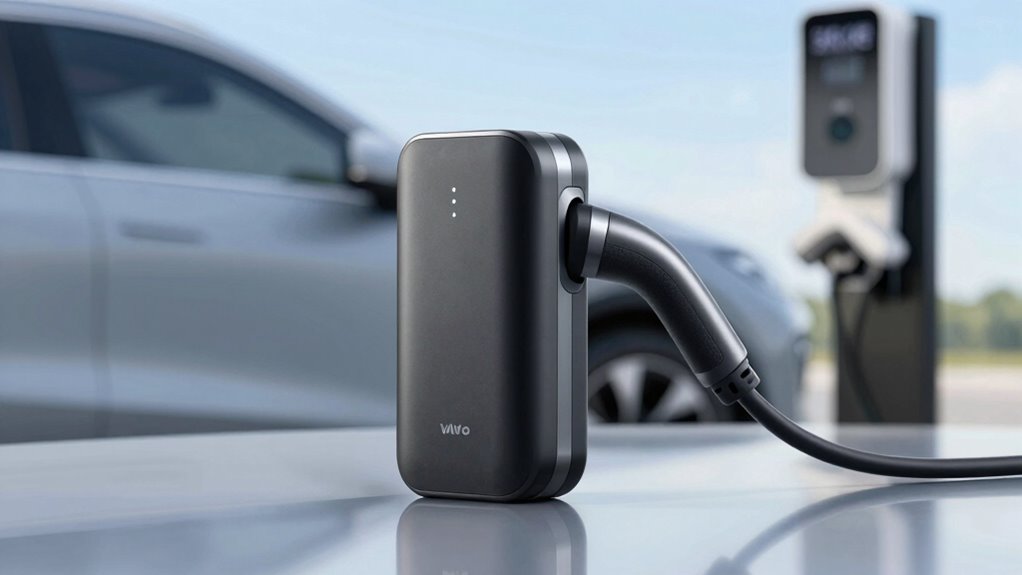
When you’re on the go, having a portable EV charger can be a game-changer, ensuring you never run out of power unexpectedly. But before you pick one, it’s important to evaluate how well it will fit your needs. One key factor is charging compatibility. Not all portable chargers work with every electric vehicle, so you need to check if the charger supports your car’s charging port and power requirements. Some chargers are designed specifically for certain models or brands, while others offer universal compatibility. Making sure the charger matches your vehicle’s charging port type—whether it’s Type 1, Type 2, or CCS—is essential. Additionally, assess the charging speed your vehicle needs and whether the portable charger can deliver that. A charger that offers lower wattage may suffice for emergencies but could take longer to top up your battery.
Portability considerations are just as important as compatibility. Look at the size and weight of the charger—if it’s too bulky or heavy, carrying it around might become a hassle, especially if you plan to keep it in your bag or glove compartment. Some models are designed to be lightweight and compact, making them easier to transport without sacrificing performance. Also, consider the durability of the device—if you’re traveling through rough terrain or unpredictable weather, a rugged, weather-resistant design can save you headaches. Battery capacity within the charger itself matters too; a larger internal battery means you can charge your vehicle multiple times before needing to recharge the charger. Moreover, understanding the power quality and safety features of the charger can help prevent damage to your vehicle and ensure reliable operation during your travels. An understanding of battery inverter generators and their watt-hour capacities can help you better evaluate the charging capabilities of your portable device. Recognizing the importance of charging standards can also guide you in selecting a compatible and efficient charger.
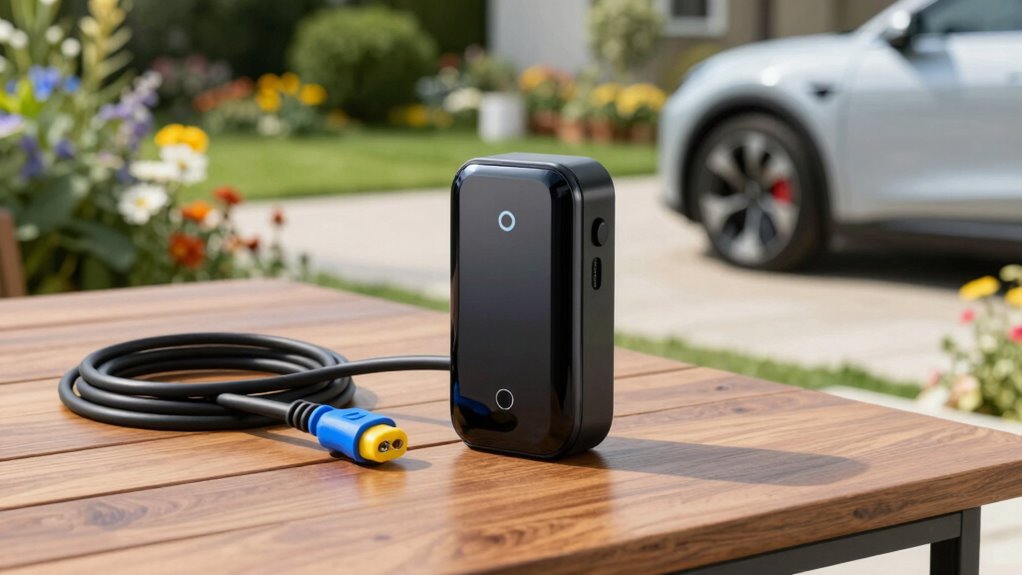
Power source options can influence portability as well. Some portable chargers come with built-in batteries, allowing you to charge your vehicle without plugging into an external power outlet. Others rely solely on an external power source, such as a wall socket, which might limit where you can use them. It’s also helpful to consider whether the charger features universal compatibility, enabling it to work with various vehicle types and charging stations. Think about your typical usage scenarios: will you be mostly charging at home, on road trips, or in areas with limited access to outlets? This will help you decide whether a charger with a built-in battery or one that plugs directly into power sources is better suited for your lifestyle.
As an affiliate, we earn on qualifying purchases.
Frequently Asked Questions
Can a Portable EV Charger Charge Multiple Vehicles Simultaneously?
A portable EV charger typically can’t charge multiple vehicles simultaneously because of limited charging speed and compatibility issues. These chargers are designed to deliver power to one vehicle at a time, ensuring the best charging speed. Attempting to connect multiple vehicles may cause compatibility problems, reduce charging efficiency, or damage the charger. To charge multiple vehicles, you’ll need separate chargers or one with a dedicated multi-port setup.
How Durable Is a Portable EV Charger in Extreme Weather Conditions?
A portable EV charger’s durability in extreme weather depends on its weatherproof design and material durability. If it’s built with high-quality, weather-resistant materials and sealed properly, it can withstand heavy rain, snow, and intense heat. However, lower-quality chargers may degrade faster in harsh conditions. Always check product specifications for weatherproof ratings and verify it’s rated for your climate to guarantee reliable performance and longevity.
Does a Portable Charger Work With All Electric Vehicle Models?
A portable EV charger generally works with most electric vehicle models, but compatibility issues can arise, especially with charging speed variations. You might find that some chargers deliver faster charging, but not all vehicles support those speeds. To guarantee smooth operation, check your EV’s charging port and compatibility with the portable charger’s specifications. This way, you avoid frustration and maximize your charging efficiency.
What Is the Typical Lifespan of a Portable EV Charger?
Imagine your portable EV charger as a reliable companion on countless road trips, lasting years of daily use. Typically, it’s designed to endure around 3 to 5 years, but factors like charging speed and compatibility issues can influence its lifespan. Regularly inspecting for wear and keeping it protected from the elements helps extend its life. With proper care, your charger can keep powering your journeys long into the future.
Are There Any Safety Certifications I Should Look For?
You should definitely look for safety certifications when choosing a portable EV charger. Make sure it meets recognized safety standards and displays certification marks like UL, CE, or ETL. These marks confirm the charger has been tested for electrical safety, durability, and reliability. Choosing a certified charger minimizes risks like electrical faults or fire hazards, giving you peace of mind during your charging sessions. Always verify the certification marks before making your purchase.
compact electric vehicle charger with built-in battery
As an affiliate, we earn on qualifying purchases.
As an affiliate, we earn on qualifying purchases.
Conclusion
Choosing the right portable EV charger is like finding a trusty sidekick for your electric adventures. It’s all about understanding your needs, checking compatibility, and considering features like portability and power output. With the right charger in hand, you’ll navigate your journeys smoothly, avoiding dead ends and surprises. Think of it as your reliable map, guiding you effortlessly through every charge, ensuring your electric vehicle remains your loyal road companion on every adventure ahead.
weather-resistant portable EV charger
As an affiliate, we earn on qualifying purchases.
As an affiliate, we earn on qualifying purchases.
fast charging portable EV charger
As an affiliate, we earn on qualifying purchases.
As an affiliate, we earn on qualifying purchases.
Columbus Day / Indigenous Peoples' Day Picks
long weekend sales
As an affiliate, we earn on qualifying purchases.