
Poor fitting seat covers often happen if you choose the wrong materials or size for your seat, or if you rush installation. Stretchable fabrics suit flat seats, but struggle with contours, leading to gaps or bunching. Not measuring your seat or skipping the instructions makes a huge difference. By paying attention to material compatibility, proper sizing, and installation techniques, you can get a snug, professional look. Keep going to discover how to perfect your seat cover fit.

Get business pricing on garage and car supplies
- Business-only prices and quantity discounts
- Tax-exempt purchasing
- Multiple users, one account, clear invoices
Key Takeaways
- Poor fit often results from selecting the wrong size or incompatible material for your seat type.
- Inadequate installation, such as improper alignment or loose securing, causes slipping and bunching.
- Not following detailed instructions or rushing during setup leads to uneven, unprofessional appearances.
- Using stiff or thick fabrics on contoured seats prevents proper conforming, creating gaps.
- Failing to measure seats accurately before purchasing increases the risk of selecting an ill-fitting cover.
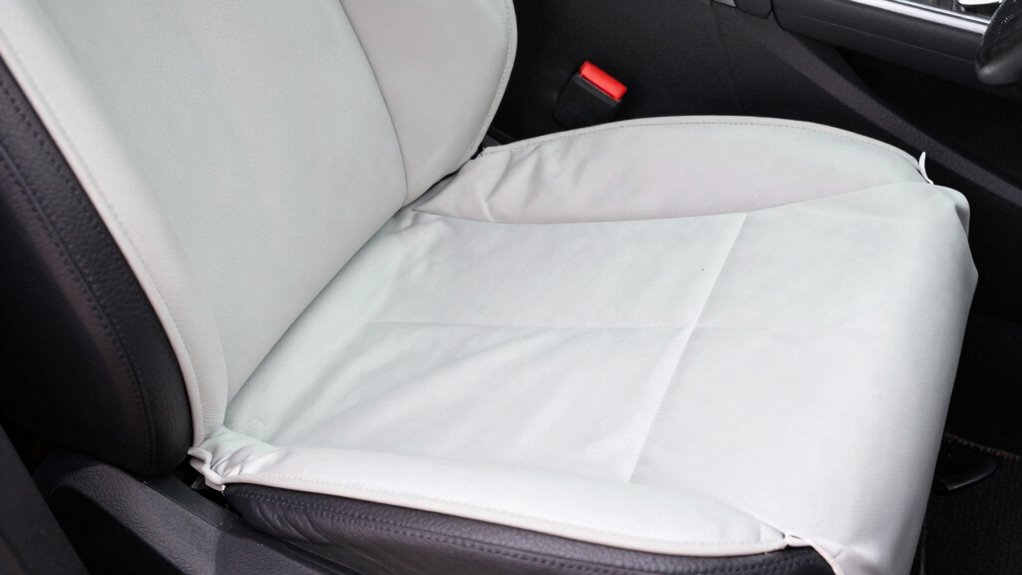
If you’ve ever purchased seat covers only to find they don’t fit your car properly, you’re not alone. Many drivers run into this problem, often because of issues related to material compatibility and installation mistakes. Understanding what causes poor fitment can help you avoid frustration and get seat covers that look good and stay in place.
One common reason seat covers fit terribly is incompatible material choices. Not all covers are designed for every type of seat or vehicle. For example, a cover made from a stretchable fabric might work well on a flat, smooth seat but struggle to conform to seats with built-in contours or side bolsters. Conversely, stiff or thick materials may not flex enough to fit snugly, creating bunching or gaps. Before purchasing, check whether the material is suitable for your vehicle’s seats. Look for product descriptions that specify compatibility with your car’s make, model, and seat type. If the material isn’t compatible, even the most carefully installed cover won’t sit right. Being aware of material compatibility can help you select the right cover initially, reducing the risk of fit issues later on. Additionally, understanding material properties can help you choose a cover that maintains its shape and fit over time.
Incompatible materials can cause seat covers to fit poorly and not conform to seat contours properly.
Installation mistakes are another leading cause of poor fit. Many seat covers are straightforward to install, but rushing through the process or ignoring instructions can lead to a loose or uneven fit. For instance, failing to properly align the cover with the seat contours or not securing the straps tightly can cause the cover to shift over time. It’s essential to read installation instructions carefully and follow each step precisely. Take your time to ensure the cover is pulled tight and secured in all designated areas. Using the right tools and paying attention to details like tucking excess fabric into crevices can make a significant difference. Additionally, understanding installation steps and how to properly secure the cover can help prevent future fit issues. Proper preparation and patience during installation are key to achieving a snug, secure fit.
Mismatched seat cover sizes also contribute to fit issues. Many brands offer multiple size options, but if you select the wrong one—say, a “small” size for a large vehicle—you’ll end up with a cover that’s either too tight or too loose. Always measure your seats carefully before buying. If available, choose a size labeled for your specific seat dimensions to ensure a proper fit.
As an affiliate, we earn on qualifying purchases.
Frequently Asked Questions
Do Universal Seat Covers Fit All Car Models Perfectly?
Universal seat covers don’t fit all car models perfectly because of varying seat shapes and sizes. While they offer good seat cover compatibility for many vehicles, their universal fit means they might be loose or tight in certain areas. To guarantee a better fit, check the product details for your specific car model and consider custom options if you want a seamless look. This way, you avoid ill-fitting seat covers and enjoy a cleaner appearance.
How Do I Measure My Car Seats Accurately?
To measure your car seats accurately, start by securing the seat measurement with a flexible tape measure. Measure the width across the seat’s widest part, then the length from the front to the back. Don’t forget to check the seat depth and side height. For perfect fit accuracy, double-check your measurements and compare them with the seat cover dimensions. Precise measurements prevent poor fits and guarantee your seat cover stays snug and secure.
Can Custom Seat Covers Be More Affordable?
Custom seat covers can be more affordable if you compare costs carefully and choose materials that balance durability with price. Look for options made from durable yet budget-friendly fabrics, and shop around for deals or discounts. While custom covers typically cost more upfront, investing in quality materials may save you money long-term by preventing frequent replacements. Doing a cost comparison helps you find the best fit for your budget and needs.
Are There Specific Materials That Fit Better?
Think of fabric fit like tailoring a suit—some materials mold better than others. For a snug, seamless look, choose seat covers made from materials with high flexibility, like neoprene or stretch polyester. These materials adapt to your seat’s shape, providing a cleaner look. Avoid stiff fabrics; they tend to bunch or shift. Selecting flexible, well-designed fabrics guarantees your seat covers fit perfectly and stay looking sharp.
How Often Should I Replace My Seat Covers?
You should replace your seat covers when they show significant signs of wear, tear, or fading, typically every 1-3 years, depending on usage. Prioritize seat cover durability by choosing high-quality materials and maintain them properly through regular cleaning. Proper material maintenance extends their lifespan, preventing premature replacement. Keep an eye on the condition of your covers, and replace them promptly to keep your vehicle looking fresh and protected.
best stretchable seat covers for contour seats
As an affiliate, we earn on qualifying purchases.
As an affiliate, we earn on qualifying purchases.
Conclusion
When seat covers don’t fit right, it’s like trying to squeeze a square peg into a round hole—you know it’s not gonna work smoothly. To avoid this, measure carefully and choose covers designed for your specific seat model. Think of it as finding the perfect puzzle piece; when it fits just right, your seats will look sharp and feel comfy, turning a messy fit into a smooth ride. With a little prep, you’ll keep your seats stylish and snug as a bug.
As an affiliate, we earn on qualifying purchases.
how to install seat covers properly
As an affiliate, we earn on qualifying purchases.
As an affiliate, we earn on qualifying purchases.
Fall Picks
fall essentials
As an affiliate, we earn on qualifying purchases.