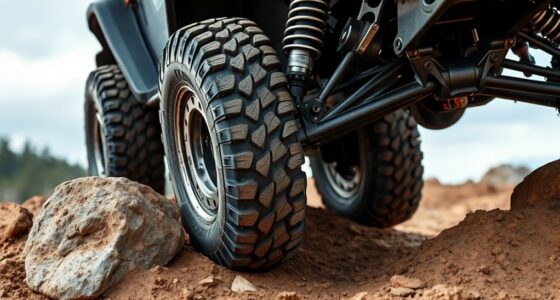
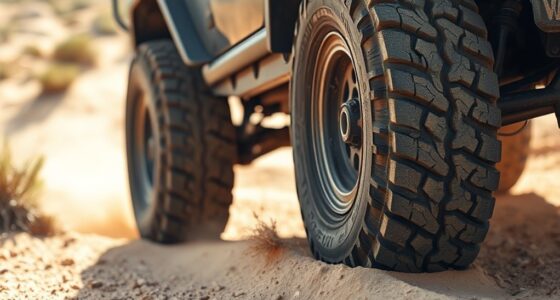
A body lift is a simpler and more affordable way to increase your vehicle’s height without changing the suspension, offering quick installation and a rugged look. However, it doesn’t improve ground clearance or off-road performance and might cause gaps or debris issues over time. Suspension lifts, on the other hand, enhance off-road ability and ground clearance but are more complex and costly. To learn more about these options’ specific pros and cons, keep exploring your choices.
Key Takeaways
- Body lifts are easier and cheaper to install but mainly offer cosmetic height increases without improving off-road capability.
- Suspension lifts provide greater ground clearance and off-road performance but involve more complex and costly modifications.
- Body lifts maintain ride quality and handling, whereas suspension lifts can alter vehicle dynamics and require adjustments.
- Aesthetic gaps and debris vulnerability are common with body lifts, while suspension lifts often require additional suspension tuning.
- For serious off-road use or performance, suspension lifts are more effective; body lifts are ideal for quick, budget-friendly visual upgrades.
Benefits and Drawbacks of Body Lifts

While body lifts are a popular way to increase a vehicle’s height, they come with their own set of benefits and drawbacks. One major advantage is the ease of frame modification, which avoids altering the vehicle’s suspension system. This makes installation simpler and less invasive. Additionally, body lifts provide a cosmetic enhancement, giving your vehicle a more aggressive or rugged look without compromising ride quality. However, drawbacks include potential issues with alignment and handling, since the body is elevated separately from the frame. Also, body lifts can sometimes cause gaps between the body and chassis, leading to aesthetic concerns or vulnerability to debris. Ultimately, while body lifts boost appearance and are relatively straightforward, they might require careful maintenance to avoid long-term problems.
Advantages and Disadvantages of Suspension Lifts
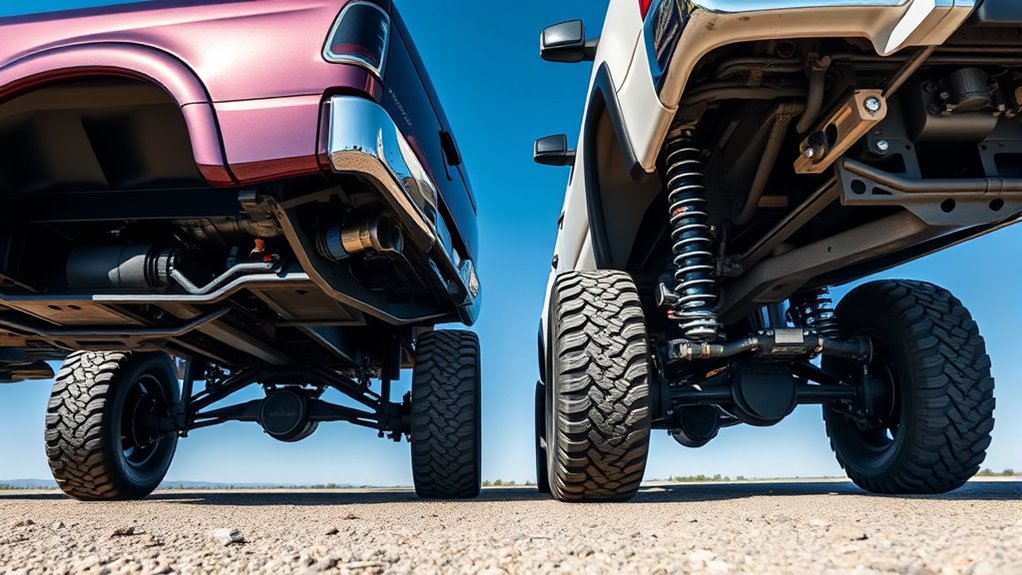
Suspension lifts offer a different approach to increasing your vehicle’s height compared to body lifts, impacting both performance and handling. One major advantage is improved ground clearance, allowing you to navigate rough terrain more effectively. This upgrade also enhances off-road capability and provides a commanding view of the road. However, suspension lifts can compromise ride comfort, making your ride bumpier and less smooth on paved surfaces. They may also affect your vehicle’s handling, steering responsiveness, and braking performance if not properly installed or balanced. Additionally, suspension lifts tend to be more complex and costly to install and maintain. Overall, while you gain better ground clearance and off-road skills, you must accept a potential trade-off in ride comfort and handling precision. Understanding the impact of projector technology on image quality can help you make more informed choices.]
Frequently Asked Questions
How Do Body Lifts Affect Vehicle Safety and Handling?
A body lift can negatively impact your vehicle’s safety and handling by raising the ride height, which may lead to a rougher ride quality. It also increases the rollover risk because the center of gravity shifts higher, making the vehicle less stable during sharp turns or sudden maneuvers. You might notice that your vehicle feels less predictable, so drive carefully and consider these factors before opting for a body lift.
Are Suspension Lifts Legal in All Regions or States?
Suspension lifts are not legal in all regions or states because of regional regulations and legal restrictions. You need to verify local laws before installing a suspension lift, as some areas have height or modification limits to ensure safety and compliance. Ignoring these rules can lead to fines or vehicle impoundment. Always consult your local Department of Transportation or relevant authorities to confirm whether a suspension lift is permitted in your area.
What Are the Long-Term Maintenance Costs for Each Lift Type?
You’ll find that suspension lifts generally have higher long-term maintenance costs due to increased repair frequency; studies show they can cost up to 30% more over five years. Body lifts tend to be cheaper to maintain, with fewer repairs needed. The cost comparison highlights that suspension lifts require more frequent inspections and part replacements, making them pricier in the long run. Keep this in mind when planning your vehicle upgrades.
Can Both Lifts Be Installed on the Same Vehicle?
Yes, you can install both a body lift and a suspension lift on the same vehicle, but you should consider compatibility concerns and installation complexity. Combining these lifts can enhance your vehicle’s height and appearance, but it may require custom modifications and expert installation. Be aware that adding both lifts can impact ride quality and handling, so weigh the benefits against potential long-term maintenance and safety risks.
How Do Lifts Impact Fuel Efficiency and Aerodynamics?
When you opt for a lift, you might notice a subtle shift in lift aerodynamics that affects your vehicle’s efficiency. Elevated rides tend to increase air resistance, leading to higher fuel consumption. While the gains in height are appealing, they often come at the expense of streamlined performance. Keep in mind, the more you lift, the more your vehicle’s aerodynamics are altered, which can modestly impact your fuel efficiency.
Conclusion
Choosing between a body lift and suspension lift depends on your needs. If you want a cheaper, quicker upgrade, a body lift might suit you, but it offers less off-road flexibility. Suspension lifts provide better ground clearance and handling but cost more and take longer to install. Did you know that over 60% of off-road enthusiasts prefer suspension lifts for their versatility? Weigh your priorities carefully, and you’ll pick the right lift for your adventures.