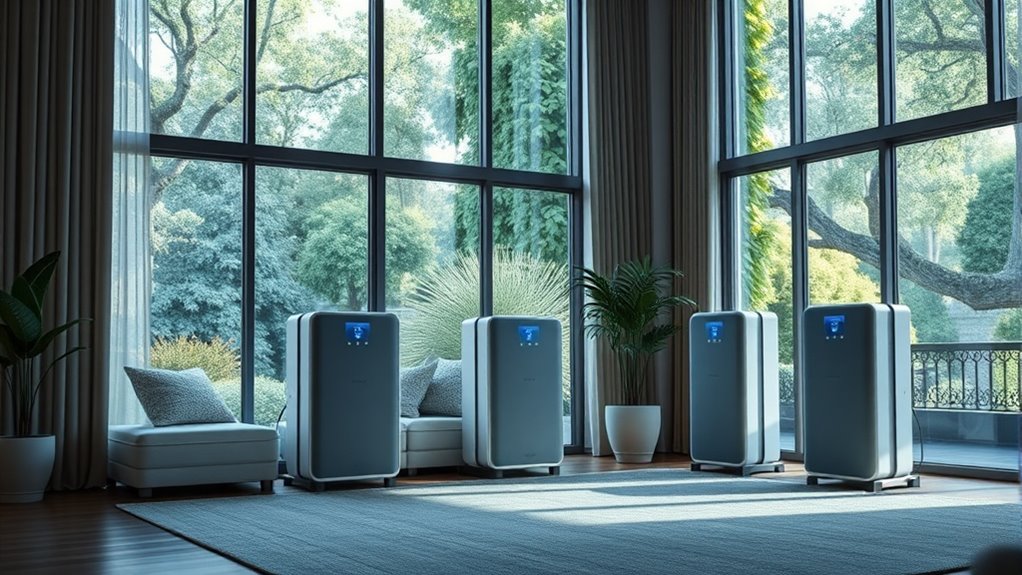

If you are searching for a whole-house air purifier for allergies, I would start by clarifying what “whole house” means: these are portable units for large rooms or open areas, not systems that connect to your home’s HVAC. My strongest all-around pick is the Winix 5510 for its True HEPA filtration, carbon filter, sensors, and app support. For a bigger stated coverage area and washable filters, the Nuwave Oxypure has the broadest reach in this group; the Levoit Vital 200S-P is a compelling alternative for buyers who want AHAM-verified performance and published pollen CADR.

Get business pricing on garage and car supplies
- Business-only prices and quantity discounts
- Tax-exempt purchasing
- Multiple users, one account, clear invoices
The central tradeoff is not simply coverage versus cost: it is verified performance, room layout, and filter upkeep. A large square-footage claim does not tell the whole story about how quickly an air purifier cleans a space, while washable filters can reduce replacement needs but still require regular cleaning. I rank these models by how clearly their provided specifications support allergy-focused use, how practical they appear for large rooms, and what compromises buyers must accept.
Complete the kit

Key Takeaways
- Winix 5510 is my best overall pick for allergy-focused large-room use because it combines True HEPA, a carbon filter, app control, and automatic sensing.
- Levoit Vital 200S-P stands out when published, separate CADR figures for smoke, dust, and pollen matter more to you than washable filters.
- Nuwave Oxypure has the largest stated coverage here at 2,934 square feet, but its multi-stage filter system and higher listed wattage call for closer attention to maintenance and operation.
- Nuwave Forever fits buyers who want reusable filters and less routine replacement shopping, while its provided details give fewer performance figures than the Levoit.
- These are portable purifiers for large rooms or open areas, not whole-home HVAC systems; match the unit to your actual room and allergy needs rather than relying on coverage alone.
| Winix 5510 Air Purifier for Large Rooms up to 1881 sq ft, True HEPA, Carbon Filter, App Support |  | Best Overall for Balanced Allergy Filtration | Coverage area: Up to 1,881 sq ft | Filtration: True HEPA and carbon filter | Allergen capture: Claims capture of 99.99% of airborne allergens | VIEW ON AMAZON | See Our Full Breakdown |
| Levoit Vital 200S-P Smart Air Purifier for Large Rooms up to 1875 sq ft |  | Best for Published Allergy-Relevant Performance Data | Coverage area: Up to 1,875 sq ft | CADR, smoke: 250 CFM | CADR, dust: 254 CFM | VIEW ON AMAZON | See Our Full Breakdown |
| Nuwave Oxypure Smart Air Purifier with 5 Stages |  | Best for the Largest Stated Coverage | Coverage area: Up to 2,934 sq ft | Filtration stages: Five-stage system | Filter configuration: Stainless-steel pre-filter, Bio-Guard, ozone removal, and 2-in-1 HEPA/carbon filter | VIEW ON AMAZON | See Our Full Breakdown |
| Nuwave Forever Smart Air Purifier for Home, Never Replace Air Filter System |  | Best for Reusable Filter Maintenance | Coverage area: Up to 2,002 sq ft | Filter system: Washable and reusable | Filtration stages: Seven-stage | VIEW ON AMAZON | See Our Full Breakdown |
| Air Purifier for Large Rooms up to 2600 sq ft with HEPA Washable Filters |  | Best Value-Oriented Washable-Filter Option | Coverage area: Up to 2,600 sq ft | Filter type: HEPA washable filter | Particle capture: 99.97% of particles, as described | VIEW ON AMAZON | See Our Full Breakdown |
| whole house air purifiers for allergie | Coverage area | Noise |
|---|---|---|
| Winix 5510 Air Purifier for La | Up to 1,881 sq ft | 23.5 dB at slow speed |
| Levoit Vital 200S-P Smart Air | Up to 1,875 sq ft | — |
| Nuwave Oxypure Smart Air Purif | Up to 2,934 sq ft | 31.4 dB |
| Nuwave Forever Smart Air Purif | Up to 2,002 sq ft | — |
| Air Purifier for Large Rooms u | Up to 2,600 sq ft | 22 dB in sleep mode |
More Details on Our Top Picks
Winix 5510 Air Purifier for Large Rooms up to 1881 sq ft, True HEPA, Carbon Filter, App Support
The Winix 5510 earns my top spot because its supplied details make a clear case for allergy-focused use without relying on coverage alone. It pairs True HEPA filtration with a carbon filter, so the stated setup addresses airborne allergens as well as odors and some VOCs. Smart sensors and auto mode can adjust operation as air conditions change, while app control gives you another way to manage it. Those features make it a more rounded choice than the simpler large-area unit with washable HEPA filtration.
Its stated coverage reaches up to 1,881 square feet, putting it in a similar broad-room class to the Levoit Vital 200S-P. The Levoit has the advantage of supplied smoke, dust, and pollen CADR figures, which give allergy shoppers a more direct performance reference. Winix instead offers a useful combination of named True HEPA filtration, carbon filtration, and AHAM verification. I would favor Winix when odor handling and app-supported automation matter; I would lean Levoit if published pollen CADR is the deciding factor.
The tradeoff is ongoing filter replacement, and the product description says nothing that removes the need to keep up with that maintenance. App setup may also feel like extra work for someone who only wants a basic purifier with physical controls. The stated low-speed noise figure is appealing for quiet operation, but it does not tell me how loud the unit becomes on higher settings. I see this as the strongest balanced pick for a main allergy room, not a device that independently purifies a whole home through its ducts.
Pros:- True HEPA filtration is specified for airborne allergen capture.
- Carbon filter adds odor and VOC reduction to particle filtration.
- Smart sensors, auto mode, and app support give flexible day-to-day control.
- AHAM verification and a stated large-room coverage figure add useful selection context.
Cons:- Replacement filters create ongoing maintenance and purchasing needs.
- App setup may be more complicated than a basic manual-control purifier.
- The supplied noise figure applies to slow speed, not every fan setting.
Best for: Allergy sufferers who want a large-room purifier with named True HEPA and carbon filtration, automatic sensing, and app control.
Not ideal for: Buyers who want reusable filters, avoid app setup, or need published CADR figures before choosing.
- Coverage area:Up to 1,881 sq ft
- Filtration:True HEPA and carbon filter
- Allergen capture:Claims capture of 99.99% of airborne allergens
- Noise:23.5 dB at slow speed
- App:Winix Smart App
- Modes:Auto mode and sleep mode
- Certifications:AHAM Verified and UL Certified
Our verdict“I recommend the Winix 5510 as the most balanced allergy-focused large-room purifier here, especially if you value carbon filtration and smart automation over washable filters or published CADR data.”
Levoit Vital 200S-P Smart Air Purifier for Large Rooms up to 1875 sq ft
If I were choosing primarily by available performance figures, I would put the Levoit Vital 200S-P near the top of the shortlist. Its supplied CADR figures are 289 CFM for pollen, 254 CFM for dust, and 250 CFM for smoke. That gives allergy shoppers more specific information than the broad coverage claims attached to several rivals. It is also described as AHAM-certified and designed to handle allergens, dust, pet dander, smoke, and odors.
The Levoit claims coverage up to 1,875 square feet, almost matching the Winix 5510’s stated 1,881 square feet. The difference is in what the supplied information emphasizes: Winix names True HEPA and carbon filtration and adds app-supported sensors, while Levoit provides distinct CADR numbers by pollutant. I would choose Levoit when pollen performance data helps me compare options, and choose Winix when its specified filtration combination and automation better fit my priorities.
There are limits to the information provided. The listing says it uses multiple replaceable filter options, but does not specify the exact filtration stages in the supplied details. Filter replacement is part of ownership, and the product may be noisy at high fan speeds. That makes placement and fan setting relevant if the purifier will run in a bedroom or shared living area. It is a strong data-led choice for allergy and pet households, but buyers seeking washable filtration or detailed included noise figures should look at other models.
Pros:- Supplied CADR figures cover pollen, dust, and smoke separately.
- AHAM certification is identified in the product details.
- Designed for large rooms and common household allergens, including pet dander.
- Multiple filter options offer some choice for different household needs.
Cons:- Replaceable filters require recurring maintenance.
- The product may be noisy at high fan speeds.
- The supplied details do not specify the full filtration-stage configuration.
Best for: Buyers who want separate pollen, dust, and smoke CADR figures to compare large-room purifier performance.
Not ideal for: People who prefer washable filters, need a specified low-speed noise figure, or want the supplied description to identify each filter stage.
- Coverage area:Up to 1,875 sq ft
- CADR, smoke:250 CFM
- CADR, dust:254 CFM
- CADR, pollen:289 CFM
- Certification:AHAM-certified, as described
- Filter options:Multiple replaceable filters
- Intended pollutants:Allergens, dust, pet dander, smoke, and odors
Our verdict“I would choose the Levoit Vital 200S-P when published pollen CADR and AHAM certification carry more weight than reusable filters or a fuller list of filtration stages.”
Nuwave Oxypure Smart Air Purifier with 5 Stages
The Nuwave Oxypure has the biggest stated coverage in this roundup, at up to 2,934 square feet. That makes it the first model I would examine for a particularly large open-plan area, especially if washable components appeal to you. Its five-stage system includes a stainless-steel pre-filter, Bio-Guard filter, ozone-removal filter, and a combined HEPA/carbon filter; the supplied description says it captures particles as small as 0.09 microns. Air-quality and odor sensors, auto mode, and an eco mode add useful ways to manage operation.
Compared with the Winix 5510, Oxypure offers a larger stated coverage area and a more elaborate named filtration stack, while Winix has the clearer combination of True HEPA, carbon, and AHAM verification. The Levoit, meanwhile, has published pollen CADR figures that are not supplied for Oxypure. So I would not treat Oxypure’s larger square-footage claim as automatic proof of stronger allergy performance; it is most persuasive when the larger space and washable-filter approach are the main priorities.
This model is also the heaviest and tallest option with supplied dimensions, at 26 pounds and 26 inches high, so it is less convenient to move from room to room than a smaller unit may be. Listed noise is 31.4 dB, and listed wattage is 128 watts; those figures give buyers useful operating context but do not describe consumption at every mode. Filters are described as washable and reusable, with regular replacements also recommended approximately annually. I see it as a large-space specialist whose reach and filtration stages come with a more involved footprint and maintenance routine.
Pros:- Largest stated coverage area in this roundup.
- Five-stage system includes a combined HEPA and carbon filter.
- Air-quality and odor sensors can support automatic operation.
- Washable filters and eco mode add maintenance and operating flexibility.
Cons:- At 26 pounds, it is less convenient to move between rooms.
- Listed wattage is 128 watts; actual use will vary by operating mode.
- The supplied details include no CADR figures for direct comparison with Levoit.
Best for: Households with a large open room that want a multi-stage purifier, air-quality sensors, and washable filter components.
Not ideal for: Buyers who prioritize published pollen CADR, a light portable unit, or the simplest possible filter system.
- Coverage area:Up to 2,934 sq ft
- Filtration stages:Five-stage system
- Filter configuration:Stainless-steel pre-filter, Bio-Guard, ozone removal, and 2-in-1 HEPA/carbon filter
- Particle retention:As small as 0.09 microns, as described
- Noise:31.4 dB
- Wattage:128 watts
- Weight and dimensions:26 lb; 14 in D x 14 in W x 26 in H
- Controls and modes:App control, six fan speeds, sleep, auto, eco, and timer
Our verdict“I recommend the Oxypure for buyers who need the largest stated room coverage and want a sensor-equipped multi-stage design, provided they accept its size and less comparable performance data.”
Nuwave Forever Smart Air Purifier for Home, Never Replace Air Filter System
The Nuwave Forever is the clearest fit for buyers who want to reduce dependence on routine replacement filters. Its washable, reusable filter system is the defining difference, supported by a seven-stage design that includes prefilters, Bio-Guard filters, and ozone-removal filters. The supplied details say it captures particles down to 0.1 microns and covers spaces up to 2,002 square feet. That is a substantial stated area, though smaller than the Oxypure’s 2,934-square-foot claim.
Compared with Oxypure, Forever offers a similar appeal for washable filtration but has a simpler provided specification set: the listing does not give a noise figure, wattage, or CADR. The Levoit is a better match if published pollen, dust, and smoke CADR numbers are what you want, while Winix provides more explicit True HEPA and carbon details plus named AHAM verification. I would choose Forever for filter reuse and reduced replacement shopping, not because the supplied figures prove it cleans air faster than those alternatives.
The description also identifies Intertek lab certification and CARB compliance, alongside an ozone-removal filter. Those details can help buyers compare its stated design, but they do not remove the need to clean reusable filters as directed. The supplied material mentions a potentially higher upfront cost without giving an amount, so I cannot judge how quickly the reusable design would offset that burden. It is a distinctive choice for maintenance-conscious households, but buyers who want a documented performance comparison or a straightforward replaceable-filter routine may prefer another pick.
Pros:- Washable, reusable filters are designed to reduce routine replacement needs.
- Seven-stage filtration includes prefilters, Bio-Guard, and ozone-removal filters.
- Stated coverage reaches 2,002 square feet.
- The supplied details identify Intertek lab certification and CARB compliance.
Cons:- No CADR figures are supplied for comparing cleaning performance with the Levoit.
- The supplied details do not state noise level or wattage.
- Reusable filters still need regular cleaning, and the upfront cost is not specified.
Best for: Households that prioritize reusable filter components and want a large-room purifier with a multi-stage design.
Not ideal for: Buyers who need CADR or noise specifications for comparison, or who prefer the familiarity of replaceable filters.
- Coverage area:Up to 2,002 sq ft
- Filter system:Washable and reusable
- Filtration stages:Seven-stage
- Named stages:Prefilters, Bio-Guard filters, and ozone-removal filters
- Particle capture:Down to 0.1 microns, as described
- Certifications:Intertek lab certified and CARB compliant, as described
- Maintenance:Wash and reuse filter components
Our verdict“I would choose Nuwave Forever when reusable filtration is the main priority, while recognizing that the provided details offer less performance and operating information than the Levoit or Oxypure.”
Air Purifier for Large Rooms up to 2600 sq ft with HEPA Washable Filters
This large-room purifier is a practical option for shoppers who want a washable HEPA filter and a stated coverage area of up to 2,600 square feet. The product description says its filter captures 99.97% of airborne particles, including dust and pet dander, and it includes a PM2.5 sensor with real-time air-quality monitoring. A washable pre-filter is also intended to extend filter life and reduce waste. Among the five, it offers a direct route to sensor-guided operation without the named app features of Winix or the more extensive stages of the Nuwave models.
Its stated coverage falls between the Nuwave Oxypure and the Nuwave Forever. The Oxypure has the largest claimed area and provides a more detailed multi-stage specification, while Forever offers a seven-stage reusable system and identifies certification details. This purifier’s case is simpler: broad coverage, adjustable fan speeds, and washable filtration. It may suit someone who wants those practical features without needing app control, but the supplied information does not provide CADR figures like the Levoit’s or identify the same verification details listed for Winix.
The word “washable” should not be read as “maintenance-free.” The product details still recommend filter replacement every three to six months, and they do not give a detailed account of filter lifespan or durability. Initial setup may also take some effort. At 22 dB in sleep mode, its stated quiet setting is appealing, though that number does not describe louder fan speeds. I rank it as a straightforward washable-filter alternative for buyers who value monitoring and broad coverage, with less documentation for comparing allergy performance than my higher-ranked picks.
Pros:- Stated coverage reaches 2,600 square feet.
- HEPA filtration is described as capturing 99.97% of airborne particles.
- PM2.5 monitoring and automatic adjustment support responsive operation.
- Washable pre-filter and four fan speeds offer practical flexibility.
Cons:- The product details still recommend filter replacement every three to six months.
- Filter durability and lifespan are not fully detailed.
- No CADR figures or app support are listed in the supplied specifications.
Best for: Buyers who want a large-area purifier with a washable HEPA filter, PM2.5 monitoring, and several fan speeds.
Not ideal for: Shoppers who need published CADR data, detailed filter-lifespan information, or the most fully specified filtration system.
- Coverage area:Up to 2,600 sq ft
- Filter type:HEPA washable filter
- Particle capture:99.97% of particles, as described
- Sensor:PM2.5
- Noise:22 dB in sleep mode
- Fan speeds:Four adjustable speeds
- Timer:Two, four, six, or eight hours
- Filter maintenance:Replacement recommended every three to six months
Our verdict“I would pick this model for its washable HEPA setup and PM2.5 monitoring, but prefer Winix or Levoit when clearer allergy-specific filtration details are the priority.”

How We Picked
I ranked these five options for people trying to reduce airborne allergens in large rooms, open-plan areas, or other spaces where a compact purifier may not be enough. I focused on the filtration details provided, including whether the listing identifies HEPA filtration, particle capture information, carbon or odor filtration, and independent verification. I also looked at the usefulness of coverage claims, controls, sensors, noise information, and filter upkeep.
My ranking gives more weight to specific, relevant evidence than to a large coverage number by itself. For allergy buyers, CADR can help show how quickly a purifier moves filtered air; the Levoit is the only product here with supplied CADR figures broken out for smoke, dust, and pollen. The Winix combines a stated True HEPA filter with AHAM verification, while the Nuwave models offer appealing reusable-filter designs but less comparable performance information in the supplied details. I treat the square-footage figures as manufacturer-provided coverage claims, not proof that every home will receive the same cleaning rate.
I also weighed practical compromises. A washable filter still needs cleaning, and washable components do not automatically mean that every filtration stage lasts forever. Replaceable filters involve ongoing upkeep, but can be a more familiar maintenance choice. Finally, none of these products is a ducted, whole-home system. I have ranked them as large-room portable purifiers and would choose based on the room where allergies are most bothersome, not on a promise to clean every room at once.
| whole house air purifiers for allergie | Coverage area |
|---|---|
| Winix 5510 Air Purifier for La | Up to 1,881 sq ft |
| Levoit Vital 200S-P Smart Air | Up to 1,875 sq ft |
| Nuwave Oxypure Smart Air Purif | Up to 2,934 sq ft |
| Nuwave Forever Smart Air Purif | Up to 2,002 sq ft |
| Air Purifier for Large Rooms u | Up to 2,600 sq ft |
Factors to Consider When Choosing Whole House Air Purifiers For Allergies
I would choose an allergy purifier by matching its filtration and airflow to the room where symptoms are most affected. A large advertised coverage figure can be useful for screening options, but it does not tell me everything about clean-air delivery, noise, maintenance, or how the unit will perform with doors open and air moving through a home.
Treat “whole house” as a room-by-room question
These five are portable room purifiers, not central HVAC equipment. A single unit may help in a large living area, but its effect will be limited by walls, closed doors, and distance. If you want allergy support across several bedrooms and living spaces, I would plan for placement in the rooms where you spend the most time rather than assume one unit will clean the entire home. For ducted whole-home filtration, compare HVAC-compatible options separately.
Read coverage alongside CADR and filter details
Coverage claims help compare the intended scale of each product, but they are not a substitute for airflow performance. The Levoit Vital 200S-P provides CADR figures for pollen, dust, and smoke, which gives buyers more direct information about its listed clean-air delivery. Winix specifies True HEPA and carbon filtration, while the Nuwave models list detailed stages and particle-size claims. I would compare these kinds of details before choosing on square footage alone.
Match filtration to your main irritants
For pollen, dust, and pet dander, focus on effective particle filtration and adequate airflow. If cooking smells, pet odors, or some VOCs are also a concern, a carbon filter can add odor-focused filtration; the Winix and Oxypure list carbon filtration. A purifier does not remove the source of an allergen, so I would pair it with practical steps such as regular cleaning, controlling indoor humidity where appropriate, and reducing outdoor pollen entry.
Choose a filter routine you will keep up with
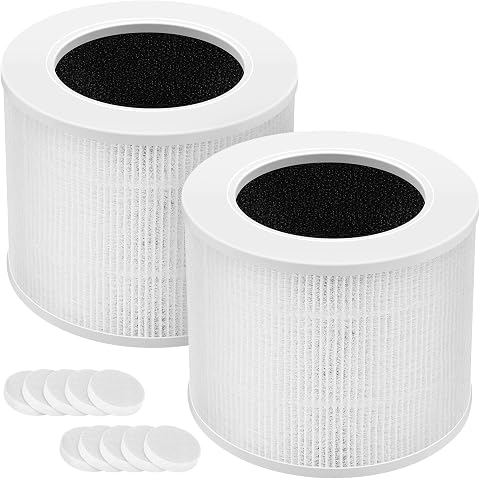
Replaceable filters, as used in the Winix and Levoit descriptions, involve recurring filter changes. Washable systems on the Nuwave models and the large-room HEPA option reduce some replacement needs, but they still need cleaning and may have other components with their own maintenance requirements. I would check the manufacturer’s instructions for cleaning, drying, and replacement intervals before buying. A filter system only helps as intended when it is maintained properly.
Think about sound, placement, and controls
Noise figures are not always measured or listed in the same way. The supplied details include low-speed or sleep-mode figures for Winix and the washable HEPA purifier, while the Oxypure lists 31.4 dB without tying it to a specific mode. If the unit will run near a bed or desk, look for noise information at the speed you expect to use. Auto mode and sensors can reduce the need for manual adjustments, while app support is useful only if you are comfortable with setup and connected controls.
Do not assume washable means maintenance-free
A washable pre-filter can catch larger debris and may extend the useful life of other filter parts, but it needs attention. A washable main filter is also not automatically interchangeable with a disposable HEPA filter or proof of equal performance. Follow the stated cleaning process and confirm which stages, if any, still need periodic replacement. This distinction matters especially when comparing the reusable Nuwave options with the replaceable-filter Winix and Levoit.
Frequently Asked Questions
Can one of these purifiers clean my entire house?
These are portable purifiers intended for large rooms or open areas, not ducted whole-home systems. Their effect is strongest in the space where air can circulate through the unit; walls and closed doors limit how much air from other rooms reaches it. If you want coverage across a whole home, I would place suitable units in the rooms where you spend the most time or investigate an HVAC-compatible system.
Which purifier in this roundup is the clearest fit for pollen allergies?
The Levoit Vital 200S-P is the clearest choice if you want a supplied pollen-specific performance figure: its listed pollen CADR is 289 CFM. The Winix 5510 is another strong candidate because it specifies True HEPA filtration and AHAM verification. I would compare room size and operating needs alongside those details rather than treating either specification as a guarantee of symptom relief.
Are washable filters better for allergy sufferers?
Not automatically. Washable filters can reduce some replacement needs, but they still need regular cleaning and correct handling. The listings for washable models vary in how much they explain about filter durability, replacement intervals, and filtration performance. I would select a washable design if its maintenance instructions fit your routine, not simply because it is reusable.
Does a carbon filter remove pollen and dust?
Carbon filtration is generally included to address odors and certain gases, while particle filtration handles airborne material such as pollen and dust. In this group, Winix and Oxypure list carbon alongside HEPA filtration, so their configurations address more than one type of indoor air concern. For allergies, I would pay particular attention to the particle filter and the purifier’s ability to move enough air through it.
How should I choose the right coverage area?
Start with the room where you want the most help, then compare its size with the manufacturer’s stated coverage and any available CADR figures. A stated maximum area does not necessarily mean the unit will clean every space equally quickly, especially in rooms with high ceilings or open connections to other areas. I would also account for noise: a unit that is too loud at the setting needed for your room may be harder to run consistently.
Conclusion
For the most balanced allergy-focused large-room option, I would choose the Winix 5510, especially if True HEPA, carbon filtration, and app-supported automation all matter. I would steer buyers who want more direct pollen performance data toward the Levoit Vital 200S-P, while shoppers with a particularly large open area should compare the Nuwave Oxypure and its greater stated coverage against its larger footprint and less comparable CADR information. If reducing routine filter replacements is your main goal, the Nuwave Forever is the more clearly specified reusable-filter pick; the washable HEPA model is a practical alternative for buyers who also want PM2.5 monitoring.
My final choice would depend on the room, not the phrase “whole house.” Pick a unit you can maintain, run at a tolerable noise level, and place where it can circulate air. For multiple closed rooms, plan for room-by-room coverage or compare a true HVAC solution rather than expecting one portable purifier to handle every corner of the home.
Halloween Picks
halloween
As an affiliate, we earn on qualifying purchases.