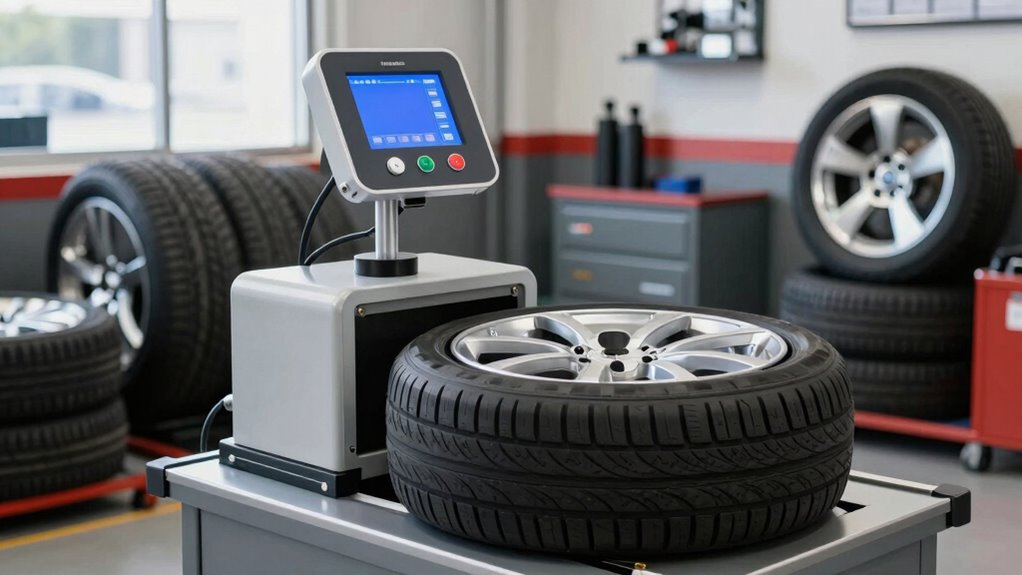
For tire shops choosing among wheel balancers for tire shops, my best overall direction is the KATOOL KT-T800/B700 combo: it pairs a dedicated balancer with a tire changer for a more joined-up shop workflow. The KATOOL KT-T830+KT-B700 is a stronger fit for shops that want a bead blaster and assist-oriented setup, while the Professional Auto portable balancer suits buyers who prioritize moving or storing equipment. The central tradeoff is between a compact, simpler balancing tool and a larger combo that can handle more of the tire-service process but needs more floor space and setup. Bubble-style balancers can make sense for basic static balancing, but they are not a like-for-like replacement for powered shop equipment. Continue reading for the full breakdown and guidance on matching a machine to your workload.

Get business pricing on garage and car supplies
- Business-only prices and quantity discounts
- Tax-exempt purchasing
- Multiple users, one account, clear invoices
Complete the kit


Key Takeaways
- Integrated combos lead for workflow: the KATOOL KT-T800/B700 and KT-T830+KT-B700 pair balancing with tire-changing equipment, reducing the need to piece together separate stations.
- The KT-T830+KT-B700 is the feature-led combo: its 2.0HP tire changer and bead blaster target shops that need more tire-service capability, though that added equipment can demand more space and setup.
- Portable models trade automation for flexibility: the Professional Auto unit and bubble balancers are easier to position or store, but their simpler formats suit narrower workloads than shop-oriented combos.
- Bubble balancers are a different class of tool: the three bubble-style options emphasize static balancing and straightforward operation, rather than the broader functionality of powered combos.
- Power and fit need checking before purchase: the 110V label on the KATOOL ME 2.0HP combo and XK 580-690 combo is useful only if the shop’s electrical setup, wheel range, and installation needs match the machine.


More Details on Our Top Picks
Professional Auto Wheel Balancer Portable Car Tire Balancer for Tire Workshops
The KT-710G is the most capable standalone balancer in this group for shops that want electronic-style accuracy without buying a tire changer as part of the same package. Its listed 1g accuracy, self-calibration, and ALU function address a broader range of rims than the manual bubble balancers from Portable Bubble Wheel Balancer Heavy Duty Tire Balancer and Tire Balancer Portable Bubble Wheel Balancer. Motorcycle and racing-tire compatibility also gives it a wider service brief than those simpler options. The tradeoff is uncertainty: the supplied data does not specify its power source, dimensions, or operating workflow, so I would verify installation and support details before making it a daily production machine. It also calls for more operator know-how than a basic bubble balancer.
Pros:- Listed 1g balancing accuracy supports fine correction work.
- Self-calibration reduces reliance on repeated manual setup adjustments.
- ALU function accommodates special-shaped rims.
- Designed for car, motorcycle, and racing tires.
Cons:- Power requirements and machine dimensions are not provided.
- Technical familiarity may be needed to use its functions effectively.
- The available data does not establish its service workflow or support details.
Best for: Tire shops that already have a tire changer and need a standalone balancer for varied passenger-car, motorcycle, or racing rims.
Not ideal for: Shops that need a fully specified, ready-to-plan installation or want the simplest manual balancing process.
- Model:KT-710G
- Rim diameter:10–24 inches
- Balancing accuracy:1g
- Calibration:Self-calibration system
- Special function:ALU mode for special-shaped rims
- Intended tire types:Cars, motorcycles, and racing tires
Our verdict“Choose the KT-710G if you need a more precise, feature-rich standalone balancer and can confirm its installation requirements before purchase.”
XK Tire Changers Machine and Wheel Balancer Combo, Model 988-690
The XK 988-690 earns its place for shops that want a tire changer and balancer in one package rather than piecing together separate machines. Its listed dynamic, static, aluminum, and motorcycle modes cover more wheel types than either portable bubble balancer here, while the 41-inch maximum wheel diameter gives the changer broad stated capacity. A 110V listing and supplied centering cones and quick-release wing nut make the package easier to plan around than the KATOOL ME 2.0HP combo, whose supplied details focus on the changer and do not list balancing accuracy or modes. Still, this is a substantial 397-pound setup, and the broad feature list does not remove the need to plan installation and setup carefully. I would skip it if a shop only needs a balancer.
Pros:- Combines a tire changer and wheel balancer in one package.
- Includes dynamic, static, aluminum, and motorcycle balancing modes.
- Listed balancing accuracy ranges from -1g to +1g.
- Includes four centering cones and a quick-release wing nut.
Cons:- At 397 pounds, delivery, placement, and installation need advance planning.
- Combined equipment is unnecessary if the shop only needs a balancer.
- Setup may call for professional assistance.
Best for: Small or midsize tire shops setting up a combined mounting and balancing station for passenger vehicles, motorcycles, and larger-diameter wheels.
Not ideal for: Shops that already own a tire changer, lack room or equipment to position a 397-pound machine, or need a lightweight portable balancer.
- Model:988-690
- Motor power:2.0 horsepower
- Voltage:110V listed; power supply noted as 110/220V, 50/60Hz
- Maximum wheel diameter:41 inches
- Maximum wheel width:12.5 inches
- Rim diameter range:10–24 inches
- Rim width range:1.5–20 inches
- Maximum wheel weight:155 pounds
- Balancing modes:Dynamic, static, aluminum, and motorcycle
Our verdict“Pick the XK 988-690 if you are equipping a shop from scratch and can accommodate a heavy combined machine.”
Portable Bubble Wheel Balancer Heavy Duty Tire Balancer with Bubble Level for Cars and Trucks
This 12.05-pound bubble balancer is best treated as a portable manual tool or backup station, not as a substitute for the powered XK 988-690 or KT-710G. Its bubble level offers a straightforward way to judge static balance, and the machined-aluminum head with a self-aligning spring-load cone helps center compatible wheels. That simplicity can suit a small operation that values mobility and does not need electronic modes or the KT-710G’s listed 1g accuracy. The limit is just as clear: the product data describes use for cars and light trucks, with no stated dynamic or ALU balancing functions. Shops handling a high volume of varied wheels should look to a powered machine; this one trades speed and breadth for a compact, manual setup.
Pros:- Lightweight design is easier to move or store than the combo machines.
- Bubble level provides a simple visual balancing indicator.
- Self-aligning spring-load cone supports wheel centering.
- Machined aluminum head and rust-resistant enamel finish.
Cons:- Manual design lacks the listed modes and automation of the KT-710G and XK 988-690.
- Product description limits its intended use to cars and light trucks.
- No electronic accuracy specification is provided.
Best for: Mobile mechanics, small tire shops, or repair bays that need a portable manual balancer for compatible passenger-car and light-truck wheels.
Not ideal for: High-volume shops or technicians balancing heavy-duty wheels and seeking dynamic, ALU, or powered balancing functions.
- Weight:12.05 pounds
- Dimensions:16.97 × 12.13 × 7.32 inches
- Hub compatibility:1.5–4 inches diameter
- Head material:Machined aluminum
- Finish:Rust-resistant enamel
- Balancing indicator:Bubble level
- Stated vehicle use:Cars and light trucks
Our verdict“Choose this as a portable manual backup for light-vehicle work, not as the primary balancer for a busy, varied tire shop.”
KATOOL ME 2.0HP Tire Machine Combo with Double Assist Arm and Bead Blaster, 12-22″ Outside & 14-24″ Inside Rim Size, 110V
The KATOOL ME combo is the pick here for shops whose tire-changing workload—not a published balancer specification—is the main concern. Its double assist arm and bead blaster are aimed at difficult mounting jobs, while the 2.0HP motor and stated capacity up to 41-inch wheel diameter give it a substantial shop footprint. Compared with the XK 988-690, its description puts more emphasis on tire-changing assistance and less on balancing details: no balancing accuracy, balancer modes, or wheel-weight limit are supplied. That makes the XK the clearer choice when documented balancing capabilities matter most. At 524 pounds, this KATOOL also needs more careful placement planning than the portable KT-710G. I would confirm exactly what balancing equipment is included before treating it as a complete balancing station.
Pros:- Double assist arm is suited to demanding tire-mounting work.
- Bead blaster helps address stubborn beads.
- 2.0HP motor and stated capacity up to 41-inch wheel diameter support substantial shop use.
- 110V specification may suit shops planning around that supply.
Cons:- At 524 pounds, delivery, setup, and positioning require planning.
- Balancing accuracy and operating modes are not specified in the supplied data.
- Package dimensions and machine weight call for dedicated floor space.
Best for: Established garages that regularly handle stubborn beads and need a heavy-duty tire-changing setup with assist-arm features.
Not ideal for: Shops prioritizing clearly documented balancing accuracy or modes, or buyers without room and support for a 524-pound machine.
- Model:530+620F
- Motor power:2.0HP
- Voltage:110V
- Rim size range:Outside 12–22 inches; inside 14–24 inches
- Maximum wheel diameter:41 inches
- Weight:524 pounds
- Package dimensions:44 × 33 × 32 inches
- Included features:Double assist arm and bead blaster
Our verdict“Choose the KATOOL ME when bead handling and tire-changing assistance lead your needs, but verify the included balancer specifications first.”
Tire Balancer Portable Bubble Wheel Balancer Tire Changer with Bubble Level for Car Light Truck Wheel Balancing
This portable bubble balancer suits a shop that needs a simple, movable static-balancing tool for passenger cars and light trucks. At 11.64 pounds, it is slightly lighter than the Portable Bubble Wheel Balancer Heavy Duty Tire Balancer, and its listed 24-inch height gives buyers a useful setup dimension missing from that product’s data. The aluminum-alloy body and chrome-plated rods are intended to resist rust, while the 1.5-to-4-inch hub range covers common compatible hub sizes. Unlike the electronic KT-710G, though, this model has no stated self-calibration, ALU mode, or 1g accuracy. Its basic bubble-level approach is better suited to occasional or backup work than a busy shop needing multiple balancing modes and repeatable powered workflow.
Pros:- Light 11.64-pound build is convenient to move.
- Hub range covers 1.5–4 inches in diameter.
- Aluminum alloy and chrome-plated rods are specified for rust resistance.
- Listed height and base dimensions help with storage and setup planning.
Cons:- Designed mainly for light cars and trucks rather than heavy-duty wheels.
- No electronic calibration or accuracy figure is provided.
- Bubble-level operation offers fewer functions than the KT-710G.
Best for: Mobile technicians and small repair shops seeking a light, manually operated balancer for compatible car and light-truck wheels.
Not ideal for: High-throughput tire shops, heavy-duty wheel service, or buyers who need electronic accuracy specifications and multiple balancing modes.
- Hub diameter range:1.5–4 inches
- Weight:11.64 pounds
- Height:24 inches
- Base diameter:11.5 inches
- Center rod diameter:0.813 inches
- Material:Aluminum alloy
- Rod finish:Chrome-plated
- Balancing indicator:Bubble level
Our verdict“Pick this portable manual balancer for occasional light-vehicle work when compact handling matters more than electronic features or shop throughput.”
Portable Bubble Wheel Balancer with Bubble Level Static Balancing Machine Tire Changer Auto Car Wheel Repair Balancer
This portable bubble balancer is the simplest option here: it relies on a bull’s-eye level for static balancing rather than the powered measuring cycle offered by the KATOOL KT-T800/B700 combo. That makes it a fit for a small shop that needs a movable, low-complexity way to balance many standard car and light-truck wheels, or as a backup when powered equipment is unavailable. Its lightweight base and anti-rust enamel finish favor easy storage and handling. The tradeoff is limited capability: the supplied details give no balancing accuracy, supported wheel dimensions, or dynamic balancing modes, so I would not choose it as the primary balancer for a busy tire shop handling varied wheel assemblies. Compared with the powered KATOOL, this is easier to move but offers far less documented performance and workflow speed.
Pros:- Bull’s-eye bubble level supports straightforward static balancing
- Lightweight design is easier to carry and store than the KATOOL combo machines
- Anti-rust enamel finish is suited to routine shop handling
- Listed for most automobile and light-truck wheels
Cons:- No stated wheel-size range or maximum wheel weight
- No accuracy or cycle-time specifications are provided
- Static balancing is less versatile than the powered modes described for the KATOOL KT-T800/B700
Best for: Small repair shops or mobile technicians who need a portable static balancer for common car and light-truck wheels, rather than a high-throughput primary machine.
Not ideal for: Busy tire shops balancing a varied mix of wheels throughout the day; the product data does not specify capacity, accuracy, or dynamic balancing capability.
- Balancing type:Static, bubble-level
- Level:Bull’s-eye bubble level
- Wheel fit:Most automobiles and light trucks
- Base finish:Anti-rust enamel
- Portability:Lightweight and portable
- Power:Not specified
Our verdict“Choose this portable balancer for simple, occasional static work, but select a powered machine for a tire shop’s main balancing station.”
KATOOL KT-T800/B700 Tire Changer and Wheel Balancer Combo Machine for Garage and Shop Use
The KT-T800/B700 earns this spot for shops that want specific balancing performance data alongside a tire changer. Its listed ±1 g accuracy and seven-second measuring time give buyers a clearer basis for planning a repeatable workflow than the bubble-level portable balancer, which provides no accuracy or cycle-time figures. The changer handles wheels up to 41 inches in diameter and 15 inches wide, while the balancer’s stated working range is narrower: under 880 mm diameter and 3–12 inches wide. That distinction matters when a shop handles large assemblies. At 186 kg, it also needs a fixed, prepared location, unlike the portable model. Multiple modes, fault diagnosis, and self-calibration add capability, but the supplied description does not detail every mode or setup step, so newer operators may need training.
Pros:- Stated balancing accuracy of ±1 g and seven-second measuring time
- 120V single-phase supply suits shops without a specified three-phase connection
- Changer accommodates wheels up to 41 inches in diameter and 15 inches wide
- Fault diagnosis and self-calibration are listed features
Cons:- The 186 kg net weight makes placement and relocation difficult
- Balancing range is narrower than the changer’s wheel-size range
- Multiple controls and setup requirements may challenge operators new to shop equipment
Best for: Automotive shops that want a documented accuracy and measuring cycle in a combined changer-balancer setup, and can dedicate floor space to a fixed machine.
Not ideal for: Mobile technicians, very small garages, or shops regularly balancing wheels outside the balancer’s stated under-880-mm diameter and 3–12-inch width range.
- Power supply:120V, 1 phase
- Motor power:2.0 HP / 1.5 kW
- Maximum changer wheel diameter:41 inches / 1040 mm
- Maximum changer wheel width:15 inches / 380 mm
- Balancing wheel diameter:Under 880 mm
- Balancing wheel width:3–12 inches
- Balancing accuracy:±1 g
- Measuring time:7 seconds
- Net weight:186 kg
Our verdict“Pick the KT-T800/B700 if documented balancing accuracy matters more than portability and your shop’s wheels fit its stated balancer range.”
KATOOL 2.0HP Tire Changer Bead Blaster Wheel Balancer Machine Combo KT-T830+KT-B700
For a shop prioritizing a broad changer range and a substantial integrated setup, the KT-T830+KT-B700 is the high-volume pick. Its changer clamps rims from 12–24 inches outside or 14–26 inches inside, a wider stated reach than the KT-T800/B700’s 12–20-inch outside clamp range. That can reduce the need to turn away work based on rim size, while the listed bead blaster and emphasis on reducing operator strain suit repeated service. The tradeoff is scale: at 583 pounds and 47 x 39 x 34 inches, it demands a planned installation area and is not a portable or casual-garage purchase. Unlike the KT-T800/B700 listing, this product data does not provide balancing accuracy or measuring time, so buyers seeking those performance benchmarks should compare specifications with care.
Pros:- Changer clamp ranges extend to 24 inches outside and 26 inches inside
- Bead blaster is included in the combo description
- Designed to reduce operator strain during repeated work
- Large, shop-oriented construction suits a dedicated service bay
Cons:- At 583 pounds, delivery, positioning, and installation need planning
- Its 47 x 39 x 34-inch footprint uses substantial floor space
- No balancing accuracy or measuring-time figures are supplied
Best for: Established tire shops with steady mounting and balancing volume, a broad mix of rim sizes, and room for a heavy fixed workstation.
Not ideal for: Small garages or shops needing easy relocation, and buyers who require published balancing accuracy or cycle-time specifications before choosing equipment.
- Model:530Z+600
- Outside clamp range:12–24 inches
- Inside clamp range:14–26 inches
- Cylinder size:8 inches diameter
- Item weight:583 pounds
- Dimensions:47 x 39 x 34 inches
- Motor power:2.0 HP
- Combo equipment:Tire changer, bead blaster, and wheel balancer
Our verdict“Choose this KATOOL combo for a busy shop that needs broad changer capacity and can accommodate a heavy installation, not for a space-limited garage.”
XK Tire Changer and Wheel Balancer Combo, 110V, 580-690
The XK 580-690 is the more flexible fit for buyers who need a combined machine but may not have a shop-only setup. Its 110V supply is a practical distinction from equipment whose power requirements may call for a dedicated shop connection, and the description covers automotive repair shops as well as home garages. The balancer supports wheels up to 44 inches and 155 pounds, while the changer handles tires up to 37 inches in diameter; those separate limits should be checked against the work you actually take in. Compared with the KATOOL KT-T800/B700, the XK lists a higher maximum wheel diameter for balancing, but it does not provide a balancing accuracy or measuring time. At 780 pounds shipping weight, it is a heavy, fixed-installation choice, not something to move around a small garage.
Pros:- 110V power supply may suit locations without a higher-voltage connection
- Balancer supports wheels up to 44 inches and 155 pounds
- Multiple balancing modes are described
- Powder-coated finish is specified for corrosion resistance
Cons:- Shipping weight of 780 pounds calls for careful delivery and placement planning
- Tire changer maximum diameter is 37 inches, separate from the balancer’s 44-inch limit
- Motorcycle adapter shown in pictures is not included
- No balancing accuracy or cycle-time figures are provided
Best for: Small automotive shops and serious home garages that need a 110V changer-balancer combo and handle wheels within the listed limits.
Not ideal for: Mobile service providers or cramped garages, and shops that need published balancing accuracy, a lightweight installation, or the pictured motorcycle adapter.
- Voltage:110V
- Tire clamping range, outside:6–15 inches
- Tire clamping range, inside:8–17 inches
- Maximum tire diameter:37 inches
- Maximum wheel diameter for balancing:44 inches
- Maximum wheel weight:155 pounds
- Maximum wheel width:12 inches
- Operating pressure:120–145 psi (8–10 bar)
- Shipping weight:780 pounds
Our verdict“Choose the XK 580-690 for a fixed 110V shop or garage setup that needs broad wheel-balancer limits, while verifying the changer’s separate tire limits first.”

How We Picked
I ranked these options around the needs of a working tire shop: the type of balancing each design supports, how well the machine fits into a tire-service workflow, stated wheel and power compatibility, and the practical demands of space, setup, and upkeep. I gave more weight to equipment that combines a tire changer and balancer when the goal is a functioning service station, while recognizing that a portable or bubble unit can be a better match for basic, mobile, or space-limited work.
The order reflects those differences, not a claim that one design suits every shop. Combo models rank ahead when they provide broader shop utility; feature-rich options such as the KATOOL KT-T830+KT-B700 stand apart from simpler packages, while duplicate-style XK combos are separated by the details available in their listed configuration. Portable and bubble models rank lower for full-service shop use because their simpler formats suit more limited tasks. Buyers should verify included accessories, wheel-size limits, electrical requirements, installation, and service support with the seller before ordering.
Factors to Consider When Choosing Wheel Balancers For Tire Shops
Choosing a balancer is a workflow decision, not just a machine decision. I would first define what work the station must handle, then check whether the equipment, shop layout, and service support match that plan.
Match the balancing method to the jobs you accept
A static bubble balancer and a powered shop balancer do not serve every job in the same way. Decide whether your shop handles routine passenger-car tire work, occasional light-truck jobs, or a broad mix that calls for more repeatable shop-station processes. Do not assume a product described as suitable for cars and trucks has the same capacity or balancing functions as every powered unit. Ask the seller which wheel types and balancing modes the machine supports, and request written specifications for load limits. A low-cost static tool can be sensible as a backup or for limited work, but it may not suit a shop that needs one station to cover its standard service mix.
Plan the whole station, not just the machine footprint
A tire changer and balancer combo can reduce the number of separate purchases, but the combined machine still needs room for wheel handling, operator movement, and safe access. Measure the work area with doors, cabinets, and vehicle lifts in their normal positions rather than relying on a machine’s listed dimensions alone. Consider where removed wheels will wait and how technicians will move them between steps. A portable balancer can help when space is tight or equipment must be moved, though portability does not automatically make a unit suitable for high-throughput daily use. Before choosing a combo, confirm its installation requirements and whether the shop floor and access route can accommodate it.
Check electrical supply and installation details early
A 110V specification may fit a shop’s existing supply, but it does not answer every electrical question. Confirm the required circuit, plug type, startup demand, and any air-supply needs for the complete package, including a bead blaster or assist equipment. A mismatch discovered after delivery can delay installation or require extra work. Ask whether the machine ships assembled, what setup is required, and whether calibration or alignment checks are part of commissioning. I would treat these details as purchase criteria, not after-sale errands, especially for a combo intended to become a primary service station.
Compare the included equipment with the work you need done
Product names can emphasize a bead blaster, assist arm, or combo package, but buyers should confirm exactly what is included. Check whether the package contains the mounting accessories, cones, adapters, protective parts, and other items needed for your wheel mix. An assist arm may help with demanding tire work, while a bead blaster can support bead seating; neither feature replaces checking the machine’s wheel compatibility. Avoid comparing packages by headline feature alone, since two combos may differ in configuration even when their names sound similar. Request an itemized list and identify any accessories that must be purchased separately before comparing total setup needs.
Think about throughput, training, and service access
The right machine depends on how often the station will be occupied and how many technicians need to use it. A simpler bubble balancer may be easy to understand, but it can be a bottleneck if the shop expects steady tire volume or needs broader functions. A more involved combo can support a fuller workflow, yet staff still need clear operating instructions and time to learn safe use. Ask about manuals, replacement parts, warranty coverage, and technical support before choosing a machine that will sit at the center of daily work. A modestly equipped unit with accessible service support may be a safer shop choice than a more elaborate machine with unclear parts availability.
Set a clear role for backup and portable equipment
Portable and bubble-style units can be useful when their job is defined: occasional balancing, backup coverage, or work at a location where a full station is impractical. They are less compelling when buyers expect them to replace a powered setup across a high-volume shop’s entire workload. Decide where the tool will live, how it will be secured and stored, and which jobs will be routed to it. If a portable balancer is meant to support roadside or mobile work, confirm that its design and accessories suit that setting rather than relying on the word portable alone. A defined secondary role prevents a compact tool from becoming an unexpected limitation at the main service bay.
Frequently Asked Questions
Should a tire shop choose a combo machine or buy a balancer and tire changer separately?
A combo makes sense when you are setting up a station and want the tire-changing and balancing steps in one package. It can simplify equipment selection, but the package may limit your ability to choose each machine independently or upgrade just one later. Separate machines can give an established shop more control over capacity and layout, though they require more selection work and may take more floor space. Compare the included accessories, service arrangements, and installation requirements rather than assuming a combo is automatically the easier option. For a shop with a defined workflow and limited room, a combo is often the more straightforward starting point.
Can a bubble balancer handle the regular workload of a tire shop?
It can support basic static balancing tasks, but it is not equivalent to a powered shop balancer in function or workflow. Whether it can handle your workload depends on the services you offer, wheel mix, expected volume, and the balancing results your customers require. A bubble unit may be useful as a backup or for limited service, while a busy general tire shop may need a more capable primary station. Ask the manufacturer or seller to clarify the method, supported wheel types, and operating limits. Do not choose it as your only balancer until those limits match your actual service menu.
What should I verify before buying a 110V tire changer and balancer combo?
Confirm the machine’s required circuit and plug, along with any air supply or other utilities needed by the complete package. Check that the shop’s electrical service can support the stated power requirements and that the outlet is located where the station will operate. Also verify the included wheel-size range, accessories, installation steps, and whether the listed voltage applies to every component. A 110V label alone does not confirm that the machine will work with a particular circuit or shop setup. Written confirmation from the seller can prevent avoidable installation delays.
How do I decide whether a bead blaster or assist arm is worth prioritizing?
Start with the tire and wheel jobs your technicians handle most often, rather than buying features because they appear in a product name. A bead blaster may be useful for bead-seating tasks, while an assist arm can help with tire-changing work that is harder to manage manually. Confirm what each feature does on the exact configuration and whether it is included or sold separately. If your shop handles a broad or demanding tire mix, these additions may make a combo more useful as a primary station. For occasional, simple work, a less equipped setup may be easier to place and operate.
What details should I confirm when two combo listings appear similar?
Compare the model numbers and written specifications, not just the product titles. Check wheel-size limits, power requirements, included accessories, bead-blaster or assist features, assembly needs, and warranty and parts support. The XK 988-690 and XK 580-690 listings, for example, should not be treated as identical without confirming their configurations with the seller. Ask for a complete included-items list and clarification of any differences before making a decision. This is especially useful when product pages use similar names but provide different levels of detail.
Conclusion
For a shop that wants one joined-up service station, I would start with the KATOOL KT-T800/B700 as my best overall direction, then confirm its exact configuration and compatibility with the seller. The KATOOL KT-T830+KT-B700 is my best premium-style pick for buyers who value the listed 2.0HP changer and bead blaster, provided the shop can support its setup and space needs. For a value-minded buyer, I would compare the XK 580-690 and XK 988-690 combos by included equipment, support, and installation details rather than relying on their similar titles. The Professional Auto portable balancer is my beginner-friendly choice for a simpler, movable setup, while the bubble models best fit basic static balancing or backup use rather than a full-service primary station. Choose the machine that matches your service mix and infrastructure, and verify specifications before ordering.