For mobile mechanics, the best tire changer and balancer combo balances useful assist features with the space, power, and transport demands of a service vehicle. My best overall pick is the KATOOL 2.0HP 830+760 combo with double assist, while the WEIZE 110V combo stands out for its bead blaster and dual assist arms, and the BILT Hard 110V combo is a simpler swing-arm option for a compact shop workflow. The main tradeoff is that larger, more capable machines can be harder to move and set up, while lighter or simpler units may ask more of the operator. I compare all 10 options by their listed features, wheel range, power needs, and likely fit for mobile work. Read on for the full breakdown and a guide to matching a combo to your route and workload.

Get business pricing on garage and car supplies
- Business-only prices and quantity discounts
- Tax-exempt purchasing
- Multiple users, one account, clear invoices
Complete the kit


Key Takeaways
- Assist features shape the ranking: the KATOOL 830+760 and WEIZE combos list dual or double assist features, which can reduce the physical effort of handling difficult tires compared with simpler swing-arm configurations.
- Bead-blast capability is a meaningful differentiator: the WEIZE and KATOOL KT-T850 combos list bead-blaster features, useful when the job mix includes tires that are difficult to seat.
- 110V power appears across several choices: BILT Hard, WEIZE, and both XK options list 110V, but mobile buyers still need to plan for suitable power delivery at the job site.
- Wheel-range claims need careful matching: several models list capacity reaching 24 inches, but advertised rim range alone does not confirm fit for every wheel design, tire profile, or service situation.
- These are shop-style machines, not automatically vehicle-ready kits: their listed capabilities may suit a mobile business, but transport space, secure mounting, compressed air, and operating power remain buyer-side decisions.
| KATOOL 2.0HP Tire Machine Combo with Double Assist Tire Changer and Wheel Balancer (830+760) |  | Best for Standard Shop Power on 120V | Outside clamp range: 12–22 inches | Inside clamp range: 14–24 inches | Motor power: 2.0 HP | VIEW ON AMAZON | See Our Full Breakdown |
| KATOOL Tire Changer Machine Combo Tilt Back + Bead Blaster KT-T850 + Wheel Balancer (Automatic Measurement) KT-B760 |  | Best for Larger Wheels | Outside clamp: 14–26 inches | Inside clamp: 16–28 inches | Body material: 3mm steel | VIEW ON AMAZON | See Our Full Breakdown |
| BILT Hard 110V 2.0HP Tire Changer Machine and Wheel Balancer Combo Rim Clamp with Swing Arm for Shop and Garage |  | Best for Broad Tire Coverage | Rim compatibility: 12–24 inches | Tire compatibility: Up to 39.4 inches | Wheel diameter range: 10–28 inches | VIEW ON AMAZON | See Our Full Breakdown |
| KATOOL Tire Changer and Wheel Balancer Combo KT835 + KT760 |  | Best for Diagnostic Shop Features | Power: 2.0 HP | Tire range: 14–24 inches | Wheel diameter support: Up to 28 inches | VIEW ON AMAZON | See Our Full Breakdown |
| KATOOL KT-T835 Tire Changer and KT-B750 Wheel Balancer Combo |  | Best for Guided Balancing | Changer maximum wheel diameter: 41 inches / 1040 mm | Changer maximum wheel width: 15 inches / 350 mm | Outside clamp: 13–24 inches | VIEW ON AMAZON | See Our Full Breakdown |
| KATOOL ME 2.0HP 24″ Tire Changer and Wheel Balancer Combo for Automotive Repair Shops and Garages |  | Best for Compact Shop Footprints | Tire clamping range: 14–24 inches | Maximum tire diameter: 39 inches | Wheel rim diameter capacity: 10–24 inches | VIEW ON AMAZON | See Our Full Breakdown |
| XK Heavy Duty Tire Changers and Wheel Balancer Combo, 110V, Model 988-690 | 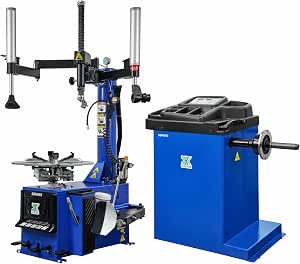 | Best for High-Volume Shop Work | Model: 988-690 | Voltage: 110V | Maximum wheel diameter: 41 inches | VIEW ON AMAZON | See Our Full Breakdown |
| WEIZE 110V 2.0 HP Tire Changer and Wheel Balancer Combo, 10”-24” Rim, Air Bead Blaster, Dual Assist Arms |  | Best for Difficult Bead Seating | Power: 2 HP | Voltage: 110V | Rim range: 10–24 inches | VIEW ON AMAZON | See Our Full Breakdown |
| 2.0HP Swing Arm 24″ Clamping Tire Changer Wheel Changer Machine Tires Machine Wheel Balancer Combo (ME-T500+B620) |  | Best for Balancing Precision | Maximum wheel diameter: 41 inches (1040 mm) | Maximum wheel width: 15 inches (380 mm) | Outside clamp range: 12–20 inches | VIEW ON AMAZON | See Our Full Breakdown |
| XK Tire Changers Machine and Wheel Balancer Combo, 110V, 580-690 |  | Best for Broad Balancer Capacity | Voltage: 110V | Tire changer rim clamping, outside: 6–20 inches | Tire changer rim clamping, inside: 10–18 inches | VIEW ON AMAZON | See Our Full Breakdown |
| tire changer and balancer combos for mobile mechanic | Voltage | Motor power |
|---|---|---|
| KATOOL 2.0HP Tire Machine Comb | 120V / 1-phase | 2.0 HP |
| KATOOL Tire Changer Machine Co | — | — |
| BILT Hard 110V 2.0HP Tire Chan | — | 2.0 HP |
| KATOOL Tire Changer and Wheel | 110V | — |
| KATOOL KT-T835 Tire Changer an | — | 2.0 HP / 1.5 kW |
| KATOOL ME 2.0HP 24" Tire Chang | 120V, single-phase | 1.5 HP |
| XK Heavy Duty Tire Changers an | 110V | — |
| WEIZE 110V 2.0 HP Tire Changer | 110V | — |
| 2.0HP Swing Arm 24" Clamping T | — | 2.0 HP (1.5 kW) |
| XK Tire Changers Machine and W | 110V | — |
More Details on Our Top Picks
KATOOL 2.0HP Tire Machine Combo with Double Assist Tire Changer and Wheel Balancer (830+760)
The 120V, 2.0HP setup makes this KATOOL a practical fit for mobile mechanics who need to work from common single-phase power, provided the equipment can stay at a home base or be transported with suitable lifting gear. Its clamp ranges cover 12–22-inch outside and 14–24-inch inside mounting, giving it useful flexibility across everyday passenger vehicles. Compared with the larger KATOOL KT-T850 + KT-B760, this combo is lighter and takes up less listed package space, but gives up some clamping range and the tilt-back design. At 583 pounds, it is still far from easy to load in and out of a service van. The double-assist design may help with demanding mounting work, though setup complexity makes it a better match for mechanics already comfortable installing shop equipment than for a first-time operator.
Pros:- Runs on 120V single-phase power, which suits many standard shop electrical setups.
- 2.0HP motor supports regular tire-changing work.
- Clamp ranges cover a useful spread of common wheel sizes.
- Double-assist design is suited to tire mounting work that benefits from added assistance.
Cons:- At 583 pounds, the combo is not practical for frequent solo transport.
- The package requires substantial space and careful installation.
- Setup may be challenging for mechanics new to tire equipment.
Best for: Mobile mechanics who run a fixed service bay or truck-based operation with a permanent, adequately supported setup and primarily service common passenger-vehicle wheel sizes.
Not ideal for: Mechanics who need to load the machines into a van for each job, work mainly on larger tires outside the clamp ranges, or want a simple first tire-service setup.
- Outside clamp range:12–22 inches
- Inside clamp range:14–24 inches
- Motor power:2.0 HP
- Voltage:120V / 1-phase
- Item weight:583 pounds
- Package dimensions:47 × 39 × 34 inches
Our verdict“Choose this for a 120V-equipped home base serving common wheel sizes, not for a mechanic who needs genuinely portable equipment.”
KATOOL Tire Changer Machine Combo Tilt Back + Bead Blaster KT-T850 + Wheel Balancer (Automatic Measurement) KT-B760
For mobile mechanics whose work regularly includes larger wheels, this combo earns its place through 14–26-inch outside and 16–28-inch inside clamp ranges, plus a tilt-back changer design intended for larger tires. The balancer’s automatic measurement can reduce manual input during repeat jobs, a useful advantage when tire work is part of a busy service route. Compared with the KATOOL 830+760, this model offers more clamping reach, but its 750-pound weight makes it a much tougher candidate for mobile deployment. It is better understood as equipment for a well-equipped mobile workshop or a fixed support bay than as something to bring to each roadside call. The steel construction and stainless bead-breaker cylinder are substantial, but installation and handling call for proper equipment and space.
Pros:- Wider clamp ranges than the KATOOL 830+760 for larger compatible wheels.
- Tilt-back design is suited to servicing larger tires.
- Automatic balancer measurement can cut down on manual setup steps.
- 3mm steel body and stainless bead-breaker cylinder are designed for demanding shop use.
Cons:- At 750 pounds, transport and installation require serious planning and lifting support.
- Its 46 × 34 × 67-inch dimensions demand a substantial dedicated footprint.
- Setup may call for professional assistance.
Best for: Mobile tire-service businesses with a permanent truck-shop or depot setup that regularly handles larger passenger and light-truck wheels.
Not ideal for: Solo mechanics who need equipment they can routinely move by hand, operate in a compact van, or install without lifting support.
- Outside clamp:14–26 inches
- Inside clamp:16–28 inches
- Body material:3mm steel
- Bead breaker cylinder:186mm stainless
- Weight:750 pounds
- Dimensions:46 × 34 × 67 inches
Our verdict“Pick this when larger-wheel capability matters more than easy transport and you have a supported installation site.”
BILT Hard 110V 2.0HP Tire Changer Machine and Wheel Balancer Combo Rim Clamp with Swing Arm for Shop and Garage
The BILT Hard stands out for its stated tire compatibility up to 39.4 inches and support for rims from 12 to 24 inches, making it a stronger fit for varied wheel work than the narrower ranges listed for the KATOOL 830+760. Its 110V power requirement may suit a mobile mechanic’s base shop, while dynamic and static balancing modes give operators options for different balancing jobs. Rim protection and a hands-free pedal system are useful when the priority is repeatable service with less risk of marking wheels. The tradeoff is that the available data does not give a machine weight or package dimensions, so transport and vehicle fit are hard to plan from the listing alone. It is also described as professional equipment, which may mean more setup and operating complexity than a beginner wants.
Pros:- Stated tire capacity reaches 39.4 inches, broader than the KATOOL 830+760’s listed clamp ranges suggest.
- 110V operation suits many standard single-phase shop setups.
- Dynamic and static balancing modes support different balancing needs.
- Rim-protection features and hands-free pedals support controlled operation.
Cons:- Weight and package dimensions are not provided, complicating mobile installation planning.
- Professional-oriented features may create a learning curve for beginners.
- The listing does not specify a full clamp-range breakdown comparable to some KATOOL models.
Best for: Mobile mechanics with a fixed service location who handle mixed wheel types and value a stated tire capacity up to 39.4 inches.
Not ideal for: Mechanics who need confirmed weight and dimensions before planning vehicle loading, or beginners looking for a clearly simple setup.
- Rim compatibility:12–24 inches
- Tire compatibility:Up to 39.4 inches
- Wheel diameter range:10–28 inches
- Wheel width range:1.5–18 inches
- Motor power:2.0 HP
- Operating voltage:110V / 60Hz
- Noise level:70 dB
- Bead-breaking force:10 Bar
- Balancing modes:Dynamic and static
Our verdict“Consider this for broad tire-size coverage at a fixed mobile-service base, but confirm its dimensions and handling requirements before purchase.”
KATOOL Tire Changer and Wheel Balancer Combo KT835 + KT760
The KT835 + KT760 is aimed at mechanics who want auto calibration and fault diagnosis alongside a capable 110V, 2.0HP changer. Those functions can help make routine servicing more consistent and help operators identify problems without relying entirely on guesswork. Its listed support for wheels up to 28 inches gives it a broader stated ceiling than the KATOOL 830+760, while the alloy-steel construction and double-side assist arm bead blast suit regular shop work. For a mobile mechanic, though, the 661-pound weight is the defining limitation: this is equipment for a dedicated mobile workshop or fixed service bay, not frequent van loading. Compared with the tilt-back KT-T850 + KT-B760, it is lighter, but has a lower stated wheel-size ceiling.
Pros:- Auto calibration and fault diagnosis add useful shop-oriented operating support.
- 110V power and a 2.0HP motor suit many standard service-bay electrical setups.
- Supports wheels up to 28 inches, above the stated range of the KATOOL 830+760.
- Double-side assist arm bead blast adds capability for tire-service work.
Cons:- At 661 pounds, it is a poor fit for frequent mobile transport.
- Installation likely needs a sturdy, dedicated space and lifting support.
- Its 28-inch wheel ceiling is lower than the KT-T850 + KT-B760’s listed 28-inch inside clamp limit and wider clamp ranges.
Best for: Established mobile tire-service operators who keep equipment at a dedicated bay and want calibration and diagnostic features for regular work.
Not ideal for: Mechanics who need to move their changer and balancer between job sites, or who need the larger clamping range of the KT-T850 + KT-B760.
- Power:2.0 HP
- Tire range:14–24 inches
- Wheel diameter support:Up to 28 inches
- Voltage:110V
- Item weight:661 pounds
- Package dimensions:46 × 34 × 33 inches
- Construction:Alloy steel
Our verdict“Choose it for a permanent mobile-service bay where calibration and diagnostics matter more than moving the machines between calls.”
KATOOL KT-T835 Tire Changer and KT-B750 Wheel Balancer Combo
The KT-T835 + KT-B750 combines a laser guide with automatic measurement, giving mechanics more guidance during fitting and balancing than the basic setup described for the KATOOL 830+760. Its changer lists a 41-inch maximum wheel diameter and a 13–24-inch outside clamp range, while the balancer has its own stated limits of under 880mm wheel diameter and 3–12-inch wheel width. That split matters: buyers should match both machines’ limits to the wheels they service rather than treating the changer’s maximum as the balancer’s capacity. Rim guards and a bead-blast seater support careful work, but at 582 pounds this combo is still a fixed-base solution for most mobile mechanics. It offers useful guided features without the 750-pound burden of the KT-T850 + KT-B760, though setup may still need experienced help.
Pros:- Laser guide and automatic measurement provide added guidance during wheel servicing.
- Changer lists a maximum wheel diameter of 41 inches.
- Rim guards and bead-blast seater support careful tire and wheel handling.
- At 582 pounds, it is lighter than the KATOOL KT-T850 + KT-B760.
Cons:- The 582-pound net weight still makes routine job-site transport impractical.
- Balancer limits differ from the changer’s maximum, so wheel compatibility needs checking.
- Installation and setup may require experienced assistance.
Best for: Mobile mechanics with a fixed workshop base who want laser-guided balancing and service a range of passenger and light-truck wheel sizes within both machines’ limits.
Not ideal for: Mechanics who need portable equipment, service wheels outside the balancer’s stated limits, or want a minimal setup without installation assistance.
- Changer maximum wheel diameter:41 inches / 1040 mm
- Changer maximum wheel width:15 inches / 350 mm
- Outside clamp:13–24 inches
- Inside clamp:14–28 inches
- Power supply:110V, 1-phase, 60Hz
- Motor power:2.0 HP / 1.5 kW
- Net weight:582 pounds
- Balancer wheel diameter:Under 880 mm
- Balancer wheel width:3–12 inches
Our verdict“Pick this for guided, fixed-base service when its separate changer and balancer capacity limits match the wheels on your route.”
KATOOL ME 2.0HP 24″ Tire Changer and Wheel Balancer Combo for Automotive Repair Shops and Garages
The KATOOL ME pairs a 24-inch clamping range with a 39-inch tire capacity, covering a broad mix of passenger-vehicle work without the 41-inch capacity offered by the WEIZE or ME-T500+B620. Its 120V power suits garages where a dedicated higher-voltage circuit is unavailable, while the combined changer and balancer avoids splitting the workflow across separate machines. Stainless mounting hardware and alloy steel jaws are intended to help protect rims during service. The tradeoff is its 473-pound weight: that is lighter than several heavy-duty combos here, but still not something I would treat as a casually movable mobile setup. Setup may also call for technical help, and buyers outside 120V regions should look elsewhere.
Pros:- Combines changing and balancing in one machine, keeping the service workflow together.
- 14–24-inch clamping range and 39-inch maximum tire diameter cover many passenger-vehicle jobs.
- Stainless mounting head and alloy steel jaws are designed to reduce rim damage risk.
- 120V single-phase supply can suit garages without a higher-voltage connection.
Cons:- At 473 pounds, it needs a planned installation and is poorly suited to frequent transport.
- Setup complexity may require technical assistance.
- 120V-only power limits suitability in regions or shops using different electrical service.
Best for: Independent mechanics who work from a fixed or semi-permanent 120V service bay and need one combo for common passenger-vehicle tire sizes.
Not ideal for: Mechanics who need to load equipment into a van between jobs, or buyers who regularly service tires larger than 39 inches or need non-120V power.
- Tire clamping range:14–24 inches
- Maximum tire diameter:39 inches
- Wheel rim diameter capacity:10–24 inches
- Wheel width capacity:1.5–20 inches
- Maximum wheel weight:143 lb
- Cycle time:6–9 seconds
- Motor power:1.5 HP
- Voltage:120V, single-phase
Our verdict“Choose the KATOOL ME for a 120V garage setup that needs broad everyday fitment, not for a machine that must travel from job to job.”
XK Heavy Duty Tire Changers and Wheel Balancer Combo, 110V, Model 988-690
The XK 988-690 is the heavy-duty, shop-first pick in this group. Its dual mechanical arms are meant to speed mounting and dismounting, while six balancing modes give a busy operator more ways to handle different wheel setups than the simpler capability description for the KATOOL ME provides. The 41-inch maximum wheel diameter also edges past that KATOOL’s 39-inch limit. Those advantages come with a major mobility penalty: at 840 pounds, this is equipment for a prepared bay, not a practical van loadout. Digital inflation monitoring and oil-mist lubrication add shop-oriented functionality, but the listed specifications do not clarify power consumption or noise. I would rank it for throughput rather than field flexibility or straightforward setup.
Pros:- Dual mechanical arms are designed to reduce effort during tire mounting and dismounting.
- 41-inch maximum wheel diameter exceeds the KATOOL ME’s stated 39-inch capacity.
- Six balancing modes provide flexibility for different wheel service needs.
- Digital inflation monitoring and oil-mist lubrication add useful shop-focused functions.
Cons:- At 840 pounds, moving and installing it requires substantial planning and equipment.
- A feature-rich setup may be difficult for occasional or inexperienced operators.
- Power consumption and noise specifications are not provided.
Best for: A fixed-location tire shop handling a steady stream of varied wheel sizes, with equipment available to position and install an 840-pound combo.
Not ideal for: Mobile mechanics, solo operators without lifting or moving equipment, and casual garage users likely to find its setup and feature set excessive.
- Model:988-690
- Voltage:110V
- Maximum wheel diameter:41 inches
- Tire width compatibility:10–24 inches
- Balancing modes:6
- Weight:840 lb
- Warranty:18-month parts replacement
Our verdict“Pick the XK 988-690 for a fixed, busy shop that values assist-arm workflow and multiple balancing modes over portability.”
WEIZE 110V 2.0 HP Tire Changer and Wheel Balancer Combo, 10”-24” Rim, Air Bead Blaster, Dual Assist Arms
The WEIZE stands apart through its combination of dual assist arms and an integrated air bead blaster. That pairing can help with tires that resist mounting or bead seating, making it more purpose-built for tougher service jobs than the KATOOL ME, which lists a smaller 39-inch maximum tire diameter and no bead blaster in its supplied details. The WEIZE handles tires up to 41 inches and rims from 10 to 24 inches, but its 795-pound weight makes the “mobile” fit a stretch: I would treat it as transportable only with a suitable vehicle, loading gear, and a planned work area. Its 8–10 bar bead-blaster pressure requirement also calls for a capable air supply. This is a function-rich choice, not a lightweight field kit.
Pros:- Integrated air bead blaster is designed to help seat stubborn tire beads.
- Dual assist arms can reduce manual effort during mounting.
- 41-inch tire capacity and 10–24-inch rim range accommodate varied fitments.
- The combo includes both tire changing and wheel balancing functions.
Cons:- At 795 pounds, it is difficult to move and poorly suited to ordinary mobile setups.
- The bead blaster requires 120–145 psi air, which may be unavailable at some service locations.
- Its large footprint and setup needs reduce flexibility for compact work areas.
Best for: A mobile mechanic with a heavy-duty service vehicle and reliable compressed air who frequently faces stubborn beads or larger tires.
Not ideal for: Mechanics working from a small van, without lifting equipment, or at sites where supplying 120–145 psi air is impractical.
- Power:2 HP
- Voltage:110V
- Rim range:10–24 inches
- Maximum tire diameter:41 inches
- Wheel balancer diameter:10–28 inches
- Air bead blaster pressure:8–10 bar (120–145 psi)
- Weight:795 lb
Our verdict“Choose the WEIZE when bead-seating help and 41-inch capacity matter more than keeping a mobile setup light.”
2.0HP Swing Arm 24″ Clamping Tire Changer Wheel Changer Machine Tires Machine Wheel Balancer Combo (ME-T500+B620)
The ME-T500+B620 is the clearest choice here for buyers who put balancing detail ahead of easy transport. It specifies ±1 g accuracy, a 180 rpm balancing speed, and a seven-second measuring time—useful figures for a mechanic who needs a defined balancing workflow rather than just a broad wheel-capacity claim. Its 2.0 HP motor and 41-inch maximum wheel diameter also give it more stated capacity than the KATOOL ME. The limits matter, though: the balancer is listed for rims under 30 inches and wheels under 65 kg, while the changer’s maximum width is 15 inches. At 186 kg, it still needs help and a stable installation; this is better for a mobile mechanic’s home base than frequent on-site relocation.
Pros:- Specified balancing accuracy of ±1 g gives buyers a clear precision benchmark.
- Seven-second measuring time supports a brisk balancing workflow.
- 2.0 HP motor and 41-inch maximum wheel diameter suit a wide range of service work.
- Alloy steel jaws and stainless mounting heads are intended to protect wheels during changing.
Cons:- At 186 kg, setup and relocation call for assistance or suitable handling equipment.
- The balancer is listed for rims under 30 inches and wheels under 65 kg, limiting some applications.
- 120V single-phase power may not match every shop or regional electrical supply.
Best for: A professional mechanic who wants specified balancing accuracy and a 41-inch tire capacity for a fixed workshop or semi-permanent service base.
Not ideal for: Solo mobile operators who need lightweight equipment, or shops routinely handling wheels beyond the stated balancer weight and rim limits.
- Maximum wheel diameter:41 inches (1040 mm)
- Maximum wheel width:15 inches (380 mm)
- Outside clamp range:12–20 inches
- Inside clamp range:14–24 inches
- Motor power:2.0 HP (1.5 kW)
- Power supply:120V, single-phase
- Balancing accuracy:±1 g
- Net weight:186 kg
Our verdict“Pick the ME-T500+B620 if specified balancing precision matters more than easy transport or oversized balancer fitment.”
XK Tire Changers Machine and Wheel Balancer Combo, 110V, 580-690
The XK 580-690 has a useful split advantage: its changer handles tires up to 37 inches, while its balancer accepts wheels up to 44 inches and 155 pounds. That balancer ceiling is broader than the listed capacity of the KATOOL ME, though the XK changer’s 37-inch tire limit is more restrictive than the ME’s 39 inches or the WEIZE’s 41 inches. Preset balancing modes cover standard dynamic, static, aluminum, and motorcycle work, but the motorcycle adapter is not included, so that capability may require another purchase. The source data also gives conflicting weights—500 pounds shipping weight and 780 pounds in the drawbacks—so I would confirm the machine’s actual installed weight before planning transport. This is a broad-use garage combo, not an easy mobile load.
Pros:- 44-inch maximum wheel diameter and 155-pound capacity give the balancer broad stated coverage.
- Preset dynamic, static, aluminum, and motorcycle balancing modes support varied jobs.
- Includes three centering cones, a quick-release wing nut, and accessories.
- 110V supply suits locations set up for that electrical service.
Cons:- The tire changer is limited to a 37-inch maximum tire diameter, below the WEIZE and ME-T500+B620 capacities.
- Motorcycle adapter is not included despite the listed motorcycle balancing mode.
- Weight information is inconsistent, and either listed figure makes routine transport a concern.
Best for: A mechanic who needs a 110V combo with a high-capacity balancer for varied wheels and can verify fitment and transport requirements before purchase.
Not ideal for: Mobile mechanics needing a clearly specified lightweight unit, or buyers who need a 41-inch-plus tire changer or motorcycle service without extra adapters.
- Voltage:110V
- Tire changer rim clamping, outside:6–20 inches
- Tire changer rim clamping, inside:10–18 inches
- Maximum tire diameter:37 inches
- Maximum wheel width:12 inches
- Bead break force:5600 lb
- Wheel balancer maximum diameter:44 inches
- Balancing accuracy:±1 g
Our verdict“Choose the XK 580-690 for its broad balancer capacity and preset modes only after confirming the weight and required adapters.”

How We Picked
I compared the 10 listed combos through a mobile mechanic’s lens: workload support, operating requirements, wheel capacity, and practical setup. I gave more weight to useful assist features, bead-blast capability, and clearly stated electrical or rim-range information because these details can affect both the jobs a mechanic can accept and the effort each job takes. I also treated product naming and listed specifications cautiously; a model title is not proof of included accessories, full portability, or compatibility with every wheel.
The order reflects how much each option appears to support demanding, varied work while still offering a plausible fit for a mobile operation. The KATOOL 830+760 leads for its double-assist positioning, while WEIZE and the KATOOL KT-T850 earn distinction for bead-blast capability. Simpler or less fully specified combos rank lower because buyers have fewer listed details to judge against a mobile workflow—not because a missing detail proves poor performance. Before purchase, confirm exact specifications, included components, dimensions, weight, and power requirements with the seller.
Factors to Consider When Choosing Tire Changer And Balancer Combos For Mobile Mechanics
A combo can save floor space compared with buying a changer and balancer separately, but mobile use adds decisions that a fixed garage buyer may not face. I would plan the work area and service vehicle first, then match machine capability to the tires and power sources the business actually encounters.
Measure the Whole Mobile Setup, Not Just the Machine
Check the machine’s dimensions and weight, then account for the stand, accessories, wheel storage, and space needed to operate the pedals and arms. A unit that fits through a garage door may still be awkward to load or unsafe to secure in a service vehicle. Ask whether the machine is intended to be bolted down and what mounting surface it requires. Avoid assuming that a combo marketed for garages is ready to travel; transport vibration and shifting loads can affect equipment and vehicle safety. If the machine will stay in a trailer or van, map out a fixed operating position before choosing a larger model.
Match Power and Air Supply to Your Work Sites
A listed 110V connection does not answer whether the machine will run reliably from the power available at each job. Check the required circuit, startup draw, plug type, and whether a generator or inverter can support the load; confirm those details against the manufacturer’s documentation. Changers and bead-blast functions may also depend on a suitable compressed-air supply, so check pressure, flow, and tank capacity rather than buying a compressor by tank size alone. A common mistake is planning around a home outlet and later finding that a remote site or generator cannot support the equipment. If most work happens at customer locations, power and air planning should come before choosing extra machine features.
Choose Capacity for the Jobs You Actually Accept
Use the advertised rim-size range as a starting point, not a guarantee that every wheel in that range will be straightforward. Wheel width, tire profile, run-flat construction, low-profile sidewalls, and unusual wheel designs can change the difficulty of a job. Confirm the machine’s clamping method and any needed adapters for your regular customer base. Paying for a broader stated range may make sense if your route includes many wheel types, but it will not substitute for correct tooling and technique. If your work is mostly standard passenger tires, prioritize reliable handling of those jobs over capacity you rarely use.
Decide When Assist Arms and a Bead Blaster Pay Off
Assist arms and bead-blast features can make challenging mounting and seating work less demanding, but they add setup needs and may require more room around the machine. They are most valuable when your schedule regularly includes stiff, low-profile, or difficult-to-seat tires. A mechanic handling occasional standard tires may prefer a simpler configuration and spend the saved space on other service equipment. Check exactly what each package includes; product names can describe a feature without clarifying accessories or operating requirements. Do not treat a bead blaster as a fix for incorrect tire fitment or unsafe inflation practice.
Plan for the Balancer’s Workflow and Accessories
The changer gets the tire off and on, but the balancer determines how efficiently you can finish the job. Confirm supported wheel sizes and weights, measurement method, included cones and adapters, and how the unit handles the wheel types common on your route. Missing or unsuitable adapters can create delays even when the machine itself has sufficient capacity. Ask about calibration procedures and the availability of replacement parts before relying on the combo for daily service. For mobile work, also think about where balanced wheels will sit safely while you finish the vehicle.
Compare Ownership Support, Not Just the Package Name
For a mobile business, downtime can disrupt appointments, so check warranty terms, parts access, and service support before committing. Confirm whether the seller can provide manuals, replacement components, and troubleshooting help for the exact model. Clarify freight delivery, unloading needs, and what is included in the shipment; a large machine may require equipment or help to receive it. Keep room in the operating plan for routine cleaning, lubrication, calibration, and inspection of air lines and moving parts. A combo with more features is only a better business choice if you can maintain it and get support when a part fails.
Frequently Asked Questions
Can I run one of these combos from a service van or trailer?
Possibly, but the product’s listed voltage alone is not enough to confirm a workable mobile installation. Check the machine’s electrical requirements and startup draw, then compare them with the generator or inverter’s continuous and peak output. You will also need a suitable air supply if the changer or bead-blast feature relies on compressed air. Confirm machine weight, dimensions, mounting needs, and safe operating clearance before planning a vehicle installation. Ask the manufacturer or seller to verify the specific setup rather than assuming a garage-ready unit is road-ready.
Is a combo with assist arms worth the added space for a one-person mechanic?
Assist arms are most useful when your regular jobs involve stiff sidewalls, low-profile tires, or wheels that demand more control during mounting. For a solo operator, reducing repeated physical effort can matter across a full workday. The tradeoff is extra machine footprint, setup complexity, and possible air requirements. If your route mainly covers standard passenger tires, a simpler changer may leave more room for tools and vehicle access. Base the decision on your actual tire mix rather than assuming every mobile mechanic needs the most assisted configuration.
Does a 24-inch rim capacity mean a combo can handle every 24-inch wheel?
No. A stated maximum rim size describes only one part of fit; wheel width, design, tire profile, clamping method, and accessory compatibility also matter. Ask the seller for the full supported range and any restrictions on wheel types or tire constructions. Confirm that the balancer can accommodate the same wheels, since changer capacity and balancer capacity may differ. If large or specialty wheels are common jobs, get confirmation for the specific wheel and tire combinations you expect to service before buying.
Should I choose a bead blaster if I already carry a compressor?
A bead blaster can be useful for seating a bead that is difficult to set, but having a compressor does not automatically mean the setup will work. Verify the required air pressure and flow, and check whether your compressor can supply them without long delays. A small portable compressor may not match the demands of repeated service calls. Also confirm the machine’s operating instructions and follow safe inflation practices; a bead blaster does not replace proper tire inspection. If difficult bead seating is rare in your work, the space and air demand may not justify the feature.
What should I confirm before ordering a combo for mobile service?
Request the exact model specifications, package contents, overall dimensions, weight, electrical requirements, and compressed-air needs. Confirm the changer’s and balancer’s separate capacity limits, included adapters, and mounting requirements. Ask how the machine should be secured during transport and whether the seller offers technical support or replacement parts. Check delivery and unloading arrangements as well, since shop equipment may arrive on a pallet. These checks help prevent a machine from reaching your business only to prove unsuitable for the vehicle, power supply, or wheel mix.
Conclusion
For the broadest mix of mobile tire work, I would start with the KATOOL 830+760 double-assist combo as best overall. The WEIZE 110V combo is my value-oriented pick for buyers who want listed dual assist arms and a bead blaster, while the KATOOL KT-T850 + KT-B760 is the premium-leaning choice for mechanics drawn to its tilt-back changer, bead blaster, and automatic measurement listing. For beginners, the BILT Hard 110V swing-arm combo is the more straightforward option to investigate, provided its capacity and included accessories match the intended jobs. If your priority is a named 24-inch setup, compare the KATOOL ME 2.0HP 24-inch combo and the ME-T500+B620 against your actual wheel types; for other shop-focused or less fully specified choices, review the KATOOL KT835+KT760, KT-T835+KT-B750, and the XK 988-690 and 580-690 closely. My final choice would depend on verified dimensions, power and air needs, package contents, and support—not the combo label alone.
Halloween Picks
halloween
As an affiliate, we earn on qualifying purchases.