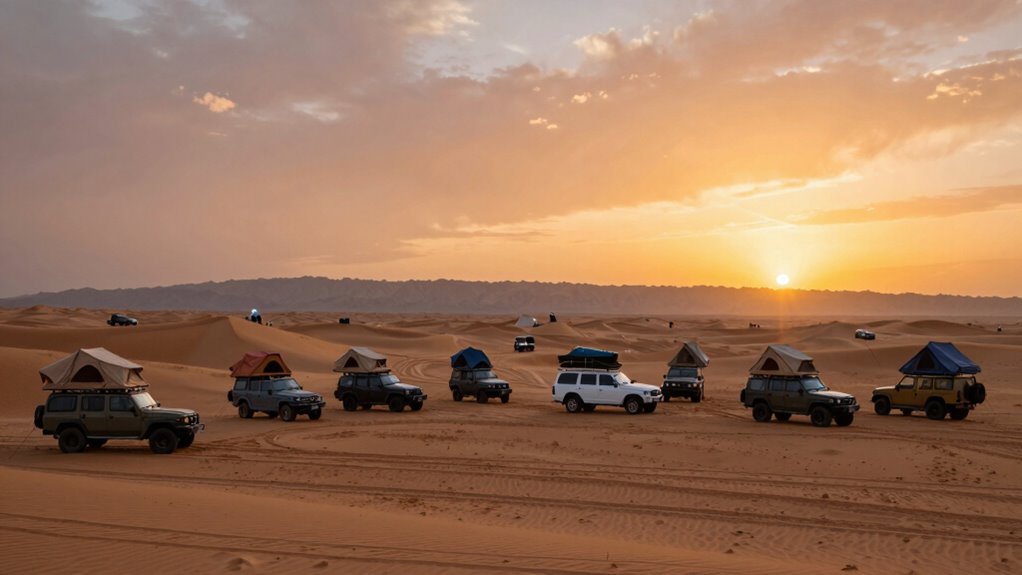

For most overlanders, the SanHima Aluminium Fold-Out Hard Shell is my best overall pick because it pairs a protective shell with a practical fold-out layout. The TOPOAK Vision XL stands out for travelers who need room for a child, while the Arctwonder with Winter Thermal Layer better suits cold-weather trips. Choosing among rooftents for overlanding means balancing setup speed, sleeping space, weather protection, vehicle load limits, and the gear you need to carry on top. A feature-rich tent can still be a poor match if its weight or packed shape strains your vehicle’s roof system. Read on for the full breakdown and a guide to matching a tent to your route and rig.

Get business pricing on garage and car supplies
- Business-only prices and quantity discounts
- Tax-exempt purchasing
- Multiple users, one account, clear invoices
Complete the kit


Key Takeaways
- Hard-shell designs dominate this lineup: they generally favor faster setup and a protective travel profile, while the TMBK and Meedo Apolle A86 M soft-shell tents offer a different fold-out approach.
- Cold-weather features vary: the Arctwonder and two tents explicitly described as having winter insulation prioritize thermal layers, but insulation alone does not replace ventilation or suitable cold-weather bedding.
- Sleeping capacity is not the whole space story: the TOPOAK Vision XL is specifically listed for three adults and one child, while several other models target two or three people; check interior dimensions and gear storage before choosing.
- Specialized features create specific tradeoffs: the solar-panel model and tents with USB power hubs may suit power-conscious trips, but added features do not remove the need to plan battery capacity, wiring, and roof load.
- Fit and total roof load shape the shortlist: tent weight, crossbar compatibility, vehicle roof limits, and clearance can matter more than a long feature list, especially on rough overland routes.


| rooftents for overlanding | Occupancy |
|---|---|
| Soft Shell Rooftop Tent for SU | 3 people |
| SanHima Rooftop Tent Hard Shel | 3 people |
| Hard Shell Roof Top Tent with | 3 people |
| Naturnest Rooftop Tent Hard Sh | 2–3 people |
| WildFinder Rooftop Tent | 3 people |
| Innovator Pro Elevated Rooftop | 2–3 people |
| Solar Panel Rooftop Tent Hard | — |
| Arctwonder Rooftop Tent Hard S | — |
| TOPOAK Vision XL 75-Inch Hard | Up to 4 people |
| Adventurer Pro Rooftop Tent Ha | Up to 3 people |
| WildFinder Rooftop Tent | — |
| Rooftop Tent Hard Shell with W | — |
| Meedo Apolle A86 M Soft Shell | — |
| Pioneer Pro Rooftop Tent Hard | — |
| Bayati Rooftop Tent Hard Shell | — |
More Details on Our Top Picks
Soft Shell Rooftop Tent for SUV & Truck Camping, 3-Person – Overland Vehicle Systems TMBK
The Overland Vehicle Systems TMBK is the soft-shell pick for overlanders who want a generous sleeping footprint without moving to a hard-shell design. Its 53.5-by-92-inch sleeping area and included waterproof rainfly suit trips where camp locations change often and a simple, sheltered place to sleep matters more than built-in electronics. The skylight adds an open-air feel, while the insulated base provides a buffer between sleepers and the vehicle roof. Compared with the hard-shell SanHima, the TMBK avoids a hard-shell profile but takes more roof space when open and has fewer convenience features. Its 108-pound weight also makes mounting a two-person job for many owners, and a compatible rack is required. I’d shortlist it for buyers who prioritize sleeping room and straightforward shelter over fast, feature-heavy deployment.
Pros:- Large 53.5-by-92-inch sleeping area for a soft-shell rooftop tent.
- Waterproof rainfly and insulated base add shelter between the sleeping area and roof.
- Skylight supports stargazing and additional airflow.
- Includes a ladder and rainfly for a ready-to-use camping setup.
Cons:- At 108 pounds, mounting and removal may require assistance.
- Soft-shell layout needs room to open, unlike a compact closed hard shell.
- Requires a compatible vehicle roof rack.
Best for: Overlanders with a compatible SUV or truck rack who want a roomy three-person soft-shell tent and are comfortable arranging help for installation.
Not ideal for: Solo travelers who need frequent fast camp-to-camp setup, or owners whose roof racks cannot support a 108-pound tent.
- Occupancy:3 people
- Sleeping area:53.5 × 92 in
- Open dimensions:56.5 × 94.5 × 51 in
- Closed dimensions:57 × 49.5 × 11.5 in
- Weight:108 lb
- Water resistance:2000 PU; 300 mm technology
- Rainfly material:420D polyester Oxford waterproof fabric
- Doors and windows:1 door; 1 window
Our verdict“Choose the TMBK if sleeping space and a simple soft-shell setup matter more than compact storage or hard-shell convenience.”
SanHima Rooftop Tent Hard Shell Aluminium Fold-Out SUV Truck Roof Top Tent
The SanHima hard-shell fold-out makes the most sense for overlanders who want lighting and charging built into their sleeping setup. A digital control panel, USB ports, and tri-color LED strip can reduce the small chores of setting up camp after dark, while blackout-lined fabric helps limit outside light. Its listed canopy rating of 3,000 mm exceeds the main body’s 2,000 mm rating, so buyers should distinguish those two areas rather than treating them as one uniform waterproof figure. Compared with the TMBK, SanHima offers more integrated conveniences and a hard-shell format, but at 131.5 pounds it is heavier and still limited to three occupants. I’d pick it for a vehicle-based travel setup where power access matters; skip it if you want the lightest roof load or a larger sleeping capacity.
Pros:- Digital panel, USB charging ports, and LED strip provide useful built-in camp amenities.
- Blackout-lined fabric helps reduce light inside the sleeping space.
- Canopy is rated to 3,000 mm water resistance.
- Hard-shell fold-out design is aimed at quick setup.
Cons:- At 131.5 pounds, it is the heaviest option in this five-tent group.
- Capacity is limited to three people.
- Main-body water resistance is listed at 2,000 mm, below the canopy rating.
Best for: Overlanders who camp from their vehicle, value built-in USB charging and lighting, and have a rack and lifting help for a 131.5-pound tent.
Not ideal for: Weight-conscious travelers, owners with limited roof-load capacity, or groups needing sleeping space beyond three people.
- Occupancy:3 people
- Water resistance:3,000 mm canopy; 2,000 mm main body
- Weight:131.5 lb
- Main fabric:600D Oxford with full blackout lining
- Canopy fabric:150D Oxford with silver lining
- Additional features:Digital panel, USB ports, tri-color LED strip
- Installation type:Vehicle-mounted rooftop tent
Our verdict“Pick the SanHima if integrated lighting and charging are worth the extra roof weight and its three-person limit fits your crew.”
Hard Shell Roof Top Tent with Adjustable Crossbars, 4-Season Waterproof Pop-up Tent with Detachable Thermal Insulation Liner, Anti-Condensation Mat & USB Power Hub for Trucks, SUVs, Vans
This hard-shell tent is the most specialized choice here for overlanders balancing colder-weather comfort with cargo needs. Its detachable thermal liner and anti-condensation mat address two common annoyances on cold trips: heat loss and moisture inside the sleeping space. Adjustable crossbars add another practical benefit by offering a place to carry gear, while the USB power hub supports small electronics. The listed 5000 mm waterproofing is stronger on paper than the TMBK’s stated water-resistance figures, though the product data gives no weight in pounds; it lists 80 kg, a substantial load that calls for a careful roof and rack check. Compared with the Naturnest Sirius 1 Plus, this model spells out its insulation and condensation features more clearly, but has no listed window or door count. I’d favor it for cold-season trips, not for buyers seeking a light, simple roof load.
Pros:- Detachable thermal liner and anti-condensation mat target cold-weather comfort.
- Listed 5000 mm waterproofing offers a clearly stated rain-resistance figure.
- Adjustable crossbars can carry additional gear.
- USB power hub adds a convenient charging point inside the tent.
Cons:- Listed weight of 80 kg is a substantial roof load and may require installation help.
- Product data does not specify the number of doors or windows.
- Vehicle-mounted design cannot be used as a standalone ground tent.
Best for: Overlanders planning cold-weather trips who want a thermal liner, condensation control, cargo crossbars, and a USB hub in one vehicle-mounted tent.
Not ideal for: Drivers with limited roof-load capacity or buyers who need clearly specified access points and a lightweight tent.
- Occupancy:3 people
- Waterproofing:5000 mm hydrostatic rating
- Weight:80 kg
- Setup time:Approximately 15 minutes
- Shell material:Aluminum
- Additional features:Detachable thermal liner, anti-condensation mat, USB power hub
- Warranty:2 years
Our verdict“Choose this model for cold trips and roof-mounted cargo flexibility if your vehicle can handle its listed 80 kg weight.”
Naturnest Rooftop Tent Hard Shell for 2-3 Persons, Waterproof and UV-Resistant, 4-Season Camping Tent for Truck, Jeep, SUV, Van, Trailer – Sirius 1 Plus
The Naturnest Sirius 1 Plus suits overlanders who often arrive late, leave early, or move camp regularly: its stated 30-second setup puts speed ahead of the more involved soft-shell arrangement of the TMBK. The hard ABS shell, blackout fabric, and six interior pockets serve practical purposes on the road, protecting the closed tent and keeping small essentials close at hand. Three windows offer more openings than the TMBK’s single window, which can help with views and ventilation. Compared with the SanHima, Naturnest’s product details emphasize rapid setup and storage rather than built-in USB controls and lighting. The tradeoff is that the provided data gives no numeric weight or waterproof rating, so I’d verify roof-load fit and weather expectations before buying. Its three-person capacity also leaves little room for a larger crew.
Pros:- Stated 30-second setup suits frequent camp moves.
- Hard ABS shell protects the closed tent during travel.
- Three windows provide multiple openings for views and airflow.
- Six pockets help organize small items inside the tent.
Cons:- No numeric tent weight is provided in the product data.
- Waterproofing is described by coating and general claims, without a numeric rating.
- Capacity is limited to two or three people.
Best for: Overlanders who move camps often and want a quick-opening hard shell, blackout sleeping space, and multiple windows for a small crew.
Not ideal for: Buyers who need a verified weight or numeric waterproof rating before choosing, or groups larger than three people.
- Occupancy:2–3 people
- Shell material:ABS
- Frame material:Aluminum alloy
- Windows:3
- Interior pockets:6
- Setup time:Approximately 30 seconds
- Compatible vehicle types:Car, Jeep, pickup truck, SUV, trailer, van
Our verdict“Choose the Sirius 1 Plus if fast setup is your priority and you can confirm its weight and rack compatibility for your vehicle.”
WildFinder Rooftop Tent, Hard Shell Roof Top Tent for Jeep SUV Truck Van
The WildFinder hard shell stands out for the amount of included organization gear: ten organizer bags, two shoe organizers, a ladder organizer, an LED strip, and a telescoping ladder can help keep a long overlanding camp less cluttered. Its 5000 mm rainproof rating, aluminum shell, and three windows make it a capable all-season-style option on paper. Compared with the Naturnest Sirius 1 Plus, WildFinder lists more included accessories and a numeric water-resistance figure, while Naturnest specifies a quicker 30-second setup. The main drawback is roof load: at 89.81 kg, this is a substantial tent to mount, and the product data does not provide a setup-time figure. I’d shortlist it for organized trips where its accessory bundle will be used, but not for vehicles with limited rack capacity or travelers seeking the easiest installation.
Pros:- Aircraft-grade aluminum shell is built for a hard-shell rooftop setup.
- Listed 5000 mm rainproof rating and four-season designation.
- Includes multiple organizers, a telescoping ladder, and an LED strip.
- Three windows provide several viewing and ventilation openings.
Cons:- At 89.81 kg, it is a very heavy roof load that may complicate mounting.
- Product data does not specify setup time or closed dimensions.
- Three-person capacity may be tight for adults traveling with substantial gear.
Best for: Overlanders taking extended vehicle-based trips who will use the included organizers, ladder accessories, and LED strip and have a rack rated for the tent’s weight.
Not ideal for: Owners with limited roof-load capacity or travelers who prioritize a stated rapid setup over accessories and storage organization.
- Occupancy:3 people
- Weight:89.81 kg
- Water resistance:5000 mm rainproof
- Shell material:Aircraft-grade aluminum
- Windows:3
- Item dimensions:83 × 52 × 9 in
- Included components:7.5 ft telescoping ladder, ladder organizer, 10 organizer bags, 2 shoe organizers, LED strip, 3 mesh windows, 2 mattresses, built-in mattress
Our verdict“Choose WildFinder if its extensive organizer bundle suits your trip style and your vehicle can safely carry its listed 89.81 kg weight.”
Innovator Pro Elevated Rooftop Tent Hard Shell, Aluminum Pop Up Roof Tent
The Innovator Pro suits overlanders who want a quick camp routine without giving up room for a small family. Its 85.43-by-54.33-inch floor and stated 660-pound capacity give two adults and a child more breathing room than the two-person Arctwonder. Hydraulic struts are advertised to open and close the shell in about five seconds, while 13 storage pockets, a skyview window, USB outlet, and LED strip help keep camp organized after arrival. The aluminum shell and flocked floor lining add useful structure and comfort, but the tent still weighs on the vehicle: mounting crossbars must support at least 165 pounds. Its 7.87-inch closed height is also taller than the Arctwonder’s seven-inch profile, and the power accessories need a suitable supply. I’d choose it for family capacity and convenience, not for a low-profile or power-free build.
Pros:- Three-person layout with a 660-pound stated capacity
- Hydraulic pop-up mechanism advertised to open and close in about five seconds
- Thirteen storage pockets plus shoe bags help manage gear inside and outside
- Skyview window, USB outlet, and LED strip add camp convenience
Cons:- Requires crossbars rated to support at least 165 pounds
- USB and lighting features require an appropriate power source
- Its 7.87-inch closed height is not as low as the Arctwonder’s seven-inch profile
Best for: Overlanding couples with one child who want a fast-opening hard shell and built-in storage and lighting.
Not ideal for: Drivers prioritizing the lowest roof profile or a lightweight load, and campers without crossbars rated for at least 165 pounds.
- Occupancy:2–3 people
- Closed dimensions:85.43 × 54.33 × 7.87 inches
- Open dimensions:85.43 × 54.33 × 60.23 inches
- Maximum load:660 pounds
- Fabric:320 g polyester
- Shell:Aircraft-grade aluminum
- Storage:13 interior pockets
- Crossbar requirement:At least 165 pounds support capacity
Our verdict“Choose the Innovator Pro if a family-sized sleeping area and rapid setup matter more than a very low roof profile or minimal power needs.”
Solar Panel Rooftop Tent Hard Shell, Pop Up Car Roof Top Tent
The solar panel is the defining reason to choose this tent: its 12V, 216W panel can help keep compatible devices charged at camp, reducing reliance on a separate portable panel. That makes it a more compelling match for overlanders who spend time away from powered sites than the Adventurer Pro, which offers an awning and LED lighting but no listed solar panel. The aluminum shell, waterproof-sealed seams, and 320 g polyester fabric suit a weather-exposed vehicle setup, and the stated 29.37-square-foot floor gives two adults space to sleep. Although the listing mentions a child or pet, the product details say it is comfortable for only two, so I would not buy it as a dependable three-person family bed. At 198 pounds, it also asks more of the rack and installation crew than the 166-pound Arctwonder.
Pros:- Integrated 12V, 216W solar panel supports mobile charging
- Aluminum alloy shell paired with 320 g polyester fabric
- Waterproof glue at seams adds weather protection
- Includes ladder, mattress, luggage bar, and shoe bag
Cons:- At 198 pounds, installation and vehicle roof load planning need extra attention
- Two people are the realistic comfortable capacity despite the child-or-pet claim
- A one-year warranty is specified
Best for: Two-person overlanding teams who want an integrated solar panel for charging compatible devices away from powered campsites.
Not ideal for: Families needing comfortable sleeping space for three or owners whose roof rack cannot handle a 198-pound tent.
- Shell material:Aluminum alloy
- Solar panel:12V, 216W
- Weight:198 pounds
- Open dimensions:83 × 51 × 59 inches
- Floor area:29.37 square feet
- Fabric:320 g polyester with rubber sun protection
- Seam sealing:Waterproof glue at seams
- Warranty:1 year
Our verdict“Pick this model if integrated solar charging matters more than minimizing rooftop weight or accommodating a third sleeper.”
Arctwonder Rooftop Tent Hard Shell with Winter Thermal Layer
For trips where cold nights are part of the plan, the Arctwonder has a clearer purpose than the more general-purpose Innovator Pro: its removable thermal layer is designed to add insulation without keeping a winter liner in place during warmer outings. The aluminum shell, 5,000 mm water resistance, and stated level 7 wind resistance make it a weather-focused option, while the seven-inch closed profile helps keep the roofline lower than the Innovator Pro’s 7.87 inches. Setup is listed at about ten seconds, slower than the Innovator’s advertised five-second operation but still suited to frequent camp moves. At 166 pounds, it is lighter than the solar-panel tent, though installation may still take help. Its two-person capacity rules it out for family sleeping, and canvas care calls for hand or machine washing rather than carefree neglect.
Pros:- Removable winter thermal layer adapts the tent for cold-weather trips
- Seven-inch closed height suits builds where roof clearance matters
- Listed 5,000 mm water resistance and level 7 wind resistance
- Includes mattress, ladder, LED strip, luggage poles, and storage bags
Cons:- Two-person capacity limits its usefulness for family overlanding
- At 166 pounds, mounting may require assistance and a suitably rated rack
- Canvas needs hand or machine washing for care
Best for: Two-person overlanders who camp through cold seasons and want a removable insulating layer with a relatively low closed profile.
Not ideal for: Families needing three or four sleeping spaces, or buyers seeking a light tent that one person can easily lift onto a vehicle.
- Capacity:2 people
- Seasons:4-season
- Materials:Aluminum and polyester
- Water resistance:5,000 mm
- Wind resistance:Level 7
- Closed height:7 inches
- Open dimensions:83 × 51 × 59 inches
- Weight:166 pounds
Our verdict“Choose the Arctwonder for two-person, cold-season travel when insulation and a low closed height matter more than extra sleeping capacity.”
TOPOAK Vision XL 75-Inch Hard Shell Rooftop Tent for 3 Adults and 1 Child
The Vision XL makes the strongest case here for a family that needs width more than a lighter roof load. Its 75-inch floor width and stated four-person capacity offer more sleeping room than the three-person Innovator Pro or the two-person Arctwonder, making it the lineup’s clearest family pick. Blackout canvas can reduce early-morning light, while mesh ventilation, LED lighting, five pockets, and a heater vent support longer stays on the road. Setup takes about 30 seconds, which is slower than the fast pop-up tents in this group, but may be a fair exchange for the fold-out layout and larger footprint. The main compromise is vehicle fit: at 176 pounds, it needs a capable rack, and the available information gives less detail on weather performance than the Arctwonder’s stated water and wind ratings.
Pros:- 75-inch floor width and stated four-person occupancy suit family trips
- Blackout canvas helps limit light inside the sleeping area
- Mesh ventilation, LED lighting, storage pockets, and heater vent support camp comfort
- Waterproof rating is listed at 5,000
Cons:- At 176 pounds, it requires a rack and vehicle setup rated for the load
- About 30-second setup is slower than the faster pop-up options here
- Weather details are less specific than the Arctwonder’s published water and wind ratings
Best for: Families of three or four with a vehicle and roof rack suited to a wide, heavy hard-shell tent.
Not ideal for: Solo overlanders, couples prioritizing a compact roof load, or buyers who need detailed wind-resistance specifications.
- Occupancy:Up to 4 people
- Dimensions:83 × 75 × 47 inches
- Floor width:75 inches
- Weight:176 pounds
- Material:Aluminum and Oxford fabric
- Water resistance:5,000
- Storage pockets:5
- Setup time:About 30 seconds
Our verdict“Pick the Vision XL if family sleeping space is the priority and your vehicle can safely carry its wide, 176-pound setup.”
Adventurer Pro Rooftop Tent Hard Shell, 2-3 Person Aluminum Roof Top Tent
The Adventurer Pro is the pick for overlanders who want shelter beyond the sleeping area: its attachable side awning gives camp a covered space, while a built-in LED strip and 13 pockets address everyday setup and storage. It is listed for three occupants and a broad mix of vehicles, including trucks, SUVs, vans, trailers, and Wranglers. Compared with the Innovator Pro, it has a similar family-oriented capacity and quick hydraulic pop-up design, but the provided specifications do not give matching floor dimensions or a stated weight, making fit and roof-load planning harder to verify. Its all-season, waterproof and UV-protection claims suit varied conditions, yet the 0–5,000 mm water-resistance range is broad rather than a precise rating. Buyers should also check the crossbars: the listing calls for at least 165 pounds of support.
Pros:- Attachable side awning adds covered space beside the vehicle
- Built-in LED strip and 13 pockets support organized camps
- Hydraulic pop-up design is advertised for rapid setup
- Listed compatibility includes trucks, SUVs, vans, trailers, and Wranglers
Cons:- Crossbars must support at least 165 pounds
- Three-person capacity does not suit larger groups
- The supplied specifications omit tent dimensions and weight
Best for: Overlanders who want a three-person hard shell with an included side awning and listed compatibility across several vehicle types.
Not ideal for: Buyers who need confirmed tent dimensions or weight before choosing a rack, or families requiring more than three occupants.
- Occupancy:Up to 3 people
- Seasons:All seasons, including winter
- Water resistance:0–5,000 mm
- Compatible vehicles:Truck, Jeep, SUV, van, trailer, Wrangler, Tacoma, minivan
- Windows:3
- Storage pockets:13
- Crossbar requirement:At least 165 pounds support capacity
- Additional features:Side awning and built-in LED strip
Our verdict“Choose the Adventurer Pro if an included side awning is a priority and you can verify vehicle fit and rack capacity before mounting.”
WildFinder Rooftop Tent, Hard Shell Roof Top Tent for Jeep SUV Truck Van
I’d shortlist this WildFinder for overlanders who put weather resistance ahead of keeping roof load low. Its aircraft-grade aluminum shell and listed 5,000 mm waterproof coating make it a sturdier, more weather-focused choice than the Meedo Apolle A86 M, whose soft-shell design trades a hard cover for a different folded profile. The 83-inch sleeping floor and stated two-to-three-person capacity give it more flexibility than the two-person JOYINRUTE, though the usable room will still depend on occupants and gear.
The tradeoff is substantial: at 163 pounds, this tent calls for careful rack-capacity checks and may take help to mount. Its large footprint is also a poor match for compact vehicles. I’d favor it for a larger SUV, truck, or van used in varied seasons, rather than a lightweight build where every pound matters.
Pros:- Aircraft-grade aluminum shell offers a rigid protective cover for travel.
- Listed 5,000 mm waterproof coating suits trips where wet weather is a concern.
- 83-inch floor and two-to-three-person capacity offer more flexibility than the two-person JOYINRUTE.
- Includes a ladder, LED strip, and mattresses according to the product description.
Cons:- At 163 pounds, mounting may require assistance and a sufficiently rated rack.
- Large dimensions may not fit smaller vehicles or short roof racks.
- The listed four-season rating does not specify a separate thermal liner for cold-weather use.
Best for: Overlanders with a suitably rated truck, van, or larger SUV who want an aluminum hard shell and stated capacity for two adults plus a child.
Not ideal for: Owners of compact vehicles or roof racks with limited load capacity, since its 163-pound weight and 83-inch length demand careful fit and mounting checks.
Our verdict“Choose this WildFinder if weather protection and a hard aluminum shell matter more than a lighter roof load.”
Rooftop Tent Hard Shell with Winter Insulation for 4-Season Camping
The JOYINRUTE is the most cold-weather-focused pick in this group: the listing emphasizes winter insulation alongside a hard aluminum shell and 5,000 mm water resistance. That makes it more targeted for chilly, damp overlanding than the Meedo Apolle A86 M, whose soft-shell construction and lower listed coating figure offer a different balance. Four windows, two doors, and six pockets also give two campers useful ventilation and storage options when they are spending time inside.
Its main compromise is the combination of 178-pound weight and a two-person limit. It is heavier than both the WildFinder and Meedo, so vehicle payload and mounting logistics deserve close attention. The one-year warranty is also shorter than WildFinder’s stated three years. I’d pick it for a pair prioritizing insulation, not for family capacity or a lightweight build.
Pros:- Winter insulation is a stated feature for colder-season camping.
- 5,000 mm water resistance and an aluminum hardshell suit exposed travel.
- Four windows, two doors, and six pockets support ventilation and cabin organization.
- Listed accessories include a ladder, mattress, LED strip, and storage options.
Cons:- At 178 pounds, it is the heaviest of these five options and may need help to mount.
- Two-person capacity offers less flexibility than the WildFinder or Pioneer Pro.
- One-year warranty is shorter than the three-year coverage listed for the WildFinder.
Best for: Two-person overlanding teams who camp in cold or wet seasons and have a vehicle and rack rated for a heavy hard-shell tent.
Not ideal for: Families or solo travelers trying to keep roof weight down; it weighs 178 pounds and is limited to two occupants.
Our verdict“Pick the JOYINRUTE for a two-person crew that values stated winter insulation and can handle its substantial roof load.”
Meedo Apolle A86 M Soft Shell Rooftop Tent for 2 People, Waterproof, Rainfly-Fold Design, Army Green
Unlike the aluminum clamshell options here, the Meedo Apolle A86 M uses a folding soft-shell layout with an aluminum alloy frame and polyester rainfly. Its five windows, two doors, and two-room design are the standout reasons to choose it: they give two campers more ways to manage airflow and separate the interior than the single-room WildFinder or Bayati. The listed 90.5-inch floor length is also generous for a two-person tent, though buyers should confirm their rack and vehicle can accommodate the packed dimensions.
This pick makes more sense for campers who value ventilation and a spacious sleeping area than fast hard-shell deployment. Its 125-pound listed weight is lower than the JOYINRUTE and Bayati, but it remains a substantial roof load. The 4,000+ waterproof coating and one-year warranty are less compelling on paper than the higher water-resistance figure and longer warranty listed for WildFinder.
Pros:- Five windows and two doors provide several ventilation options.
- Two-room layout distinguishes it from the single-room hard-shell choices.
- 90.5-inch floor length offers ample sleeping length for two.
- At 125 pounds, it is lighter than the JOYINRUTE and Bayati.
Cons:- Soft-shell construction does not provide the same rigid travel cover as the aluminum hard shells.
- Listed waterproof coating is 4,000+ rather than the 5,000 mm figure on WildFinder and JOYINRUTE.
- Still weighs 125 pounds and is specified for only two occupants.
Best for: Two-person overlanders who want multiple ventilation openings, a long sleeping floor, and a folding soft-shell design.
Not ideal for: Buyers who want a hard protective shell for travel, more than two sleeping places, or a longer stated warranty.
Our verdict“Choose the Meedo if ventilation and a roomy two-person fold-out layout matter more than a hard travel shell.”
Pioneer Pro Rooftop Tent Hard Shell, 2-3 Person Aluminum Roof Top Tent
The Pioneer Pro is the most setup-oriented option in this set. Its hydraulic pop-up system is described as opening and closing in five seconds, a practical advantage when frequent camp moves make packing time matter. Compared with the WildFinder, it adds a listed 660-pound maximum load, four-sided ventilation, a side awning, and shoe storage bags; the WildFinder, by contrast, has a clearly stated three-year warranty and 5,000 mm coating specification. The Pioneer’s aluminum shell, flocked floor lining, condensation mat, and sleeping mat make the kit feel geared toward equipped overland travel.
That convenience comes with details to verify: the listing calls for crossbars supporting at least 165 pounds, and it does not give a tent weight here. It also lists several materials and care details without a single clear water-resistance figure. I’d choose it for quick roadside stops, but compare vehicle fit and load data before buying.
Pros:- Hydraulic pop-up mechanism is listed for five-second opening and closing.
- Four-sided windows, built-in LED strip, and attachable side awning add practical campsite features.
- Flocked floor lining, condensation mat, and sleeping mat are included in the listed equipment.
- Stated 660-pound maximum load supports a two-adult-and-child use case.
Cons:- The supplied product data does not state the tent’s own weight.
- Installation instructions call for crossbars rated to at least 165 pounds.
- No specific millimeter waterproof rating is provided, unlike the WildFinder and JOYINRUTE.
Best for: Overlanders who change camps often and want a hydraulic pop-up, integrated lighting, and ventilation features in an aluminum hard shell.
Not ideal for: Buyers who need a clearly stated tent weight or quantified waterproof rating before checking roof-rack compatibility.
Our verdict“Choose the Pioneer Pro if rapid setup and included campsite features outweigh the need for complete weight and waterproof-rating data.”
Bayati Rooftop Tent Hard Shell, Easy Setup Pop Up Tent for 2-4 People
The Bayati stands out for floor space rather than low weight: its 86-by-63-inch floor is the widest listed here, giving two adults more room to spread out than the Meedo or either WildFinder hard-shell option. Its ABS shell, elevated ceiling, and included mattress and telescopic ladder make it a straightforward fit for travelers who want a roomy pop-up arrangement without piecing together basic sleeping gear. Compared with the Pioneer Pro, it offers a wider stated floor, while the Pioneer lists more ventilation openings and a side awning.
That extra room is costly in roof load: the Bayati weighs 174 pounds, close to the heavier JOYINRUTE, and has just one door. Its listed occupancy is three, despite the title’s “2-4” wording, so I would not plan on four sleepers. The specs also identify waterproofing but do not provide a numeric rating. This suits space-first crews with a verified roof setup, not compact vehicles or buyers needing precise weather-rating data.
Pros:- 86-by-63-inch floor is the widest sleeping platform among these five products.
- Elevated ceiling and stated three-person capacity suit crews wanting more interior room.
- ABS hard shell and listed all-season, waterproof design target varied camping conditions.
- Includes a mattress, shoe bags, support rods, and telescopic ladder.
Cons:- At 174 pounds, mounting and vehicle payload need careful planning.
- One door offers fewer entry and exit options than the Pioneer Pro or Meedo.
- Product data lists capacity as three people despite the title’s two-to-four-person claim, and gives no numeric waterproof rating.
Best for: Two or three campers who want a wide sleeping platform and elevated headroom in a hard-shell rooftop tent.
Not ideal for: Four-person groups, compact-vehicle owners, or buyers who need a numeric waterproof rating; the listed capacity is three and the tent weighs 174 pounds.
Our verdict“Choose the Bayati for a roomy two- or three-person sleeping platform if your vehicle can carry its weight.”

How We Picked
I ranked these 15 rooftents for overlanding around the demands of travel beyond paved campsites: repeated setup, exposure to changing weather, vehicle compatibility, sleeping comfort, and the practical burden of carrying a tent on a roof. I gave preference to options whose stated design points map clearly to a use case, such as a hard shell for quicker deployment, a thermal layer for colder trips, or a larger listed capacity for family travel. I also considered whether a model’s features add useful flexibility or bring extra fit, weight, or maintenance questions.
The ranking reflects how clearly each product serves a distinct buyer need, not a claim that every specification is independently verified or that any model suits every vehicle. Product names and supplied descriptions identify standout features, but buyers should confirm current dimensions, tent weight, vehicle roof limits, rack compatibility, and included accessories with the manufacturer before purchase. Models with sparse or overlapping descriptions rank behind options with a more defined role; two similarly named WildFinder listings are treated as separate entries because both appear in the lineup.
Factors to Consider When Choosing Rooftents For Overlanding
For overlanding, the tent is part of a vehicle system rather than a standalone shelter. I would narrow the choice by checking what the rig can carry, how often the route calls for quick camp setup, and what weather the trip is likely to bring. These broader checks can prevent a roomy or feature-heavy tent from becoming a poor match once it is mounted and loaded.
Match Tent Weight to the Whole Roof System
Start with the vehicle and rack limits, not the tent’s sleeping capacity. Compare the tent’s weight with the rack’s rated load and the vehicle maker’s roof guidance, and account for mounts, crossbars, awnings, and other equipment. Static and dynamic load ratings describe different conditions, so confirm which rating applies while driving and which applies when parked. A tent that fits the rack may still leave too little allowance for other roof gear. Over rough tracks, a top-heavy load can also affect handling, so lighter may be a better choice than a larger floor plan. Ask the vehicle or rack maker about compatibility if the published limits are unclear.
Choose a Shell Style for Your Camping Rhythm
Hard-shell tents often appeal to travelers who move camp frequently because their opening method can reduce setup steps and the closed shell protects the fabric during travel. Soft-shell designs can offer a different balance of interior layout and packed form, but folding and securing them may take more time. Neither style is automatically better for every overlanding route: a long stay at one base camp makes rapid setup less valuable than it is on a trip with daily moves. Check how the tent closes when bedding is inside, whether the cover needs separate handling, and how much space it occupies when deployed. Ask for a demonstration or clear setup instructions before buying, particularly if one person will pitch it alone.
Treat Capacity Labels as a Starting Point
A stated capacity is not a promise of comfortable space for every group. Adult height, sleeping positions, mattress width, and the amount of bedding all change how a two-, three-, or four-person tent feels. A family may value the TOPOAK Vision XL’s listed three-adult-and-one-child capacity, but should still compare its interior measurements with the family’s actual sleep setup. Also decide where clothes, shoes, and small essentials will go; a full sleeping area can leave little room for them. If possible, compare the mattress dimensions with the sleeping pads or bedding you already own. Choosing one size up can help comfort, but the added weight and roof area need to suit the vehicle.
Plan for Weather Beyond a Season Label
Descriptions such as four-season or waterproof are useful starting points, not a substitute for checking construction details. Look for information on fly coverage, seam treatment, fabric specifications, ventilation, and how rain is directed away from doors and windows. In cold conditions, an insulation liner can reduce heat loss, but moisture from breathing still needs a way out; poor ventilation can leave condensation on fabric and bedding. A thermal layer also does not replace a suitable sleeping bag or pad for the expected temperatures. For mixed-weather trips, ask whether the liner can be removed and how the tent handles warm, humid nights. Match the system to the weather you expect, rather than relying on a label alone.
Check Setup, Access, and Maintenance Before the Trip
Overlanding can mean arriving at camp tired, in wind, or after dark, so setup complexity matters beyond convenience. Check whether the ladder, mounting hardware, cover, and any poles are included, and whether setup can be handled by one person. Confirm how the tent is accessed from the vehicle and whether the ladder can be placed safely on uneven ground. After wet or dusty trips, fabric and seals may need cleaning and full drying before storage; a hard shell still needs care around hinges and latches. Ask about replacement parts and warranty support before choosing a model with unfamiliar hardware. A tent that is easier to maintain may serve better across repeated remote trips than one with more accessories but harder-to-source components.
Buy Power Features Only If They Fit Your Electrical Plan
A solar-panel tent or a model with a USB power hub can make charging more convenient, but neither feature creates unlimited power. Check whether the panel is included, its output, connector type, and whether it can charge the battery system you actually use. Shade, travel direction, and campsite conditions can reduce solar production, so plan a backup for navigation devices and other essential electronics. A USB hub also needs a suitable power source and may not supply enough output for every device. For trips where power is a priority, compare the tent feature with a separate portable panel or vehicle charging setup. Avoid paying attention to the accessory name alone; compatibility and usable output determine its value.
Frequently Asked Questions
Can I mount any of these rooftop tents on my SUV or truck?
No. Confirm the tent’s weight, mounting requirements, crossbar spacing, and rack compatibility against your vehicle and rack documentation. Check both the driving load limit and the parked load limit, since they apply under different conditions. Leave room in the load calculation for mounts and any other roof equipment. If the listing does not provide clear dimensions or weight, ask the seller before ordering. A tent that cannot be mounted within the manufacturer’s limits is not a suitable choice, even if the vehicle type appears in the product name.
Is a hard-shell tent a better choice for overlanding than a soft-shell tent?
It depends on how you travel. A hard shell may be more convenient for frequent camp moves because it can simplify opening and closing, while soft-shell models such as the TMBK and Meedo Apolle A86 M offer an alternative layout and packing approach. Compare closed dimensions, setup steps, and whether bedding can stay inside when the tent is packed. Consider how much roof space you need for other gear, too. If you tend to stay several nights at each camp, the difference in setup speed may matter less than fit, comfort, and load.
Will a winter thermal liner make a rooftop tent comfortable in freezing weather?
A liner can add insulation, but it does not by itself establish a tent’s safe or comfortable temperature range. Check the full tent construction, ventilation options, and the maker’s guidance for cold-weather use. You will still need a sleeping bag and pad rated for the expected conditions, since heat loss through the mattress can be substantial. Moisture management matters as well: breathing and wet gear can add condensation inside an enclosed space. For trips near freezing or colder, test the complete sleep system in controlled conditions before relying on it in a remote location.
Should I choose a tent rated for more people than will usually sleep in it?
Extra capacity can improve comfort if the listed dimensions suit your group, but it often adds roof weight and may take up more space when open. Do not rely on the number alone; compare the interior floor and mattress dimensions with the sleepers’ heights and bedding. A child sharing with adults may need less width than another adult, but bags and clothes still require storage. If the tent will mostly be used by two people, a smaller model may make vehicle fit and setup easier. Choose added capacity when you have a clear use for it, such as regular family trips, rather than as a number on a label.
Is a rooftop tent with solar power or a USB hub enough for an overlanding trip?
Not necessarily. A USB hub is only useful when connected to a compatible power source, and a solar panel’s output depends on conditions such as sun exposure and shade. Check the panel’s specifications, wiring, connectors, and whether the tent listing includes the components needed to charge your battery. Work out how much power your devices use each day and plan a backup for cloudy weather or extended stops. For essential communications or navigation, do not depend on an unverified accessory as the only power source. A separate battery and charging plan may be the more dependable setup.
Conclusion
For a balanced starting point, I would choose the SanHima Aluminium Fold-Out Hard Shell as best overall, subject to confirming its fit and load against the vehicle. The best value candidate is the Overland Vehicle Systems TMBK soft-shell for buyers who want a straightforward three-person option and accept a different setup routine; compare its current specifications and included hardware before deciding. For a premium, room-focused choice, the TOPOAK Vision XL is the clearest match for a family needing its listed space. Beginners who prioritize a simple hard-shell format can start by comparing the Innovator Pro and Adventurer Pro, then choose based on verified weight, mounting details, and support rather than their names alone. For specific needs, consider the Arctwonder or insulated models for colder trips, and the Solar Panel Rooftop Tent for power-conscious travel only after checking output and compatibility. Whichever model you choose, verify roof limits, rack fit, dimensions, and weather details before committing.