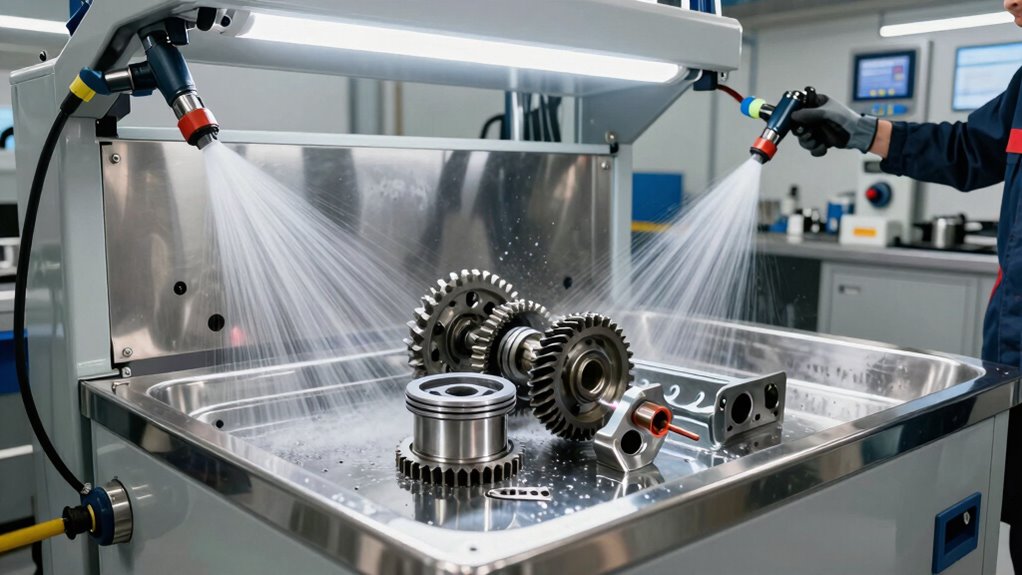

For auto restoration, the Eastwood 40 Gallon Parts Washer is my best overall pick for its large, 10-inch-deep tub and stated 5.3 GPM pump flow. The Red Sun 40 Gallon Cabinet is another standout for restorers who want a high-capacity cabinet format, while the 20-Gallon Portable Washer offers a more manageable footprint for routine component cleaning. The key tradeoff is between tub capacity and shop space, with material, pump performance, and solvent compatibility shaping day-to-day usefulness. Smaller 3.5- and 5-gallon options suit compact work but limit the size and number of parts cleaned per batch. Read on for the full breakdown and guidance on matching a washer to your restoration workload.

Get business pricing on garage and car supplies
- Business-only prices and quantity discounts
- Tax-exempt purchasing
- Multiple users, one account, clear invoices
Complete the kit


Key Takeaways
- Eastwood leads for capacity and stated flow: its 40-gallon tub, 10-inch depth, and 5.3 GPM pump make it the strongest fit for frequent work with larger components, though it needs more floor space.
- Red Sun is the other large-format choice: its 40-gallon cabinet with shelf tank prioritizes batch capacity and organized work over a compact footprint.
- The 20-gallon portable washer is the middle ground: it offers more room than the 3.5– and 5-gallon units without moving up to a 40-gallon cabinet.
- Small washers serve distinct shop needs: the 3.5-gallon portable model favors a minimal footprint, while the Jack Boss, VEVOR, and Big RED options sit in the 5-gallon class; VEVOR specifies a 3.5-gallon solvent capacity and 0.4 GPM flow.
- Construction and capacity matter together: plastic portable units can suit light-duty, small-part cleaning, while steel and heavy-duty models better match frequent restoration work; buyers still need to verify solvent compatibility and usable tub dimensions.


| parts washers for auto restoration | Dimensions | Capacity | Weight | Material |
|---|---|---|---|---|
| 20-Gallon Portable Automotive | — | — | — | — |
| 3.5 Gallon Portable Parts Wash | 18.1 x 13.4 x 9.1 inches | 3.5 gallons | 15 pounds | — |
| Red Sun Parts Washer 40 Gallon | 44.5 x 21.3 x 35 inches | 40 gallons | — | Alloy steel |
| Eastwood 40 Gallon Parts Washe | 35 x 21.5 x 43 inches | 40 gallons | 92.4 pounds | — |
| Jack Boss 5 Gallon Capacity Po | 13.8 x 13.8 x 5.5 inches | 5 gallons | — | Plastic |
| VEVOR 5-Gallon Parts Washer | 18.11 x 13.39 x 9.06 inches | — | 15 pounds | — |
| Big RED AXH-PPW5GR Torin 5 Gal | 13.7 x 13.7 x 5 inches | 5 gallons | 3.5 pounds | Plastic |
| AFF Parts Washer | 30 x 20.5 x 35.625 inches | — | 62 pounds | All-steel |
More Details on Our Top Picks
20-Gallon Portable Automotive Parts Washer with 110V Electric Pump
I’d put this washer high on the list for restorers cleaning a steady run of bearings, gears, and carburetor pieces. Its stated 50-gallon-per-hour pump flow exceeds the 30-gallon-per-hour flow of the 3.5-gallon portable model, which can help keep small-part cleaning moving. The removable basket and shelf also give parts a place to drain without occupying the whole work area. A fusible-link lid adds a safety feature for a garage setup.
The capacity needs a closer read: despite the 20-gallon name, the listed maximum liquid level is 10 gallons. That is less fluid capacity than the Red Sun and Eastwood 40-gallon washers, so I wouldn’t choose it for batches of larger restoration components. At 58 pounds, it is also less convenient to move than the 15-pound 3.5-gallon unit. Its appeal is strong circulation in a smaller cabinet, not true large-volume capacity.
Pros:- Listed pump output of 50 gallons per hour supports brisk circulation during repeated small-part cleaning.
- Removable shelf and work basket help separate parts and provide a place to drain them.
- Hinged lid with fusible link is designed to close automatically in a flash fire.
- Powder-coated steel cabinet resists rust and corrosion.
Cons:- Maximum listed liquid level is 10 gallons, not 20 gallons.
- At 58 pounds, it is heavier to relocate than the 15-pound compact washer.
- The 10-inch tub depth limits the size of components it can accommodate.
Best for: Home restorers cleaning frequent batches of small or medium parts who want brisk pump circulation and a basket-and-shelf setup.
Not ideal for: Restorers washing large components or many parts at once, or anyone expecting a 20-gallon working-fluid capacity or an especially easy-to-carry washer.
- Motor:110V, single-phase, 0.7A
- Tub depth:10 inches
- Maximum liquid level:10 gallons (5 inches)
- Minimum liquid level:6 gallons (3 inches)
- Pump output:50 gallons per hour
- Overall dimensions:30 x 21 x 35 inches
- Shipping weight:58 pounds
Our verdict“Choose it for fast circulation on frequent small-part jobs, but skip it if you need a true 20-gallon working capacity or room for bulky components.”
3.5 Gallon Portable Parts Washer with 110V Pump – Automotive Parts Cleaner for Wheel Bearings, Gears, and Carburetors
For a restoration garage where bench space matters more than batch size, I’d favor this compact 3.5-gallon washer over the 20-gallon-named model. Its 18.1 x 13.4 x 9.1-inch footprint and 15-pound weight make it easier to place near a workbench or move between work areas. The flexible gooseneck spigot can direct fluid toward small parts, while the removable shelf helps keep components out of the bottom of the tank.
The tradeoff is capacity and circulation: its 30-gallon-per-hour pump is slower than the 50-gallon-per-hour pump listed for the 20-gallon portable washer, and the small reservoir calls for more frequent refills during a restoration batch. The stainless-steel alloy construction and powder-coated finish suit a garage environment, but this is still a small-parts station, not a substitute for the 40-gallon Red Sun or Eastwood cabinets when cleaning larger components.
Pros:- Compact dimensions and 15-pound weight make it easier to place or move than the cabinet-style washers.
- Flexible gooseneck spigot helps direct cleaning fluid at small parts.
- Removable shelf provides a practical place to hold parts during cleaning.
- Hinged lid with fusible link adds a fire-safety feature.
Cons:- The 3.5-gallon capacity can require frequent refilling on larger batches.
- Its 30-gallon-per-hour pump flow is lower than the 50-gallon-per-hour portable model.
- Small dimensions rule it out for bulky restoration components.
Best for: Restorers with limited bench or floor space who mostly clean bearings, carburetor parts, and other small components.
Not ideal for: Shops processing large parts or extended batches that would make a 3.5-gallon capacity and 30-gallon-per-hour flow restrictive.
- Capacity:3.5 gallons
- Power:110V
- Pump flow rate:30 gallons per hour
- Dimensions:18.1 x 13.4 x 9.1 inches
- Weight:15 pounds
- Material and finish:Stainless steel alloy with powder-coated finish
- Pump motor:Sealed 0.7A
Our verdict“Pick this for a space-conscious garage focused on small parts, not for large components or high-volume cleaning sessions.”
Red Sun Parts Washer 40 Gallon Cabinet Electric Solvent Pump Portable Automotive Parts Cleaner with Shelf Tank for Wheel Bearings, Gears, and Carburetors
The Red Sun is the capacity-led choice here: its 40-gallon tank gives restorers room to clean more parts per session than either compact portable washer. A removable basket and circulating pump suit repeated work on groups of components, while the listed fluid-recycling system is a useful fit for jobs that would otherwise consume cleaning solution quickly. Its 44.5-inch length also points to a dedicated floor or shop-space setup rather than a small benchtop station.
Compared with the Eastwood 40-gallon washer, the Red Sun shares the large-capacity format but has no stated pump flow rate or tub depth in the supplied specifications, making direct performance comparisons difficult. The steel cabinet and rust-resistant coating favor a more permanent shop installation, but its bulk makes relocation harder than with the 15-pound compact unit. The supplied product information also warns against volatile solvents such as gasoline, so solvent choice needs care.
Pros:- 40-gallon capacity supports larger batches than the compact portable washers.
- Circulating pump and stated recycling system are suited to repeated cleaning sessions.
- Removable basket helps keep parts organized in the tank.
- Steel construction with a rust-resistant coating suits a regular workshop location.
Cons:- Large cabinet dimensions make it harder to move and place than compact models.
- The supplied specifications do not state pump flow rate or tub depth.
- Not recommended for volatile solvents such as gasoline.
Best for: Restoration shops or home garages that clean multiple parts in batches and have space for a large cabinet washer.
Not ideal for: Small garages needing a mobile washer, or users who want a documented pump-flow rate or plan to use volatile solvents such as gasoline.
- Capacity:40 gallons
- Dimensions:44.5 x 21.3 x 35 inches
- Material:Alloy steel
- Finish:Powder-coated
- Pump:Circulating pump
- Basket:Removable
- Safety feature:Automatic lid lock
Our verdict“Choose the Red Sun when batch capacity and a recycling system matter more than portability or detailed flow specifications.”
Eastwood 40 Gallon Parts Washer, 10-Inch Deep Tub, Heavy Duty Powder-Coated Steel, 120V Pump, 5.3 GPM Flow, Blue
I’d rank the Eastwood as the strongest documented choice for a restoration shop that wants a large tank with a specified high-flow pump. Its 40-gallon capacity matches the Red Sun, while its stated 5.3-gallon-per-minute flow rate and reusable filter give buyers more concrete performance details than the Red Sun listing provides. The 10-inch-deep tub and all-steel, powder-coated construction fit regular cleaning of larger automotive components better than either small portable washer.
This is a fixed-workspace choice, not a portable convenience: at 92.4 pounds and 35 x 21.5 x 43 inches, it needs a suitable spot and is difficult to relocate. Unlike the compact 3.5-gallon model, it is built for capacity and shop use, but the supplied description says no brush or accessories are included for scrubbing. A standard 120V outlet is required, and the pump may be noisy. Tech support and a one-year limited warranty add ownership support, not a substitute for checking your workspace and cleaning needs.
Pros:- 40-gallon capacity and 10-inch tub depth suit larger components and batch cleaning.
- Stated 5.3-gallon-per-minute pump flow supports rapid fluid circulation.
- Reusable filter can help extend the use of cleaning fluid.
- All-steel construction, powder-coated finish, lifetime tech support, and one-year limited warranty.
Cons:- At 92.4 pounds, it is difficult to relocate once installed.
- No brush or scrubbing accessories are included in the supplied description.
- Requires a 120V outlet and may be noisy during operation.
Best for: Restoration professionals and serious home-shop owners who need a large-capacity washer with a stated high flow rate and reusable filter.
Not ideal for: Small-garage owners who need portability, a supplied scrubbing brush, or a washer that takes up little floor space.
- Capacity:40 gallons
- Tub depth:10 inches
- Flow rate:5.3 gallons per minute
- Voltage:120V
- Weight:92.4 pounds
- Dimensions:35 x 21.5 x 43 inches
- Construction:All-steel, powder-coated
- Part number:31875
Our verdict“Choose the Eastwood for a permanent shop setup where documented flow, filtration, and a 40-gallon tank outweigh weight and footprint.”
Jack Boss 5 Gallon Capacity Portable Plastic Automotive Parts Washer Cleaner
The Jack Boss takes a different approach from the self-contained steel washers: it is a plastic, bucket-based cleaning setup with a waterproof submersible pump and flow-through bristle brush. That brush is the key distinction for restoration work, where greasy grime may need direct scrubbing rather than circulation alone. Its 13.8 x 13.8 x 5.5-inch listed dimensions make it a compact option for cleaning small tools and parts, without the cabinet footprint of the Red Sun or Eastwood.
The setup has a catch: a compatible 5-gallon bucket is not included, so it is not ready to use as a complete washer straight out of the package. It is also limited to non-corrosive water-based solutions and may struggle with large or heavily caked components. Compared with the 3.5-gallon 110V washer, this kit offers a brush but does not list a flow rate or voltage. I’d choose it for targeted hand-cleaning, not as the main washer for broad restoration batches.
Pros:- Flow-through bristle brush adds direct scrubbing for greasy small parts.
- Waterproof submersible pump supports fluid delivery during cleaning.
- Compact plastic setup is suited to portable, small-part work.
- Designed for non-corrosive water-based cleaning solutions.
Cons:- Compatible 5-gallon bucket is not included.
- Limited to non-corrosive water-based solutions.
- May not handle large components or heavily caked grime effectively.
Best for: DIY restorers who clean small tools and parts by hand, prefer a flow-through brush, and already have or can supply a compatible bucket.
Not ideal for: Shops needing a complete self-contained washer, users relying on solvent-based cleaning solutions, or anyone tackling large, heavily caked parts.
- Capacity:5 gallons
- Dimensions:13.8 x 13.8 x 5.5 inches
- Material:Plastic
- Finish:Matte black
- Compatible groove diameter:27.94 cm
- Model:AS5GR
- Included cleaning feature:Waterproof submersible pump and flow-through bristle brush
Our verdict“Pick the Jack Boss for compact, brush-assisted cleaning with water-based solutions, provided you have a compatible bucket and modest-sized parts.”
VEVOR 5-Gallon Parts Washer – Portable Steel Automotive Cleaner with Electric Pump (3.5 gal solvent capacity, 0.4 gpm)
The VEVOR earns its place for restorers who need a self-contained steel washer that can move between benches. Its electric pump sends solution through a mesh filter and flexible gooseneck, so you can direct fluid at crevices on smaller engine components without repeatedly dipping them. At 15 pounds, it is easier to relocate than the 62-pound AFF 20-gallon washer, though its 3.5-gallon solvent capacity is far less suited to a steady stream of larger, greasy parts. The 0.4 gpm flow is also modest, so expect slower rinsing and cleaning than a higher-capacity shop setup. Its compact footprint and coated steel body make it a more durable, ready-to-use choice than the bucket-based Big RED, but it still suits bench-scale work rather than major teardown cleanup.
Pros:- Electric pump circulates solution through a mesh filter for repeated cleaning.
- Flexible gooseneck directs fluid onto complex part shapes.
- Compact 15-pound unit is easy to move around a workshop.
- Powder-coated steel construction offers a sturdier enclosure than plastic washer kits.
Cons:- The 0.4 gpm maximum flow is slow for larger or heavily soiled parts.
- Its 3.5-gallon solvent capacity limits extended cleaning sessions.
- Small tank dimensions restrict the size of components that can be handled.
Best for: Restorers cleaning small engine parts, brackets, and hardware at different workshop stations who want a portable steel tank with a circulating pump.
Not ideal for: Shops cleaning large components or many heavily soiled parts in succession; the 3.5-gallon solvent capacity and 0.4 gpm flow can make that work slow.
- Brand:VEVOR
- Model:XH-PW3-1/2G
- Tank volume:5 gallons
- Solvent capacity:3.5 gallons
- Maximum flow rate:0.4 gpm
- Power source:AC
- Weight:15 pounds
- Dimensions:18.11 x 13.39 x 9.06 inches
- Construction:Steel with rust-resistant powder coating
Our verdict“Choose the VEVOR for portable, small-part restoration work where a steel tank matters more than high flow or large capacity.”
Big RED AXH-PPW5GR Torin 5 Gallon Capacity Portable Plastic Automotive Parts Washer Cleaner
The Big RED is the simplest entry point here for cleaning small parts and hand tools with water-based solution. Its lightweight pump-and-tray setup fits a standard 5-gallon bucket, letting a home restorer use a container they already have rather than making room for a dedicated steel tank like the VEVOR. That flexibility comes with a catch: the bucket is not included, and the plastic washer is limited to non-corrosive, water-based solutions. A submersible pump, flow-through brush, and drainage system make it useful for routine grime and small pieces, but the supplied details flag weaker performance on heavy-duty cleaning. Compared with the VEVOR’s filtered circulation and gooseneck, this is a more basic, bucket-dependent arrangement; it is lighter and simpler, but less suited to persistent grease on restoration components.
Pros:- Lightweight 3.5-pound assembly is easy to carry and store.
- Fits a standard 5-gallon bucket, allowing the user to choose a suitable container.
- Flow-through brush helps scrub small parts while solution is supplied.
- Drainage system supports cleanup after washing.
Cons:- A compatible 5-gallon bucket must be supplied separately.
- Limited to non-corrosive, water-based cleaning solutions.
- May not provide enough cleaning performance for heavy grease or demanding restoration jobs.
Best for: Home restorers and hobbyists who already own a standard 5-gallon bucket and want a lightweight setup for small tools and lightly soiled parts.
Not ideal for: Restorers needing solvent compatibility, a complete standalone unit, or dependable cleaning power for heavily greased engine and drivetrain parts.
- Brand:Torin / Big RED
- Model:AXH-PPW5GR
- Capacity:5 gallons
- Material:Plastic
- Weight:3.5 pounds
- Dimensions:13.7 x 13.7 x 5 inches
- Pump:Waterproof submersible pump
- Included features:Flow-through bristle brush and drainage system
- Container requirement:Fits a standard 5-gallon bucket; bucket not included
Our verdict“Pick the Big RED for an inexpensive-in-space, bucket-based way to wash small parts with water-based solution, not for heavy degreasing.”
AFF Parts Washer – Heavy Duty 20 Gallon Capacity for Tools & Automotive Components Cleaning
The AFF is the strongest fit in this group for a dedicated restoration bay that regularly cleans larger parts and batches. Its 20-gallon tank and 12-gallon working capacity give components more room than the VEVOR’s compact 5-gallon tank, while the removable shelf and parts basket help separate small hardware from bulky pieces. The all-steel construction, corrosion-resistant components, and listed safety features suit a permanent shop station better than the lightweight Big RED bucket attachment. The tradeoff is substantial: at 62 pounds and roughly 30 inches wide, this is not a washer to shift around casually. It also accepts only water-based cleaning solutions with pH 7–8, so restorers seeking a solvent washer should skip it. Its 50 GPH pump output supports steady circulation, but does not change that chemistry limitation.
Pros:- 20-gallon tank with 12-gallon working capacity provides room for larger parts and batch work.
- Removable work shelf and parts basket organize components during cleaning.
- All-steel construction and corrosion-resistant pump components suit regular shop use.
- UL listing, cETL certification, automatic fuse cover, and GFCI plug add safety provisions.
Cons:- Restricted to water-based cleaning solutions with pH 7–8.
- At 62 pounds, it is difficult to move compared with the VEVOR or Big RED.
- Requires a 110V electrical outlet and dedicated floor or bench space.
Best for: Restoration shops and serious home garages that clean larger components or frequent batches using compatible pH 7–8 water-based solutions.
Not ideal for: Restorers who need solvent compatibility, a compact portable washer, or a unit that can be moved easily between work areas.
- Tank capacity:20 gallons
- Working capacity:12 gallons
- Dimensions:30 x 20.5 x 35.625 inches
- Weight:62 pounds
- Pump output:50 GPH
- Material:All-steel
- Power:110V / 0.5A
- Cleaning solution:Water-based solutions with pH 7–8
- Certification:UL Listed, cETL
Our verdict“Choose the AFF for a stationary restoration workspace that needs a larger, organized washer for water-based cleaning and can accommodate its weight and solution limits.”

How We Picked
I compared the eight washers by the factors that change how they fit into a restoration shop: usable capacity, tub depth, pump information, construction, portability, and stated intended use. Capacity alone does not settle the ranking; a large cabinet can handle bigger batches, but it takes more space and is harder to place in a small garage. I also separated stated solvent capacity from overall washer capacity where those figures were provided, since the difference affects how much cleaning fluid the unit holds.
The ranking favors products with a clearer fit for recurring restoration work and useful disclosed specifications, placing the Eastwood 40-gallon model first for its stated flow rate and deep tub. The Red Sun 40-gallon cabinet follows as a roomy alternative, while the 20-gallon unit earns a middle-ground position. Smaller portable washers rank below those picks for general restoration because their capacity limits batch size, though they may be the better match for a beginner, tight workspace, or occasional carburetor and bearing cleaning. Where specifications are limited, I avoid assuming performance that the product details do not establish.
| parts washers for auto restoration | Material |
|---|---|
| 20-Gallon Portable Automotive | — |
| 3.5 Gallon Portable Parts Wash | — |
| Red Sun Parts Washer 40 Gallon | Alloy steel |
| Eastwood 40 Gallon Parts Washe | — |
| Jack Boss 5 Gallon Capacity Po | Plastic |
| VEVOR 5-Gallon Parts Washer | — |
| Big RED AXH-PPW5GR Torin 5 Gal | Plastic |
| AFF Parts Washer | All-steel |
Factors to Consider When Choosing Parts Washers For Auto Restoration
Before choosing a parts washer, I would match the machine to the messes and components that actually come through the restoration bay. Capacity, fluid choice, and shop setup can matter more than a headline gallon figure. These factors help prevent buying a washer that is either awkwardly large or too cramped for the jobs you expect it to handle.
Match Tub Size to the Largest Parts You Clean
Start with the largest component you expect to wash, not the number of small parts you can fit in a batch. Measure its length, width, and height, then check the tub’s usable interior dimensions and depth; nominal capacity does not tell you whether a differential cover or long bracket will fit flat. A deeper tub can help keep awkward parts submerged, but it also calls for more fluid and can make handling heavier components less comfortable. If most of your work is carburetors, bearings, and fasteners, a compact washer may be easier to live with than a 40-gallon cabinet. A common mistake is buying extra capacity for a rare job while sacrificing valuable floor space every day. Choose a larger unit when repeated batch cleaning or oversized parts are normal shop work.
Check Pump Flow and Fluid Delivery Details
A pump’s flow rate affects how readily cleaning fluid reaches the work surface, but it does not by itself prove that a washer will remove every kind of residue. Compare stated flow figures only alongside pump voltage, outlet arrangement, and the washer’s intended fluid. When flow information is absent, treat that as an unknown rather than assuming the pump performs like a higher-flow model. For dried grease and carbon, soaking time and manual brushing may matter as much as circulation. Check whether the design returns fluid cleanly to the tank and whether the work area lets you position parts under the stream. Buyers often focus on pump power and overlook the practical reach of the hose or nozzle.
Verify Solvent Compatibility Before Filling
Never choose a cleaning fluid based only on what you have used in another washer. Read the manufacturer’s instructions for approved fluids, and check local rules for storing and disposing of the chosen cleaner. Solvent capacity can be lower than the washer’s advertised overall capacity, so confirm how much fluid the unit actually holds. Some restoration tasks call for a water-based degreaser, while others may need a different approved cleaning agent; the right choice depends on the contaminant and the materials being cleaned. Test sensitive finishes, seals, and nonferrous parts with care, since an aggressive fluid can damage components that look sturdy. Planning fluid handling before purchase can also prevent ventilation, spill-control, or waste-storage problems in a home garage.
Choose Materials for Your Workload and Shop
Construction affects durability, weight, and how a washer suits a busy restoration space. Steel models are a natural fit for frequent use and heavier components, while plastic portable designs may be easier to move and sufficient for occasional small-part cleaning. Neither material makes a washer automatically compatible with every fluid, so confirm the maker’s guidance for the tank, lid, seals, and pump. Look for stable legs or a firm base, a lid that stays out of the way during work, and a surface that is straightforward to wipe down. A lightweight unit can be convenient, but a loaded washer is still cumbersome and should sit on a level, sturdy surface. Pay for heavier construction when the machine will see regular shop use, not simply because it sounds more durable.
Plan for Workspace, Power, and Moving the Washer
A parts washer needs room for the machine, the parts being handled, and safe access to its lid and controls. Measure the intended location, including clearance to open the lid and reach an outlet, before selecting a cabinet or portable tub. Models with electric pumps require a suitable power source; check the product’s voltage and follow the manufacturer’s electrical and placement instructions around cleaning fluids. Portability is most useful when the washer is empty or partly drained, so wheels or a compact frame do not remove the need for a safe location. Avoid placing a large unit where it blocks vehicle access or becomes difficult to drain and maintain. A smaller washer near the bench may be more productive than a high-capacity model parked across the shop.
Factor in Cleaning Habits and Ongoing Maintenance
Restoration work creates sludge, metal particles, and settled grease that can shorten fluid life and interfere with cleaning. Before buying, check how the tank drains, whether the washer has a shelf or basket to keep parts above settled debris, and how easily the pump and work area can be accessed for cleaning. Decide whether you will clean parts in batches or keep the washer ready for frequent small jobs; that pattern affects how much fluid you want sitting in the shop. A larger reservoir can support extended use, but it also means more fluid to manage when it needs replacement. Set aside a place for used fluid and follow its disposal rules instead of treating it as ordinary waste. Simple access for maintenance can be more valuable over time than extra capacity you rarely use.
Frequently Asked Questions
Is a 40-gallon parts washer too large for a home restoration garage?
It can be, particularly if the garage also needs to hold a vehicle and provide clear walking space. Measure the washer’s footprint and lid clearance, then account for room to handle dirty parts and reach a drain or outlet. A 40-gallon model makes more sense when you regularly clean large components or several parts in batches. For mostly small parts and occasional jobs, a 3.5- or 5-gallon portable unit may be easier to place and maintain. Do not assume the larger capacity will compensate for a poor fit in the workspace.
Does a washer’s gallon rating tell me how much cleaning fluid it holds?
No, advertised capacity and usable fluid capacity may refer to different measurements. The VEVOR listing, for example, describes a 5-gallon washer with a 3.5-gallon solvent capacity. That difference can affect how much fluid is available to cover parts and how often you need to replenish it. Check the manufacturer’s stated operating fill level rather than filling to the tank’s brim. Also confirm that the parts you plan to clean fit within the usable tub dimensions.
Can I use mineral spirits or another solvent in any of these washers?
No single fluid should be assumed compatible with every washer. Confirm the manufacturer’s approved-fluid list for the tank, pump, hoses, seals, and electrical setup before adding a cleaner. A fluid that works on one machine may damage another unit’s materials or create a safety hazard. Also check local requirements for storage, ventilation, and disposal. If the product information does not state compatibility clearly, ask the manufacturer before purchase or use.
Is the Eastwood’s stated 5.3 GPM flow rate enough to choose it over a smaller washer?
Flow rate is useful for comparing fluid delivery, but it is not a substitute for tub size, pump reliability information, or fit for the parts you clean. Eastwood pairs its stated 5.3 GPM flow with a 40-gallon, 10-inch-deep tub, so it is a strong candidate for recurring larger-part work. A smaller washer may still be the smarter purchase if your parts are compact and the larger unit would crowd your shop. Consider how often you need to rinse or circulate fluid across a part, then weigh that against footprint and fluid capacity. Confirm the product’s operating instructions before matching it with a specific cleaning solution.
Should a beginner start with a small portable washer or buy a larger cabinet once?
Base the choice on the work you already expect to do, rather than buying large capacity as insurance against every possible future project. A 3.5- or 5-gallon portable unit can be a manageable starting point for small components, provided its material and fluid guidance suit your work. If your current restoration regularly involves large parts or repeated batches, stepping up to a 20- or 40-gallon model can avoid cramped cleaning sessions. Think about storage, power access, fluid handling, and maintenance alongside the initial footprint. A larger washer is only a better long-term choice if the shop has room and the extra capacity will see regular use.
Conclusion
For a restorer who cleans larger parts regularly, I would choose the Eastwood 40 Gallon Parts Washer as the best overall because its deep tub and stated 5.3 GPM flow offer the clearest performance details in this lineup. The 20-Gallon Portable Washer is my best value-style middle ground for buyers who need more room than a small portable unit but cannot dedicate space to a 40-gallon cabinet; confirm its dimensions and fluid guidance before buying. For a premium, high-capacity setup, the Red Sun 40 Gallon Cabinet suits batch cleaning and a cabinet-style workspace, while the Eastwood is the stronger pick for buyers prioritizing the published flow specification. Beginners and occasional users should start with the 3.5-gallon portable washer or a 5-gallon option such as Jack Boss or Big RED, choosing by available space, construction, and stated fluid compatibility. For a portable steel option with disclosed 0.4 GPM flow, consider VEVOR; for a heavy-duty 20-gallon unit, consider AFF. Choose the smallest model that comfortably fits your regular parts, and move up in capacity only when larger components or frequent batches justify the added shop space.