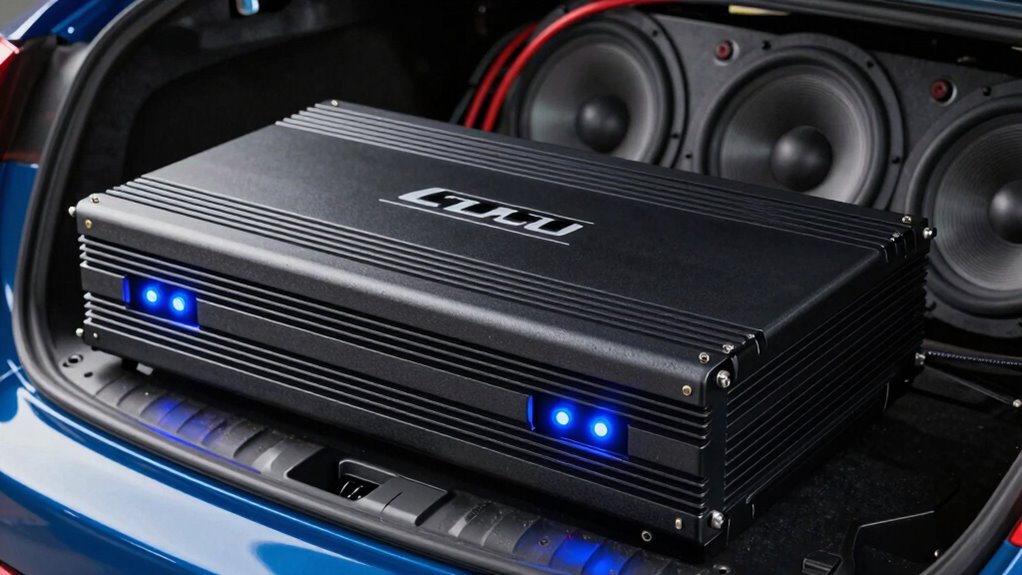

For powerful bass, I’d start with the Taramps Smart 3 Bass as the best overall balance of 3,000 watts RMS and multi-impedance flexibility; the SounDigital EVO6 3000.1 stands out when compact installation matters, while the Taramps BASS 8K targets builds that need far more output. The right choice depends on your subwoofer’s RMS rating and final impedance, not a headline maximum-watt number. Higher-output amplifiers can also demand substantial electrical-system upgrades, while smaller models may be easier to install but leave less headroom. I compare output, impedance compatibility, usability, and installation demands below. Continue reading for the full breakdown and a pick matched to your setup.

Get business pricing on garage and car supplies
- Business-only prices and quantity discounts
- Tax-exempt purchasing
- Multiple users, one account, clear invoices
Complete the kit


Key Takeaways
- The Smart 3 Bass is the most flexible high-output pick: its stated 3,000 watts RMS and 0.5–2-ohm range give it broader load options than fixed-impedance alternatives.
- Power needs vary widely across this lineup: the BASS 8K and MD 5000.1 suit demanding builds, while the BASS 400 and 1000-watt-class models fit more modest systems.
- Compactness and output are separate priorities: the SounDigital EVO6 is listed as compact, but a smaller chassis does not remove the need to plan for heat and power delivery.
- RMS ratings matter more than maximum-watt claims: compare the amplifier’s continuous output at your final load with your subwoofer’s RMS handling.
- Impedance compatibility can rule out a model: several picks specify a 1-ohm or 2-ohm configuration, while the Smart 3 Bass lists a wider operating range; verify the exact wiring load before buying.


| monoblock car amplifiers for powerful bass | Channels | Dimensions | Frequency response |
|---|---|---|---|
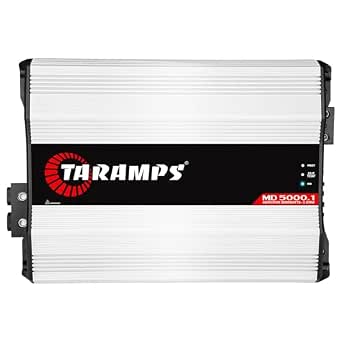
| Taramps MD 5000.1 Monoblock Ca | 1 | 8.98 × 2.76 × 12.87 inches | 10Hz–10kHz |
| Stinger Audio MT-1000.1V2 Mono | 1 | — | — |
| Taramps BASS 8K 1 Ohm 8000W RM | 1 | 9.41 × 16.5 × 2.87 inches | 8Hz–250Hz (-3dB) |
| AUDISHAKO MHD1600.1D 3200W Mon | 1 | 10.5 × 4.56 × 1.97 inches | 10Hz–250Hz |
| SounDigital EVO6 3000.1 Car Au | 1 | 5.93 × 5.81 × 2.39 inches | — |
| Taramps HD 3000 1 Ohm 3000W RM | 1 | 7 x 9 x 3 inches | 10Hz–20kHz |
| BOSS Audio Systems R1100M 1100 | 1 | 10.43 x 9.21 x 2.25 inches | — |
| ORION CBA2000.1D Cobalt Mono 1 | 1 | 14 x 8 x 3 inches | 10–250Hz |
| Taramps Smart 3 Bass 3000 Watt | 1 | 9.37 x 9.45 x 2.8 inches | — |
| Taramps BASS 1200 1 Ohm 1200W | 1 | 9.41 x 6.18 x 2.87 inches | — |
| CT Sounds CT-1000.1D Compact C | 1 | 11.68 × 5.62 × 2.18 inches | 0–320 Hz |
| Skar Audio RP-800.1D Monoblock | 1 | 16 × 7 × 3 inches | 20 Hz–250 Hz |
| Taramps HD 2000 2 Ohms 2000W R | 1 | 8.98 × 7.32 × 2.52 inches | 10 Hz–20 kHz |
| Taramps BASS 400 2 Ohms 400W R | 1 | 6 × 6 × 6 inches | — |
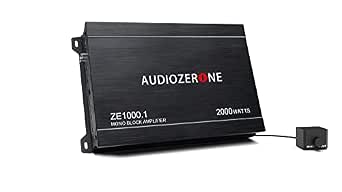
| AUDIOZERONE Car Audio Amplifie | — | — | — |
More Details on Our Top Picks
Taramps MD 5000.1 Monoblock Car Amplifier
The Taramps MD 5000.1 is aimed at a system that needs substantial output without moving to the even larger 8000-watt Taramps BASS 8K. Its stated 5000 watts RMS at 1 ohm and adjustable crossover and bass boost give experienced builders room to tune a demanding subwoofer setup. The full-range design and broad 10Hz–10kHz response also offer more flexibility than a subwoofer-focused amp such as the AUDISHAKO MHD1600.1D, whose listed response ends at 250Hz.
That output calls for a suitably capable electrical system, wiring, and installation; it is far beyond what a small or stock setup is likely to need. The Smart Cooler and multiple protection circuits are useful safeguards, not a substitute for correct system matching. Choose it for high-output tuning flexibility, not an uncomplicated upgrade.
Pros:- Stated 5000W RMS output at 1 ohm suits demanding builds.
- Variable high-pass and low-pass crossovers support system tuning.
- Adjustable bass boost adds another way to shape low-frequency output.
- Smart Cooler and listed electrical and thermal protections support demanding operation.
Cons:- Requires appropriately rated wiring and a capable electrical system.
- Its output can exceed the needs of modest subwoofers or basic systems.
- Installation and tuning call for more expertise than a lower-output option such as the Stinger MT-1000.1V2.
Best for: Experienced builders pairing a 1-ohm load with a high-capacity electrical system and subwoofers that can use substantial amplifier output.
Not ideal for: Drivers upgrading a basic factory system or seeking a simple, low-demand install; its stated power requires careful system matching and installation.
- Power output:5000W RMS at 1 ohm
- Channels:1
- Frequency response:10Hz–10kHz
- Crossover:Variable high-pass and low-pass
- Bass boost:Switchable and adjustable
- Protection:Short circuit, thermal overload, low impedance, and voltage spike protection
- Cooling:Smart Cooler
- Dimensions:8.98 × 2.76 × 12.87 inches
- Weight:9.28 lb
Our verdict“Choose the MD 5000.1 if your subwoofers and electrical system are built for high output and you want more tuning range than a subwoofer-only design.”
Stinger Audio MT-1000.1V2 Monoblock 1000W Class D Car Audio Amplifier
The Stinger Audio MT-1000.1V2 makes more sense for a conventional subwoofer upgrade than the high-output Taramps MD 5000.1 or BASS 8K. Its 1000-watt mono output is a more restrained target for buyers who do not need competition-scale power, while the included remote bass control lets the driver adjust bass level from the cabin. That practical control is a notable advantage over the SounDigital EVO6 3000.1, whose supplied details do not list a remote.
The tradeoff is limited system scope: this is a single-channel subwoofer amplifier, not a solution for powering a full speaker system. The provided specifications also leave out detailed crossover ranges and dimensions, so check installation fit and tuning needs before choosing it. It still needs technical installation, but its modest stated output makes it a less demanding direction than the 3000- and 5000-watt choices.
Pros:- 1000W output targets a less extreme upgrade than the 3000W and 5000W options.
- Included remote bass control supports convenient level adjustment from the cabin.
- Compact design is described as suitable for vehicle installations.
- HEX FET MOSFET technology is specified for the amplifier.
Cons:- One channel is intended for a subwoofer, not a full stereo speaker system.
- Detailed frequency response and dimensions are not provided in the supplied specifications.
- Technical installation is needed, and Bluetooth or wireless connectivity is not listed.
Best for: Drivers adding one subwoofer to an existing system who want a 1000-watt amplifier and an included cabin remote for bass-level adjustment.
Not ideal for: Builders running multiple high-demand subwoofers or seeking full-range, multi-channel amplification; its listed output and single-channel design are more limited.
- Output power:1000W
- Channels:1
- Voltage range:9–16V
- Technology:HEX FET MOSFET
- Included components:Amplifier, remote bass control, cable, mounting bracket, and screws
- Mounting:Screw mount
- Warranty:1 year
Our verdict“Pick the Stinger if you want a comparatively restrained subwoofer amp with a supplied remote, rather than the much higher output of the Taramps models.”
Taramps BASS 8K 1 Ohm 8000W RMS Monoblock Car Subwoofer Amplifier
The Taramps BASS 8K takes the highest-output role here: its listed 8000W RMS is well above the MD 5000.1 and the 3000W SounDigital EVO6. That headroom is intended for custom, high-output subwoofer builds, including SPL-focused systems, rather than a routine factory-audio upgrade. Its 8Hz–250Hz response is specifically suited to bass duties, unlike the MD 5000.1’s much wider stated response.
The physical and electrical demands are part of the decision. At 16.5 inches long, it needs room to mount, and its voltage range does not remove the need for an electrical system and wiring suited to a build at this level. Compared with the smaller EVO6, this is a much more specialized choice: it offers far more stated output, but requires more space and system planning. Buyers without compatible subwoofers should skip the extra capacity.
Pros:- Listed 8000W RMS output targets extreme bass and SPL-oriented builds.
- 8Hz–250Hz response is focused on low-frequency reproduction.
- Adjustable filters allow bass-system tuning.
- Aluminum construction and listed protection systems suit a demanding installation.
Cons:- Its high stated output demands careful electrical and wiring planning.
- The 16.5-inch length can rule it out for compact mounting locations.
- Advanced setup and system matching make it less suitable for first-time installers.
Best for: SPL competitors and advanced builders with compatible subwoofers, substantial electrical-system capacity, and room for a large amplifier.
Not ideal for: Everyday drivers with stock electrical systems, limited mounting space, or modest subwoofers that cannot make use of its stated output.
- Maximum output power:8000W
- Channels:1
- Operating voltage:9–17V DC
- Frequency response:8Hz–250Hz (-3dB)
- Dimensions:9.41 × 16.5 × 2.87 inches
- Material:Aluminum
- Mounting type:Surface mount
- Warranty:1 year
Our verdict“Choose the BASS 8K only for a space- and power-ready competition or custom bass build; for a smaller system, the MD 5000.1 or EVO6 is a more measured match.”
AUDISHAKO MHD1600.1D 3200W Monoblock Car Audio Amplifier
The AUDISHAKO MHD1600.1D stands out less for headline power than for installation flexibility: it accepts both high-level and RCA inputs, which can help when integrating with different source units. Its listed 1600W RMS at 1 ohm places it above the Stinger MT-1000.1V2’s 1000W, but well below the Taramps MD 5000.1 and BASS 8K. That middle ground suits a subwoofer build seeking more output than a basic upgrade without aiming at extreme SPL levels.
Its 10Hz–250Hz response is focused on bass, so it is not the full-range alternative to the MD 5000.1. The 0.25–8V input sensitivity adds setup range, though installation and tuning may take patience for newcomers. The supplied data also lists a 12V specification but no detailed protection features, leaving buyers with less information than the Taramps models provide.
Pros:- High-level and RCA inputs support different source-unit installations.
- Listed 1600W RMS at 1 ohm exceeds the Stinger’s 1000W output.
- Input sensitivity range of 0.25–8V accommodates varied signal levels.
- Compact 1.97-inch height may help with low-clearance mounting.
Cons:- Its 250Hz upper frequency limit makes it a bass-focused rather than full-range choice.
- The supplied product data does not specify protection features.
- High output and tuning controls can make setup challenging for new installers.
Best for: Installers adapting a subwoofer amplifier to either a factory-style high-level source or an RCA-equipped aftermarket head unit, with a moderate-to-high output target.
Not ideal for: Buyers seeking documented protection features, a full-range monoblock, or the extreme power headroom of the Taramps BASS 8K.
- Power output:1600W RMS at 1 ohm
- Maximum power:3200W
- Channels:1
- Frequency response:10Hz–250Hz
- Input sensitivity:0.25–8V
- Inputs:High-level and RCA
- Voltage:12V
- Dimensions:10.5 × 4.56 × 1.97 inches
Our verdict“Choose the MHD1600.1D if input flexibility matters and 1600W RMS is a better fit than the Stinger’s lower output or Taramps’ far more demanding high-power models.”
SounDigital EVO6 3000.1 Car Audio Amplifier
The SounDigital EVO6 3000.1 offers a useful middle path for buyers who want substantial bass output but cannot give an amplifier much space. Its listed 3000W RMS output is lower than the Taramps MD 5000.1 and far below the BASS 8K, while its 5.93 × 5.81 × 2.39-inch footprint is dramatically smaller than the BASS 8K’s 16.5-inch length. That combination gives this pick a distinct role for compact custom installations rather than maximum-output builds.
Built-in LPF/HPF controls and bass boost support system tuning, and clip and power indicators help monitor operation. The tradeoff is that its small case does not make the electrical demands disappear, and the supplied data does not list included mounting hardware. At 1.35 kg, it is also the more installation-friendly choice compared with the heavier MD 5000.1, but its 3000W target still calls for suitable subwoofers and wiring.
Pros:- Compact dimensions make it easier to fit than the larger Taramps BASS 8K.
- Listed 3000W output offers substantial capacity without the BASS 8K’s extreme rating.
- Built-in LPF/HPF and bass boost provide tuning options.
- Clip and power indicators provide at-a-glance operating information.
Cons:- No mounting hardware is listed as included.
- Its 3000W output still calls for a suitable electrical system and carefully matched subwoofers.
- The supplied specifications do not state detailed frequency response or input options.
Best for: Space-conscious builders who want a compact 3000W-rated mono amplifier for a capable subwoofer system and can provide appropriate wiring and electrical support.
Not ideal for: Buyers seeking the absolute highest stated output, a documented remote bass controller, or a package with mounting hardware included.
- Model:SD3000.1-1D
- Output power:3000W
- Channels:1
- Dimensions:5.93 × 5.81 × 2.39 inches
- Weight:1.35 kg
- Material:Aluminum
- Mounting type:Surface mount
- Tuning features:Built-in LPF/HPF and bass boost
- Warranty:1 year
Our verdict“Pick the EVO6 if mounting space is tight but you still want a 3000W-class mono amp, rather than the larger and more demanding BASS 8K.”
Taramps HD 3000 1 Ohm 3000W RMS Full Range Monoblock Car Audio Amplifier
The Taramps HD 3000 combines 3000W RMS with a stated 10Hz–20kHz response, giving it more flexibility than subwoofer-focused models such as the ORION CBA2000.1D, whose listed range stops at 250Hz. That broad response can suit a system where one mono amp needs to handle bass or other low-frequency duties, while adjustable crossovers help shape the output. Remote compatibility also lets you adjust level from the cabin when paired with a compatible remote. The tradeoff is the installation burden: its 150A fuse and 4 AWG power-cable specification point to substantial wiring needs, and the single-channel design is not a stereo solution. Compared with the compact Taramps BASS 1200, this is the stronger choice for a much more demanding setup, but it calls for more supporting electrical capacity and installation know-how.
Pros:- 3000W RMS output for demanding mono setups
- 10Hz–20kHz stated frequency response offers broader application than subwoofer-only models
- Adjustable crossovers support system-specific tuning
- Remote compatibility allows convenient level adjustment with a compatible remote
Cons:- 150A fuse and 4 AWG power-cable specification require substantial wiring and planning
- Mono output cannot power a stereo setup on its own
- Its output and installation needs may exceed what a modest vehicle electrical system can support
Best for: Experienced builders seeking a high-output mono amplifier with a broader stated frequency range for a custom bass or low-frequency system.
Not ideal for: Drivers with stock electrical systems, limited installation space, or a stereo-amplification requirement; its 3000W rating calls for careful system matching and substantial wiring.
- Channels:1
- Output power:3000W RMS
- Frequency response:10Hz–20kHz
- Supply voltage range:9–16V
- Fuse:150A
- Power cable gauge:4 AWG
- Dimensions:7 x 9 x 3 inches
- Weight:5 lb
Our verdict“Choose the HD 3000 if you need high mono output and broader frequency flexibility, and can support the wiring and electrical demands.”
BOSS Audio Systems R1100M 1100 Watt Monoblock Car Amplifier
The BOSS Audio R1100M is the approachable pick for a first mono bass system: its RCA and speaker-level inputs give installers more ways to connect it to a source unit, and the included remote subwoofer control makes level changes easier from the driver’s seat. Its Class A/B design and MOSFET power supply contrast with the Class D Taramps BASS 1200, while its listed output is lower and specified as maximum power rather than RMS. That makes the R1100M a less convincing match for buyers chasing sustained, high-output bass than the Taramps HD 3000, but a more measured option for a modest system. Adjustable low-pass filtering and bass boost help tailor the sound; still, the 2-ohm stability limit and the need for careful installation restrict how far a build can grow.
Pros:- RCA and speaker-level inputs support different source-unit setups
- Remote subwoofer control makes bass-level changes convenient
- Adjustable low-pass filter and bass boost offer basic tuning options
- Class A/B design with MOSFET power supply
Cons:- Power figures are listed as maximum output, not RMS
- 2-ohm stability rules out lower-impedance configurations
- Its dimensions may complicate tight installations, and setup may call for professional help
Best for: First-time installers building a modest subwoofer system who want speaker-level input flexibility and a cabin bass remote.
Not ideal for: Buyers seeking verified high RMS output, 1-ohm operation, or a compact installation; the listed ratings are maximum power and the unit is stable only to 2 ohms.
- Channels:1
- Power at 2 ohms:1100W maximum
- Power at 4 ohms:550W maximum
- Minimum stable impedance:2 ohms
- Amplifier class:A/B
- Inputs:RCA and speaker-level
- Dimensions:10.43 x 9.21 x 2.25 inches
- Weight:4.37 lb
Our verdict“Pick the R1100M for a first, moderate-output bass build that benefits from flexible inputs, not for a high-RMS or low-impedance system.”
ORION CBA2000.1D Cobalt Mono 1-Channel Class D Amplifier, 2000W Max
The ORION CBA2000.1D earns its place through subwoofer-specific control rather than headline power: its subsonic control, phase shift, low-pass filter, bass boost, and remote bass knob give system builders several ways to shape the result. It also supports continuous 1-ohm operation, a useful match for compatible subwoofer loads. Its listed RMS output—500W at 1 ohm—is a more grounded guide to sustained power than the 2000W maximum figure, and sits well below the 3000W RMS claims of the Taramps HD 3000 and Taramps Smart 3 Bass. That makes Orion the more restrained tuning-focused pick, not the choice for maximum output. The 14-inch length also demands mounting room, and its array of controls may take more setup effort than the simpler BOSS R1100M.
Pros:- Continuous 1-ohm support for compatible subwoofer configurations
- 500W RMS at 1 ohm provides a clearer sustained-output reference than its maximum rating
- Subsonic control, phase shift, low-pass filter, and bass boost broaden tuning options
- Remote bass knob and thermal protection are included
Cons:- Listed RMS output is far below the 3000W RMS Taramps models
- 14-inch length may limit mounting locations
- Multiple tuning controls require care to set up well
Best for: Subwoofer owners who want 1-ohm capability, a remote bass knob, and several filters for shaping a custom low-frequency response.
Not ideal for: Buyers prioritizing 3000W-class RMS output, a small amp footprint, or a straightforward plug-and-play setup.
- Channels:1
- RMS power at 1 ohm:500W
- RMS power at 2 ohms:260W
- RMS power at 4 ohms:160W
- Frequency response:10–250Hz
- Inputs:Low-level RCA
- Dimensions:14 x 8 x 3 inches
- Protection:Thermal protection and two-way protection circuitry
Our verdict“Choose the ORION if flexible subwoofer tuning and 1-ohm operation matter more than the highest RMS output or a compact chassis.”
Taramps Smart 3 Bass 3000 Watts RMS Car Amplifier, 1 Channel, Multi-Impedance (0.5-2 Ohms), Class D, Mosfet Monoblock with Crossover and Bass Boost
The Taramps Smart 3 Bass pairs 3000W RMS with a stated 0.5–2-ohm operating range, making it the most adaptable high-output pick here for builders whose subwoofer wiring lands below 1 ohm. That range distinguishes it from the Taramps HD 3000, which is specified as a 1-ohm model, while both offer 3000W RMS and require serious electrical planning. The Smart 3 Bass adds crossover and bass-boost controls plus short-circuit, voltage, and thermal protection; these features help with system setup and fault safeguards, but do not remove the need for appropriate wiring or vehicle electrical capacity. Its aluminum chassis is more compact than the ORION CBA2000.1D’s listed 14-inch length. The tradeoff is a 200A fuse specification and a one-year warranty, so this is a specialist high-demand choice rather than an easy upgrade for a stock setup.
Pros:- 3000W RMS output for high-demand bass systems
- 0.5–2-ohm range supports more load configurations than the HD 3000’s stated 1-ohm specification
- Crossover, bass boost, and level settings support system tuning
- Short-circuit, voltage, and thermal protection features
Cons:- 200A fuse specification signals substantial wiring and electrical-system demands
- Power level may require vehicle electrical upgrades and expert installation
- One-year warranty is a limited coverage period
Best for: Experienced installers building a high-output subwoofer system with a compatible load between 0.5 and 2 ohms.
Not ideal for: Drivers with stock wiring or limited electrical capacity, buyers who need stereo channels, or anyone seeking a low-effort upgrade.
- Channels:1
- Output power:3000W RMS
- Impedance range:0.5–2 ohms
- Supply voltage range:9–17V
- Fuse:200A
- Dimensions:9.37 x 9.45 x 2.8 inches
- Material:Aluminum
- Warranty:1 year
Our verdict“Choose the Smart 3 Bass for a professionally planned, high-output build that needs flexibility across 0.5–2-ohm loads.”
Taramps BASS 1200 1 Ohm 1200W RMS Monoblock Car Audio Amplifier
The Taramps BASS 1200 hits a practical middle ground: 1200W RMS at 1 ohm gives it a more specific sustained-power rating than the BOSS R1100M’s maximum figures, without stepping up to the 3000W demands of the Taramps HD 3000 or Smart 3 Bass. Adjustable low-end tuning and an included monitor level remote make it easier to adapt bass from the cabin, while the aluminum chassis measures 9.41 x 6.18 x 2.87 inches. That smaller footprint helps compared with the 14-inch ORION CBA2000.1D, though it still needs a properly planned vehicle installation. Its 1-ohm rating narrows the load choices, and the 1200W output still calls for suitable wiring and electrical capacity. I’d shortlist it for a substantial single-sub upgrade, not a stock-system swap with no supporting changes.
Pros:- 1200W RMS output at 1 ohm suits a substantial bass upgrade
- Included monitor level remote allows cabin adjustment
- Aluminum chassis is smaller than the ORION CBA2000.1D’s listed footprint
- Adjustable low-end controls support bass tuning
Cons:- 1-ohm specification limits compatibility with other load configurations
- Installation still requires appropriate wiring and vehicle electrical capacity
- One-year manufacturer warranty
Best for: Drivers upgrading to a substantial 1-ohm subwoofer setup who want cabin level control without moving to a 3000W-class amplifier.
Not ideal for: Buyers whose subwoofer load is not compatible with 1-ohm operation, or those with limited wiring capacity seeking a simple low-power replacement.
- Channels:1
- Output power:1200W RMS at 1 ohm
- Supply voltage range:9–17V DC
- Dimensions:9.41 x 6.18 x 2.87 inches
- Weight:4.4 lb
- Material:Aluminum
- Included component:Monitor level remote
- Warranty:1 year
Our verdict“Pick the BASS 1200 for a serious but less extreme 1-ohm bass upgrade with a remote, rather than a 3000W-class build.”
CT Sounds CT-1000.1D Compact Class D Car Audio Monoblock Amplifier, 1000 Watts RMS
The CT Sounds CT-1000.1D pairs a stated 1,000 watts RMS at 1 ohm with a chassis about 11.68 inches long, making it a strong fit when subwoofer power matters but installation space is limited. Its protection circuits cover high and low voltage, overcurrent, and excess heat, giving buyers several safeguards in a demanding bass setup. Compared with the Taramps BASS 400, it offers far more rated output for larger or more power-hungry subs; unlike the full-range Taramps HD 2000, its listed frequency response is focused on bass, not broad speaker duties. The tradeoff is the mono-only design and the need for properly sized wiring and a compatible 1-ohm load. Its compact footprint helps, but it is not a substitute for careful system matching.
Pros:- Rated 1,000 watts RMS at 1 ohm for demanding subwoofer systems
- Compact dimensions ease placement in crowded vehicle interiors
- Protection covers voltage, overcurrent, and high-temperature conditions
- Class D design suits a high-output bass installation
Cons:- Mono bass amplification cannot power a conventional stereo system
- Requires a subwoofer and wiring matched to its 1-ohm rating
- Its power capacity can exceed the needs of modest subwoofers
Best for: Drivers fitting a high-output subwoofer system into a vehicle with limited amplifier-mounting space, whose sub can safely run at 1 ohm.
Not ideal for: Buyers seeking one amplifier for full-range or stereo speakers, or those without the wiring and electrical setup for a 1,000-watt RMS system.
- Amplifier type:Class D monoblock
- Channels:1
- Frequency response:0–320 Hz
- Operating voltage:14.4 volts
- Dimensions:11.68 × 5.62 × 2.18 inches
- Protection:High voltage, low voltage, overcurrent, and high temperature
- Mounting type:Surface mount
Our verdict“Choose the CT-1000.1D when you need substantial 1-ohm subwoofer power in a relatively compact amplifier and do not need full-range channels.”
Skar Audio RP-800.1D Monoblock Class D MOSFET Amplifier with Remote Subwoofer Level Control, 800W
The Skar Audio RP-800.1D is a practical choice for listeners who want meaningful subwoofer output and an easy way to adjust bass from the driver’s seat. Its 800 watts RMS at 1 ohm sits below the CT Sounds CT-1000.1D’s 1,000-watt rating, while the included remote level control and selectable +6 dB or +12 dB bass EQ add hands-on tuning that the CT’s listed feature set does not highlight. Those controls can help adapt bass level to different music or listening preferences, but boost settings should be used with care because they can demand more from the subwoofer and electrical system. The four-way protection circuitry is a useful safeguard, though it does not replace correct installation. This is still a single-channel amplifier, and its 16-inch length calls for more mounting room than the CT.
Pros:- 800 watts RMS at 1 ohm suits many substantial subwoofer setups
- Included remote control allows cabin-level bass adjustment
- Selectable +6 dB and +12 dB bass EQ offers tuning flexibility
- Four-way protection circuitry adds electrical and thermal safeguards
Cons:- Longer 16-inch chassis needs more mounting space than the CT Sounds CT-1000.1D
- Bass boost can push a subwoofer or electrical system harder if used carelessly
- Mono-only output is not suited to full-range stereo speaker duty
Best for: Drivers with a 1-ohm-compatible subwoofer who want to change sub level from the cabin and tune bass without reaching the amplifier.
Not ideal for: Owners of small or low-power subwoofers, buyers with tight mounting space, or anyone needing full-range stereo amplification.
- Maximum output:1,200 watts
- Amplifier type:Class D MOSFET monoblock
- Channels:1
- Frequency response:20 Hz–250 Hz
- Bass EQ:+6 dB and +12 dB options
- Remote control:Remote subwoofer level control included
- Dimensions:16 × 7 × 3 inches
- Protection:Four-way protection circuitry
Our verdict“Pick the RP-800.1D if remote bass adjustment and built-in EQ matter more to you than the CT Sounds amplifier’s smaller footprint and higher RMS rating.”
Taramps HD 2000 2 Ohms 2000W RMS Full Range Monoblock Car Audio Amplifier
The Taramps HD 2000 stands apart from bass-focused models by combining 2,000 watts RMS at 2 ohms with a listed 10 Hz–20 kHz frequency response. That broad range makes it a more flexible mono option for compatible speaker applications, while the Taramps BASS 400 is explicitly geared toward subwoofer frequencies and is a simpler match for modest bass systems. For subwoofer buyers, the HD 2000’s output leaves room for a demanding setup, but the 2-ohm rating means it is not a direct substitute for 1-ohm-stable choices such as the CT Sounds CT-1000.1D or Skar RP-800.1D. Its three-speed smart cooling and thermal, voltage, and short-circuit protection address high-output use. The tradeoffs are careful load matching, secure installation, and a mono channel that cannot provide stereo separation.
Pros:- 2,000 watts RMS at 2 ohms supports high-output compatible systems
- 10 Hz–20 kHz response offers broader application than bass-only models
- Three-speed smart cooling is designed to respond to amplifier heat
- Thermal, voltage, and short-circuit protection are specified
Cons:- 2-ohm rating limits compatibility with subwoofer systems designed around 1 ohm
- A 2,000-watt amplifier requires careful wiring, load matching, and installation
- Single-channel output cannot provide stereo speaker separation
Best for: Experienced installers building a high-output 2-ohm system who want one mono amplifier that can serve compatible subwoofer or other speaker applications.
Not ideal for: Buyers whose subwoofer needs a 1-ohm load, those seeking a straightforward small bass-only amp, or listeners who need stereo channels.
- Impedance:2 ohms
- Amplifier type:Full-range monoblock
- Channels:1
- Frequency response:10 Hz–20 kHz
- Operating voltage:12.6 volts
- Supply-voltage range:9–16 volts
- Dimensions:8.98 × 7.32 × 2.52 inches
- Cooling and protection:Three-speed smart cooler; thermal, voltage, and short-circuit protection
Our verdict“Choose the HD 2000 if you need high output at 2 ohms and value its broad frequency range; skip it if your subwoofer system requires a 1-ohm-stable amp.”
Taramps BASS 400 2 Ohms 400W RMS Monoblock Subwoofer Car Audio Amplifier
The Taramps BASS 400 is the restrained pick here: its 400 watts RMS at 2 ohms suit a modest subwoofer setup better than the Skar RP-800.1D’s 800-watt output or the Taramps HD 2000’s 2,000-watt rating. That lower ceiling can make system matching easier for buyers who do not need competition-level output, while adjustable bass boost lets you shape low-end emphasis. High-level and RCA inputs also give it more than one route into a system. Its stated 8 Hz–250 Hz range is focused on bass, so it is not a replacement for a full-range amplifier. The compact 6-inch cube housing saves space, though its power rating is a poor fit for larger subs that need more headroom. Buyers should also check the listed 14-volt minimum supply requirement against their vehicle’s electrical setup.
Pros:- 400 watts RMS suits modest subwoofer systems without the output of larger amps
- Adjustable bass boost provides low-end tuning control
- High-level and RCA inputs support different source-system connections
- Compact aluminum housing measures 6 × 6 × 6 inches
Cons:- 400-watt output may fall short for larger or high-power subwoofers
- 2-ohm specification does not suit every subwoofer wiring configuration
- Listed minimum supply voltage is 14 volts, which buyers should verify against their vehicle
Best for: Drivers running a modest 2-ohm subwoofer who want a small, bass-focused amplifier with adjustable boost and flexible input options.
Not ideal for: Owners of large, power-hungry subwoofers, systems built around a 1-ohm load, or anyone seeking full-range stereo amplification.
- Impedance:2 ohms
- Channels:1
- Frequency range:8 Hz–250 Hz
- Voltage:14.4 volts
- Supply-voltage range:14–16 volts
- Dimensions:6 × 6 × 6 inches
- Weight:620 g
- Inputs and warranty:High-level and RCA inputs; 1-year warranty
Our verdict“The BASS 400 is a sensible match for a modest 2-ohm subwoofer when compact size and simple bass tuning matter more than maximum output.”
AUDIOZERONE Car Audio Amplifier ZE1000.1 2000W Monoblock Class D MOSFET Subwoofer Amplifier
The AUDIOZERONE ZE1000.1 gives buyers several power figures to match against a subwoofer: 1,000 watts RMS at 1 ohm, 650 watts at 2 ohms, and 400 watts at 4 ohms. That makes it more adaptable across common loads than the Taramps BASS 400, which is listed for 2 ohms, while the CT Sounds CT-1000.1D offers a similar 1,000-watt RMS figure specifically at 1 ohm. The ZE1000.1’s Class D design, 6.6-pound weight, and 11-by-6.9-by-2-inch dimensions give it a manageable footprint for a high-output mono amp. Thermal, overload, and short-circuit protection are included, but the listed 2,000-watt maximum is not the same as its RMS rating. It remains subwoofer-focused, and correct wiring and cooling matter at high output.
Pros:- Rated 1,000 watts RMS at 1 ohm for a high-output subwoofer setup
- Also specifies RMS output at 2- and 4-ohm loads
- Class D design and compact dimensions help with installation planning
- Thermal, overload, and short-circuit protection are specified
Cons:- The 2,000-watt maximum figure is higher than the 1,000-watt RMS rating at 1 ohm
- Mono output is intended for subwoofer duty, not stereo playback
- High-output operation still calls for suitable wiring and ventilation
Best for: Subwoofer owners who want a 1-ohm-stable amplifier with stated RMS outputs at 1, 2, and 4 ohms to accommodate different wiring loads.
Not ideal for: Listeners needing stereo or full-range channels, buyers who compare maximum watts instead of RMS output, or systems without suitable wiring and cooling.
- Maximum power:2,000 watts
- Amplifier type:Class D MOSFET monoblock
- Channels and stability:1 channel; stable at 1 ohm
- Dimensions and weight:11 × 6.9 × 2 inches; 6.6 lb
- Voltage:14.4 volts; maximum supply voltage 16 volts
- Protection:Thermal, overload, and short-circuit protection
Our verdict“Choose the ZE1000.1 if you want 1-ohm stability and documented power across several subwoofer loads, while judging it by RMS rather than its maximum rating.”

How We Picked
I ranked these amplifiers around the needs behind powerful, usable bass: stated RMS output, supported impedance, and features that help match an amplifier to a subwoofer. I gave more weight to clearly specified continuous power than to maximum-watt claims, since RMS figures are more useful for comparing sustained output. I also considered fit and setup: compact designs can help in crowded installations, while crossovers, bass controls, and multi-impedance support can make a system easier to tune or adapt.
The order reflects capability balanced against fit and installation demands, not output alone. High-power models rank well for bass potential but are not universal winners; their electrical and wiring requirements can make them poor matches for factory-level systems or lower-rated subs. Where specifications describe only maximum power or omit useful details, I treat that uncertainty as a limitation rather than assuming performance. Buyers should confirm current manufacturer ratings, fuse and wiring guidance, and compatibility with their own subwoofer before purchase.
Factors to Consider When Choosing Monoblock Car Amplifiers For Powerful Bass
Choosing a monoblock is a system-matching decision, not a contest to buy the largest watt figure. I’d work from the subwoofer and vehicle outward: establish the load, estimate the output you can support, then decide which controls and physical dimensions make installation manageable.
Match RMS output to the subwoofer
Use the subwoofer’s continuous RMS handling as your starting point, then compare it with the amplifier’s RMS rating at the impedance you will actually run. A large mismatch can leave useful output unavailable or make it easier to overdrive the speaker. Headline maximum watts do not tell you how much power the amp can sustain, so avoid comparing that figure directly with another model’s RMS number. For dual-voice-coil subs, calculate the final wiring load before choosing an amplifier. Leave room for clean adjustment rather than planning to run gain at its limit to reach a target.
Check final impedance, not just the sub’s label
The amplifier must support the load created by the full subwoofer wiring arrangement. Voice-coil configuration and series or parallel wiring can produce an impedance different from the rating printed on any single component. A model specified for 1 ohm is not automatically a match for a 2-ohm final load, and a 2-ohm model should not be assumed safe at 1 ohm. Multi-impedance designs offer more flexibility when a system may change, but confirm output ratings at each supported load. Before buying, sketch the wiring or have an installer verify the planned configuration.
Budget for the vehicle’s electrical system
Higher amplifier output can draw more current, so the alternator, battery, power cable, grounds, and fusing all affect whether the system can perform reliably. A powerful amp paired with undersized wiring may experience voltage drop, heat, shutdowns, or inconsistent output. The required upgrade depends on the vehicle and listening demands; do not assume that the factory electrical system can support a major power increase. Follow the manufacturer’s fuse and cable recommendations and plan for proper chassis grounding. If the installation calls for electrical work beyond your experience, include professional assessment in the build plan.
Treat heat and mounting space as performance factors
A compact chassis can solve a tight-space problem, but it still needs ventilation and a secure mounting surface. Do not place an amplifier where carpet, trim, or stored items block cooling. High output can create substantial heat, especially during sustained bass playback, so a tucked-away location may need more thought than a larger, open mounting area. Measure the available space and leave room for wiring bends, connectors, and airflow. A smaller amp is a fit advantage, not a guarantee that the installation will be simpler.
Choose controls for the way you tune
Crossovers help limit the frequencies sent to the subwoofer, while a remote level control can make bass adjustment easier from the driver’s seat. Bass boost may seem like a quick route to more impact, but aggressive settings can increase distortion and stress the subwoofer. Set the crossover to suit the speaker and the rest of the system, then tune gain as a signal-matching control rather than a volume knob. If you want straightforward setup, favor controls that address a real need in your system. More adjustment options help only when they are used carefully.
Decide whether you need headroom or a simpler build
Buying far more amplifier output than the subwoofer and electrical system can use adds installation demands without guaranteeing better bass. Extra headroom can make sense when the subwoofer is rated for it, the load is supported, and the vehicle can supply the current. A lower-output model may be the smarter choice for a single modest sub or a first system, especially when ease of integration matters more than maximum output. Compare the cost and effort of supporting the amp, not just the amplifier itself. The strongest choice is the one your whole system can run safely and cleanly.
Frequently Asked Questions
Should I choose a 3,000-watt amp or a 5,000- or 8,000-watt model?
Choose by the subwoofer’s RMS rating, final impedance, and the vehicle’s electrical capacity rather than by the biggest number. The 3,000-watt-class options in this roundup can suit substantial systems without automatically pushing into the demands associated with the 5,000- and 8,000-watt models. A higher-rated amp only helps if the subwoofers can use its output and the installation can supply the current. Check the manufacturer’s output rating at your specific load, since power can change with impedance. If those details are unknown, confirm them before ordering.
Can I wire my subwoofer to 1 ohm with any amplifier on this list?
No. Some models are identified for a particular impedance, and that does not mean every amplifier in the roundup is rated for a 1-ohm load. The Smart 3 Bass lists a 0.5–2-ohm range, while several other products are specified as 1-ohm or 2-ohm models. Your subwoofer’s voice coils determine the loads available from different wiring arrangements. Verify the planned final impedance against the exact amplifier’s documentation; never use an unsupported load to chase extra output.
Will a high-power monoblock work with my factory alternator and battery?
It may, but the answer depends on the amplifier’s current draw, listening level, vehicle electrical capacity, and wiring. High-output models such as the BASS 8K and MD 5000.1 deserve particular attention to those requirements before installation. A factory system that handles a smaller amp may not maintain stable voltage under sustained heavy bass. Check the manufacturer’s recommended cable, fuse, and electrical guidance, then have the vehicle assessed if the proposed load is substantial. Do not treat an amplifier’s watt rating as proof that the vehicle can support it.
Is a compact amplifier a good choice if I have limited mounting space?
A compact design can make placement easier, which is why the SounDigital EVO6 is a useful candidate for space-conscious builds. Still, the amplifier needs airflow, secure mounting, and room for power and speaker connections. Tight, enclosed spaces can trap heat even when the chassis itself is small. Measure the intended location, including cable clearance, before choosing. If ventilation is poor, a larger or more open mounting position may be safer than squeezing in a compact unit.
Do I need an amp with bass boost or a remote level control?
Neither control is required for every system. A remote level control is useful when you want to adjust subwoofer output from the driver’s seat, while bass boost can add a targeted emphasis but may increase distortion or speaker stress when used heavily. Start with crossover and gain settings that match the system, rather than relying on boost to compensate for a poor subwoofer or installation. If simple operation is your priority, choose controls you are likely to use. Check the specific product listing to confirm which accessories are included.
Conclusion
For the broadest mix of strong stated output and load flexibility, I’d choose the Taramps Smart 3 Bass as best overall. The Taramps BASS 1200 is my value-minded pick for a more moderate build, while the Taramps BASS 8K is the premium high-output choice for a system built to support that level of demand. Beginners may find the Stinger MT-1000.1V2 a more manageable starting point than the very high-output models, provided its ratings suit the subwoofer. For tight mounting space, I’d look first at the SounDigital EVO6 3000.1; for a smaller, lower-power system, the Taramps BASS 400 is the more fitting specific-use option. Before deciding, match RMS power and impedance, then confirm your vehicle can support the installation.