
When choosing a long-range antenna for off-road radios, I focus on how well each option boosts communication over rugged terrain, durability, and ease of installation. The Retevis GMRS Mobile Antenna stands out for its impressive 6.5dB gain and heavy-duty fiberglass body, making it ideal for extended off-road adventures. The Midland MXTA26 offers a solid 6dB gain in a compact form, perfect for those needing reliable performance without length constraints. Meanwhile, the Rugged Radios Long Range Antenna for GMR2 Plus is designed for specific Rugged radios, offering a significant range boost with a simple install. Each brings a different strength and tradeoff, whether it’s power handling, size, or compatibility, helping you weigh what’s most important for your off-road communication needs.

Get business pricing on garage and car supplies
- Business-only prices and quantity discounts
- Tax-exempt purchasing
- Multiple users, one account, clear invoices
Complete the kit


Key Takeaways
- Heavy-duty fiberglass antennas provide durability against the elements but can be heavier and more complex to install.
- Antenna gain significantly influences range; higher dB ratings generally mean better long-distance communication.
- Compatibility with specific radios or mounts can limit flexibility—always match your radio model and installation setup.
- Longer antennas often improve range but may be cumbersome for vehicle mounting or storage.
- Premium options tend to offer better materials and range but come at a higher price point.


| long range antennas for off road radio | Gain |
|---|---|
| Retevis GMRS Mobile Antenna | 6.5dB |
| HYS GMRS Pretuned Low-Profile | 3.5dBi |
| Rugged Radios Long Range Anten | — |
| Rugged Radios Long Range Tuned | — |
| Midland MXTA26 MicroMobile 32- | 6dB |
More Details on Our Top Picks
Retevis GMRS Mobile Antenna, Heavy Duty Fiberglass, 6.5dB, 462-467MHz, 16ft Coaxial Cable, Compatible with Midland Radio RT97 RA86
The Retevis GMRS Mobile Antenna excels in rugged environments thanks to its heavy-duty fiberglass construction and impressive 6.5dB gain, which translates into better long-distance communication. Its flexible spring base helps absorb vibrations, reducing damage during off-road trips. Compared with smaller or lower-gain antennas, this model offers superior range, but its weight of 2.6 lbs makes it less ideal for quick, frequent mounting adjustments. The long 16ft coaxial cable provides flexible installation options, making it suitable for larger vehicles and stationary setups. Its main tradeoff is the installation complexity, which may require some technical skill, but it’s a reliable choice for serious off-road users who prioritize durability and reach.
Pros:- Durable fiberglass construction resistant to corrosion
- Flexible spring base absorbs vibrations
- Long 16ft coaxial cable for versatile mounting
- High 6.5dB gain enhances range
Cons:- Installation can be technical and time-consuming
- Heavy weight may be cumbersome for some vehicles
Best for: Off-road enthusiasts needing maximum durability and range in challenging terrains
Not ideal for: Casual users or those seeking a lightweight, easily portable antenna
- Frequency:462-467MHz
- Gain:6.5dB
- Power:50 W
- Length:48.2 inches
- Cable Length:16 ft
- Impedance:50Ω
Our verdict“This antenna is perfect for those who need a rugged, long-range solution and are prepared for a more involved setup.”
HYS GMRS Pretuned Low-Profile UHF Whip NMO 462-467MHz 5/8 Antenna for GMRS Radios
The HYS GMRS Pretuned Low-Profile UHF Whip offers a balanced mix of durability and performance, with a 3.5dBi gain that improves signal strength without excessive length. Its low-profile design makes it suitable for vehicles with limited mounting space, and its robust construction handles outdoor conditions well. Designed mainly for GMRS frequencies, it handles up to 150W, making it suitable for demanding environments. However, its limited frequency range and requirement for an NMO mount mean it’s less flexible for multi-band or multi-radio setups. Compared to taller antennas, it’s easier to install and less prone to damage, but it doesn’t deliver the same maximum range as taller models with higher gain.
Pros:- Good signal gain in a compact form
- Durable construction for outdoor use
- Handles high power levels up to 150W
- Easy to install on NMO mounts
Cons:- Limited to GMRS frequency range
- Requires additional NMO mounting hardware
Best for: Vehicles needing a durable, space-efficient long-range antenna for GMRS frequencies
Not ideal for: Users needing multi-band coverage or those with incompatible mounts
- Frequency Range:462-467MHz
- VSWR:< 1.5
- Gain:3.5dBi
- Max Power:150W
- Application:Mobile/Vehicle
Our verdict“A reliable, space-saving choice for vehicle-mounted GMRS communication where space is at a premium.”
Rugged Radios Long Range Antenna for GMR2 Plus
This long-range antenna for GMR2 Plus increases communication distance by up to 30%, making it ideal for users who want a straightforward boost without complex setups. Its machined aluminum base and stainless steel whip ensure durability, while its easy screw-on installation means you can get it up quickly. It’s limited to the GMR2 Plus radio, so it’s not a universal solution, but for that specific model, it offers a noticeable range increase. The tradeoff is that the actual range gain depends heavily on the environment, and it won’t work with other radios. Still, it’s a smart choice for Rugged Radios users looking to extend their communication reach without extra bulk.
Pros:- Significant 30% range increase
- Durable machined aluminum and stainless steel
- Simple installation process
- Compact and lightweight design
Cons:- Limited to GMR2 Plus models
- Range improvements vary by environment
Best for: GMR2 Plus owners seeking an easy, effective range boost
Not ideal for: Users with different radio models or seeking multi-band coverage
- Range Increase:up to 30%
- Length:6-3/4 inches
- Material:Machined aluminum, stainless steel
- Compatibility:Rugged Radios GMR2 Plus
Our verdict“Ideal for Rugged Radios GMR2 Plus users who want a simple, effective way to extend their radio range.”
Rugged Radios Long Range Tuned UHF Whip Antenna for Two Way Mobile Radio GMRS, 14.5″ Length, NMO Mount, 406-470 MHz
The Rugged Radios Tuned UHF Whip delivers on long-range communication with its 14.5-inch length and tuned frequency range of 406-470 MHz. Its NMO mount and high-quality materials, including silver soldered connections and gold-plated contacts, ensure dependable performance in demanding environments. Its length gives it an edge in extending UHF signals over large distances, particularly in dense terrain or challenging conditions. The tradeoff is that it’s somewhat overkill for casual or short-distance use, and the NMO mount requires a specific base setup. This antenna is best suited for users who prioritize maximum range and durability over compactness.
Pros:- Optimized for long-range UHF communication
- High-quality, durable construction
- Reliable connections with gold-plated contacts
- Easy to install with standard NMO mount
Cons:- Limited to 406-470 MHz range
- Requires NMO mounting base
Best for: Professionals or serious off-road users demanding maximum long-range UHF communication
Not ideal for: Casual users or those with limited mounting options
- Antenna Length:14.5 inches
- Frequency Range:406-470 MHz
- Mount Type:NMO
- Material:High Heat ABS
Our verdict“Best suited for those who need maximum UHF range and durability in tough conditions.”
Midland MXTA26 MicroMobile 32-inch Whip Antenna with 6dB Gain for Off-Road and Farm Communication
The Midland MXTA26 provides a substantial 6dB gain in a 32-inch whip, making it well-suited for off-road, overlanding, and farm use. Its length is a key advantage for improving range without the complexity of larger, taller antennas. The 6dB gain effectively boosts signal strength, especially valuable in remote or rugged environments where terrain can impede communication. However, the antenna’s considerable length might pose installation challenges on some vehicle mounts, and it requires proper setup to achieve optimal performance. Compared with shorter or lower-gain antennas, this model offers better range but may be less convenient for quick adjustments or storage in tight spaces.
Pros:- Boosts signal with 6dB gain
- Durable design for outdoor use
- Ideal length for range improvement
- Suitable for rugged environments
Cons:- May be too long for some vehicle mounts
- Requires correct installation for best results
Best for: Off-road and farm users needing a balance of range and ease of use
Not ideal for: Users seeking ultra-compact antennas or quick-removal options
- Base Diameter:1.5 inches
- Gain:6dB
- Wave Type:5/8 wave
- Antenna Length:32 inches
- Max Power:120W
Our verdict“A solid choice for those wanting a high-gain whip that balances performance with practicality.”
How We Picked
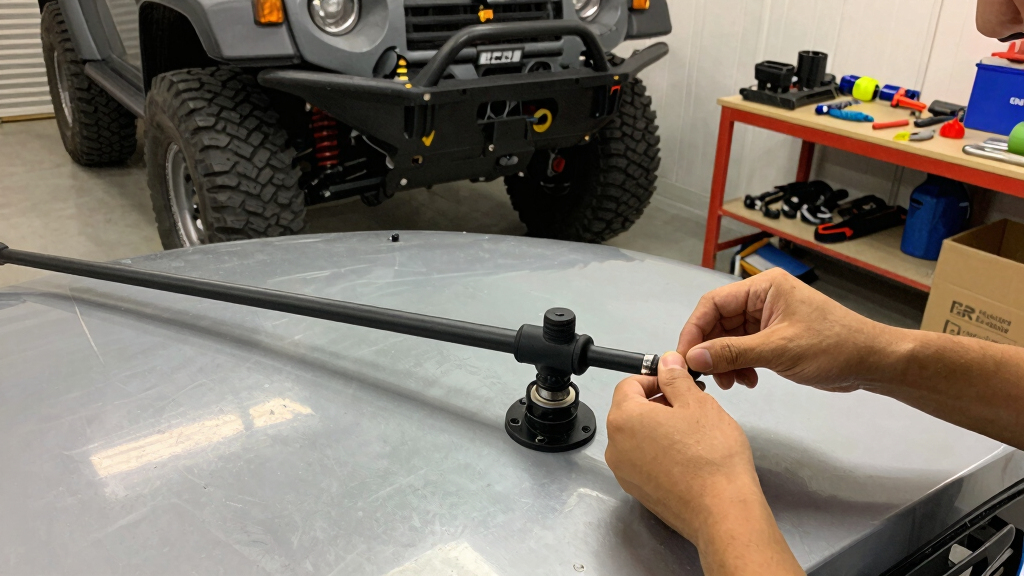
My selection process focused on antennas specifically designed for off-road and rugged environments, prioritizing durability, gain, and ease of installation. I looked at how well each antenna would perform in challenging terrains, emphasizing products with proven construction quality and clear compatibility with popular off-road radios. The balance of size, power handling, and value also guided my choices, ensuring there are options suitable for beginners, enthusiasts, and professionals alike. Products were compared based on technical specs, user feedback, and their suitability for demanding off-road conditions.
Factors to Consider When Choosing Long Range Antennas For Off Road Radios
Choosing the right long-range antenna for off-road radios involves balancing durability, range, size, and compatibility. Longer antennas generally provide better communication distances but can be bulkier and harder to install. Higher gain ratings translate into stronger signals, essential for traversing challenging terrains where obstacles and distance weaken communication. Compatibility considerations, such as radio model and mount type, can significantly influence your choice, ensuring the antenna fits your vehicle and radio system. Ultimately, your specific environment and usage frequency determine whether you need a rugged, high-gain antenna or a more compact, versatile option.Durability and Construction
Off-road conditions demand antennas built to withstand exposure to dirt, water, vibration, and impact. Fiberglass antennas tend to excel here, offering corrosion resistance and structural toughness. Heavy-duty materials like machined aluminum and stainless steel also contribute to longevity, especially in harsh environments. When evaluating durability, consider how well the antenna’s mounting base and connections are protected against the elements.
Range and Gain
Range depends heavily on antenna gain, measured in decibels (dB). A higher dB rating means a stronger signal and longer communication distance. For off-road scenarios where terrain and obstacles can impede signals, a 6dB or higher gain antenna offers a noticeable advantage. However, increased length or gain often means more installation considerations, so match your needs with the antenna’s size and performance specifications.
Size and Mounting
Longer antennas can improve range but may be impractical for some vehicles or mounts. Compact, low-profile antennas work well where space is limited but often sacrifice some range. Proper mounting is critical: NMO mounts are common for larger antennas, while smaller whip antennas might use different bases. Think about your vehicle’s size, available mounting points, and whether you prefer a fixed or removable antenna.
Compatibility and Installation
Ensure the antenna matches your radio’s frequency range and connector type. Some antennas are designed specifically for GMRS, UHF, or VHF bands, while others are more versatile. Installation complexity varies, with some models requiring additional hardware or technical skills. Consider how much effort you’re willing to put into setup and whether the antenna’s form factor fits your vehicle and usage style.
Frequently Asked Questions
What is the most important factor in choosing a long-range antenna for off-road radios?
The most critical factor is the antenna’s gain, measured in decibels (dB), which directly influences how far your signal can travel. Higher gain antennas provide longer-range communication, especially essential in off-road conditions where obstacles and terrain can weaken signals. However, higher gain often means a longer, more robust antenna, so balancing size and performance is key.
Can I use a standard vehicle antenna for off-road long-range communication?
While some standard vehicle antennas may offer basic functionality, off-road environments benefit from antennas specifically designed for rugged durability and higher gain. Off-road antennas are typically made from tougher materials like fiberglass or stainless steel, and are tuned for higher performance in challenging terrains. Using a dedicated off-road antenna ensures you get the reliability and range needed for remote or obstacle-filled areas.
How does antenna length affect performance?
Generally, longer antennas tend to offer better range because they can capture and transmit signals more effectively, especially at higher gain levels. However, longer antennas can be more cumbersome to mount and may be prone to damage during off-road activities. Shorter antennas are easier to handle and less likely to be damaged but usually provide less range, making them suitable for casual or urban use.
Are high-gain antennas suitable for all off-road situations?
High-gain antennas are excellent for long-distance communication, but their effectiveness depends on the environment and installation. They work best in open terrain but can be less effective if mounted improperly or if the terrain introduces significant signal obstruction. Additionally, very tall antennas may be more vulnerable to damage, so consider your vehicle’s mounting options and typical usage scenarios when choosing high-gain antennas.
Is installation difficult for long-range antennas?
Installation difficulty varies by antenna type. Compact whip antennas are usually straightforward, often requiring just a simple NMO mount. Larger, heavy-duty antennas with long coaxial cables or specialized mounts can be more complex and may require some technical knowledge or additional hardware. It’s worth considering your comfort level with installation and whether you need professional help or DIY solutions.
Conclusion
For off-road users prioritizing maximum range and durability, the heavy-duty Retevis GMRS antenna is a top choice, despite its heavier weight and installation complexity. Those seeking a more compact, easy-to-install solution should consider the Midland MXTA26, which offers a strong balance of gain and portability. Rugged Radios’ options are perfect for dedicated GMR2 Plus users or professionals needing specific, reliable range boosts. Casual enthusiasts or those with limited mounting space may prefer shorter, low-profile antennas. Ultimately, your choice depends on your environment, radio compatibility, and how much effort you want to invest in setup and maintenance.