For most newcomers, I’d start with the Breville Bambino: its compact design and guided brewing features make the first steps less involved, while leaving room to improve your technique. The Breville Barista Express is a standout for buyers who want a built-in grinder and more control, and the De’Longhi Stilosa is a simpler manual option for shoppers who prefer a straightforward setup. The main tradeoff is between convenience and hands-on control, with footprint, milk steaming, and grinder needs also shaping the choice. Compact machines can save counter space, but they may offer fewer adjustments than larger setups. Read on for the full comparison and help matching a machine to your routine.

Get business pricing on garage and car supplies
- Business-only prices and quantity discounts
- Tax-exempt purchasing
- Multiple users, one account, clear invoices
Complete the kit


Key Takeaways
- The Breville Bambino is the strongest starting point for many beginners because it pairs a compact footprint with a more guided experience than the manual-first options.
- The Barista Express bundles grinding and brewing, reducing the need to shop for a separate grinder, but its larger setup and broader controls suit a buyer ready to learn more.
- The Stilosa favors hands-on simplicity; it is a better match for someone who wants to practice basic espresso-making than someone seeking automation.
- Several compact 20-bar listings emphasize pressure and small size, but those specs alone do not tell a beginner how easy dialing in, steaming, or cleaning will be.
- Low-pressure 3.5-bar machines are a different kind of choice from the espresso-focused Breville and De’Longhi models, so buyers should check drink expectations before choosing one.


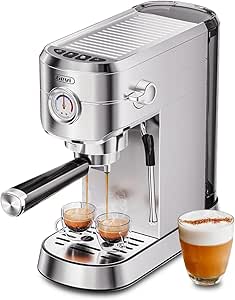


| espresso machine for beginner | Wattage | Dimensions | Weight | Voltage |
|---|---|---|---|---|
| CASABREWS CM5418 Compact Espre | 1350 W | — | — | — |
| De’Longhi Stilosa Compact Manu | 1100 W | 12.13 × 9.45 × 14.17 in | 8.6 lb | 120 V |
| Neretva 20 Bar Espresso Machin | 1350 W | 11 × 12 × 9.1 in | 17 lb | 120 V |
| AMZCHEF Espresso Machine with | 1350 W | 12.1 × 13 × 6.5 in | 8.5 lb | 120 V |
| AMZCHEF Espresso Machine With | 1500 W | 12.5 × 10.82 × 13.38 in | 13.9 lb | 120 V |
| 3.5-Bar Espresso Machine 4-Cup | 800 watts | 9.65 x 6.5 x 13.58 inches | — | 120 volts |
| XIXUBX Compact Espresso and Ca | 800 watts | 8.3 x 6 x 11.8 inches | 3.3 pounds | — |
| Breville BES870XL Barista Expr | 1600 watts | 13.8 x 12.5 x 15.9 inches | 22.1 pounds | — |
| Gevi 20-Bar Compact Espresso M | 1350 watts | 12.3 x 5.5 x 12 inches | 8.6 pounds | — |
| XIXUBX Espresso Machine | 1100 watts | 11.4 x 6.7 x 11.8 inches | 7 pounds | — |
| 20 Bar Espresso Machine with M | 1450 watts | 12.2 in D × 5.32 in W × 11.5 in H | — | — |
| AMZCHEF Compact Espresso Machi | 1350 watts | 12.5 in D × 7 in W × 14.4 in H | 8.2 lb | 120 volts |
| Chulux Slim Espresso Machine w | 1400 watts | 11.7 in D × 5.5 in W × 12.5 in H | 7.8 lb | 120 volts |
| Casabrews 3700 Essential Stain | 1350 W | — | — | 120 V |
| Breville Bambino Espresso Mach | 1560 watts | 13.7 in D × 6.3 in W × 12 in H | 10.9 lb | 120 volts |
More Details on Our Top Picks
CASABREWS CM5418 Compact Espresso Machine with Milk Frothing Steam Wand
The CASABREWS CM5418 suits beginners who want a compact machine for espresso and milk drinks without adding a grinder to the counter. Its 34 oz detachable tank is straightforward to refill, and the steam wand gives you room to practice milk texture and latte art. Compared with the De’Longhi Stilosa, it lists a higher-pressure 20-bar pump and a larger tank, though those figures alone do not guarantee a better-tasting shot. Both require ground coffee and hands-on operation. The main learning wrinkle is the cooling pause after steaming: you cannot move straight from frothing to brewing, which slows down making several drinks in a row. I’d choose this over the more feature-heavy AMZCHEF model with grinder if counter space matters more than grinding fresh beans.
Pros:- Compact brushed stainless steel design suits small kitchens or office counters.
- Detachable 34 oz tank makes refilling easier.
- Steam wand supports practice with milk foam and latte art.
- Semi-automatic controls offer hands-on espresso preparation.
Cons:- No built-in grinder, so coffee must be ground separately or bought pre-ground.
- Needs to cool after frothing before brewing, slowing consecutive drinks.
Best for: Beginners with limited counter space who want to practice espresso and milk drinks using pre-ground coffee.
Not ideal for: People who want freshly ground coffee from one appliance or need to brew immediately after steaming milk.
- Operation mode:Semi-automatic
- Pressure:20 bar
- Wattage:1350 W
- Water tank capacity:34 oz
- Material:Brushed stainless steel
- Milk frother:Steam wand
Our verdict“Choose the CM5418 if a small footprint and a milk wand matter more to you than an integrated grinder or a quick brew-and-steam sequence.”
De’Longhi Stilosa Compact Manual Espresso Machine, Manual Milk Frother
The De’Longhi Stilosa is a practical starting point for someone willing to learn manual espresso routines rather than rely on automated steps. Its included single and double filters, scoop/tamper, and portafilter provide the basic tools in the box, while the two-level cup holder accommodates taller glasses. Compared with the CASABREWS CM5418, it has a lower stated pump pressure and a smaller listed tank capacity, but its stainless-steel boiler and clear, simple setup make it a straightforward choice for learning the basics. The tradeoff is that this is not a quick one-touch machine: you supply ground coffee, operate the frother yourself, and wait between brewing and steaming because it has a single boiler. I’d favor it over the AMZCHEF model with grinder for buyers who prefer a simpler setup and do not need integrated grinding.
Pros:- Includes a portafilter, scoop/tamper, and single and double espresso filters.
- Compact dimensions fit many kitchen counters.
- Stainless-steel boiler is designed for durability.
- Two-level cup holder accommodates taller glasses.
Cons:- Manual operation requires practice with dosing, brewing, and milk frothing.
- No built-in grinder; coffee grounds must be supplied separately.
- Single-boiler design prevents brewing and steaming simultaneously.
Best for: First-time home espresso makers who want included baskets and basic tools, and are comfortable preparing grounds and frothing milk manually.
Not ideal for: People who want automatic drink preparation, an integrated grinder, or to brew and steam at the same time.
- Model:EC260BK
- Operation:Manual
- Pressure:15 bar
- Wattage:1100 W
- Voltage:120 V
- Capacity:1000 ml
- Dimensions:12.13 × 9.45 × 14.17 in
- Weight:8.6 lb
- Warranty:5 years
Our verdict“Pick the Stilosa if you want an uncomplicated manual machine with basic accessories and can accept the slower, hands-on workflow.”
Neretva 20 Bar Espresso Machine Super Compact Espresso Coffee Machine
The Neretva 20 Bar stands out for beginners who want more control over extraction, with temperature control and pre-infusion listed alongside its steam wand. These features can make it easier to explore how brewing conditions affect a shot, though they also mean this is better for a curious learner than someone seeking a set-and-forget appliance. Compared with the De’Longhi Stilosa, the Neretva adds those control features and a larger stated tank, but its 17-pound weight makes it less convenient to move or stow. It also takes ground coffee and uses semi-automatic operation, so a grinder and some practice remain part of the setup. The 1.31-liter tank is adequate for home use, but frequent drink-making may call for refills sooner than with the AMZCHEF machine’s listed 44 oz tank.
Pros:- Temperature control and pre-infusion offer added brewing variables to learn.
- Steam wand allows milk frothing and latte-art practice.
- Compact listed dimensions take up less counter area than many larger setups.
- 1.31-liter tank supports multiple drinks before refilling.
Cons:- At 17 pounds, it is relatively heavy for a compact machine.
- Ground-coffee input means there is no integrated grinder.
- Semi-automatic brewing calls for practice and user involvement.
Best for: Beginner home baristas who want to experiment with temperature and pre-infusion and have a stable spot for the machine.
Not ideal for: People seeking a very light, grab-and-store appliance, automated brewing, or a grinder built into the machine.
- Operation mode:Semi-automatic
- Pressure:20 bar
- Wattage:1350 W
- Voltage:120 V
- Water tank capacity:1.31 L
- Dimensions:11 × 12 × 9.1 in
- Weight:17 lb
- Coffee input:Ground coffee
- Material:Stainless steel
Our verdict“Choose the Neretva if learning extraction control matters more than portability or the simpler workflow of the De’Longhi Stilosa.”
AMZCHEF Espresso Machine with Self-Cleaning, 20-Bar Coffee Maker, Platinum
The AMZCHEF 20-Bar gives beginners a few convenience touches without replacing the hands-on parts of espresso making. Its LED touch display shows machine status, while the self-cleaning function can reduce routine cleanup effort. The 44 oz removable tank also holds more than the CASABREWS CM5418’s 34 oz tank, which can mean fewer refills during a day of making drinks. Both machines still depend on ground coffee and manual steaming, so the display should not be mistaken for fully automatic operation. Compared with the AMZCHEF model with a built-in grinder, this one has a simpler coffee workflow but leaves grinding to you. Its compact footprint and 8.5-pound weight suit a counter where easy handling matters, though its semi-automatic process still asks beginners to learn dosing and milk frothing.
Pros:- Self-cleaning function can reduce routine maintenance work.
- 44 oz removable tank holds more than the CASABREWS CM5418’s listed tank.
- LED touch display provides machine status.
- Manual steam wand supports milk frothing.
Cons:- Accepts ground coffee only and does not offer pod compatibility.
- Semi-automatic operation still requires espresso-making practice.
- Compact size may be limiting for larger-volume drink preparation.
Best for: Beginners who use pre-ground coffee and want a removable larger tank, status display, and a self-cleaning function.
Not ideal for: Buyers who want pod compatibility, an integrated grinder, or fully automatic drinks with little hands-on preparation.
- Operation mode:Semi-automatic
- Pressure:20 bar
- Wattage:1350 W
- Voltage:120 V
- Water tank capacity:44 oz
- Dimensions:12.1 × 13 × 6.5 in
- Weight:8.5 lb
- Display:LED touch
- Cleaning feature:Self-cleaning function
Our verdict“Choose this AMZCHEF if maintenance aids and a larger tank appeal more than the built-in grinder offered by its sibling model.”
AMZCHEF Espresso Machine With Grinder, Temp Control, 44 Grind Settings
The AMZCHEF with Grinder is the most complete setup here for a beginner ready to learn with fresh beans: its built-in grinder offers 44 settings, and temperature adjustment gives you more ways to tune brewing than the CASABREWS CM5418 or De’Longhi Stilosa. Keeping grinding and espresso in one appliance can simplify the counter setup, while the 60 oz tank cuts down on refills compared with the other listed models. That flexibility brings a steeper learning curve, though; semi-automatic brewing still requires practice, and a wide range of grind settings can mean more adjustment rather than instant consistency. Its listed dimensions also take more space than the compact manual options. The grinder-equipped design makes it a stronger fit for regular bean-to-cup experimentation than for a casual user who simply wants an uncomplicated espresso routine.
Pros:- Built-in grinder removes the need for a separate grinder.
- 44 grind settings provide room to adjust for different brewing preferences.
- Temperature control ranges from 190°F to 201°F.
- 60 oz water tank reduces the frequency of refills.
Cons:- Larger footprint than compact options such as the CASABREWS CM5418.
- Semi-automatic brewing and grinder adjustments require practice.
- More features may be unnecessary for occasional espresso drinkers.
Best for: Beginners who plan to use whole beans, want one appliance for grinding and espresso, and are willing to learn grind and temperature adjustments.
Not ideal for: Casual espresso drinkers with little counter space or anyone who wants a simple, low-involvement machine.
- Operation mode:Semi-automatic
- Wattage:1500 W
- Voltage:120 V
- Water tank capacity:60 oz
- Grind settings:44
- Temperature range:190°F–201°F
- Dimensions:12.5 × 10.82 × 13.38 in
- Weight:13.9 lb
- Material:Stainless steel
Our verdict“Choose this model if you want to learn with freshly ground beans and can make room for a more involved all-in-one machine.”
3.5-Bar Espresso Machine 4-Cup Compact Coffee Maker 800W Black
This is a straightforward entry point for someone who wants espresso-style drinks without a large machine or a long list of controls. Its 800W heating system, reusable filter, and built-in steam wand cover the basics for ground coffee and milk drinks, while the narrow footprint suits a dorm, office, or crowded counter. Compared with the XIXUBX 3.5-Bar Compact Espresso and Cappuccino Machine, this model is taller and deeper, but its listed capacity is slightly larger at 8.1 ounces. That is still a small reservoir, so frequent refills are part of the routine. The 3.5-bar pressure also places it in a simpler category than the Gevi’s 20-bar machine; choose this for uncomplicated use, not for greater control or a more advanced espresso workflow.
Pros:- Simple operation keeps the first brewing steps approachable.
- Compact 6.5-inch width suits small counters and office kitchens.
- Built-in steam wand supports cappuccinos and lattes.
- Reusable filter works with ground coffee.
Cons:- The 8.1-ounce capacity calls for frequent refills.
- 3.5-bar pressure offers a less advanced extraction setup than the Gevi 20-Bar Compact Espresso Machine.
- Results depend on suitable coffee grind size.
Best for: First-time buyers with limited counter space who mainly want occasional espresso-style drinks and milk-frothed coffee.
Not ideal for: Households making several drinks back-to-back or buyers seeking espresso-machine pressure and more control over extraction.
- Operation:Semi-automatic
- Output pressure:3.5 bar
- Wattage:800 watts
- Coffee input:Ground coffee
- Capacity:8.1 ounces
- Dimensions:9.65 x 6.5 x 13.58 inches
- Voltage:120 volts
Our verdict“Choose this for occasional, uncomplicated milk drinks in a small space, but pick the Gevi if you want a more capable espresso setup.”
XIXUBX Compact Espresso and Cappuccino Machine – 3.5 Bar with Steam Wand
Among the beginner options here, this XIXUBX makes the strongest case for a very small kitchen, dorm desk, or office nook. At 8.3 inches deep and 6 inches wide, it takes up less counter space than the 3.5-Bar Espresso Machine 4-Cup Compact Coffee Maker, and its 3.3-pound weight makes it easier to move or store. The 800W fast-heating system and single-dial operation keep the routine simple, while the steam wand adds flexibility for milk drinks. Its 240 ml capacity is the main compromise: it suits one or two small servings better than repeated brewing. Like the other 3.5-bar model, it uses ground coffee and offers less scope for dialing in shots than the Gevi 20-Bar Compact Espresso Machine.
Pros:- Small footprint fits tight counters and shelves.
- Light 3.3-pound body is easy to move and store.
- Fast-heating 800W system helps shorten the wait to brew.
- Steam wand allows milk-based drinks as well as coffee.
Cons:- The 240 ml capacity limits drinks per fill.
- No built-in grinder, so coffee must be ground separately.
- Single-dial control may feel restrictive as skills develop.
Best for: Students, renters, and office users who need a lightweight machine for a few small drinks and have very little counter space.
Not ideal for: People brewing for a group, buyers who want a built-in grinder, or aspiring home baristas who want more shot control.
- Operation:Semi-automatic
- Pressure:3.5 bar
- Wattage:800 watts
- Capacity:240 ml
- Dimensions:8.3 x 6 x 11.8 inches
- Weight:3.3 pounds
- Coffee input:Ground coffee
- Warranty:1 year
Our verdict“Pick this XIXUBX when footprint and portability matter more than capacity or advanced brewing control.”
Breville BES870XL Barista Express Espresso Machine, Brushed Stainless Steel
The Barista Express is the most hands-on choice in this group, but it also removes a common beginner hurdle by pairing a conical burr grinder with the espresso machine. Grinding fresh beans at home means you do not need to source a separate grinder before getting started. Its digital temperature control and steam wand give learners room to refine shots and milk texture, unlike the simpler 3.5-bar machines. That capability comes with a steeper learning curve: grinding, dosing, tamping, and steaming all take practice, so this is not the easiest pick for someone who wants one-touch convenience. Compared with the Gevi 20-Bar Compact Espresso Machine, the Breville has a much larger 67-ounce water tank and an integrated grinder, but it is heavier and occupies more counter space.
Pros:- Built-in conical burr grinder avoids a separate grinder purchase.
- Digital temperature control supports more consistent brewing.
- 67-ounce water tank reduces refill interruptions.
- Steam wand supports textured milk for lattes and cappuccinos.
Cons:- Manual grinding, dosing, and tamping require practice.
- At 22.1 pounds, it is much less portable than the compact XIXUBX models.
- Its 13.8 x 12.5-inch footprint needs more counter room than the Gevi.
Best for: Beginners committed to learning espresso preparation who want a grinder, temperature control, and room to improve in one machine.
Not ideal for: Buyers who want a lightweight, low-effort machine, have very limited counter space, or prefer pre-ground coffee and minimal setup.
- Operation:Manual
- Wattage:1600 watts
- Water tank capacity:67 ounces
- Bean hopper capacity:1/2 pound
- Grinder:Built-in conical burr grinder
- Dimensions:13.8 x 12.5 x 15.9 inches
- Weight:22.1 pounds
- Exterior finish:Stainless steel
Our verdict“Choose the Barista Express if learning a more complete espresso workflow matters more than simplicity, weight, and counter space.”
Gevi 20-Bar Compact Espresso Machine with Milk Frother for Home Latte and Cappuccino
The Gevi is a useful middle ground for beginners who want more brewing feedback than the small 3.5-bar machines provide, without taking on the Breville Barista Express’s built-in grinding and manual workflow. Its pre-infusion and pressure gauge make the extraction process easier to observe, while adjustable shot volume gives buyers a way to shape servings as they learn. Button controls, a removable water tank, and auto shut-off keep everyday operation approachable. The 20-bar pump and steam wand add flexibility, though the listed pressure alone does not guarantee better espresso; grind size and technique still matter. At 1 liter, its tank is larger than the XIXUBX 3.5-Bar model’s 240 ml capacity, yet it can still need refilling during heavier use.
Pros:- Pressure gauge and pre-infusion offer useful feedback as beginners learn.
- Adjustable shot volume allows serving-size changes.
- Removable 1-liter water tank simplifies filling and cleaning.
- Compact stainless-steel body includes a steam wand for milk drinks.
Cons:- The 1-liter tank may need refilling during frequent or multi-person use.
- Ground coffee input means a separate grinder is needed for whole beans.
- More controls and feedback can involve more learning than the 3.5-bar XIXUBX.
Best for: New home baristas who want visible brewing feedback, adjustable shot volume, and milk steaming without an integrated grinder.
Not ideal for: Buyers who want beans ground in the machine, need a large water reservoir, or prefer the most basic possible setup.
- Operation:Semi-automatic
- Output pressure:20 bar
- Wattage:1350 watts
- Water capacity:1 liter
- Pre-infusion:Yes
- Pressure gauge:Built-in
- Dimensions:12.3 x 5.5 x 12 inches
- Weight:8.6 pounds
Our verdict“Pick the Gevi if you want a compact first machine with shot feedback and adjustable volume, but not a built-in grinder.”
XIXUBX Espresso Machine, Compact Espresso Maker with Milk Frother, White
This XIXUBX combines a slim footprint with features that give beginners more consistency than the simpler 3.5-bar machines in this lineup. Its PID temperature control and pre-infusion are designed to help steady brewing, while the 34-fluid-ounce capacity is far more accommodating than the 240 ml XIXUBX Compact Espresso and Cappuccino Machine. A steam wand and stainless-steel pitcher are included for milk drinks, and the 7-pound body is easier to shift around than the Breville Barista Express. The tradeoff is that compact size does not make it automatic: coffee grind, tamping, and shot selection still require attention. The single-button operation may also take some getting used to when choosing between single and double shots, so this suits learners willing to practice rather than buyers seeking hands-off coffee.
Pros:- PID temperature control supports more repeatable brewing.
- Pre-infusion adds a brewing feature absent from the 3.5-bar XIXUBX model.
- 34-fluid-ounce capacity means fewer refills than the smaller XIXUBX.
- Compact 7-pound design is easier to place or move than the Breville.
Cons:- Good results still depend on grind size, tamping, and technique.
- Single-button controls may make single- and double-shot selection less clear.
- No built-in grinder is listed, so whole-bean users need separate grinding equipment.
Best for: Beginners with a small kitchen who want temperature control, a larger reservoir, and milk steaming in a relatively light machine.
Not ideal for: People who want an integrated grinder or a fully guided workflow that avoids grinding, tamping, and shot-selection decisions.
- Pump pressure:20 bar
- Wattage:1100 watts
- Capacity:34 fluid ounces
- Dimensions:11.4 x 6.7 x 11.8 inches
- Weight:7 pounds
- Temperature control:PID
- Pre-infusion:Yes
- Milk frother:Steam wand with stainless-steel pitcher
Our verdict“Choose this XIXUBX if you want a compact machine with temperature control and a useful reservoir, and are willing to learn manual preparation.”
20 Bar Espresso Machine with Milk Frother, Compact Stainless Steel Coffee Maker, 34oz Removable Water Tank, for Home and Office – Silver
For a beginner with very little counter space, this machine’s 5.32-inch width is its clearest advantage: it takes up less room than the AMZCHEF Compact Espresso Machine, which is listed at 7 inches wide. Its semi-automatic controls and steam wand also let you learn the basics of pulling espresso and frothing milk without committing to a larger setup. The listed 1450-watt heater is designed for quick preparation, though the product information also calls for preheating before use, so the stated quick heat-up does not remove every wait. The tradeoff for the narrow footprint is a 34-ounce tank, smaller than the tanks listed for several alternatives here. I’d choose it for occasional drinks in a small kitchen or office, not for serving several people back-to-back.
Pros:- Narrow 5.32-inch width suits counters where wider machines like the AMZCHEF Compact may not fit.
- Steam wand supports milk drinks as well as straight espresso.
- Removable water tank makes refilling and cleaning more straightforward.
- 1450-watt heating system is designed for quick preparation.
Cons:- The 34-ounce water tank is smaller than the listed capacities of several competing machines.
- Preheating is required, adding a step before brewing.
- Semi-automatic operation takes practice for beginners learning shot preparation.
Best for: Beginners with narrow counters who want a compact machine for occasional espresso and milk drinks at home or in a small office.
Not ideal for: Households making several drinks in a row, since the 34-ounce tank means more frequent refills, or buyers who want guided, low-effort operation.
- Operation mode:Semi-automatic
- Wattage:1450 watts
- Output pressure:20 bar
- Water tank capacity:34 oz
- Dimensions:12.2 in D × 5.32 in W × 11.5 in H
- Color:Silver
Our verdict“Choose this if saving counter width matters more than tank capacity or beginner-friendly automation.”
AMZCHEF Compact Espresso Machine 20 Bar, Americano, Latte & Cappuccino
The AMZCHEF is the better fit for beginners who want more help with repeatable daily brewing than the very narrow 20 Bar Espresso Machine in this lineup. Its one-touch operation lowers the number of decisions at the controls, while the listed PID temperature control is intended to keep brewing temperature steadier. The 50-ounce tank, as described in the product details, also means fewer refill interruptions than the 34-ounce tank on that slimmer alternative. There is a tradeoff: at 7 inches wide and 14.4 inches tall, it takes more counter space, and the description notes plastic materials that may be less reassuring for long-term durability than an all-metal build. It remains semi-automatic, so buyers seeking full control over every brewing step may prefer a more hands-on machine.
Pros:- One-touch operation makes routine brewing less involved for newcomers.
- PID temperature control is designed to support more consistent brewing.
- The listed 50-ounce tank reduces refill frequency compared with smaller-tank options.
- Includes a stainless steel milk frother for latte and cappuccino preparation.
Cons:- Its 7-inch width and 14.4-inch height require more room than the narrowest machines here.
- The product description notes plastic materials that may raise durability concerns.
- Semi-automatic operation offers less hands-off convenience than a fully automatic machine.
Best for: New espresso drinkers who want simple one-touch operation, temperature control, and fewer refills for a regular home coffee routine.
Not ideal for: Buyers with especially narrow counters or those prioritizing a metal-heavy build and extensive manual control.
- Operation mode:Semi-automatic
- Wattage:1350 watts
- Voltage:120 volts
- Output pressure:20 bar
- Water tank capacity:50 oz (as stated in product description)
- Dimensions:12.5 in D × 7 in W × 14.4 in H
- Weight:8.2 lb
- Filter type:Reusable
Our verdict“Pick the AMZCHEF if you want easier repeatable brewing and a larger tank, and can spare the counter space.”
Chulux Slim Espresso Machine with Milk Frother for Home Latte, Dark Blue
The Chulux pairs a slim 5.5-inch width with a 40-ounce tank, making it a useful middle ground between the especially narrow 20 Bar Espresso Machine and wider models such as the AMZCHEF Compact. Its 20-bar pump and included steam wand cover the basics for a beginner who wants both espresso and milk drinks, while the supplied portafilter, brew basket, spoon, and tamper provide the main tools to get started. Unlike the AMZCHEF’s advertised one-touch operation, this model calls for more hands-on preparation. It also uses ground coffee only and has no built-in grinder, so buyers need to supply ground beans or a separate grinder. That hands-on approach can suit someone learning espresso, but it is less convenient for people who want a quick, near-automatic routine.
Pros:- Slim 5.5-inch width fits narrow kitchen counters.
- 40-ounce water capacity is larger than the 34-ounce tank on the narrowest alternative.
- Includes a portafilter, brew basket, spoon, and tamper for getting started.
- Steam wand supports milk drinks alongside espresso.
Cons:- Uses ground coffee only and does not support pods.
- No built-in grinder, so grinding requires separate equipment or pre-ground coffee.
- Manual operation requires more practice than the AMZCHEF’s one-touch approach.
Best for: Beginners with limited counter width who want a manual ground-coffee setup and a steam wand for home lattes.
Not ideal for: Pod users or anyone wanting an integrated grinder or simpler one-touch brewing.
- Wattage:1400 watts
- Voltage:120 volts
- Pressure:20 bar
- Water capacity:40 fl oz
- Dimensions:11.7 in D × 5.5 in W × 12.5 in H
- Weight:7.8 lb
- Material:Stainless steel
- Color:Dark blue
Our verdict“Choose the Chulux if you need a slim machine but still want a larger tank and hands-on espresso preparation.”
Casabrews 3700 Essential Stainless Steel Espresso Machine with Steam Wand
The Casabrews 3700 is a practical choice for beginners who expect to make several drinks before refilling. Its 43.9-ounce tank exceeds the capacities listed for the Chulux and the narrow 34-ounce model, while the included one-cup, two-cup, and double-shot filters give newcomers clear starting options. A stainless steel body and steam wand round out a straightforward home setup. Compared with the Breville Bambino, this Casabrews offers a larger listed tank, but the Bambino’s ThermoJet heating and temperature control provide a more feature-focused path for buyers who value speed and precision. The Casabrews has no built-in pressure gauge, so beginners get less visual feedback while dialing in a shot. Its first setup also calls for careful attention to the instructions.
Pros:- 43.9-ounce tank supports multiple drinks between refills.
- One-cup, two-cup, and double-shot filters give beginners straightforward brewing choices.
- Stainless steel construction and a steam wand suit a basic home espresso station.
- Compact design is intended to fit home or office kitchens.
Cons:- No built-in pressure gauge to help users monitor extraction.
- Initial setup may require close attention to the instructions.
- Requires some familiarity with espresso preparation for consistent results.
Best for: Beginners and small households who make multiple espresso or milk drinks in a session and want a larger tank with several filter options.
Not ideal for: Buyers who want a pressure gauge to guide shot adjustments or a particularly quick, temperature-focused machine.
- Operation mode:Semi-automatic
- Wattage:1350 W
- Voltage:120 V
- Pressure:20 bar
- Water tank capacity:43.9 oz
- Material:Stainless steel
- Filter types:One cup, two cup, double shots
- Color:Silver
Our verdict“Choose the Casabrews if a larger tank and flexible filter options matter more than a pressure gauge or faster heating features.”
Breville Bambino Espresso Machine, Brushed Stainless Steel
The Bambino suits a beginner who wants a compact machine with more emphasis on fast preparation and temperature control than the simpler 20-bar models here. Its ThermoJet system is listed to heat in 3 seconds, reducing the wait before brewing, and precise temperature control supports a more consistent routine as skills develop. The manual steam wand can make microfoam, giving it more room to grow into milk-texturing practice than a basic frother. Compared with the Casabrews 3700, the Bambino has a 47-ounce capacity and faster listed heating, while the Casabrews offers multiple filter types and a slightly smaller overall setup profile by description. This Breville still requires practice with extraction and steaming, and it has no built-in grinder. It makes the most sense for buyers who value control and quick readiness over an all-in-one workflow.
Pros:- ThermoJet heating is listed at 3 seconds, minimizing startup wait.
- Precise temperature control supports a more consistent brewing routine.
- Manual steam wand gives room to practice microfoam for milk drinks.
- Compact design fits more easily than larger integrated grinder machines.
Cons:- No built-in grinder, so fresh grinding requires separate equipment.
- Manual extraction and steaming take practice to master.
- Designed for home use rather than commercial-volume service.
Best for: Beginners ready to learn espresso and milk texturing who want fast heating, temperature control, and a compact stainless steel machine.
Not ideal for: Buyers who want a built-in grinder, fully automated drinks, or a commercial machine for high-volume use.
- Operation mode:Semi-automatic
- Material:Stainless steel
- Wattage:1560 watts
- Voltage:120 volts
- Capacity:47 fl oz
- Dimensions:13.7 in D × 6.3 in W × 12 in H
- Weight:10.9 lb
- Filter type:Reusable
Our verdict“Pick the Bambino if you want a quick-heating, skill-building machine and are comfortable buying a grinder separately.”

How We Picked
I compared the 15 machines through the needs of a first-time home user: how approachable the controls appear, whether the machine supports a repeatable brewing routine, what it offers for grinding and milk steaming, and how its size fits a typical counter. I also weighed maintenance signals such as removable water tanks and self-cleaning features, along with the practical value of built-in equipment versus a simpler machine that may call for separate accessories.
The order gives preference to machines that balance an accessible start with room to learn, rather than relying on a headline pressure figure or a long feature list. The Bambino and Barista Express rank highly for offering clearer paths into espresso, though they serve different levels of involvement. The Stilosa and compact steam-wand models make sense for buyers prioritizing basic operation or space. Products with less information in their names about control, grinder capability, or brewing workflow rank below options with a more evident beginner-use case; buyers should verify the exact configuration and instructions before purchase.
Factors to Consider When Choosing Espresso Machine For Beginners
Choosing a first machine is less about chasing the biggest number on a product page and more about deciding how much of the coffee routine you want to handle yourself. These factors can help separate a useful learning tool from a machine that only looks simple at first glance.
Decide How Much Control You Want
Manual machines give you more say over dosing, tamping, and shot timing, but they also ask you to repeat those steps consistently. That can be rewarding if learning the craft is part of the appeal; it can feel fussy if you mainly want a quick morning drink. Before buying, check which steps are automatic and which rely on your judgment. A preset button does not necessarily remove the need to grind and tamp correctly. Avoid paying for extra controls you do not expect to use, but do not mistake a short feature list for a truly effortless routine.
Plan for a Grinder, Not Just a Machine
Espresso depends on a suitable, adjustable grind, so the machine is only part of the setup. A built-in grinder can simplify shopping and keep the process in one footprint, but it can add bulk and more settings to learn. A machine without one may be easier to place on the counter, yet you will need a grinder capable of producing a fine, consistent grind. Check whether the machine’s package includes the accessories you need rather than assuming they are bundled. A common first-purchase mistake is choosing a machine first and discovering that the grinder becomes the bigger limitation.
Treat Pressure Claims as One Clue
A prominently advertised bar rating is not, by itself, a reliable shortcut to a better beginner experience. Brewing consistency, temperature behavior, the basket and portafilter setup, and the quality of the grind all affect the cup. Compare operating instructions and the machine’s intended brewing style instead of ranking options by the largest pressure number. Some compact products in this roundup list 20 bars, while others list 3.5 bars; those specifications point to different machine approaches and should prompt closer inspection of the product details. Match the machine to the espresso or espresso-style drinks you actually want to make.
Match the Milk System to Your Drinks
If lattes and cappuccinos are part of your routine, check whether the machine has a steam wand and how much practice milk texturing may take. A wand gives you hands-on control, but it is not the same as pressing a button for finished foam. Buyers who mostly drink straight espresso may not need to give milk features much weight. If you make several milk drinks in a row, consider the time spent steaming and cleaning between them. A frequent mistake is choosing a machine for its latte promise without checking whether its workflow suits the number of drinks you plan to make.
Measure the Whole Setup
Compact machines can fit narrow counters, but a small body does not tell the whole space story. Leave room to access the water tank, move a cup under the spout, use the steam wand, and store or handle a separate grinder. If the machine will sit under cabinets, check its height and the space needed to refill it. A built-in grinder may save a separate appliance while making the machine itself wider. Measure the space you will use each day, not just the machine’s listed footprint.
Think Beyond the First Shot
Daily upkeep affects whether a beginner keeps using a machine. Look for clear cleaning instructions, accessible drip and water components, and a maintenance routine you are willing to follow. A self-cleaning label can be helpful, but it does not mean every coffee-contact part or steam wand needs no attention. Consider how often you will make drinks and whether you will clean immediately or prefer a simpler end-of-day routine. Spending more makes sense when it buys a feature you will use repeatedly, such as an integrated grinder or a more guided workflow, rather than a specification that does not address your main frustration.
Frequently Asked Questions
Should I buy a machine with a built-in grinder for my first setup?
A built-in grinder can make the setup more convenient because grinding and brewing happen in one machine. It may also help if you have limited counter space for separate equipment. The tradeoff is that an integrated setup can cost you flexibility: if you later want to change grinders, you cannot separate the grinder from the machine. If you already own a capable espresso grinder, a machine without one may be the more sensible fit. Choose based on your existing gear and how much you value a one-unit routine.
Is a 20-bar machine automatically a better choice than a 3.5-bar model?
No single pressure figure tells you whether a machine will suit your needs or produce the kind of drink you expect. Product listings in this group use different pressure specifications, which can indicate different designs and brewing approaches. Check the manufacturer’s brewing instructions, basket type, and drink claims before comparing them directly. Also consider grind adjustment and how repeatable the brewing steps are. If you want conventional espresso, confirm that the machine is intended for that style rather than relying on the number in its name.
Do I need a steam wand if I mostly drink lattes?
A steam wand is useful for making milk drinks, but it requires you to steam and texture milk yourself. That can be a good fit if you want control and are willing to practice. If you want a fast, low-effort latte routine, check whether the machine offers a milk system that matches that expectation; a basic wand does not automatically create finished foam. Also think about how often you will clean the wand and pitcher. Buyers who rarely make milk drinks can put more emphasis on brewing and grinder features instead.
Is a compact beginner machine a good choice if I want to improve over time?
It can be, provided the machine gives you enough control to practice the parts of brewing you care about. Small size alone does not tell you whether a machine supports adjustable grinding, repeatable dosing, or hands-on milk steaming. Consider whether you want an easy entry point or a setup that can accommodate a more involved routine later. A compact machine may remain a good fit if you value counter space more than extensive adjustments. If you expect to grow into espresso as a hobby, compare the upgrade path and included equipment before choosing.
What should I check before choosing a machine for a small kitchen?
Measure the available width, depth, and cabinet clearance, then account for how you refill the tank and use any steam wand. The machine’s listed dimensions may not include the room needed to open a lid or remove a reservoir. If it lacks a grinder, include the grinder’s footprint in your plan. Also think about whether the drip tray and other parts can be removed without moving the machine. A compact model is only convenient if its everyday access points fit your counter as well as its body does.
Conclusion
Best overall: I’d point most first-time buyers toward the Breville Bambino for a compact, more guided starting point. Best premium: Choose the Breville Barista Express if you want an integrated grinder and are ready for a more involved workflow. Best value: The De’Longhi Stilosa is the straightforward manual pick for someone who wants to learn the basics without a built-in grinder. Best for beginners: The Bambino is again the easiest recommendation for buyers who want a balance of approachability and room to build skill. Best for specific needs: Consider a compact steam-wand model such as the CASABREWS CM5418 when counter space and milk drinks are priorities, and check the product details closely before choosing one of the 3.5-bar options. Match your choice to your preferred routine: guided convenience, hands-on practice, or an all-in-one setup.