Among these car amplifiers for audiophiles, my best overall pick is the SounDigital 800 4-channel, whose stated 800W RMS output and compact design suit a more demanding multi-speaker setup. The ORION CEA400.4D is a compact Class D alternative, while the Pioneer GM-A6704 offers a recognizable Class AB option for listeners who want four-channel amplification. The main tradeoffs are rated continuous power versus headline maximum figures, channel count, amplifier class, and the space and wiring an installation requires. No single model fits every system, especially when speaker impedance and desired power differ. Read on for the full breakdown and a guide to matching an amplifier to your listening goals.

Get business pricing on garage and car supplies
- Business-only prices and quantity discounts
- Tax-exempt purchasing
- Multiple users, one account, clear invoices
Complete the kit



Key Takeaways
- SounDigital 800 leads this group on its stated 800W RMS rating and compact 4-channel format, making it the strongest fit here for a higher-output multi-speaker system.
- ORION CEA400.4D stands out as a compact Class D choice with a stated 400W RMS output; its lower rating makes system matching more important than headline power claims.
- Pioneer GM-A6704 and GM-A3702 are Class AB choices, but the first has four channels for a broader speaker setup while the second is aimed at a simpler two-channel or bridged configuration.
- Several listings emphasize maximum wattage rather than continuous RMS output. The comparison favors models with clearer RMS information because it is more useful for matching an amplifier to speakers.
- The lineup spans compact Class D, Class AB, and lower-cost multi-channel models, but specifications vary in clarity; verify rated output at your speakers’ impedance before choosing.
| Pyle PLA2378 2-Channel Car Stereo Amplifier |  | Best for Bridgeable Two-Channel Setups | Model: PLA2378 | Channels: 2 | Maximum output: 2000 W, bridgeable | VIEW ON AMAZON | See Our Full Breakdown |
| Fosi Audio CA30 4-Channel Car Amplifier |  | Best for Compact, Low-Distortion Sound | Channels: 4 | Stereo output: 200 W × 4 at 4 Ω/2 Ω | Bridged output: 400 W × 2 at 4 Ω | VIEW ON AMAZON | See Our Full Breakdown |
| Orion CBA3500.4 Cobalt 4-Channel Class A/B Amplifier | 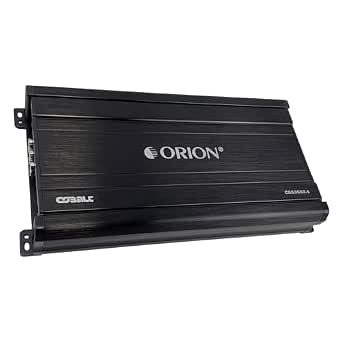 | Best for Larger, Power-Focused Builds | Channels: 4 | Output at 2 Ω: 125 W RMS × 4 | Output at 4 Ω: 80 W RMS × 4 | VIEW ON AMAZON | See Our Full Breakdown |
| SounDigital 800.4 EVO 4-Channel Full Range Amplifier | 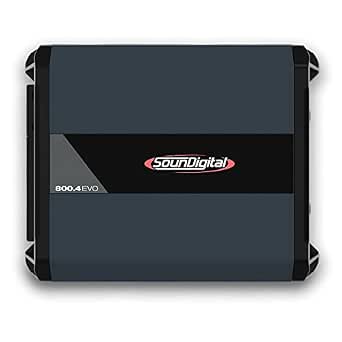 | Best for Compact, Rugged Installations | Model: 800.4 EVO | Channels: 4 | Amplifier class: Class D | VIEW ON AMAZON | See Our Full Breakdown |
| CLES ZYZ Z9500F 4-Channel Car Amplifier |  | Best for Buyers Who Verify Specifications First | Model: Z9500F | Brand: CLES ZYZ | Channels: 4 | VIEW ON AMAZON | See Our Full Breakdown |
| Pioneer GM-A3702 500W Max Class AB Bridgeable 2-Channel Car Amplifier |  | Best for Factory-Radio Bass Upgrades | Channels: 2 | Maximum output power: 500 watts | RMS output: 60W x 2 at 2 ohms; 190W bridged | VIEW ON AMAZON | See Our Full Breakdown |
| BOSS Audio Systems PF1800 4-Channel Car Amplifier, 1800 Watts, 2-4 Ohm |  | Best for Flexible Speaker-and-Subwoofer Configurations | Channels: 4 | Maximum power: 1800 watts | Impedance: 2–4 ohms | VIEW ON AMAZON | See Our Full Breakdown |
| ORION CEA400.4D Cobalt Elite Compact Class D 4-Channel Amplifier, 400W RMS |  | Best Compact Four-Channel Pick | Channels: 4 | Amplifier class: Class D | Output at 4 ohms: 65W RMS x 4 | VIEW ON AMAZON | See Our Full Breakdown |
| Pioneer GM-A6704 1000W Max Class AB Bridgeable 4-Channel Car Amplifier |  | Best Class AB Four-Channel Upgrade | Channels: 4 | Maximum output power: 1000 watts | Amplifier class: Class AB | VIEW ON AMAZON | See Our Full Breakdown |
| BOSS Audio Systems R1004 Riot 400 Watt 4-Channel Car Amplifier |  | Best Lightweight Basic Four-Channel | Channels: 4 | Maximum output: 400 watts | Output at 2 ohms: 100W maximum x 4 | VIEW ON AMAZON | See Our Full Breakdown |
| car amplifiers for audiophile | Channels | Dimensions | Amplifier class |
|---|---|---|---|
| Pyle PLA2378 2-Channel Car Ste | 2 | 14.99 × 11.47 × 3.28 in | — |
| Fosi Audio CA30 4-Channel Car | 4 | 7.3 × 3.9 × 1.7 in | — |
| Orion CBA3500.4 Cobalt 4-Chann | 4 | 16.5 × 8 × 3 in | — |
| SounDigital 800.4 EVO 4-Channe | 4 | — | Class D |
| CLES ZYZ Z9500F 4-Channel Car | 4 | — | — |
| Pioneer GM-A3702 500W Max Clas | 2 | 7.13 x 9.58 x 2.38 inches | Class AB |
| BOSS Audio Systems PF1800 4-Ch | 4 | 13.5 x 10.31 x 2.25 inches | — |
| ORION CEA400.4D Cobalt Elite C | 4 | — | Class D |
| Pioneer GM-A6704 1000W Max Cla | 4 | 8.5 x 14 x 2.38 inches | Class AB |
| BOSS Audio Systems R1004 Riot | 4 | — | Class A/B |
More Details on Our Top Picks
Pyle PLA2378 2-Channel Car Stereo Amplifier
The PLA2378 is the two-channel choice here for listeners building around a dedicated pair of speakers or a bridged bass channel. Its MOSFET power supply, configurable crossover, and bass boost give more tuning options than the simpler format suggests, while silver-plated RCA inputs support a clean signal path. Compared with the four-channel Fosi Audio CA30, it gives up independent amplification for four speakers and compact Class D efficiency, but its bridgeable layout may suit a focused two-channel system better. The advertised 2000 W figure is a maximum rating, not a useful substitute for continuous-power specifications, so I would verify speaker matching and system power needs before buying. Its metal chassis and protection circuitry are welcome, though heavy use can bring heat and substantial current demand.
Pros:- Two-channel design can be configured for a bridged application.
- Adjustable crossover and switchable bass boost support system tuning.
- MOSFET design and silver-plated RCA inputs target a clean signal path.
- Metal housing includes thermal, overload, and short-circuit protection.
Cons:- The 2000 W maximum rating does not establish continuous output capability.
- Can draw substantial current and generate noticeable heat under heavy loads.
- Requires a 14.4 V vehicle power source.
Best for: Listeners upgrading a two-speaker system or planning a bridged channel who want crossover and bass-boost controls.
Not ideal for: Audiophiles seeking independently powered four-speaker systems, clearly specified continuous output, or a particularly low-heat installation.
- Model:PLA2378
- Channels:2
- Maximum output:2000 W, bridgeable
- Voltage:14.4 V
- Construction:Metal
- Dimensions:14.99 × 11.47 × 3.28 in
- Weight:5.7 lb
Our verdict“Choose the PLA2378 for a bridgeable two-channel build, but not if verified continuous-power figures or four-channel flexibility are priorities.”
Fosi Audio CA30 4-Channel Car Amplifier
For a space-limited system where measurable signal performance matters, the CA30 is the most clearly specified pick in this group. Its THD+N of ≤0.006% and 104 dB signal-to-noise ratio point to a low-noise design, while the tiny Class D chassis can fit beneath many seats. Four channels keep front and rear speakers independently powered; the adjustable HPF/LPF and high-level input also make it easier to integrate with varied source units. Compared with the larger Orion CBA3500.4, the Fosi trades a substantial chassis and higher advertised total output for compact installation and explicit fidelity figures. Its stated 200 W per channel and bridged ratings still need to be matched to the actual speaker load. Fine gain-adjustment steps call for a careful setup rather than hurried tuning.
Pros:- Specified THD+N and signal-to-noise ratio support a low-noise system design.
- Compact 7.3 × 3.9 × 1.7 in chassis suits restricted installation spaces.
- RCA and high-level inputs work with different source-unit setups.
- Adjustable HPF/LPF, full-pass mode, and extensive protection features.
Cons:- Fine gain-adjustment steps require patience during tuning.
- Power ratings should be checked against the intended speaker impedance and system needs.
- Small chassis may be less convenient to access for later adjustments.
Best for: Audiophile-minded owners fitting a four-channel upgrade under a seat and prioritizing low distortion, low noise, and flexible inputs.
Not ideal for: Buyers who want simple, quick gain setup or need a system built around high verified continuous output into a demanding load.
- Channels:4
- Stereo output:200 W × 4 at 4 Ω/2 Ω
- Bridged output:400 W × 2 at 4 Ω
- Efficiency:93% maximum; >88% stated
- Signal-to-noise ratio:104 dB
- THD+N:≤0.006%
- Dimensions:7.3 × 3.9 × 1.7 in
- Inputs:RCA and high-level
- Crossover:Adjustable HPF/LPF, 50–250 Hz; full-pass mode
Our verdict“Pick the CA30 when compact fit and documented low-distortion performance matter more than the Orion’s larger, power-focused design.”
Orion CBA3500.4 Cobalt 4-Channel Class A/B Amplifier
The CBA3500.4 suits a roomier installation built around multiple speakers and flexible load matching. Its most useful power figures are the stated 125 W RMS × 4 at 2 Ω and 80 W RMS × 4 at 4 Ω; those are more informative for planning than the headline 3500 W maximum. Adjustable high- and low-pass filters plus bass boost let an installer tailor the system, while 2 Ω and 4 Ω stability expands speaker options. Compared with the compact Fosi Audio CA30, the Orion is much larger and its Class A/B format is less oriented toward under-seat space-saving. The tradeoff is a 16.5-inch-long chassis and a listed 10–30 kHz frequency range, which gives detail-focused buyers reason to compare response specifications before choosing it.
Pros:- Provides stated RMS output at both 2 Ω and 4 Ω loads.
- Four channels support a multi-speaker system without relying on a separate two-channel amp.
- Adjustable low/high-pass filters and bass boost allow system tuning.
- MOSFET supply and built-in protection support demanding installations.
Cons:- Large 16.5 × 8 × 3 in dimensions limit placement options.
- Listed 10–30 kHz frequency response may concern detail-focused listeners.
- 3500 W maximum headline is less useful for matching than the stated RMS figures.
Best for: Owners with room for a full-size amplifier who need four channels, 2 Ω compatibility, and adjustable filtering for a demanding speaker system.
Not ideal for: Drivers with tight under-seat space or listeners who prioritize a broadly specified high-frequency response and compact Class D efficiency.
- Channels:4
- Output at 2 Ω:125 W RMS × 4
- Output at 4 Ω:80 W RMS × 4
- Maximum output:3500 W
- Voltage:12 V; minimum 10 V DC
- Dimensions:16.5 × 8 × 3 in
- Frequency response:10–30 kHz
Our verdict“Choose the Orion for a spacious, load-flexible four-channel build, but favor the Fosi CA30 if compact fit and published distortion figures matter more.”
SounDigital 800.4 EVO 4-Channel Full Range Amplifier
The SounDigital 800.4 EVO earns its place for buyers who need four channels in a vehicle where space, vibration, or moisture are real installation constraints. Its Class D design is intended to reduce heat and power draw, and the stated 800 W total output gives a single amplifier room to serve a multi-speaker setup. Moisture-resistant, vibration-proof construction also makes it a more natural fit for motorcycles, ATVs, and marine applications than the home-audio-minded buyer might expect. Compared with the Fosi Audio CA30, the SounDigital emphasizes rugged use rather than publishing detailed distortion and noise figures; those seeking an evidence-based fidelity comparison have less data here. Its stated 12.6 V supply limit also narrows compatibility, and the supplied information omits channel-by-channel RMS output.
Pros:- Four-channel, 800 W total rating suits a range of multi-speaker layouts.
- Compact construction is intended for installations with limited space.
- Moisture-resistant and vibration-proof build supports rugged vehicle environments.
- Class D design is intended to limit heat and power draw.
Cons:- Listed 12.6 V supply limit may restrict compatibility with some vehicle systems.
- No channel-by-channel RMS output is provided in the supplied specifications.
- Detailed distortion and signal-to-noise figures are not listed.
Best for: Owners of motorcycles, ATVs, UTVs, boats, or compact cars who need a rugged four-channel amplifier and can confirm their electrical system matches 12.6 V.
Not ideal for: Listeners who need detailed per-channel RMS and distortion specifications, or whose vehicle electrical setup does not match the stated voltage.
- Model:800.4 EVO
- Channels:4
- Amplifier class:Class D
- Output:800 W total
- Voltage:12.6 V DC
- Mounting type:Freestanding
- Construction:Moisture-resistant and vibration-proof
Our verdict“Choose the SounDigital when rugged compact installation leads the decision, but pick the Fosi CA30 if published fidelity measurements are the priority.”
CLES ZYZ Z9500F 4-Channel Car Amplifier
The Z9500F makes the list as a cautious option for shoppers drawn to a four-channel aluminum chassis and a stated 170 W RMS per channel at 2 Ω. That channel-level figure is more useful for matching speakers than the conflicting maximum-power claims in the supplied data. The description cites 2400 W maximum, while the specifications list 6800 W output and maximum output; I would not use those figures as a basis for system design without clarification. Compared with the Orion CBA3500.4, which supplies explicit RMS output at both 2 Ω and 4 Ω, the Z9500F leaves more uncertainty around its power claims and vehicle fit. Its protection circuitry and aluminum housing are practical positives, but the six-month warranty is limited relative to the longer warranty specified for the Fosi CA30.
Pros:- Description states 170 W RMS per channel at 2 Ω.
- Four channels can support a multi-speaker system.
- Aluminum housing is specified and may aid heat dissipation.
- Description cites built-in protection circuitry and marked connections.
Cons:- Power information conflicts: the description says 2400 W maximum while the specs list 6800 W.
- Vehicle compatibility and fit require checking before installation.
- Six-month warranty is limited compared with the 24-month Fosi CA30 warranty.
Best for: Experienced installers willing to confirm the true RMS ratings, impedance compatibility, and physical fit before committing to a four-channel amplifier.
Not ideal for: Audiophiles who want consistent, verifiable power specifications, a longer stated warranty, or a low-risk plug-and-play choice.
- Model:Z9500F
- Brand:CLES ZYZ
- Channels:4
- Stated RMS output:170 W × 4 at 2 Ω
- Maximum output in description:2400 W
- Output listed in specifications:6800 W
- Mounting type:Surface mount
- Material:Aluminum
- Warranty:6 months
Our verdict“Consider the Z9500F only after confirming its actual RMS ratings and fit; the Orion is the clearer choice for buyers who need better-defined power data.”
Pioneer GM-A3702 500W Max Class AB Bridgeable 2-Channel Car Amplifier
Factory-radio integration is the GM-A3702’s clearest advantage: its speaker-level inputs let me add amplification when the original stereo lacks preamp outputs. The two-channel Class AB design suits a focused front-speaker upgrade or a bridged subwoofer setup, and its selectable low-pass filter helps shape bass without adding a separate crossover. Its stated output—60W RMS per channel at 2 ohms or 190W RMS bridged—is more useful for matching equipment than the headline 500W maximum figure.
Compared with the Pioneer GM-A6704, this model gives up two channels and broader system flexibility, but its simpler layout can make sense for a targeted upgrade. The tradeoff is that it is not a one-amp solution for a full four-speaker system, and sustained high-power use may generate heat. I’d choose it for a modest, carefully matched system, not for maximum headroom or extensive tuning.
Pros:- Speaker-level inputs support integration with factory radios lacking preamp outputs.
- Class AB design and selectable low-pass filter suit a focused speaker or subwoofer upgrade.
- Provides 60W RMS per channel at 2 ohms or 190W RMS bridged for more useful matching guidance than its maximum-power headline.
- Compact dimensions offer more placement options than larger multi-channel amplifiers.
Cons:- Two channels cannot independently power a typical four-speaker setup.
- Requires sound power wiring and a stable 12V supply.
- May run hot during sustained high-output use.
Best for: Drivers keeping a factory head unit who want to amplify two speakers or run one bridged subwoofer.
Not ideal for: Audiophiles building a four-channel system or seeking detailed multi-speaker tuning; its two channels limit expansion.
- Channels:2
- Maximum output power:500 watts
- RMS output:60W x 2 at 2 ohms; 190W bridged
- Amplifier class:Class AB
- Supply voltage:12V DC
- Inputs:Speaker-level inputs
- Filter:Selectable low-pass filter
- Dimensions:7.13 x 9.58 x 2.38 inches
Our verdict“Choose the GM-A3702 for a straightforward factory-radio-compatible two-channel or bridged-subwoofer upgrade, but pick the GM-A6704 for a full four-speaker system.”
BOSS Audio Systems PF1800 4-Channel Car Amplifier, 1800 Watts, 2-4 Ohm
The PF1800’s four channels make it a flexible choice for listeners who want to power multiple speakers and leave room for a bridged subwoofer arrangement. Bass boost and crossover controls provide basic ways to shape the system, while the MOSFET power supply supports its high-output design. Its 1800-watt figure is maximum power, though; the supplied product details do not give RMS output figures, which makes careful amplifier-to-speaker matching harder than with the Orion CEA400.4D, whose per-channel RMS ratings are specified.
That gap matters to an audiophile trying to plan for clean headroom rather than shop by a headline number. The PF1800’s broad configuration options are appealing, but its 12-pound weight and relatively large footprint call for a suitable mounting location and careful installation. I’d shortlist it when wiring flexibility matters more than compactness or detailed published output data; buyers seeking a clearer power match should compare the Orion or Pioneer GM-A6704.
Pros:- Four channels support multi-speaker layouts and flexible bridged configurations.
- Adjustable bass boost and crossover controls allow basic system tuning.
- MOSFET power supply and 2–4 ohm impedance compatibility support varied system designs.
- Listed six-year Platinum Online Dealer Warranty.
Cons:- The provided specifications list maximum power but no RMS output figures.
- At 12 pounds and 13.5 x 10.31 x 2.25 inches, it needs substantial mounting space.
- Installation requires careful wiring, and mounting hardware is not included.
Best for: Installers and experienced hobbyists configuring four speakers with the option to bridge channels for a subwoofer.
Not ideal for: Buyers who need published RMS ratings for precise speaker matching or a compact amplifier for a tight installation space.
- Channels:4
- Maximum power:1800 watts
- Impedance:2–4 ohms
- Power supply:MOSFET
- Controls:Adjustable bass boost and crossover
- Dimensions:13.5 x 10.31 x 2.25 inches
- Weight:12 lb
- Warranty:6-year Platinum Online Dealer Warranty
Our verdict“Pick the PF1800 for channel and wiring flexibility, but favor the Orion CEA400.4D if clearly stated RMS output and a compact chassis matter more.”
ORION CEA400.4D Cobalt Elite Compact Class D 4-Channel Amplifier, 400W RMS
Compact Class D efficiency gives the CEA400.4D a practical advantage when a clean installation has limited room. It supplies four channels with stated output of 65W RMS per channel at 4 ohms or 100W RMS at 2 ohms, so buyers can plan around real per-channel figures rather than the maximum-power headline used for models such as the Pioneer GM-A6704. Adjustable high- and low-pass filters spanning 40–500Hz also make it easier to divide frequency duties between speakers and a subwoofer.
Compared with the larger BOSS PF1800, the Orion is the more space-conscious, specification-led option, though its description offers less detail about broader system integration. Thermal, short-circuit, and voltage protection add useful safeguards, but this is still a model for someone comfortable matching channels, impedance, and filters. No remote control or extra accessories are included. I’d favor it for a tidy four-speaker install, not for buyers who want extensive supplied controls or documentation.
Pros:- Compact Class D design suits installations with limited mounting space.
- Published output of 65W RMS x 4 at 4 ohms and 100W RMS x 4 at 2 ohms helps with speaker matching.
- Adjustable high- and low-pass filters cover 40–500Hz for system tuning.
- Protection circuitry addresses thermal overload, short circuits, and voltage irregularities.
Cons:- Product details provide limited information about integration features and other operating specifications.
- No remote control or additional accessories are included.
- System setup requires familiarity with impedance and crossover configuration.
Best for: Audiophiles fitting a compact four-channel amplifier who want stated RMS output and adjustable crossover points.
Not ideal for: New installers who need extensive integration guidance, included accessories, or a remote control.
- Channels:4
- Amplifier class:Class D
- Output at 4 ohms:65W RMS x 4
- Output at 2 ohms:100W RMS x 4
- Supply voltage:12V minimum
- Crossover range:40–500Hz, adjustable high-pass and low-pass filters
- Protection:Thermal overload, short-circuit, and voltage-irregularity protection
Our verdict“Choose the CEA400.4D for a space-constrained four-channel build with clear RMS ratings, and choose the Pioneer GM-A6704 if Class AB operation is your priority.”
Pioneer GM-A6704 1000W Max Class AB Bridgeable 4-Channel Car Amplifier
The GM-A6704’s four channels and variable high- and low-pass filters make it the more adaptable Pioneer in this group: it can run multiple speakers while helping shape the system’s frequency handoff. Its Class AB design is aimed at listeners who prefer that topology, and the 1,000-watt maximum-power rating signals its broad system role without replacing the RMS figures needed for precise speaker matching. Unlike the two-channel GM-A3702, it can serve a fuller speaker layout; unlike the compact Orion CEA400.4D, it uses Class AB rather than Class D.
That flexibility comes with a larger 14-inch length and fewer listed tuning extras than some buyers may want. The supplied details do not give channel-by-channel RMS ratings, and there is no remote control or advanced connectivity. I’d select it for a straightforward, filter-adjustable four-channel system, but compare the Orion if installation space and published per-channel power figures are higher priorities.
Pros:- Four channels can support a complete speaker layout.
- Variable high- and low-pass filters allow frequency-shaping flexibility.
- Class AB design suits buyers specifically seeking that amplifier topology.
- Surface-mount format supports varied vehicle installation locations.
Cons:- The supplied specifications do not state per-channel RMS output.
- At 14 inches long, it is less convenient for very compact installations than the Orion CEA400.4D.
- No remote control or advanced connectivity features are listed.
Best for: Listeners building a four-speaker system who want a Class AB amplifier with variable high- and low-pass filters.
Not ideal for: Buyers with tight mounting space or those who require detailed per-channel RMS ratings before choosing speakers.
- Channels:4
- Maximum output power:1000 watts
- Amplifier class:Class AB
- Supply voltage:12V DC
- Maximum supply voltage:26V DC
- Supply current:5A
- Filters:Variable high-pass and low-pass
- Dimensions:8.5 x 14 x 2.38 inches
- Warranty:1 year
Our verdict“Choose the GM-A6704 for a flexible four-channel Class AB setup, but compare the Orion CEA400.4D if compactness and published RMS ratings matter more.”
BOSS Audio Systems R1004 Riot 400 Watt 4-Channel Car Amplifier
At 3.09 pounds and 7.75 x 9 x 2 inches, the R1004 is the easiest choice here to accommodate when mounting space and weight are concerns. Its four channels and Class A/B topology suit a basic multi-speaker setup, while the listed output—50W maximum per channel at 4 ohms or 100W maximum at 2 ohms—sets a more modest expectation than the headline figures on the PF1800 or GM-A6704. The supplied details also include a 12Hz–22kHz frequency response and 90dB signal-to-noise ratio.
Those figures offer useful context, but the description does not provide advanced crossover controls or other tuning tools, making this less adaptable than the Orion CEA400.4D. Its light chassis and straightforward role are assets for a simple install, not signs of extensive system control. I’d consider it for a lightweight, uncomplicated four-channel build; listeners planning precise crossover work or a subwoofer-focused setup should look elsewhere.
Pros:- Lightweight 3.09-pound chassis and compact dimensions make placement easier.
- Four channels can power multiple speakers in a basic setup.
- Class A/B topology with a MOSFET power supply.
- Published frequency response and signal-to-noise ratio provide some sound-performance context.
Cons:- The listed per-channel power figures are maximum ratings, not RMS ratings.
- Few advanced customization or crossover features are specified.
- Less suited to a system requiring detailed tuning than the Orion CEA400.4D.
Best for: Drivers seeking a lightweight, compact amplifier for a straightforward four-speaker system without extensive tuning needs.
Not ideal for: Audiophiles who want adjustable crossovers, detailed system controls, or clearly specified RMS output for speaker matching.
- Channels:4
- Maximum output:400 watts
- Output at 2 ohms:100W maximum x 4
- Output at 4 ohms:50W maximum x 4
- Amplifier class:Class A/B
- Speaker impedance:2–8 ohms
- Frequency response:12Hz–22kHz
- Signal-to-noise ratio:90dB
- Dimensions and weight:7.75 x 9 x 2 inches; 3.09 lb
Our verdict“Pick the R1004 for a light, simple four-channel installation, but choose the Orion CEA400.4D for published RMS ratings and adjustable crossover controls.”

How We Picked
I compared the ten amplifiers by the details buyers need to match a system: continuous RMS power where stated, channel count, supported impedance, bridgeability, amplifier class, and physical format. I gave more weight to usable, clearly described output than to large maximum-wattage figures, since peak claims alone do not show how an amplifier will pair with speakers during sustained listening. I also considered whether the listed features and layout suit a real upgrade, from powering two speakers to running a four-channel system.
The order favors options with stronger, clearer information and a more defined role for an audiophile-oriented build. The SounDigital 800 ranks first for its stated RMS output and compact four-channel format; the ORION CEA400.4D follows as a compact Class D alternative. Pioneer’s Class AB models earn distinct positions based on channel count and system scope, while products promoted mainly by maximum wattage or with less detailed specifications rank lower. These rankings reflect the supplied product information, not independent listening tests; confirm the manufacturer’s full power ratings, impedance limits, dimensions, and protection features before purchase.
| car amplifiers for audiophile | Amplifier class |
|---|---|
| Pyle PLA2378 2-Channel Car Ste | — |
| Fosi Audio CA30 4-Channel Car | — |
| Orion CBA3500.4 Cobalt 4-Chann | — |
| SounDigital 800.4 EVO 4-Channe | Class D |
| CLES ZYZ Z9500F 4-Channel Car | — |
| Pioneer GM-A3702 500W Max Clas | Class AB |
| BOSS Audio Systems PF1800 4-Ch | — |
| ORION CEA400.4D Cobalt Elite C | Class D |
| Pioneer GM-A6704 1000W Max Cla | Class AB |
| BOSS Audio Systems R1004 Riot | Class A/B |
Factors to Consider When Choosing Car Amplifiers For Audiophiles
Choosing an amplifier for sound quality starts with the rest of the system, not the largest number on the product listing. I would match the amplifier to the speakers, installation space, and listening goals first, then compare class, controls, and expansion options.
Match RMS Output to the Speakers
Use each speaker’s continuous power handling and impedance as the starting point, then compare them with the amplifier’s RMS rating at that same impedance. A maximum or peak figure is not a substitute: it does not tell you what output to expect during sustained playback. An amplifier with more capability than a speaker can be used carefully, but poor gain setup can raise distortion and damage equipment. A modest power mismatch is less concerning than ignoring impedance or running the amplifier into clipping. If a listing omits RMS ratings by impedance, seek the manufacturer’s specification sheet before deciding. This is particularly relevant here because some products advertise large maximum wattage figures while giving less detail about continuous output.
Choose the Channel Layout Before You Buy
Two channels can suit a front-speaker upgrade or a bridged subwoofer setup, while four channels can power front and rear speakers or a pair of speakers alongside a bridged load. Bridging changes the load each channel sees, so check the minimum supported impedance in bridged mode rather than assuming every speaker combination is safe. A four-channel amp may offer room to grow, but unused channels can add cost, wiring, and installation complexity without improving the current system. Decide whether rear fill matters to your listening goals; many focused listening setups prioritize a properly powered front stage. Plan any later subwoofer addition separately, since not every amplifier in this lineup is designed around that role. Channel count is a system-planning choice, not a direct measure of sound quality.
Treat Amplifier Class as a Practical Tradeoff
Class AB and Class D describe different amplifier designs, but neither label alone predicts how a system will sound after installation. Class D models are often attractive where space and electrical efficiency matter, while Class AB options may appeal to buyers who prefer that design and have room for the hardware. Actual sound quality also depends on clean gain staging, speaker matching, installation, and the amplifier’s performance under the intended load. Avoid paying extra based on class terminology without checking power ratings, operating limits, and fit. In this roundup, the SounDigital and ORION models provide Class D options, while the Pioneer picks are Class AB. Compare the complete system requirements rather than treating one class as an automatic audiophile upgrade.
Check Space, Cooling, and Electrical Capacity
Measure the intended mounting area, including room for power connections, speaker wires, and airflow around the chassis. A compact amplifier can simplify placement, but it still needs suitable ventilation and secure mounting away from moisture, heat, and loose cargo. Higher output can demand heavier-gauge wiring, a suitable fuse near the battery, and a sound ground connection; the vehicle’s charging system may also limit what is practical. Do not select an amplifier from its power claim before checking the installation requirements in its manual. Poor wiring or inadequate cooling can undermine reliability even when the amplifier itself is well matched. A professional installation can be worthwhile when the system needs substantial current or complicated bridging.
Look for Clear Specifications and Useful Controls
Useful documentation should state RMS output at relevant impedances, crossover options, input compatibility, dimensions, fuse requirements, and protection behavior. Controls such as gain and crossover can help integrate an amplifier with the rest of a system, but they do not replace proper tuning or a clean signal source. Bass boost deserves restraint: using it to compensate for weak speakers or poor enclosure design can increase distortion and strain. When two listings appear similar, clearer technical documentation is a meaningful advantage because it lowers the risk of a mismatch. Ask whether the amplifier accepts the signal from your existing stereo and whether adapters are needed. Confirm warranty terms and installation guidance before purchase rather than relying on a product title alone.
Spend More on Fit, Not on a Bigger Number
A higher-output amplifier makes sense when the speakers can use that power and the vehicle can support the installation. If your current speakers need modest power, better placement, sound treatment, or a clean signal path may improve listening more than a large amplifier upgrade. Budget for wiring, fusing, installation, and any signal-processing equipment that the system needs; the amplifier is only one part of the total build. A compact model may justify its place when mounting space is tight, while a four-channel design can be worthwhile if it replaces multiple amplifiers. Be cautious with listings that present a dramatic maximum rating without a corresponding RMS specification. Paying for verified compatibility and a clear installation plan is usually a better bet than chasing headline wattage.
Frequently Asked Questions
Should I choose the SounDigital 800 or the ORION CEA400.4D for a four-speaker system?
Start with the RMS power your speakers can use and the impedance they present, not the model names or a broad wattage claim. The SounDigital listing states 800W RMS across four channels, while the ORION CEA400.4D is listed at 400W RMS and has a compact Class D design. Those figures do not by themselves establish the power available per channel at your speakers’ impedance, so check the detailed manufacturer ratings. The ORION may suit a lower-output or space-conscious build; the SounDigital is the stronger candidate when the speakers and electrical system can make use of more power. If the technical sheets do not clarify output per channel, get that information before buying either one.
Are maximum-wattage ratings enough to compare these amplifiers?
No. Maximum figures do not tell you how much continuous power an amplifier can deliver under a specified load, which is the information needed for speaker matching. Several products here foreground maximum wattage, while others provide an RMS figure that gives buyers a more useful comparison point. Check RMS output at the impedance you plan to use, and confirm whether a rating applies to each channel or the full amplifier. Also verify whether the figure changes when channels are bridged. If the seller’s listing leaves those points unclear, use the manufacturer’s documentation or choose a model with better-specified ratings.
Can I bridge a two-channel amplifier to power a subwoofer?
Possibly, but bridgeability alone does not confirm that a particular subwoofer is compatible. Check the amplifier’s minimum bridged impedance and its RMS output in bridged mode, then compare both with the subwoofer’s impedance and power handling. The Pyle PLA2378 and Pioneer GM-A3702 are described as bridgeable two-channel models, but their listing claims should be checked against full technical specifications. A load below the allowed impedance can make an amplifier overheat or enter protection. If the subwoofer has dual voice coils, have the wiring configuration checked before connecting it.
Is a Class D amplifier automatically the better audiophile choice?
No. Class D can be a practical fit when compact size and efficiency matter, but the class label alone does not establish sound quality. The ORION CEA400.4D and SounDigital 800 are Class D options in this lineup, while the Pioneer models offer Class AB designs. The better choice depends on verified output, speaker and signal compatibility, installation space, and system tuning. A well-matched amplifier with clean wiring can be a better result than a poorly matched model in a preferred class. Compare specific specifications and integration needs rather than buying by class name.
What should I verify before installing a higher-output four-channel amplifier?
Confirm the amplifier’s output at your speaker impedance, the minimum load allowed on each channel, and any limits that apply when bridging. Check the vehicle’s battery, alternator, fuse requirements, and recommended power-wire gauge against the installation manual. Measure the mounting space and allow for cooling and access to wiring; a compact chassis still needs airflow. Make sure the stereo can provide a compatible signal, or plan for the right adapters or signal interface. If you are unsure about current draw, grounding, or bridged wiring, ask a qualified installer to review the system before powering it up.
Conclusion
For the strongest all-around fit in this group, I would start with the SounDigital 800, provided its verified channel ratings match the speakers and the vehicle’s electrical capacity. For a compact Class D build, the ORION CEA400.4D is the more restrained alternative; buyers seeking a Class AB four-channel option should compare the Pioneer GM-A6704 with their speaker requirements. The Pioneer GM-A3702 is a straightforward candidate for a simpler two-channel or bridged setup, making it a sensible beginner pick when its ratings fit the system. For value-focused shopping, compare the Pyle PLA2378 and BOSS models only after confirming their continuous output and impedance details; the listings’ headline wattage should not decide the purchase. If your priority is a compact professional-style multi-channel installation, look closely at SounDigital and ORION, then choose by measured fit, RMS needs, and documentation. My final rule is simple: match the amplifier to the speakers and installation first, and treat every unverified power claim with caution.