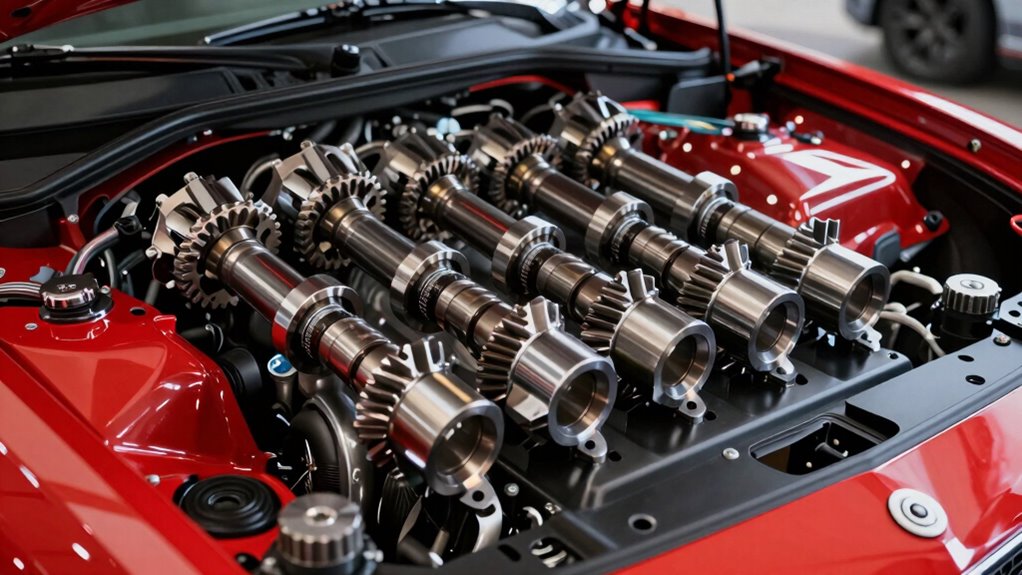

For muscle-car owners comparing camshaft upgrade kits, the best choice depends on engine family, supporting parts, and how much idle character you want to trade for performance. I’d put the BTR Stage 2 LS Truck V3 Cathedral Port Kit first for its broad stated LS fitment and kit-focused approach; the Truck Norris stands out for Gen 3 and Gen 4 LS builds, while the Enginetech ES1013R gives small-block Chevy owners a separate path. The lineup also includes Sloppy Mechanics Stage 2 options, a Stage 3 naturally aspirated cam, and a COMP Cams SBC kit, so these are not interchangeable choices. The key tradeoffs are engine compatibility, included valvetrain and timing parts, and the effect of a more aggressive cam on street drivability. Read on for the full comparison, fitment checks, and guidance on choosing a kit for your build.

Get business pricing on garage and car supplies
- Business-only prices and quantity discounts
- Tax-exempt purchasing
- Multiple users, one account, clear invoices
Complete the kit


Key Takeaways
- The BTR Stage 2 LS Truck V3 Cathedral Port kits lead this roundup because their stated fitment spans several 4.8L, 5.3L, and 6.0L LS applications; buyers still need to confirm the exact engine and cylinder-head configuration.
- The repeated BTR Stage 2 listings appear to describe closely related or duplicate options, so compare the exact included parts and listing details rather than treating every listing as a different cam profile.
- Truck Norris is the lineup’s distinct Gen 3/4 LS alternative, while the BTR Stage 3 NA cam is aimed at a different, more focused naturally aspirated build.
- The Enginetech ES1013R and COMP Cams Xtreme Energy kit serve Chevy small-block owners; LS fitment should not be assumed to cover an SBC engine.
- Kit completeness varies across the names: confirm whether lifters, timing components, springs, and other required hardware are included before comparing bundles or planning installation.
| BTR Brian Tooley Racing Stage 2 LS Truck Camshaft V3 Cathedral Port Kit |  | Best Overall for Cathedral-Port Street Builds | Camshaft profile: V3 | Duration: 208/21X degrees | Valve lift: .549″/.549″ | VIEW ON AMAZON | See Our Full Breakdown |
| Brian Tooley Racing Stage 2 LS Truck Camshaft V3 Cathedral Port Kit |  | Best for Three-Bolt Cathedral-Port Setups | Camshaft profile: V3 cathedral-port | Duration: 208/21X degrees | Valve lift: .549″/.549″ | VIEW ON AMAZON | See Our Full Breakdown |
| BTR Brian Tooley Racing Stage 2 LS Truck Camshaft Kit V3 for Cathedral Port Engines |  | Best for Street-and-Towing Builds | Camshaft profile: 208/21X .549″/.549″ | Lobe separation angle: 108.5 degrees | Pattern: 3-bolt | VIEW ON AMAZON | See Our Full Breakdown |
| BTR Brian Tooley Racing Truck Norris LS Camshaft Kit |  | Best for Torque-Focused Truck Builds | Camshaft specs: 212/22X duration, .552″/.552″ lift, 107-degree LSA | Engine generation: Gen 3 and Gen 4 LS | Model years: 1999–2013 | VIEW ON AMAZON | See Our Full Breakdown |
| Sloppy Mechanics Stage 2 Camshaft 1840-P for LS Engines |  | Best for a More Aggressive Muscle-Car Profile | Camshaft specs: 228/230 duration, .585″/.585″ lift, 112-degree LSA | Manufacturer: Elgin | Model: 1840-P | VIEW ON AMAZON | See Our Full Breakdown |
| Stage 2 LS Camshaft Kit for Chevy GMC 1997-2007 4.8L 5.3L 6.0L LS Engines |  | Best Complete Kit for a Broad LS Refresh | Engine compatibility: 1997–2013 Chevrolet 4.8L, 5.3L, 5.7L, and 6.0L LS engines | Camshaft duration at .050: 212/218 degrees | Included components: Camshaft, valve springs, seals, pushrods, lifters, oil pump, timing chain | VIEW ON AMAZON | See Our Full Breakdown |
| Enginetech ES1013R Stage 2 RV HP Camshaft with Performance Lifters and Double Roller Timing – Chevy SBC 5.7L |  | Best for Classic Small-Block Chevy Builds | Engine application: Chevy Small Block, 283–400 cubic inches | Camshaft duration at .050: 214/224 degrees | Valve lift: .443/.465 inches | VIEW ON AMAZON | See Our Full Breakdown |
| Brian Tooley Racing Stage 2 LS Truck Camshaft V3 Cathedral Port Kit | Fits 4.8L 5.3L 6.0L LS1 LM7 LQ4 LC9 LR4 | | Best for Cathedral-Port Truck Builds | Profile: V3 | Duration: 208/21X degrees | Valve lift: .549/.549 inches | VIEW ON AMAZON | See Our Full Breakdown |
| BTR Brian Tooley Racing Stage 3 NA Camshaft V2 for LS Engines |  | Best for High-RPM Naturally Aspirated Builds | Camshaft specifications: 227/24x duration, .636/.636-inch lift | Lobe separation angle: 111.5 degrees | Engine applications: LS1, LS2, LS6, 5.3L, 6.0L | VIEW ON AMAZON | See Our Full Breakdown |
| E1840P Sloppy Mechanics Stage 2 Camshaft Kit for Chevy/GMC LS Engines (1999-2013) |  | Best for a Broad-RPM LS Truck Upgrade | Engine compatibility: 1999–2013 Chevy/GMC LS Gen 3/4 4.8L and 5.3L Vortec | Camshaft type: Hydraulic roller | RPM range: 2,200–5,400 RPM | VIEW ON AMAZON | See Our Full Breakdown |
| COMP CAM 12-230-2 Xtreme Energy Camshaft Kit & High-Performance Lifters for Chevrolet SBC |  | Best Street Upgrade for Traditional Small-Block Chevys | Engine compatibility: Chevrolet SBC 283, 327, 350, 400 (non-roller) | Valve lift: .432 in / .444 in | Duration at .050 in: 206° / 212° | VIEW ON AMAZON | See Our Full Breakdown |
| BTR Brian Tooley Racing Stage 2 Truck Camshaft Install Kit – Fits Gen III/IV LS 4.8L 5.3L Vortec Trucks |  | Best Complete Install Kit for 4.8L and 5.3L Vortec Trucks | Application: GM Gen III/IV 4.8L and 5.3L LS Vortec trucks | Camshaft duration: 208° / 21X° (as listed) | Valve lift: .549 in / .549 in | VIEW ON AMAZON | See Our Full Breakdown |
| camshaft upgrade kits for muscle cars 2 | Lobe separation angle | Valve lift |
|---|---|---|
| BTR Brian Tooley Racing Stage | 108.5 degrees | .549"/.549" |
| Brian Tooley Racing Stage 2 LS | 108.5 degrees | .549"/.549" |
| BTR Brian Tooley Racing Stage | 108.5 degrees | — |
| BTR Brian Tooley Racing Truck | — | — |
| Sloppy Mechanics Stage 2 Camsh | — | — |
| Stage 2 LS Camshaft Kit for Ch | — | — |
| Enginetech ES1013R Stage 2 RV | 107 degrees | .443/.465 inches |
| Brian Tooley Racing Stage 2 LS | 108.5 degrees | .549/.549 inches |
| BTR Brian Tooley Racing Stage | 111.5 degrees | — |
| E1840P Sloppy Mechanics Stage | — | .585 inches intake / .585 inches exhaust |
| COMP CAM 12-230-2 Xtreme Energ | 110° | .432 in / .444 in |
| BTR Brian Tooley Racing Stage | 108.5° | .549 in / .549 in |
More Details on Our Top Picks
BTR Brian Tooley Racing Stage 2 LS Truck Camshaft V3 Cathedral Port Kit
For a cathedral-port LS build that needs a noticeable idle and a broader performance feel, I’d put this BTR Stage 2 V3 kit ahead of the more truck-torque-focused Truck Norris. Its .549-inch lift and 108.5-degree lobe separation are aimed at an assertive street character, while the listed 208/21X duration points to a cam profile suited to mid-range and top-end gains. The kit’s supporting components are a practical advantage over buying a camshaft alone, though the product data does not list every included part. The tradeoff is fitment: it is for cathedral-port LS engines, not a universal LS upgrade, and tuning and supporting modifications affect the result. I’d choose it over the Sloppy Mechanics Stage 2 when a more application-specific kit matters more than that cam’s larger, more aggressive profile.
Pros:- Designed for a range of cathedral-port LS engine applications
- .549-inch lift and 108.5-degree LSA support an assertive performance character
- Kit includes supporting components for the camshaft upgrade
- Described as dyno-tested for performance development
Cons:- Fitment is limited to the listed cathedral-port applications
- Tuning is needed to make the combination work properly
- Results depend on supporting modifications
Best for: Street-build owners with a compatible cathedral-port 4.8L, 5.3L, or 6.0L LS who want an aggressive idle and a kit-oriented upgrade.
Not ideal for: Owners with non-cathedral-port heads, or buyers who want a cam choice that does not call for tuning and supporting modifications.
- Camshaft profile:V3
- Duration:208/21X degrees
- Valve lift:.549″/.549″
- Lobe separation angle:108.5 degrees
- Application:Cathedral-port LS engines
- Listed engine sizes:4.8L, 5.3L, 6.0L
- Listed engine families:LS1, LM7, LQ4, LC9, LR4
Our verdict“Choose this kit for a compatible cathedral-port LS street build where a complete, aggressive V3 package is a better fit than the Truck Norris’s torque-oriented approach.”
Brian Tooley Racing Stage 2 LS Truck Camshaft V3 Cathedral Port Kit
This listing makes the most sense for a buyer who has already confirmed a three-bolt cam gear and wants a V3 profile for a cathedral-port LS. Its core specs match the other BTR V3 listing here—208/21X duration, .549-inch lift, and 108.5-degree LSA—so I would not treat it as a different performance tier from the B07PCS4H7V kit. The explicit gear configuration is the useful differentiator: it gives a parts-planning detail the other listing does not state. Like that counterpart, this kit targets a specific engine and head setup, calls for tuning, and can’t promise gains without the right supporting parts. Compared with the broader-fitting Truck Norris, this BTR option is narrower in application but clearer for a buyer matching a three-bolt cathedral-port combination.
Pros:- Three-bolt cam gear configuration is explicitly listed
- V3 profile is specified for cathedral-port LS engines
- .549-inch lift and 108.5-degree LSA define a clear performance setup
- Kit includes components intended to support installation and valvetrain operation
Cons:- Compatibility is limited to the listed LS applications
- Tuning adjustments may be needed
- An aggressive profile can increase valvetrain demands
Best for: LS owners building a listed cathedral-port engine who need a kit specified for a three-bolt cam gear.
Not ideal for: Buyers with a different gear configuration, non-cathedral-port heads, or a build that prioritizes broad application coverage over exact V3 fitment.
- Camshaft profile:V3 cathedral-port
- Duration:208/21X degrees
- Valve lift:.549″/.549″
- Lobe separation angle:108.5 degrees
- Cam gear configuration:3-bolt
- Engine sizes:4.8L, 5.3L, 6.0L
- Listed engine families:LS1, LM7, LQ4, LC9, LR4
Our verdict“Pick this listing when your cathedral-port LS build needs the stated three-bolt configuration; otherwise, compare fitment carefully with the closely matched BTR V3 kit.”
BTR Brian Tooley Racing Stage 2 LS Truck Camshaft Kit V3 for Cathedral Port Engines
This BTR V3 listing is the clearest match here for a buyer balancing street drivability and towing use: its description directly frames the kit around performance and towing, rather than only an aggressive sound or top-end power. The stated 208/21X profile, .549-inch lift, and 108.5-degree LSA are shared with the other BTR Stage 2 V3 options, so I’d choose among those listings by verified fitment and kit details, not by assuming a distinct cam grind. Against the Truck Norris, this one is specifically limited to cathedral-port applications, while Truck Norris lists a wider range of truck engine sizes. The compromise is that installation calls for technical knowledge, and supporting modifications still shape the outcome. It is a focused LS upgrade, not a drop-in solution for every towing vehicle.
Pros:- Description specifically identifies performance and towing applications
- Fits several listed cathedral-port LS engine families
- .549-inch lift and 108.5-degree LSA provide concrete selection details
- Street drivability is part of the stated design intent
Cons:- Cathedral-port fitment limits compatibility
- Installation requires technical knowledge
- Power gains depend on supporting modifications
Best for: Owners of compatible cathedral-port LS trucks who want a cam upgrade for mixed street driving and towing rather than a dedicated high-rpm build.
Not ideal for: Buyers without LS installation experience, owners of non-cathedral-port engines, or those seeking a kit with explicitly detailed included parts.
- Camshaft profile:208/21X .549″/.549″
- Lobe separation angle:108.5 degrees
- Pattern:3-bolt
- Compatibility:Cathedral-port LS engines
- Engine sizes:4.8L, 5.3L, 6.0L
- Listed engine families:LS1, LM7, LQ4, LC9, LR4
- Stated applications:Performance, towing, and LS engine upgrades
Our verdict“Choose this V3 kit for a cathedral-port LS truck that still needs street manners, but consider the Truck Norris if your priority is its broader stated truck fitment.”
BTR Brian Tooley Racing Truck Norris LS Camshaft Kit
Among these five, the Truck Norris is the clearest choice for a muscle-car-based truck or street truck where low- and mid-range response matters more than chasing a more narrowly defined cathedral-port setup. Its listed 212/22X duration, .552-inch lift, and 107-degree LSA distinguish it from the BTR V3 kits, which use a 208/21X profile and .549-inch lift. The product description emphasizes throttle response and towing, making its intended use easier to read. It also lists Gen 3 and Gen 4 truck engines across several displacements, a broader stated range than the V3 options. That breadth does not remove the need to confirm the exact build, tune, and supporting parts. Installation can be demanding for beginners, and this remains a truck-oriented choice rather than the most straightforward pick for every LS swap.
Pros:- Description targets low- and mid-range torque and throttle response
- Lists compatibility across several Gen 3 and Gen 4 LS truck displacements
- 212/22X duration, .552-inch lift, and 107-degree LSA are clearly specified
- Aims to retain drivability for street and towing use
Cons:- Tuning may be required
- Installation can be complex for beginners
- Results depend on supporting components and the engine combination
Best for: Owners of 1999–2013 GM LS trucks who want stronger low- and mid-range response for street driving, towing, or a more assertive exhaust note.
Not ideal for: Beginners planning a first cam installation, or buyers with an engine outside the listed truck applications who need confirmed fitment.
- Camshaft specs:212/22X duration, .552″/.552″ lift, 107-degree LSA
- Engine generation:Gen 3 and Gen 4 LS
- Model years:1999–2013
- Engine sizes:4.8L, 5.3L, 5.7L, 6.0L, 6.2L
- Intended use:Daily driving, towing, and street performance
- Item weight:18.06 pounds
- Package dimensions:24.1 x 10.5 x 4.9 inches
- Model number:TRUCKNORRIS
Our verdict“Choose the Truck Norris when a listed LS truck needs torque-oriented street performance; choose a BTR V3 instead if your build specifically calls for its cathedral-port application.”
Sloppy Mechanics Stage 2 Camshaft 1840-P for LS Engines
If the goal is a more pronounced lope and muscle-car character, the Sloppy Mechanics 1840-P stands apart from the truck-oriented BTR choices. Its 228/230 duration and .585-inch lift are larger than the BTR V3 and Truck Norris figures listed here, while its 112-degree LSA gives buyers a different profile to weigh with their engine builder. The broader Gen 3/4 fitment list also includes LS2 and LS6 applications, unlike the cathedral-port-specific V3 kits. That flexibility comes with a real drivability cost: the description calls for a 2,600–2,800 stall converter in automatic applications, and its aggressive idle may be less pleasant in daily traffic. I’d favor it over the Truck Norris for a sound-and-power-focused street build, but not for a towing-first truck or a simple cam swap.
Pros:- 228/230 duration and .585-inch lift offer the most aggressive listed profile in this group
- Designed for a pronounced, lopey idle
- Fits a broad set of listed Gen 3 and Gen 4 LS engines
- Applicable to street cars, trucks, and LS swaps
Cons:- Automatic applications require a 2,600–2,800 stall converter
- Aggressive idle may compromise daily-driving comfort
- Professional tuning may be needed
Best for: Experienced LS builders seeking a lopey street-car sound and a more aggressive cam profile, with an automatic transmission setup able to use the specified stall range.
Not ideal for: Daily drivers prioritizing smooth idle and easy low-speed manners, or automatic owners unwilling to use a 2,600–2,800 stall converter.
- Camshaft specs:228/230 duration, .585″/.585″ lift, 112-degree LSA
- Manufacturer:Elgin
- Model:1840-P
- Engine generation:Gen 3 and Gen 4 LS
- Listed engine sizes:4.8L, 5.3L, 5.7L, 6.0L, 6.2L
- Listed engine families:LS1, LS2, LS6, LQ4, LQ9
- Automatic transmission converter guidance:2,600–2,800 stall
Our verdict“Choose the 1840-P for an aggressive LS street build with the converter and tuning to match, not for a smooth, towing-focused combination like the Truck Norris targets.”
Stage 2 LS Camshaft Kit for Chevy GMC 1997-2007 4.8L 5.3L 6.0L LS Engines
This kit earns its place for buyers who want more than a camshaft alone: it bundles springs, lifters, pushrods, an oil pump, and a timing chain, reducing the number of separate parts to source for an LS upgrade. Its listed 212/218-degree duration at .050 points to a milder direction than the higher-revving BTR Stage 3 NA V2, making it a more approachable choice for a street-focused build. The broad 4.8L–6.0L fitment is useful, but the product description gives differing year ranges, so I would verify the exact engine and OE numbers before ordering. That parts coverage comes with a tradeoff: this is not a casual bolt-on for an inexperienced owner, and the listing does not provide lift or lobe-separation figures to judge the profile fully.
Pros:- Includes a camshaft, springs, seals, pushrods, lifters, oil pump, and timing chain
- Listed 212/218 duration favors a less extreme direction than the BTR Stage 3 NA V2
- Covers several common 4.8L, 5.3L, and 6.0L LS applications
- High-strength materials are specified
Cons:- Product details give different year ranges, so exact fitment needs confirmation
- No lift or lobe-separation figures are supplied for evaluating the cam profile
- Installation may call for professional expertise and supporting checks
Best for: LS owners planning a street-oriented cam upgrade who want the major valvetrain and timing components included in one kit.
Not ideal for: Casual drivers seeking a minimal, low-effort change, or buyers who cannot confirm their engine’s OE numbers and exact fitment.
- Engine compatibility:1997–2013 Chevrolet 4.8L, 5.3L, 5.7L, and 6.0L LS engines
- Camshaft duration at .050:212/218 degrees
- Included components:Camshaft, valve springs, seals, pushrods, lifters, oil pump, timing chain
- Material:High-strength materials
- Kit type:Stage 2 LS camshaft kit
- Vehicle applications in title:Chevy and GMC, 1997–2007
Our verdict“Choose this kit if you want a broad set of LS upgrade components together and can verify fitment before purchase.”
Enginetech ES1013R Stage 2 RV HP Camshaft with Performance Lifters and Double Roller Timing – Chevy SBC 5.7L
Unlike the LS-focused kits elsewhere in this roundup, the Enginetech ES1013R targets traditional Chevy small-block engines from 283 to 400 cubic inches. Its 214/224-degree duration, .443/.465-inch lift, and 107-degree lobe separation are aimed at an aggressive idle and mid-range punch, making it a better match for a street-and-strip SBC than a stock-style commuter. The kit includes performance lifters, a double-roller timing set, and chromoly pushrods, so it offers more core valvetrain pieces than the BTR Stage 3 NA V2, which calls for supporting parts. The tradeoff is application sensitivity: the listing favors carbureted setups, and fuel-injected builds need extra compatibility checks. Its stated 1,800–5,500 RPM range also makes engine combination and gearing relevant to the result.
Pros:- Fits a wide range of traditional Chevy small-block displacements, from 283 to 400 cubic inches
- Includes performance lifters, a double-roller timing set, and chromoly pushrods
- 214/224 duration and 107-degree lobe separation suit an assertive street-and-strip character
- Specified operating range gives buyers a useful RPM target for matching the build
Cons:- Primarily intended for carbureted applications, so fuel-injection fitment needs verification
- Valvetrain compatibility must be checked before installation
- May deliver limited gains on a stock or mild engine combination
Best for: Muscle-car owners building a carbureted 283–400-cubic-inch Chevy small block for street and strip use who want timing and valvetrain parts in the package.
Not ideal for: Owners of LS engines or fuel-injected SBC builds who need a clearly specified injection-compatible setup.
- Engine application:Chevy Small Block, 283–400 cubic inches
- Camshaft duration at .050:214/224 degrees
- Valve lift:.443/.465 inches
- Lobe separation angle:107 degrees
- Operating range:1,800–5,500 RPM
- Pushrod length:7.794 inches
- Included components:Camshaft, performance lifters, double-roller timing set, chromoly pushrods
Our verdict“Pick the Enginetech kit for a carbureted classic SBC build, not for the LS engines covered by most of the other options.”
Brian Tooley Racing Stage 2 LS Truck Camshaft V3 Cathedral Port Kit | Fits 4.8L 5.3L 6.0L LS1 LM7 LQ4 LC9 LR4
This BTR kit is the most specifically targeted choice here: its V3 profile is for cathedral-port LS applications, including truck-oriented LM7, LQ4, LC9, and LR4 engines. The listed .549-inch lift and 108.5-degree separation support the product’s stated balance of mid-range and top-end performance with an assertive idle. That focus distinguishes it from the broader Stage 2 kit by Stage 2 LS Camshaft Kit, whose supplied specs list a milder 212/218 duration but less profile detail. Buyers should still confirm exactly which supporting components come in the purchased kit, since the description’s inclusion claim is not itemized. This cam is also less forgiving of an unmodified or untuned setup than a milder street choice; tuning and engine compatibility checks are part of the plan, not optional extras.
Pros:- Designed for named cathedral-port LS applications, including LM7, LQ4, LC9, and LR4
- Specified .549-inch lift provides a clear profile reference for build planning
- Aims to retain drivability while adding mid-range and top-end performance
- The V3 application focus makes it easier to distinguish from more general LS kits
Cons:- Narrower engine and port application limits its versatility
- Proper tuning is required for the intended performance
- Not presented as a suitable choice for stock engine setups
Best for: Owners building a cathedral-port LS truck or street vehicle who want a defined Stage 2 performance profile and are prepared to tune the engine.
Not ideal for: Drivers keeping a stock engine and calibration, or LS owners with non-cathedral-port applications that do not match the listed fitment.
- Profile:V3
- Duration:208/21X degrees
- Valve lift:.549/.549 inches
- Lobe separation angle:108.5 degrees
- Applications:Cathedral-port LS1, LM7, LQ4, LC9, LR4
- Listed engine sizes:4.8L, 5.3L, 6.0L
- Cam gear:3-bolt
Our verdict“Choose this BTR V3 when your engine matches the cathedral-port applications and your build includes tuning support.”
BTR Brian Tooley Racing Stage 3 NA Camshaft V2 for LS Engines
The Stage 3 NA V2 is the most aggressive LS choice in this group, with 227/24x duration, .636-inch lift, and a 111.5-degree lobe separation. That profile is aimed at naturally aspirated builds seeking high-RPM power and a distinctly choppy idle, rather than an easygoing street manners upgrade. Compared with the cathedral-port BTR Stage 2 V3, this cam trades some of that model’s stated drivability balance for a more demanding performance direction. The listing covers LS1, LS2, LS6, 5.3L, and 6.0L engines, but the cam alone is not the whole build: upgraded springs, pushrods, and other supporting modifications are required for valvetrain stability. I would skip it for a stock daily driver, since the radical profile and installation demands can outweigh the power-focused appeal.
Pros:- Aggressive duration and .636-inch lift target high-RPM naturally aspirated performance
- Listed for LS1, LS2, LS6, 5.3L, and 6.0L applications
- Designed to increase horsepower, torque, airflow, and throttle response
- Distinct performance focus compared with the milder BTR Stage 2 V3
Cons:- Requires upgraded valve springs, pushrods, and supporting modifications
- Choppy idle and a potentially loud exhaust note may not suit street-focused drivers
- Installation complexity favors experienced builders
Best for: Experienced LS builders assembling a naturally aspirated street or track engine with the supporting valvetrain parts and tuning to match.
Not ideal for: Daily drivers prioritizing smooth idle and stock-like operation, or first-time builders without access to installation and tuning expertise.
- Camshaft specifications:227/24x duration, .636/.636-inch lift
- Lobe separation angle:111.5 degrees
- Engine applications:LS1, LS2, LS6, 5.3L, 6.0L
- Engine type:Naturally aspirated LS
- Idle character:Choppy
- Performance focus:High-RPM horsepower and torque
Our verdict“Choose this cam for a supported, high-RPM naturally aspirated LS build, and skip it if you want stock-like street manners.”
E1840P Sloppy Mechanics Stage 2 Camshaft Kit for Chevy/GMC LS Engines (1999-2013)
The Sloppy Mechanics E1840P stands out for a clearly stated 2,200–5,400 RPM operating range and a substantial .585-inch lift, giving builders more profile information than the first Stage 2 LS kit in this batch. It is designed for 1999–2013 Chevy and GMC Gen 3/4 4.8L and 5.3L Vortec engines, with a hydraulic roller cam and a package that includes lifters, pushrods, gaskets, and valve springs. That makes it a well-defined truck-oriented option, though not a universal LS kit. The 3-bolt cam gear is a key fitment detail: engines equipped with a 1-bolt camshaft need a conversion kit. Its stated RPM span offers a broad performance target, but supporting modifications and careful installation still shape the final result.
Pros:- Provides a stated 2,200–5,400 RPM operating range for matching the cam to the build
- Includes camshaft, lifters, pushrods, gaskets, and beehive valve springs
- Lists duration, lift, lobe separation, and intake centerline for planning
- Hydraulic roller design is specified for LS Gen 3/4 truck applications
Cons:- Requires a 3-bolt conversion kit when replacing a 1-bolt camshaft
- Listed compatibility is limited to 4.8L and 5.3L Vortec applications
- Installation is complex for beginners, and results depend on supporting modifications
Best for: Chevy or GMC 4.8L and 5.3L Vortec owners seeking a Stage 2 upgrade with listed supporting parts and a defined mid-to-upper RPM range.
Not ideal for: Owners with a 1-bolt setup who do not want to source a conversion kit, or builders whose engine falls outside the listed 4.8L and 5.3L applications.
- Engine compatibility:1999–2013 Chevy/GMC LS Gen 3/4 4.8L and 5.3L Vortec
- Camshaft type:Hydraulic roller
- RPM range:2,200–5,400 RPM
- Cam gear attachment:3-bolt
- Duration at .050:228 degrees intake / 230 degrees exhaust
- Valve lift:.585 inches intake / .585 inches exhaust
- Lobe separation and intake centerline:112-degree lobe separation; 108-degree intake centerline
- Valve spring loads:130-pound install load; 318-pound open load
- Included components:Camshaft, lifters, pushrods, gaskets, beehive valve springs
Our verdict“Pick the E1840P for a compatible 4.8L or 5.3L LS truck build when its 3-bolt setup and included parts match your plan.”
COMP CAM 12-230-2 Xtreme Energy Camshaft Kit & High-Performance Lifters for Chevrolet SBC
For a street-driven non-roller Chevrolet small-block, this kit favors usable low- and midrange response over a highly specialized, high-RPM setup. Its 206°/212° duration at .050-inch and 600–4,600 RPM range suit drivers who want stronger throttle response and an assertive exhaust note without aiming the build at the upper reaches of the rev range. The included precision-oiling lifters make it a more complete choice than buying a cam alone, though they do not remove the need for careful break-in.
Compared with the Enginetech ES1013R Stage 2 RV HP option in this roundup, the COMP Cams kit is presented as a broad street-performance upgrade rather than an RV-oriented package with double-roller timing hardware. Its main limitation is fitment: it will not work with roller-cam engines, and installation calls for mechanical knowledge. I’d choose it for a compatible classic SBC, not a newer roller setup.
Pros:- Designed to improve low-end torque and throttle response for street use.
- Broad stated compatibility across Chevrolet SBC 283, 327, 350, and 400 non-roller engines.
- Includes high-performance lifters with precision oiling.
- Moderate duration and RPM range favor usable street manners over a narrowly focused high-RPM setup.
Cons:- Not compatible with roller-cam engines.
- Requires a correct camshaft break-in procedure for longevity.
- Installation may be challenging for buyers without engine-building experience.
Best for: Muscle-car owners with a 283, 327, 350, or 400 Chevrolet SBC non-roller engine who want stronger street torque and a more pronounced cam sound.
Not ideal for: Owners of roller-cam small-blocks or buyers seeking a high-RPM race cam; this kit is restricted to non-roller applications and lists a 600–4,600 RPM range.
- Engine compatibility:Chevrolet SBC 283, 327, 350, 400 (non-roller)
- Valve lift:.432 in / .444 in
- Duration at .050 in:206° / 212°
- Advertised duration:250° / 260°
- Lobe separation angle:110°
- Stated RPM range:600–4,600 RPM
- Included components:Camshaft kit and high-performance lifters
Our verdict“Choose this kit for a compatible non-roller SBC street build when you value low-speed response and a stronger idle character over roller-engine fitment or high-RPM focus.”
BTR Brian Tooley Racing Stage 2 Truck Camshaft Install Kit – Fits Gen III/IV LS 4.8L 5.3L Vortec Trucks
This BTR package is the more application-specific pick in this pair: it targets Gen III/IV 4.8L and 5.3L LS Vortec trucks and bundles the camshaft with lifters, trays, and head gaskets. That combination can reduce parts-matching work during a cam swap, while the .549-inch lift and 108.5-degree lobe separation signal a more aggressive truck performance direction than the COMP Cams SBC kit’s mild street-focused figures. The listing describes gains in power and torque, but results depend on the engine’s supporting parts and tune.
Unlike the COMP Cams Xtreme Energy kit, this package is for LS truck applications, not traditional small-block Chevys, and its included gaskets and trays make it the more install-oriented bundle. That breadth of included parts does not make the job simple for a novice: installation still calls for mechanical skill, and the narrow 4.8L/5.3L fitment rules out many muscle-car builds. I’d pick it when the truck application matches, not as a universal LS cam kit.
Pros:- Bundles a cam kit, head gaskets, lifters, and trays for the specified installation.
- Camshaft specifications target a stronger performance setup, with .549-inch lift and 108.5-degree LSA.
- Designed for Gen III/IV 4.8L and 5.3L LS Vortec truck applications.
- OEM-grade parts are described as supporting durability.
Cons:- Fitment is limited to the listed 4.8L and 5.3L Vortec truck applications.
- Power gains depend on supporting modifications and engine setup.
- Installation requires mechanical expertise despite the bundled components.
Best for: Experienced builders upgrading a Gen III/IV 4.8L or 5.3L LS Vortec truck who want the cam, lifters, trays, and head gaskets grouped in one kit.
Not ideal for: Traditional SBC owners, buyers with LS displacements outside the stated 4.8L and 5.3L truck fitment, or first-time installers who need a simple bolt-in job.
- Application:GM Gen III/IV 4.8L and 5.3L LS Vortec trucks
- Camshaft duration:208° / 21X° (as listed)
- Valve lift:.549 in / .549 in
- Lobe separation angle:108.5°
- Head gasket bore size:3.920 in
- Head gasket thickness:.051 in
- Included components:Cam kit, head gaskets, lifters, and trays
Our verdict“Choose this BTR kit when you have a matching 4.8L or 5.3L Vortec truck and want key cam-swap parts bundled, but skip it for a traditional SBC or a less experienced installation.”

How We Picked
I ranked these options by how clearly their stated application matches common muscle-car engine families, how much useful kit content is identified, and how practical the cam choice appears for a street-oriented build. I also weighed the difference between broad truck-oriented LS fitment, more specific LS alternatives, and the small-block Chevy kits, since an engine-family mismatch can make every other feature irrelevant. Where listings share a name or overlapping fitment, I treated that overlap as a reason to verify part numbers and included components rather than as proof of separate performance advantages.
The order favors options with clearly described applications and a useful balance for buyers who want a performance upgrade without jumping straight to a more specialized cam. I placed more focused alternatives lower where the available product name gives less information about intended supporting modifications or street behavior. This is a fitment- and bundle-based comparison, not a claim that one cam will outperform another in every engine; final selection depends on the complete combination, installation plan, and manufacturer guidance.
| camshaft upgrade kits for muscle cars 2 | Valve lift |
|---|---|
| BTR Brian Tooley Racing Stage | .549"/.549" |
| Brian Tooley Racing Stage 2 LS | .549"/.549" |
| BTR Brian Tooley Racing Stage | — |
| BTR Brian Tooley Racing Truck | — |
| Sloppy Mechanics Stage 2 Camsh | — |
| Stage 2 LS Camshaft Kit for Ch | — |
| Enginetech ES1013R Stage 2 RV | .443/.465 inches |
| Brian Tooley Racing Stage 2 LS | .549/.549 inches |
| BTR Brian Tooley Racing Stage | — |
| E1840P Sloppy Mechanics Stage | .585 inches intake / .585 inches exhaust |
| COMP CAM 12-230-2 Xtreme Energ | .432 in / .444 in |
| BTR Brian Tooley Racing Stage | .549 in / .549 in |
Factors to Consider When Choosing Camshaft Upgrade Kits For Muscle Cars 2
Choosing a cam kit starts with the engine and the whole vehicle, not the stage number on the box. I’d use these checks to avoid buying a cam that fits the listing title but conflicts with the heads, valvetrain, transmission, or intended use.
Match the Engine Family and Exact Configuration
LS and Chevy small-block engines are different families, and a kit for one does not become compatible with the other because both are used in muscle cars. Check the engine code, displacement, generation, cylinder-head port style, and any swaps or changes made by a previous owner. The listings here name several LS applications, cathedral-port configurations, and SBC options, so confirm the exact part number against your engine rather than relying on a broad model-year range. A mismatch can affect both physical fit and the parts needed around the cam. If the engine has aftermarket heads or a nonstandard valvetrain, ask the manufacturer or a machine shop to verify compatibility before ordering.
Choose Cam Behavior Around the Whole Car
A cam’s stage label alone does not tell you how the car will drive. Idle quality, low-speed response, vacuum, and power delivery depend on the cam profile as well as compression, induction, exhaust, gearing, torque converter, and vehicle weight. A rougher idle may suit a weekend build, but it can be a poor match for a car expected to idle smoothly in traffic or run accessories reliably. Before selecting a more aggressive option, decide how much street comfort you are willing to give up and check whether your transmission and rear gearing suit the intended powerband. Ask for the cam maker’s operating-range and supporting-combination guidance when those details are not clear in a listing.
Compare Kit Contents, Not Just the Cam Name
Two kits carrying a Stage 2 label may include different supporting hardware, and similar product titles do not prove that their bundles are identical. Check whether the package includes lifters, valve springs, pushrods, timing components, seals, and any other parts required for your specific setup. The lineup includes listings explicitly naming lifters and double-roller timing, as well as listings whose titles emphasize the cam or install kit without spelling out every component. Missing parts can add expense and delay, while buying parts you already have may be unnecessary. Use the included-parts list and current manufacturer documentation as the basis for comparison.
Plan for Valvetrain Clearance and Installation
A cam upgrade can require more than swapping one component, especially when lift, spring pressure, or valve motion differs from the factory setup. Confirm spring compatibility, retainer-to-seal clearance, pushrod length, lifter requirements, and piston-to-valve clearance for the actual engine combination. Do not assume that a kit labeled for your displacement resolves every clearance issue on a modified engine. Installation also calls for correct timing, lubrication, and any break-in procedure specified for the cam and lifters. If you lack the tools or experience to verify these items, include professional inspection and installation in the build plan before choosing a more involved setup.
Set a Realistic Budget for the Complete Build
The cam kit is only one part of the upgrade. Supporting valve-train components, gaskets, fluids, tuning, labor, and repairs to worn parts can shape the final cost and outcome more than the cam selection alone. A bundle with more of the required hardware may simplify sourcing, while a cam-only listing may make sense if you already have verified compatible parts. Avoid choosing a kit solely because its title sounds complete; compare its actual contents with a written parts list for your engine. Spending more makes sense when it buys needed compatibility or hardware, not simply a more aggressive stage label.
Keep Intended Use and Compliance in View
A street-driven muscle car has different demands from a dedicated track or drag build. Consider cold starts, stop-and-go driving, idle vacuum, noise, and how often the car will be driven before prioritizing peak-output goals. A cam change may also affect emissions compliance or inspection eligibility, depending on the vehicle and location; verify local rules and any applicable manufacturer restrictions before purchasing. If the car must remain dependable for regular use, favor a matched combination with documented guidance over a cam chosen from its name alone. For a purpose-built car, you may accept more compromises, but plan the supporting parts and tuning around that purpose.
Frequently Asked Questions
Can I use an LS camshaft kit in a Chevy small-block engine?
No. LS and small-block Chevy engines use different designs and parts, so an LS kit should not be assumed to fit an SBC. This roundup includes separate small-block options, including the Enginetech ES1013R and COMP Cams Xtreme Energy kit. Check the engine family and exact configuration before ordering, especially if the car has had an engine swap. When the engine identity is uncertain, verify the casting or engine code with a qualified shop.
How do I tell which of the repeated BTR Stage 2 LS listings is the right one?
Compare the exact part number, engine and head fitment, and included components on each listing. Several entries here have very similar Stage 2 LS Truck V3 names, so the title alone may not show a meaningful difference. Confirm whether the listing is for a camshaft alone, a full kit, or an install kit, and check that its contents match your build plan. If the details remain unclear, ask the seller or manufacturer to confirm the part number against your engine configuration before purchase.
Do I need to replace the valve springs and lifters when upgrading the cam?
That depends on the cam specifications, the condition and compatibility of the existing parts, and the engine’s current setup. Some products in this roundup name lifters or other supporting components, but not every title describes a complete valvetrain package. Check the cam maker’s requirements for springs, lifters, pushrods, and related hardware rather than reusing parts by default. A builder can also inspect wear and verify clearances, which helps avoid pairing a new cam with unsuitable components.
Will a Stage 2 cam still work well in a street-driven muscle car?
It can, but “Stage 2” does not define a consistent driving experience across brands or engines. Street manners depend on the specific cam profile and the rest of the combination, including gearing, converter, compression, intake, exhaust, and tuning. A more noticeable idle or a narrower useful powerband may be acceptable in a weekend car but frustrating in regular traffic. Review the manufacturer’s operating guidance and discuss your intended use with an engine builder before choosing based on stage name alone.
Should I choose a bundled kit or buy the cam and supporting parts separately?
A bundle can make sourcing easier when it includes the parts required for your exact setup, but its title does not guarantee that every needed component is present. Buying parts separately may suit a build that already has verified compatible springs, lifters, or timing hardware, though it requires careful matching. Compare the actual contents against the cam manufacturer’s requirements and your engine’s condition. Also account for installation supplies, tuning, and any parts that need replacement once the engine is opened.
Conclusion
For most buyers with a compatible LS truck-style or cathedral-port setup, I’d start with the BTR Stage 2 LS Truck V3 Cathedral Port Kit as the best overall choice, while checking the exact listing and bundle contents because several entries overlap. The Sloppy Mechanics Stage 2 listings are the value-minded alternatives when their confirmed fitment and included parts suit the build; the BTR Stage 3 NA is the premium-style pick for a more focused naturally aspirated combination, not a default street upgrade. Beginners should favor a clearly matched kit and get fitment and installation requirements confirmed before ordering, rather than choosing by stage label. For Gen 3/4 LS buyers comparing a distinct truck-oriented option, consider Truck Norris; for small-block Chevy needs, look at the Enginetech ES1013R or COMP Cams Xtreme Energy instead of an LS kit. The right choice is the one that matches the engine, supporting parts, and real driving use—not simply the most aggressive name.