
Before adding weight to your off-road build, consider how it will affect your vehicle’s traction, handling, and stability. Make sure you upgrade your suspension and tires to handle the extra load safely, and watch out for shifting your weight too high, which can raise the center of gravity and risk rollover. Proper weight placement and gradual addition help you keep control and performance. If you continue, you’ll discover key tips to optimize your setup and stay safe.
Listen free for 30 days with Audible
Thousands of audiobooks and originals — cancel anytime.
As an affiliate, we earn on qualifying purchases.
Key Takeaways
- Assess how additional weight affects vehicle handling, traction, and stability to avoid compromising safety.
- Upgrade suspension components with reinforced shocks and springs to support increased load without sagging.
- Choose tires with higher load ratings and stronger sidewalls to handle extra weight and improve durability.
- Distribute weight strategically to maintain balanced center of gravity and prevent rollover risks.
- Monitor fuel efficiency and response gradually to ensure modifications enhance performance without adverse effects.

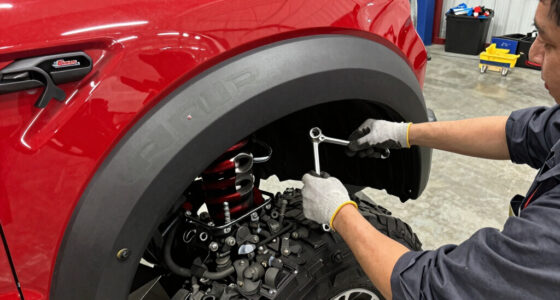
Adding weight to your off-road build might seem like a straightforward way to improve traction and stability, but it’s vital to understand the potential impacts first. Extra weight can help keep your tires grounded, especially on uneven terrain, but it also influences your vehicle’s handling, suspension, and overall performance. Before adding weight, consider how your suspension upgrades will cope with the additional load. Upgrading your suspension system is essential because stock setups often aren’t designed to handle extra mass. A reinforced suspension with heavier-duty shocks and springs can maintain ride quality and prevent sagging or damage, ensuring your vehicle remains responsive and safe during off-road adventures.
Adding weight improves traction but requires suspension upgrades to maintain handling and prevent damage.
Tire modifications are equally important when adding weight. Heavier vehicles exert more pressure on tires, increasing the risk of punctures, faster wear, or even tire failure if not properly equipped. Upgrading to tires with stronger sidewalls, better traction, and suitable load ratings can compensate for the added weight. These modifications help distribute the load more effectively, improving grip and reducing the chance of tire issues. Keep in mind that heavier vehicles also generate more heat in the tires, so choosing tires with better heat dissipation properties can extend their lifespan and performance.
While adding weight might seem like a simple way to achieve better traction, it can also negatively impact fuel efficiency and acceleration. The increased mass puts more strain on your engine and drivetrain, leading to higher fuel consumption and potential wear over time. If you decide to add weight, doing so gradually allows you to monitor how your vehicle responds and make necessary adjustments. Remember, the goal isn’t just to make your vehicle heavier but to enhance its capability in a balanced way that considers suspension and tire modifications. Additionally, understanding how additional weight impacts vehicle dynamics can help you make more informed decisions. Proper weight distribution is crucial because center of gravity plays a significant role in off-road stability and safety.
Adding weight correctly involves considering how it affects the vehicle’s handling and control, ensuring that the advantages in traction don’t come at the expense of safety. Proper placement is critical—placing weight too high or unevenly can raise your vehicle’s center of gravity, making it more prone to rolling over or losing stability on steep inclines. Strategic placement, combined with suspension upgrades and tire modifications, results in a safer and more capable off-road build. Remember to account for how vehicle weight influences overall performance, as it directly impacts acceleration, braking, and maneuverability. Ultimately, adding weight isn’t just about putting more mass in your vehicle; it’s about understanding how each component works together to optimize your off-road experience without compromising safety or performance.
off-road suspension upgrade shocks springs
As an affiliate, we earn on qualifying purchases.
As an affiliate, we earn on qualifying purchases.
Frequently Asked Questions
How Does Added Weight Affect Fuel Efficiency?
Adding weight to your off-road build can reduce fuel efficiency because your vehicle has to work harder to move the extra mass. This impacts fuel economy, making each trip slightly more costly. To minimize this, focus on weight optimization—removing unnecessary gear or using lighter materials. By balancing added weight with efficiency, you guarantee better performance without sacrificing too much fuel economy on your adventures.
What Are the Best Types of Weights for Off-Road Vehicles?
The best weights for off-road vehicles include tire balancing weights and cargo weights that enhance stability and traction. Tire balancing weights help guarantee even weight distribution, preventing vibrations on rough terrain. Cargo capacity weights, when properly distributed, improve vehicle handling and prevent overloading. Use these weights carefully to maintain ideal off-road performance, and always balance your tires to avoid unnecessary wear and improve safety during your adventures.
Can Weight Distribution Impact Vehicle Handling?
You might think adding weight is just about extra grip, but it actually impacts vehicle handling more than you’d expect. Proper weight placement shifts the center of gravity, making your ride more stable or, if poorly done, more prone to rollovers. So, yes, weight distribution really matters. Keep your center of gravity low and balanced, or you’ll find yourself fighting the vehicle instead of steering it.
How Does Weight Influence Suspension Performance?
Weight directly influences suspension performance by affecting suspension sag and load capacity. When you add weight, your suspension compresses more, increasing sag, which can impact handling and comfort. Guarantee your suspension can handle the extra load without bottoming out or losing control. Upgrading your suspension components or adjusting settings helps maintain best performance, especially when off-roading with added weight, keeping your vehicle stable and responsive.
Are There Legal Restrictions on Adding Weight?
You might think adding weight is a free-for-all, but legal limits and compliance guidelines actually restrict your options. Federal and state regulations often specify maximum vehicle weights, especially for off-road vehicles used on public land. Ignoring these rules can lead to fines or vehicle confiscation. So, before you load up your build, check local laws to guarantee you stay within legal limits, keeping your off-road adventures trouble-free and compliant.
heavy-duty off-road tires with high load rating
As an affiliate, we earn on qualifying purchases.
As an affiliate, we earn on qualifying purchases.
Conclusion
Adding weight to your off-road build might seem like a simple way to boost stability, but it’s not always the answer. Some believe heavier vehicles handle rough terrain better, yet others find increased weight hampers agility and fuel efficiency. The truth is, ideal weight depends on your specific terrain and driving style. So, before loading up, consider testing different setups—sometimes, a lighter, more agile ride wins the toughest trails.
off-road vehicle weight distribution accessories
As an affiliate, we earn on qualifying purchases.
As an affiliate, we earn on qualifying purchases.
off-road tire heat dissipation tires
As an affiliate, we earn on qualifying purchases.
As an affiliate, we earn on qualifying purchases.
NFL season / tailgating Picks
team gear
As an affiliate, we earn on qualifying purchases.