
Your Bluetooth audio quality varies from car to car because of differences in supported codecs, hardware, and system design. Higher-quality codecs like aptX and AAC deliver better sound but may not be supported in all vehicles. The vehicle’s audio system and how it processes sound also impact quality, along with Bluetooth version and data transfer rates. If you’re curious about the specifics behind these variations, you’ll discover more about what influences your car’s sound experience.

Get business pricing on garage and car supplies
- Business-only prices and quantity discounts
- Tax-exempt purchasing
- Multiple users, one account, clear invoices
Key Takeaways
- Different vehicle Bluetooth codecs (like AAC or aptX) impact audio fidelity and compression levels.
- Variations in Bluetooth versions and hardware affect data transfer rates and sound quality.
- The vehicle’s audio system design and processing capabilities influence how sound is reproduced.
- Firmware updates and hardware support determine compatibility and potential improvements in audio quality.
- Budget models often prioritize connection stability over high-fidelity codecs, reducing sound clarity.

When you switch between different cars, you might notice that your Bluetooth audio quality varies considerably. This inconsistency often puzzles you, but it mostly comes down to how each vehicle handles wireless connections. The key factors influencing sound quality are the wireless codec used and the way audio compression is managed. Wireless codecs are the backbone of Bluetooth audio, determining how efficiently sound data is transmitted from your device to the car’s audio system. Different cars come equipped with different Bluetooth modules that support various codecs like SBC, AAC, aptX, or LDAC. Some codecs are better at preserving sound quality, while others prioritize stability and lower latency. If your car supports a high-quality codec like aptX or AAC, you’ll generally enjoy clearer, richer sound, whereas cars limited to SBC might produce more compressed, less detailed audio.
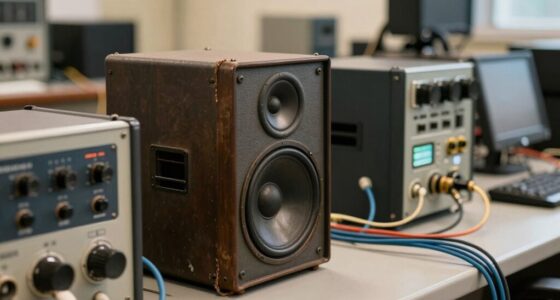
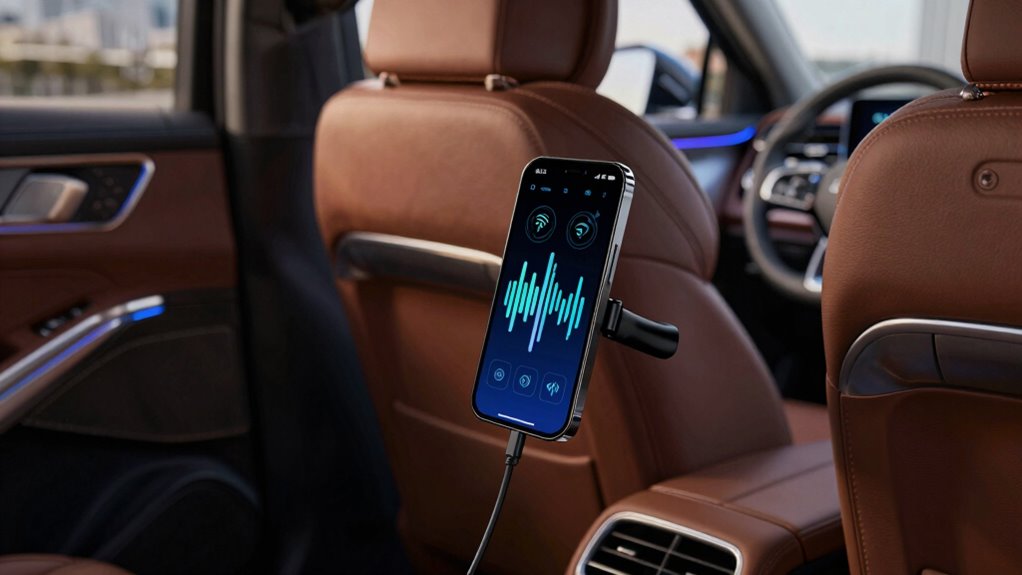
Bluetooth codec support varies by vehicle, affecting sound quality and audio clarity during wireless playback.
Audio compression plays an equally significant role in this variability. When sound data is compressed, some details are inevitably lost to make transmission faster and more reliable. This process is essential because Bluetooth bandwidth is limited, and excessive data transfer can cause dropouts or lag. However, the degree of audio compression depends on both the codec and the car’s audio system. Higher-end vehicles often use codecs that allow for less aggressive compression, resulting in better sound fidelity. Conversely, budget or older models might prioritize stability over quality, compressing audio more heavily to prevent interruptions. This means that, even if your phone supports high-quality codecs, the car’s hardware and software settings might still limit the overall audio experience. Additionally, Bluetooth version differences can impact data transfer rates; newer standards support higher bandwidth, which can improve audio quality with compatible codecs. A firmware update to the vehicle’s Bluetooth system can sometimes enhance compatibility and performance, further affecting sound quality. Moreover, audio system integration plays a crucial role in how well the decoded sound is processed and delivered through the speakers. The overall system design is also important, as it determines how effectively the components work together to produce the best possible sound. Understanding these various factors can help you optimize your listening experience across different vehicles.
Another factor is how the car’s audio system handles decoding and playback. Some vehicles have advanced digital signal processing, which can enhance sound clarity and balance once the audio data is received. Others might have basic systems that don’t do much to compensate for compression artifacts, leading to a less satisfying listening experience. Additionally, Bluetooth versions differ; newer Bluetooth standards support higher data rates, enabling better audio quality with compatible codecs. When your device and car are on different Bluetooth versions, the available bandwidth might restrict the quality of the streamed audio, causing noticeable changes when you switch vehicles.
As an affiliate, we earn on qualifying purchases.
Frequently Asked Questions
How Does Bluetooth Version Affect Audio Quality in Cars?
The Bluetooth version directly impacts your car’s audio quality by supporting advanced features and higher data transfer rates. Newer versions reduce wireless interference, ensuring clearer sound, and improve device compatibility, so your devices connect seamlessly. If your car has an older Bluetooth version, you might experience lower sound quality and more dropouts. Upgrading to a newer Bluetooth version can enhance your listening experience by providing more stable, high-quality audio.
Can Audio Codecs Improve Bluetooth Sound Performance?
Yes, audio codecs can improve Bluetooth sound performance. When your device and car support high-quality codecs like AAC or aptX, you’ll experience clearer, more stable sound. However, wireless interference can still affect quality, causing drops or distortions. Ensuring codec compatibility between devices and minimizing interference can optimize your Bluetooth audio, making your listening experience much better across different cars.
Does the Distance Between Device and Car Impact Audio Quality?
Think of your Bluetooth connection like a tightrope walk—stay too far, and the signal wobbles. Yes, distance impacts audio quality because wireless interference increases, causing dropouts or lower sound quality. If your device isn’t compatible or is far from the car, you might notice muffled or distorted audio. Keep your device close and make certain of compatibility to enjoy clearer sound, just like keeping a tightrope well-balanced.
How Do Car Audio System Settings Influence Bluetooth Sound?
Car audio system settings greatly influence Bluetooth sound quality. By adjusting speaker calibration, you can optimize sound balance, clarity, and volume, reducing distortions. Proper calibration minimizes audio interference, which can cause dropouts or static. If your system allows, tweak equalizer settings to enhance the Bluetooth connection’s clarity. Regular maintenance and updates also help guarantee the Bluetooth audio streams smoothly, providing a better listening experience regardless of your car model.
Are There Aftermarket Solutions for Better Bluetooth Audio in Cars?
Yes, aftermarket solutions can improve Bluetooth audio quality in your car. You might consider installing a dedicated Bluetooth receiver or a high-quality wireless audio transmitter, which can reduce wireless interference and provide a stronger signal. Keep in mind, these devices can impact your car battery, so choose models with low power consumption. Proper placement and compatibility are key to ensuring better sound without draining your battery excessively.
As an affiliate, we earn on qualifying purchases.
Conclusion
In the end, understanding why Bluetooth audio quality varies from car to car is like tuning a delicate instrument—you need the right settings, compatibility, and hardware. Each vehicle acts as a different stage for your music, sometimes amplifying the melody and other times muffling it. By paying attention to these factors, you can turn your car’s audio system into a symphony rather than static noise, ensuring your favorite tunes always sound just right wherever you drive.
Bluetooth audio codec support device
As an affiliate, we earn on qualifying purchases.
As an affiliate, we earn on qualifying purchases.
High fidelity Bluetooth transmitter
As an affiliate, we earn on qualifying purchases.
As an affiliate, we earn on qualifying purchases.
Halloween Picks
halloween
As an affiliate, we earn on qualifying purchases.