
To decide between MIG and TIG for automotive work, consider your project’s speed, complexity, and finish quality. MIG is faster and easier for bulk welding and larger repairs, ideal for quick fixes. TIG provides precise, cleaner welds, perfect for delicate or high-quality parts. Think about material types and your skill level; MIG is beginner-friendly, while TIG demands more experience. For a deeper understanding, you’ll find valuable tips ahead to help you choose the best method.

Get garage and car supplies delivered free — and shop member deals
- Fast, free delivery on millions of items
- Access to Prime Big Deal Days deals on October 6–7
- Prime Video, Amazon Music and more included
Key Takeaways
- Choose MIG for faster, bulk repairs on thicker automotive panels or frames.
- Opt for TIG when precision, clean finishes, and working on delicate or thin automotive components.
- Consider your skill level: MIG is easier for beginners; TIG requires more experience but offers higher quality.
- Evaluate project scope: large areas benefit from MIG’s efficiency, while detailed work favors TIG.
- Prioritize safety and environmental factors when selecting the process, including proper ventilation and protective gear.

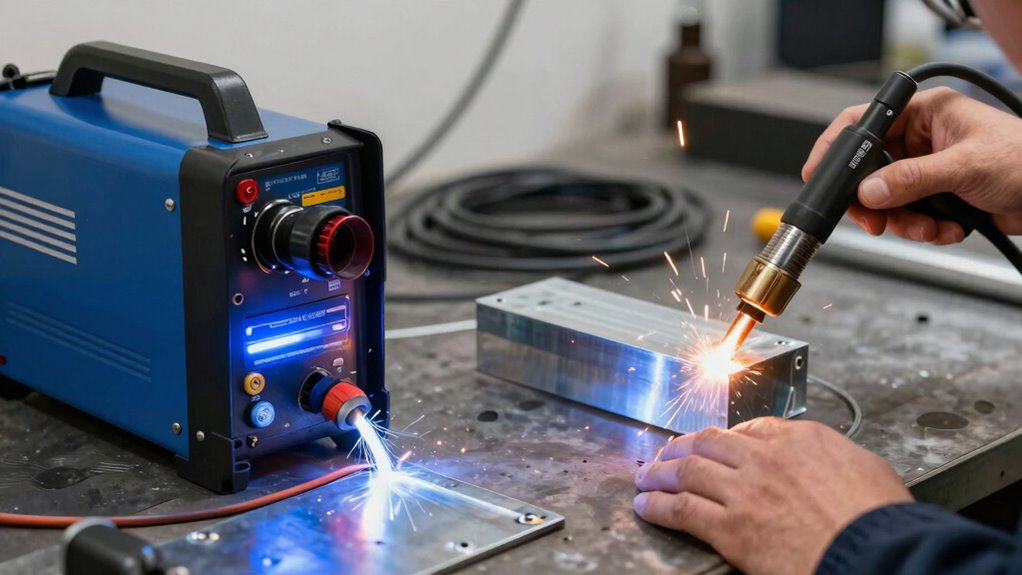
Choosing between MIG welding and TIG welding for automotive work depends on your specific project needs and skill level. Both methods have distinct advantages and limitations, so understanding how they align with your tasks can help you make an informed decision. A key factor is welding speed. MIG welding typically offers faster welds, making it ideal for projects where speed is a priority, such as repairing panels or assembling parts quickly. Its quick setup and high deposition rate allow you to cover larger areas efficiently. Conversely, TIG welding tends to be slower, but it provides greater control and precision, which is essential when working on detailed or delicate components like exhaust systems or custom fabrications.
MIG offers fast, efficient welding for larger projects; TIG provides precision for detailed, delicate work.
Material versatility is another vital aspect. MIG welding handles a wide variety of metals, including steel, stainless steel, and aluminum, with ease. Its ease of use makes it suitable for many automotive applications, especially for those working on bodywork or structural repairs. TIG welding, on the other hand, excels in producing cleaner, more refined welds. It is particularly effective on thinner materials and allows for better control over heat input, reducing the risk of warping or burn-through. If your projects involve a mix of different metals or require high-quality finish welds, TIG might be the better choice, despite its slower pace. Additionally, cost considerations can influence your decision, especially when factoring in equipment and consumables for each method. Being aware of welding costs can help you plan your budget more effectively. Furthermore, understanding the environmental impact of each welding process can guide choices that promote sustainability and safety.
Your skill level also influences the decision. MIG welding is generally more forgiving for beginners because it has a shorter learning curve. Its automatic wire feed and simpler process mean you can produce decent welds with less practice. TIG welding requires more hand-eye coordination, patience, and experience to master, but it rewards those who develop their skills with superior weld quality and finesse. If you’re just starting out, MIG can help you build confidence and complete projects quickly, while TIG can be a goal as your skills improve. Moreover, considering safety practices and proper equipment maintenance can significantly impact the quality and longevity of your welds.
Additionally, considering the family well-being aspect of your projects can ensure that your welding practices contribute to overall safety and durability. Proper ventilation and protective gear are essential components of a safe welding environment. Ultimately, your choice hinges on balancing these factors against your project demands. If you need quick results on thicker materials and want an easier learning curve, MIG is likely your best bet. If precision, clean finishes, or working on thinner metals are your priorities, and you’re willing to invest time into learning, TIG offers significant advantages. By considering welding speed, material versatility, and your skill level, you can choose the method that best aligns with your automotive projects, ensuring efficient, high-quality results.
MIG welding machine for automotive repair
As an affiliate, we earn on qualifying purchases.
As an affiliate, we earn on qualifying purchases.
Frequently Asked Questions
Can MIG and TIG Be Used Together on the Same Project?
Yes, you can use MIG and TIG welding equipment together on the same project. It’s common to switch between them for different tasks, especially in automotive work where precision and speed matter. Keep in mind, having both types of welding equipment guarantees you get the best results for different materials and joint requirements.
Which Welding Method Is Better for Thin Automotive Sheet Metal?
For thin automotive sheet metal, TIG welding is your best choice because it offers superior welding precision and control. TIG allows you to make clean, precise welds without burning through delicate materials. MIG can work, but it’s more likely to cause burn-through or require additional finishing. With TIG, you get smoother, more accurate welds, which are essential for maintaining the integrity and appearance of thin sheet metal in automotive repairs.
How Do Ambient Conditions Affect MIG and TIG Welding?
Ambient conditions can be the uninvited guest ruining your perfect weld. High humidity can cause moisture in the shielding gas, leading to porosity, while low temperatures make the metal tougher to weld, risking cracks. Ambient temperature impacts arc stability—hotter air keeps it steady, cold air makes it dance unpredictably. So, don’t ignore weather—your weld’s patience and quality depend on it. Stay prepared, and don’t let the elements catch you off guard.
Are There Specific Safety Concerns Unique to Each Welding Type?
You should be aware of safety concerns unique to each welding type. For MIG welding, make sure you wear proper protective gear like gloves and a welding helmet, and maintain good ventilation to avoid fumes. TIG welding also requires protective gear, especially gloves and eye protection, but typically produces fewer fumes, though good ventilation remains essential. Always follow safety guidelines to prevent burns, fumes inhalation, and electrical hazards during either welding process.
What Are the Long-Term Durability Differences Between MIG and TIG Welds?
You’ll find TIG welds generally offer greater long-term durability than MIG welds because they provide higher weld strength and better corrosion resistance. TIG’s precise control results in cleaner, stronger joints that withstand harsh conditions better. MIG welds, while quick and versatile, might not match TIG’s durability over time, especially in demanding automotive environments. So, if longevity and corrosion resistance matter most, TIG is your best choice for durable, long-lasting welds.
TIG welding kit for automotive work
As an affiliate, we earn on qualifying purchases.
As an affiliate, we earn on qualifying purchases.
Conclusion
Choosing between MIG and TIG for automotive work depends on your project’s precision, material type, and speed needs. For instance, if you’re restoring a vintage car with thin sheet metal, TIG’s accuracy guarantees a cleaner finish. Conversely, MIG might be your go-to for quick frame repairs on a busy shop floor. By understanding these differences, you can select the right welding method to save time, improve quality, and get your project done right the first time.
As an affiliate, we earn on qualifying purchases.
welding helmet for MIG and TIG welding
As an affiliate, we earn on qualifying purchases.
As an affiliate, we earn on qualifying purchases.
Halloween Picks
halloween
As an affiliate, we earn on qualifying purchases.