
TL;DR
An automotive tool kit is a collection of tools and supplies for routine maintenance, roadside emergencies, or repairs. Choose one around your vehicle and the jobs you can safely handle: prioritize visibility and basic emergency supplies for the road, and check socket fit, drive size, and quality for home repairs. Codes and tools have limits, and high voltage EV or hybrid work belongs to trained professionals.
A flat tire on a rainy shoulder can make a shiny 200-piece tool case feel less useful than a bright vest and a working flashlight. That’s the difference between buying the biggest automotive tool kit and choosing one that fits the moments you may actually face.

Get business pricing on garage and car supplies
- Business-only prices and quantity discounts
- Tax-exempt purchasing
- Multiple users, one account, clear invoices
A kit is a collection of tools for routine vehicle maintenance, roadside emergencies, or more involved repairs. The right contents depend on your car, your skills, your storage space, and whether you plan to work at home or simply want to be better prepared when trouble strikes.
This guide shows you what to prioritize, how to check whether hand tools fit your vehicle, and where a roadside fix should stop. You’ll also see why safety supplies often matter more than another row of sockets, and why some jobs need a certified mechanic.
Match the kit to your vehicle and the tasks you can safely handle; item count alone is a poor buying guide.
For roadside preparedness, prioritize a vest, reflective warning equipment, gloves, flashlight, and first aid kit.
Check socket drive size, metric and SAE coverage, extensions, fit, and case quality against the jobs you plan to do.
A diagnostic code points toward an area to investigate; it does not prove which part has failed.
Do not work on high voltage EV systems or safety-critical brakes and airbags without appropriate training; use a certified mechanic.
Choose a kit around the jobs you’ll actually do
An automotive tool kit is a collection of tools and supplies matched to a specific kind of vehicle work: roadside preparedness, routine maintenance, or home repair. A compact emergency set and a mechanic’s workshop set serve different jobs, even if both come in black molded cases. Treat the kit as a practical commitment: every extra tool takes up space and needs to be checked, while an absent tool can leave you unable to complete a planned job.
Start with a typical week, not an imaginary engine rebuild. If you drive an older car on long rural routes, a tire-pressure gauge, flashlight, gloves, warning equipment, and jumper cables may be more useful than specialty sockets. That balance reflects the consequences of being stranded: visibility and communication can reduce exposure to traffic, while a tool only helps if the problem is one you can safely fix. If you change wiper blades and handle simple maintenance at home, a ratchet, commonly sized sockets, pliers, and screwdrivers may earn their space.
For example, a driver who parks outside in winter may want a charged jump starter and gloves within reach. Cold weather can make a weak battery more likely to cause trouble, and gloves make handling equipment more manageable; however, a booster adds little value if it is uncharged or incompatible. A person who keeps a compact car in a busy city garage may get more use from a pressure gauge and a small set of hand tools. The kit should match what you expect to do and can do safely, with storage and upkeep included in the decision.
Think of the case like a small pantry: a hundred ingredients don’t help if you need salt and the jar is empty. Choose a practical collection of tools for the vehicle and tasks you know, then add items as your needs become clearer. This gradual approach lets real experience reveal which tools are useful before you spend money and space on specialized equipment.
Products Worth Considering

Chemical Guys 16-Piece Ceramic Car Wash and Protection Kit with Big Mouth Foam Cannon

Chemical Guys Arsenal Builder Car Wash Kit with Foam Cannon and Carry Bag

NOCO Boost GB70 2000A 12V Lithium Jump Starter
As an affiliate, we earn on qualifying purchases.
Put roadside safety ahead of extra repair tools
A roadside kit should help you stay visible, communicate, and handle simple problems safely. Before you add more repair tools, pack reflective warning equipment, a high visibility vest, gloves, a flashlight, and a first aid kit. These supplies address the risks around a disabled car: other drivers may not see you, darkness makes careful work harder, and a minor injury can complicate an already exposed situation.
Imagine a tire losing pressure after dark on a narrow road. A small ratchet set won’t make passing traffic slow down; reflective triangles placed as your owner’s manual directs and a vest can help other drivers see you. The useful choice is to reduce your exposure before deciding whether the repair is manageable. If you cannot park well away from traffic, or conditions feel unsafe, call roadside assistance rather than beginning a repair. A spare tire is only helpful when the car has one and there is a safe place to change it.
Jumper cables and battery boosters can help when a vehicle has a dead battery, but they work differently. Cables need a suitable second vehicle and correct connection steps, which means help and a safe connection point must both be available. A booster is more self-contained, yet it must be compatible with your vehicle, charged, and used exactly as its instructions describe. Neither item makes every battery problem a safe do-it-yourself job; damaged batteries, unusual smells, or uncertainty about connection points are reasons to stop and seek assistance.
Keep the emergency supplies together in a secured case or bag so they don’t slide around the cabin. Keeping them accessible matters because searching through luggage beside traffic adds time and distraction. A flashlight with dead batteries is just extra weight, so check its charge and replace worn or missing supplies periodically. For any collision, suspected fuel leak, or unsafe location, get clear and call for help.
Check socket fit before you buy a mechanic’s set
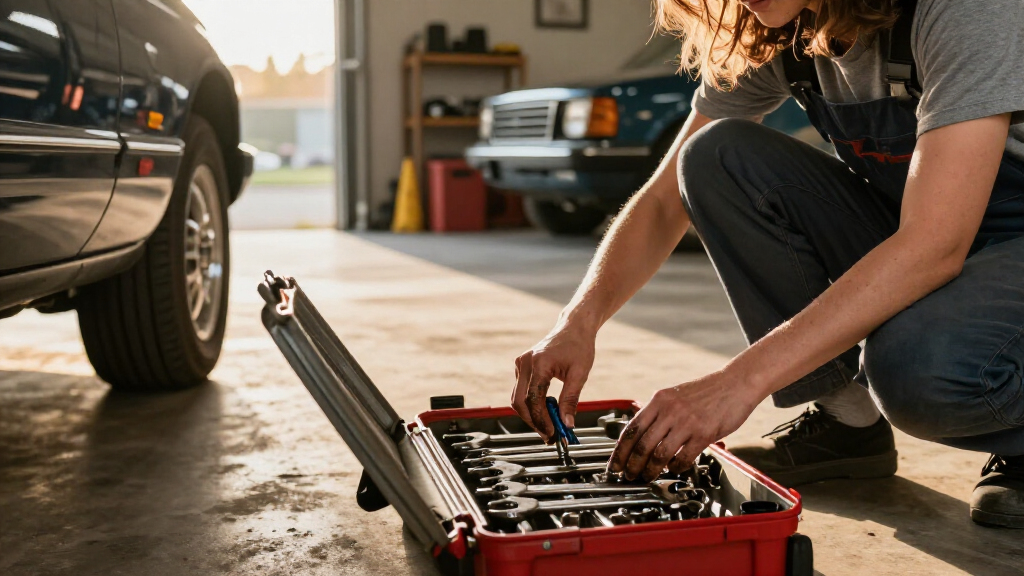
A mechanic’s tool set is useful only when its sockets and accessories fit the fasteners on your vehicle and the job at hand. Check drive size, metric and SAE coverage, extensions, and the shape and range of sockets before you compare the number stamped on the box. Drive size describes the connection between a socket and ratchet; choosing an appropriate size affects access and the amount of force the tool can handle. A larger assortment does not help if the needed socket is missing or cannot reach the fastener.
Many vehicles use metric fasteners, but that doesn’t make every metric set right for every job. Requirements vary with the vehicle, the part, and even accessories installed by a previous owner. If you plan to change a battery hold-down or remove a particular wheel, check the vehicle’s service information or the fastener itself before shopping. This check can prevent buying a set that appears broadly compatible but lacks the exact size, socket profile, or reach the task requires.
Suppose a kit has dozens of sockets but no extension long enough to reach a recessed fastener. The count looks impressive, but the missing reach stops the job. A smaller set with the needed sizes, a ratchet that feels secure, and a case that holds everything firmly may serve you better. Secure storage also matters on a job: if a socket is missing from its slot, it is easier to notice before the car is partly disassembled.
Compare sets by actual contents, durability, warranty, and fit for your planned work. A loose-fitting socket can round a fastener, while a flimsy ratchet may slip under load; damage can turn a routine task into a more difficult repair. For a first home set, choose quality for the tasks you expect to repeat; fill gaps when a real job calls for them. This costs less up front than buying a large set for hypothetical repairs, while still letting you add a specialized tool when the need is clear.
Use this simple process to build a kit that fits
To build an automotive tool kit that suits your needs, list your vehicle, likely tasks, and safe skill level first, then choose tools to match those jobs. This keeps you from paying for a case full of tools you cannot use or store. It also makes the limit of the kit clearer: preparing for a few likely tasks is useful, but a toolbox cannot make an unfamiliar or unsafe repair appropriate.
- Read your owner’s manual. Find out which roadside steps the maker permits, where the spare or lifting points are, and what the car’s systems allow. For instance, a vehicle may not include a spare tire at all. Knowing this before a trip prevents you from relying on equipment that the vehicle cannot use or attempting a lift at an unapproved point.
- Pick two or three realistic jobs. You might check tire pressure, replace wiper blades, or attach jumper cables. Let those tasks guide the tool list rather than planning for every possible repair. Narrowing the list makes it easier to learn the correct procedure and notice when a problem is outside your experience.
- Check the specific tools. Confirm socket sizes, metric or SAE coverage, extensions, and any required compatibility. If buying a booster or scanner, read its vehicle support and operating directions. Compatibility is more than a convenience: using the wrong tool or an unsupported device can waste time or lead to damage.
- Add safety supplies and secure the kit. Pack visibility gear, gloves, a first aid kit, and a reliable light; store the case so it cannot fly forward during a sudden stop. Easy access helps during an emergency, while secure storage reduces the chance that the kit itself becomes a hazard.
- Review it a few times each year. Check batteries, replace missing items, and look for rust, cracked handles, or damaged cables. Wear and battery drain can turn a once-useful item into dead weight, so a quick inspection tests whether the kit is still ready.
For example, before a winter road trip, you could find that your booster is uncharged and your flashlight has corroded batteries. A quick check at home is much better than discovering both problems with cold hands beside a dark road. The check also gives you time to replace or recharge items without pressure.
Treat diagnostic codes as clues, not repair instructions
A diagnostic trouble-code reader can show you information from a vehicle system, but a code is a clue, not a complete diagnosis. It can help narrow down what to investigate; it does not necessarily name the failed part or explain the underlying cause. A code reports that the vehicle detected a condition under particular circumstances, so interpretation requires checking the related system and other evidence.
Say a warning light appears and a reader returns a code related to an oxygen sensor circuit. Replacing the sensor at once may not solve the issue: wiring, a connector, or another fault could be involved. The implication is practical: buying a part based only on a code can cost money without fixing the condition, and clearing the code may hide useful information. A code can give you a useful starting point for a conversation with a mechanic, especially if you record the code and when the light appeared.
Before buying a scanner, check which systems it supports on your particular vehicle. A basic reader may offer useful engine codes, while access to other vehicle systems depends on the tool and its compatibility. An app or screen full of numbers does not replace service information or hands-on diagnosis. More data can help only when you know what the tool can read and how that information relates to symptoms.
Use the scanner as one item in your collection of tools, not as permission to replace parts by guesswork. If the vehicle drives poorly, shows a serious warning, or needs work beyond your experience, arrange professional diagnosis. Keeping a photo of the code can make your description more precise when you call for help. Preserve the code and any warning details before clearing anything, since that context may help identify an intermittent fault.
Know when a repair needs a certified mechanic
Use a roadside kit only for tasks that the owner’s manual allows, you understand, and you can perform away from traffic. Stop and call for help when a repair feels unsafe or beyond your skill level; a roadside toolkit is not a substitute for a mechanic’s workshop. The relevant tradeoff is between a limited delay and the possibility of making a fault worse or putting yourself in danger. If the safe work area, correct procedure, or suitable equipment is missing, the kit cannot compensate for that.
That limit matters even more for hybrid and electric vehicles. Some work involves high voltage components, which need appropriate training, procedures, and equipment. An ordinary hand-tool kit is not suitable for opening or repairing those systems. Contact with high voltage can cause severe injury, and a component may remain dangerous even when the vehicle appears switched off. Follow the manufacturer’s service information, and leave high voltage work to trained professionals.
Other repairs also carry serious safety risks. Brakes and airbags are safety-critical systems, so use a certified mechanic rather than relying on a roadside kit or a video if you lack the right training. A mistake in these systems can affect the vehicle or its occupants later, even if the car seems usable immediately after the repair. If a warning or suspected defect raises a recall concern, check the vehicle’s recall status using the NHTSA recall lookup in the United States, then follow the manufacturer’s instructions for repair.
Consider a driver whose brake pedal feels soft after a roadside wheel change. Even if the car still moves, that is a reason to stop driving and get professional help because braking performance may be compromised. No toolbox is worth risking a crash, a damaged vehicle, or an injury.
Keep your kit ready through heat, cold, and rattling roads
A tool kit is only prepared if its contents still work when you need them. Store it dry and secured, check batteries and consumables, and replace tools or supplies that are missing or damaged. Maintenance is part of choosing a kit: a smaller set that is kept ready can be more useful than a larger set whose batteries are depleted or whose contents have shifted.
A car’s trunk can get hot in summer, cold in winter, and damp after snow-soaked boots and bags go in. Those conditions can affect batteries and encourage rust. If you keep a booster in the car, check its charge according to the maker’s directions. If your flashlight uses replaceable batteries, look for leaks and corrosion. When storage conditions are especially harsh, follow the product’s temperature guidance because a battery stored outside its recommended range may not perform as expected.
Imagine opening a case after a long drive and finding a loose ratchet, a rusty socket, and a flashlight that flickers. A snug case with labeled spaces makes gaps easy to spot, while a compact safety bag keeps gloves and a vest accessible. Secure both so they cannot become loose objects in a sudden stop. Separating emergency supplies from heavier tools also makes the most time-sensitive items easier to reach.
Review your kit when seasons change or before a long trip. Replace disposable items, confirm your warning equipment is present, and take out tools that no longer fit your vehicle or tasks. A short check at home can keep a small problem from turning into a frustrating roadside search. It also keeps the kit aligned with changes to your vehicle, such as different tires or newly added equipment.
Frequently Asked Questions
What should a basic car tool kit include?
Start with a flashlight, gloves, tire-pressure gauge, reflective warning equipment, and a first aid kit. Add suitable hand tools based on your vehicle and the simple tasks you know how to do safely.
Is a roadside kit different from a mechanic’s tool set?
Yes. A roadside kit focuses on visibility, emergency supplies, and simple problems, while a mechanic’s set provides a wider range of tools for repair work. A roadside kit does not replace a workshop or professional repair service.
Do I need metric or SAE tools?
Many vehicles use metric fasteners, but the right coverage depends on the specific vehicle and job. Check service information or the fastener before choosing a set, and consider any accessories that have been added to the vehicle.
Are jump starters better than jumper cables?
A jump starter is self-contained and does not need a second vehicle, but it needs a charged battery and must be compatible with your car. Jumper cables require a suitable second vehicle and correct connection steps, so follow the instructions for either option.
Should I buy a diagnostic scanner?
A scanner can help you read diagnostic trouble codes, but codes are clues rather than definitive diagnoses. Check that the scanner supports your vehicle and the systems you want to read, and seek professional diagnosis when the problem exceeds your skills.
Can I use a regular tool kit on a hybrid or electric car?
You can use ordinary tools only for tasks permitted by the owner’s manual and within your training. Do not open or work on high voltage components without the required training, equipment, and manufacturer procedures.
Conclusion
Choose your automotive tool kit by starting with your car, your likely jobs, and the work you can safely do. Put visibility and emergency supplies first for roadside use, then buy hand tools that fit the fasteners you actually expect to touch.
Check the kit before a trip, secure it in the car, and know when to call a professional. The best toolbox is ready when you need it—and quiet in the trunk the rest of the time.