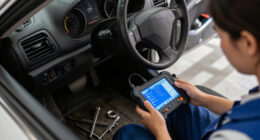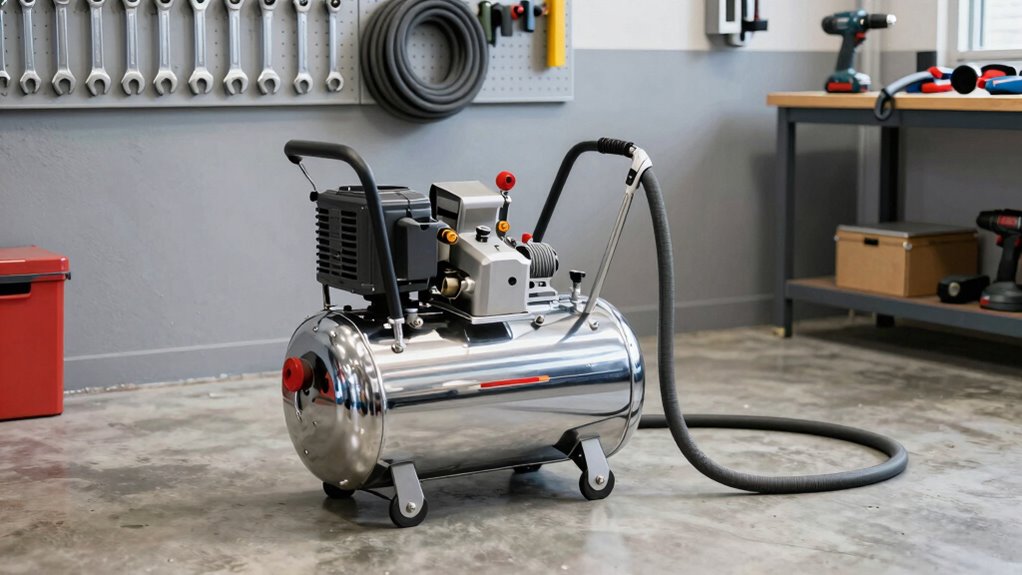

Choosing the right air compressor size is key to making your garage tools work smoothly and efficiently. If it’s too small, you’ll face delays and underpowered performance, especially with high-demand tools like impact wrenches or spray guns. On the other hand, a compressor that’s too big can be noisy, heavy, and waste energy. Finding a balance guarantees you get enough airflow without unnecessary clutter or expense. Keep exploring to discover how to match your compressor to your projects perfectly.

Get business pricing on garage and car supplies
- Business-only prices and quantity discounts
- Tax-exempt purchasing
- Multiple users, one account, clear invoices
Key Takeaways
- Matching compressor size to tool demands ensures consistent performance and prevents pressure drops during use.
- Smaller compressors are suitable for light tasks, while larger units support high-demand pneumatic tools.
- Proper sizing helps avoid unnecessary expense, excessive noise, and workspace clutter.
- Adequate CFM and tank capacity are essential for continuous operation of power tools like impact wrenches.
- Considering noise levels and portability ensures a comfortable and practical garage environment.
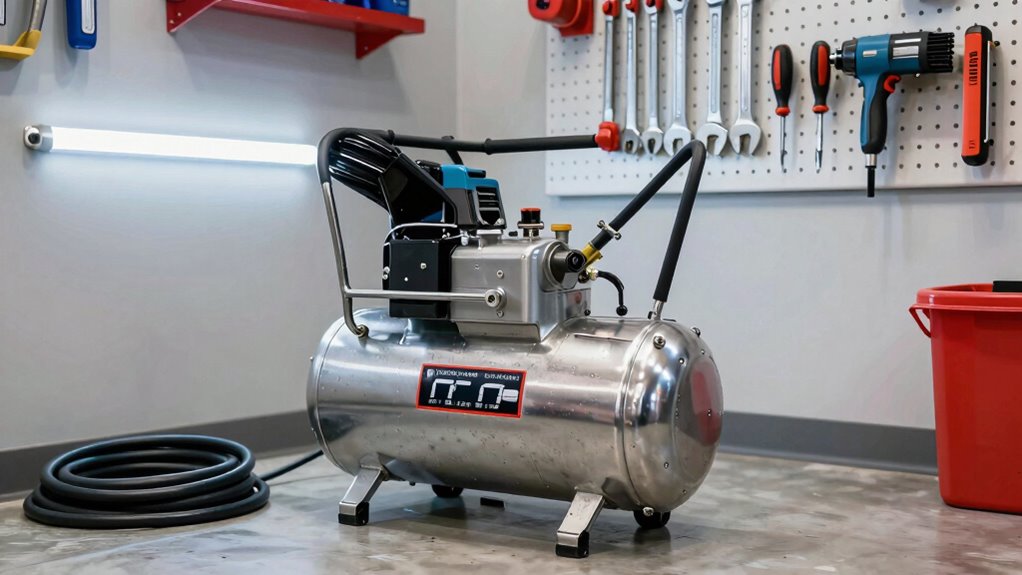
Choosing the right air compressor size for your garage tools is essential to guarantee you have enough power without overspending on unnecessary capacity. When you’re selecting an air compressor, it’s important to take into account how you plan to use it. If you’re working on small projects or occasional repairs, a smaller, portable option might be perfect. These compact units are easy to move around and store, making them ideal for limited spaces or if you need to transport your compressor frequently. However, don’t let their size fool you—many portable options deliver sufficient airflow for tasks like inflating tires, spray painting, or powering small pneumatic tools. Just remember, their size often means they have a lower tank capacity and CFM (cubic feet per minute), so they won’t support prolonged use of high-demand tools. Larger, industrial-style compressors tend to produce more noise, which can be disruptive if your garage is close to living spaces or shared with others. Portable models generally operate quieter, making them more suitable for home garages where noise control matters. It’s worth checking the decibel ratings before buying; a quieter compressor makes your work environment more comfortable and reduces the likelihood of disturbing family members or neighbors. Smaller, portable options often feature quieter motors, but some may still generate enough noise to warrant hearing protection if used extensively. Additionally, considering the horsepower of electric dirt bikes can give you an idea of the power capacity that might be necessary for certain pneumatic tools, ensuring your compressor can handle the workload. Size also influences how much air the compressor can deliver consistently. For example, if you’re planning to run impact wrenches, nail guns, or spray guns regularly, you’ll need a compressor with a higher CFM rating and a larger tank. This ensures you won’t experience delays or pressure drops during use. It’s also helpful to understand the environmental impact of tissue paper, as choosing eco-friendly options can contribute to a more sustainable workshop. Moreover, understanding the contrast ratio of your compressor can help evaluate the quality of its airflow and performance during demanding tasks. Additionally, new innovations in compressor technologies, like variable speed drives, can improve efficiency and reduce energy consumption, making your setup more cost-effective. When selecting a compressor, it’s beneficial to consider the air quality it provides, especially if you work with paint or other sensitive materials. Conversely, if your tasks are light, like inflating tires or cleaning parts, a smaller compressor with lower CFM and tank capacity will suffice, saving you money and space. Ultimately, choosing the right size for your garage tools depends on balancing power needs, portability, and noise considerations. Bigger isn’t always better; a larger compressor might deliver more air, but it also tends to be bulkier and noisier. Smaller, portable options can meet your needs without overwhelming your workspace or disturbing your peace. Think about the types of projects you’ll tackle most often, and match those requirements to a compressor that offers enough airflow, manageable noise levels, and convenient size. This way, you’ll have a reliable, efficient tool that enhances your garage work without unnecessary expense or inconvenience.
portable air compressor for garage
As an affiliate, we earn on qualifying purchases.
As an affiliate, we earn on qualifying purchases.
Frequently Asked Questions
Can Small Air Compressors Handle Heavy-Duty Garage Tools?
Small air compressors typically can’t handle heavy-duty garage tools, especially for prolonged use, because they often lack the necessary CFM and PSI. If you opt for portable options, you’ll enjoy easy mobility but should be mindful of higher noise levels, which can be disruptive. For demanding tools, investing in a larger compressor guarantees consistent power and performance, preventing frustration and ensuring safety during your projects.
How Does Compressor Size Affect Tool Performance Over Time?
A larger air compressor generally offers better tool performance over time because it provides consistent pressure and airflow, reducing strain on your tools. This improves the air compressor lifespan and guarantees your tools stay compatible and functional longer. If you choose a compressor too small, you may experience pressure drops, causing tools to work inefficiently or wear out faster. Proper sizing is essential for maintaining performance and prolonging equipment life.
What Is the Ideal CFM for Different Garage Tools?
Imagine the hum of your garage filled with the right air compressor—quiet yet powerful. For spray guns and nailers, aim for 4-5 CFM at 90 PSI, ensuring consistent air quality without excess noise. Heavy-duty tools like impact wrenches need 6-8 CFM. Choosing the ideal CFM prevents tool lag and maintains air quality, while keeping compressor noise to a minimum, so your workspace stays efficient and comfortable.
Are Larger Compressors More Energy-Efficient for Garage Use?
Larger compressors can be more energy-efficient for garage use because they often have a higher compressor capacity, meaning they run at lower speeds and use less energy during operation. This reduces overall energy consumption, especially if you’re running multiple tools. However, size should match your needs—buying an oversized compressor might waste energy, while a too-small one could strain and consume more power over time.
How Often Should I Maintain My Garage Air Compressor?
Think of your compressor as a trusted steed needing regular grooming. You should check and maintain it monthly, especially if used frequently. Regular maintenance improves air quality by preventing dust buildup and guarantees noise levels stay manageable. Keep an eye on oil levels, drain moisture, and inspect for leaks. This routine keeps your compressor running smoothly, extends its life, and minimizes disruptive noise, letting you work quietly and efficiently.
high CFM air compressor for pneumatic tools
As an affiliate, we earn on qualifying purchases.
As an affiliate, we earn on qualifying purchases.
Conclusion
Choosing the right air compressor size is like picking the perfect shoe size—you need comfort, support, and the right fit for your needs. When you select a compressor that matches your garage tools, you’ll enjoy smoother projects and fewer interruptions. Don’t underestimate the power of a well-sized compressor; it’s the heartbeat of your toolkit. With the right size, your garage work becomes as effortless as a gentle breeze—making every task more enjoyable.
As an affiliate, we earn on qualifying purchases.
As an affiliate, we earn on qualifying purchases.
Halloween Picks
halloween
As an affiliate, we earn on qualifying purchases.