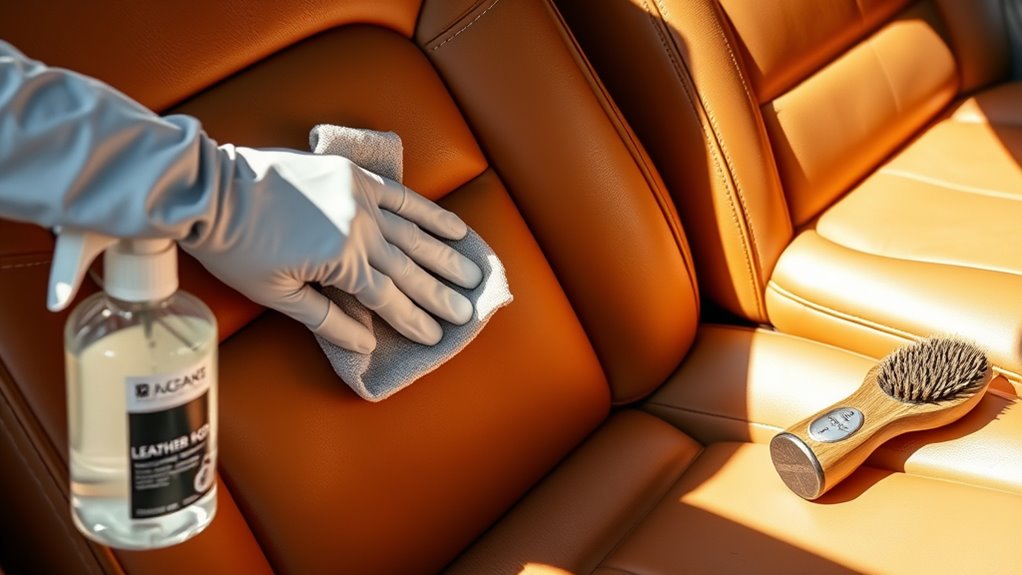

To clean and protect leather car seats like a pro, start by gathering quality leather cleaners, conditioners, and UV protectants. Remove loose debris with a soft brush or vacuum, then gently clean the seats with a leather-specific product, using a microfiber cloth in circular motions. Follow up with a conditioner to keep the leather soft and protected from sun damage. Keep these steps in mind, and you’ll uncover more tips for maintaining your seats beautifully.
Key Takeaways
- Use gentle, leather-specific cleaners and conditioners to effectively clean and maintain leather seats without causing damage.
- Vacuum thoroughly to remove loose debris from crevices and seams before applying cleaning products.
- Apply UV protectants and avoid direct sunlight to prevent fading and preserve leather’s natural luster.
- Test cleaning products on hidden areas to ensure compatibility and prevent discoloration.
- Regularly condition leather seats to create a protective barrier and prolong their lifespan.

Armor All Car Leather Cleaner Spray, Beeswax Leather Care Spray for Cars, Trucks, Motorcycles, 16 Oz Each
Nourish leather with real beeswax in Armor All Leather Care With Beeswax. Real beeswax for leather is blended…
As an affiliate, we earn on qualifying purchases.
As an affiliate, we earn on qualifying purchases.
Gathering the Right Supplies for Leather Seat Care

Before you begin cleaning and protecting your leather car seats, it’s essential to gather the right supplies. Start with a high-quality leather conditioner to keep your seats soft and prevent cracking. You’ll also need a gentle cleaner specifically designed for leather to remove dirt without damaging the material. Seat protection products like UV protectants help shield your seats from sun damage and fading. Microfiber cloths are perfect for applying conditioners and cleaners smoothly, avoiding scratches. Consider a soft-bristled brush for stubborn dirt in creases. Having these supplies on hand ensures you can clean thoroughly and maintain your leather seats’ appearance and durability. Proper seat protection not only enhances your car’s look but also extends the life of your leather upholstery. Incorporating smart home technology such as automated climate control can help maintain optimal temperature and humidity levels, reducing stress on your leather seats over time. Additionally, understanding the importance of natural materials can guide you in choosing eco-friendly cleaning products that preserve your vehicle’s interior while being gentle on the environment. Regularly checking your vehicle’s air quality and using appropriate air purification methods can also help keep your car’s interior fresh and free from pollutants that may accelerate wear. Using protective coatings can provide an extra barrier against everyday wear and tear, further extending your leather’s lifespan. Employing seasonal maintenance routines can help address environmental factors that impact leather condition over time.

Leather Honey Leather Conditioner, Since 1968. For All Leather Items Including Auto, Furniture, Shoes, Purses and Tack. Non-Toxic and Made in the USA / 8 Fl Oz (Pack of 1)
POWERFUL LEATHER CONDITIONER: Leather Honey penetrates deep to protect new leather and rejuvenate dry leather and old leather….
As an affiliate, we earn on qualifying purchases.
As an affiliate, we earn on qualifying purchases.
Preparing Your Vehicle Before Cleaning

Before cleaning, remove any loose debris from your seats to prevent scratching the leather. Vacuum the surface thoroughly to pick up dirt and dust, ensuring a cleaner finish. Protect the surrounding areas with cloth or plastic to avoid accidental spills or damage during the process. Additionally, consider assessing the color accuracy of your seats’ leather to ensure proper cleaning and conditioning, preventing color fading or damage. Proper evaluation of leather care can help maintain the seat’s appearance over time. Being aware of vetted cleaning products suitable for your leather type can further safeguard your seats from damage. Familiarizing yourself with seasonal variations in conditions can also help you choose the best cleaning and protection methods for different times of the year. Recognizing environmental factors that affect leather can further enhance your maintenance routine.
Clear Debris First
Start by removing any loose debris from the leather seats using a soft brush or a vacuum with a brush attachment. Clearing debris prevents scratches and makes the cleaning process smoother. Remember, many leather cleaning myths suggest using harsh chemicals, but sticking to gentle methods preserves the leather’s quality. Clearing debris also helps with leather scent enhancement, ensuring your seats smell fresh rather than musty. When you’re done, consider creating calm by organizing your cleaning routine to avoid rushing through the process. Before cleaning, consider these tips:
- Remove crumbs, dust, and pet hair
- Use a soft brush for textured surfaces
- Vacuum thoroughly to pick up hidden particles
- Avoid using abrasive tools that damage leather
- Ensure the seats are dry before applying any cleaners
- Incorporate proper maintenance practices to prolong the leather’s lifespan
- Regular exfoliation can also help maintain the leather’s appearance and prevent buildup of dirt and oils.
Vacuum Thoroughly Surface
To guarantee your leather seats are properly prepared for cleaning, you need to vacuum thoroughly across the entire surface. Use the right vacuum accessories, such as a brush attachment or a soft brush nozzle, to effectively loosen dust and debris without damaging the leather. Focus on all areas, including crevices, seams, and edges, where dust tends to accumulate. Proper dust removal via vacuuming helps prevent scratching or embedding dirt into the leather during cleaning. Make sure to move slowly and cover every inch of the seat surface to ensure no particles are left behind. This step creates a clean foundation, making the subsequent cleaning process more effective and preventing dirt from settling into the leather’s pores. Additionally, selecting a vacuum with effective filtration helps trap fine particles and allergens, further protecting your leather surfaces. Incorporating a vacuum with HEPA filters ensures even the tiniest dust particles are captured, enhancing overall cleanliness. Moreover, using a vacuum with powerful suction can help remove stubborn dirt from textured surfaces. Regular vacuuming also minimizes the risk of Rhythm Failure, which can occur if dirt becomes embedded over time, leading to potential damage and discoloration. Employing a vacuum with multi-surface capability can make cleaning different areas of your vehicle more efficient and thorough.
Protect Surrounding Areas
After vacuuming your leather seats, it’s important to protect the surrounding areas of your vehicle to prevent any accidental damage during cleaning. Proper surrounding protection guarantees that dirt, cleaning products, or tools don’t harm your dashboard, carpets, or trim. Focus on area maintenance by covering or removing items that could get in the way or be damaged. Use painter’s tape or plastic sheets to shield delicate surfaces. Keep a microfiber cloth handy to catch any drips. Clear out loose items from nearby compartments. Move floor mats aside and secure loose cables or accessories. These steps create a safe workspace, helping you clean effectively while maintaining your vehicle’s interior integrity. Understanding seasonal checklists can also help you plan proper maintenance routines to keep your vehicle in top condition. Additionally, paying attention to interior maintenance can extend the lifespan of your vehicle’s interior components, especially when combined with proper protective measures. Regularly inspecting and interior cleaning ensures your leather seats and surrounding areas stay in optimal condition over time.
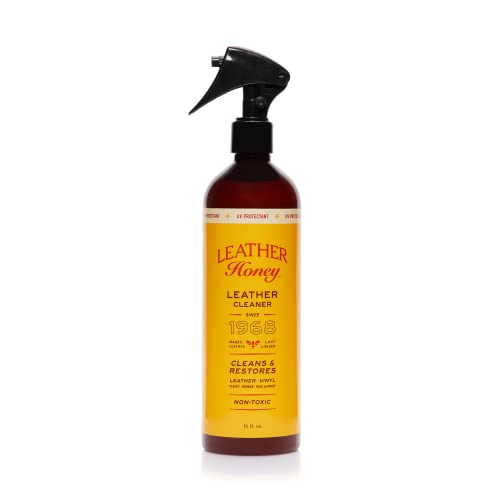
Leather Honey Leather Cleaner Spray: UV Protectant, Non-Toxic & Made in the USA Since 1968. Cleans & Protects Leather, Faux & Vinyl – Couches, Car Seats, Purses, Shoes, Bags & Tack. Safe for Any Color
NON-TOXIC, POWERFUL LEATHER CLEANER + UV PROTECTANT: The same reliable formula in a convenient spray + UV protectant….
As an affiliate, we earn on qualifying purchases.
As an affiliate, we earn on qualifying purchases.
Removing Surface Dirt and Debris Effectively
To remove surface dirt and debris, start with gentle brushing to lift loose particles without damaging the leather. Use soft cloth wipes to clean the surface carefully, avoiding harsh scrubbing. Regularly vacuum the seats to pick up debris and prevent buildup that could cause scratches or stains. Incorporating sound vibrations can also help loosen dirt particles, making cleaning more effective and less abrasive. Utilizing auditory cues during cleaning can improve efficiency by signaling when the surface is thoroughly cleaned. Additionally, applying proper cleaning techniques helps preserve the leather’s integrity and appearance over time. For optimal maintenance, consider using specialized leather cleaning products designed specifically for automotive upholstery to ensure long-lasting protection.
Use Gentle Brushing Techniques
Gently brushing your leather car seats is an effective way to remove surface dirt and debris without damaging the material. Using proper brushing techniques guarantees gentle cleaning while preserving the leather’s softness. Keep your brush light and use slow, sweeping motions to avoid scratching or scuffing the surface. Focus on seams, creases, and textured areas where dirt tends to accumulate.
Consider these tips for effective brushing:
- Use soft-bristled brushes designed for delicate surfaces
- Always brush in the direction of the leather grain
- Avoid pressing too hard to prevent damage
- Work in small sections for thorough cleaning
- Combine brushing with a gentle cleaning solution for best results
These brushing techniques help maintain your leather’s appearance and longevity.
Employ Soft Cloth Wipes
Using soft cloth wipes is an effective way to remove surface dirt and debris from your leather car seats without risking damage. These wipes are gentle yet effective at lifting dust and light stains without scratching the leather. To clean, gently wipe the seats with the soft cloth wipes in a circular motion, ensuring even coverage. This method allows for gentle buffing, which helps maintain the leather’s smooth surface and natural sheen. Avoid pressing too hard, as excessive force can cause abrasion. Regular use of soft cloth wipes keeps surface dirt from settling into the leather pores, preventing future stains and buildup. Always choose high-quality wipes designed for leather to ensure you’re cleaning safely and effectively while preserving your seats’ integrity.
Vacuum Regularly for Debris
Regularly vacuum your leather car seats to effectively remove surface dirt and debris before they can settle into the leather. This step is essential for maintaining leather seat aesthetics and prolonging their lifespan. Use gentle vacuuming techniques to avoid damaging the leather surface. Pay attention to crevices and seams where dirt tends to accumulate. Keep the vacuum’s nozzle close to the surface without pressing too hard. For best results, use a soft brush attachment to loosen stubborn debris. Regular vacuuming prevents dirt buildup that can cause cracks and fading over time. Incorporate these vacuuming tips:
- Use a soft brush attachment for gentle cleaning
- Vacuum in slow, overlapping strokes
- Pay special attention to seams and corners
- Avoid pressing too hard to prevent damage
- Clean the vacuum filter regularly for essential suction

USANOOKS Microfiber Cleaning Cloth Grey – 12 Pcs (12.5"x12.5") – High Performance – 1200 Washes, Ultra Absorbent Microfiber Towel Weave Grime & Liquid for Streak-Free Mirror Shine – Car Washing Cloth
10x GRIP-ROOT WEAVE – TRAP MORE, WORK LESS: Ultra-absorbent microfiber towels for car Grip Root weave works like…
As an affiliate, we earn on qualifying purchases.
As an affiliate, we earn on qualifying purchases.
Choosing the Best Leather Cleaner for Your Seats

Choosing the right leather cleaner is essential to maintaining your car seats’ appearance and durability. You want a cleaner that effectively removes dirt and grime without damaging the leather or causing unwanted leather odor. Look for products specifically designed for automotive leather, as they’re gentle yet effective. If your seats have experienced leather dyeing or color fading, select a cleaner that’s compatible with dyed leather to prevent discoloration. Avoid harsh chemicals or household cleaners that can strip away the finish or cause cracking. Test any new product on a small, inconspicuous area first. A quality leather cleaner not only cleans but also preserves the natural softness and luster of your seats, keeping them looking new for years.
Proper Techniques for Cleaning Leather Surfaces

To clean leather car seats effectively, you need to follow proper techniques that guarantee damage and assure thorough removal of dirt and oils. Start by gently wiping the surface with a microfiber cloth to preserve the leather grain. Use a suitable leather cleaner and apply it with a soft cloth, working in small sections. Be cautious around areas prone to dye transfer, avoiding excessive moisture that could cause color bleeding. Always test a hidden spot first. When cleaning, move in the direction of the leather grain to prevent scratches. Avoid harsh scrubbing, which can damage the finish. Regularly dust and clean your seats to prevent dirt buildup. Remember, patience and gentle handling protect your leather’s appearance and longevity.
- Use a soft, microfiber cloth for application
- Work in small sections to avoid oversaturation
- Test cleaner on a hidden area first
- Always wipe in the direction of the leather grain
- Avoid scrubbing to prevent damage
Conditioning Leather to Maintain Softness and Flexibility
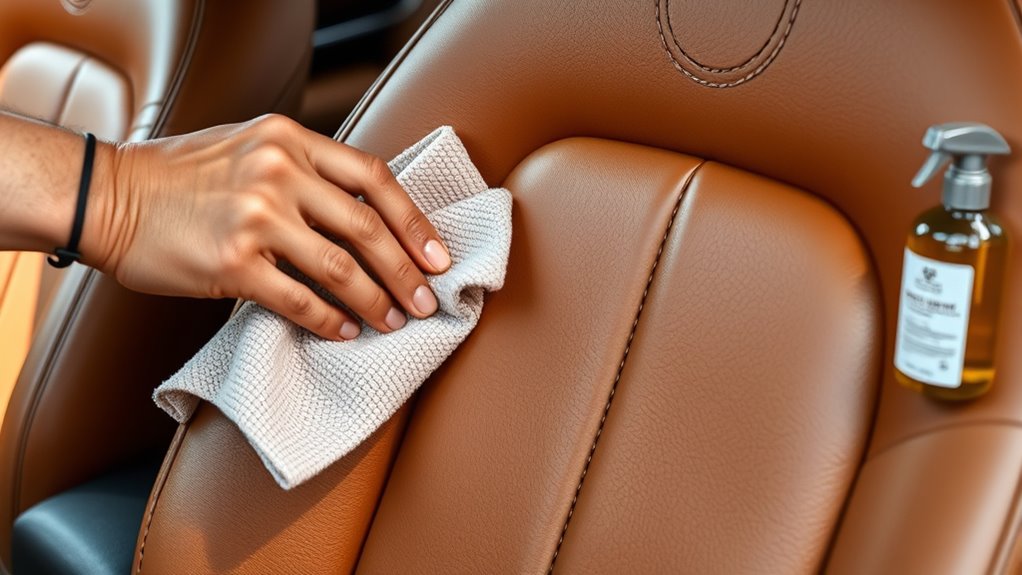
Maintaining the softness and flexibility of your leather car seats requires proper conditioning to prevent drying and cracking. Leather conditioning restores moisture, keeps the surface supple, and prolongs your seats’ lifespan. Incorporate a regular maintenance routine to ensure your leather stays in top shape. Use quality leather conditioners designed specifically for automotive seats, applying them evenly with a soft cloth. Avoid over-conditioning, which can lead to residue buildup. Consistency is key—condition every 3 to 6 months. Here’s a quick guide:
| Step | Action | Frequency |
|---|---|---|
| Cleaning | Remove dirt and oils | Before conditioning |
| Applying Conditioner | Spread evenly and massage in | Every 3-6 months |
| Buffing | Wipe excess for shine | After application |
Stick to these maintenance routines to keep your leather soft and flexible.
Protecting Leather Seats From Sun Damage and Stains
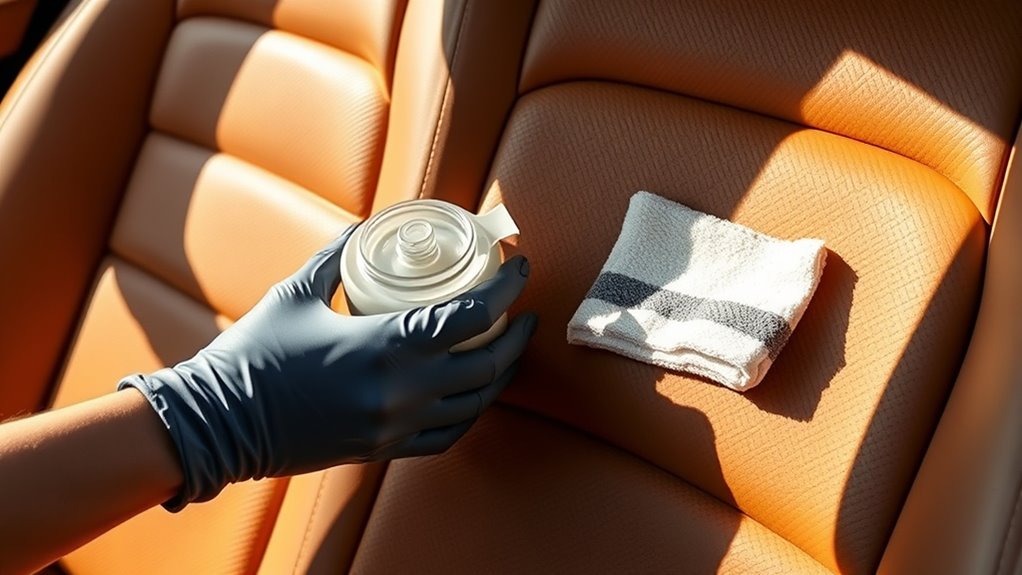
Leather seats are vulnerable to sun damage and stains, but you can protect them effectively with simple measures. Start by applying a quality UV protection spray to block harmful rays and prevent fading. Use sunshades or seat covers when parking in direct sunlight to reduce exposure. Regularly clean your seats to remove dirt that can cause stains, and immediately address spills with a damp cloth for stain prevention. Consider installing window tinting to further block UV rays. Additionally, park in shaded areas whenever possible to minimize sun contact. These steps help preserve your leather’s appearance, keeping it soft and smooth over time. Consistent protection guarantees your leather seats remain stylish and durable, resisting the effects of sun damage and stains.
Regular Maintenance Tips for Long-Lasting Leather

To keep your leather seats looking their best, stick to routine cleaning practices like wiping them down regularly with a gentle cleaner. Preventative care, such as using conditioners and avoiding harsh products, helps sustain the leather’s durability. Consistently following these strategies ensures your seats stay soft, shiny, and protected for years to come.
Routine Cleaning Practices
Ever wonder how to keep your leather car seats looking their best over time? Regular cleaning is key to maintaining their appearance and longevity. First, avoid common leather cleaning myths that can damage your seats, like using harsh chemicals or household cleaners. Instead, stick to gentle, leather-specific products. Incorporate seasonal maintenance tips, such as deep cleaning before winter and conditioning during summer. For routine care, consider these practices:
- Wipe seats weekly with a soft, damp cloth
- Use a microfiber cloth for dust removal
- Apply a leather conditioner every 3-6 months
- Avoid direct sunlight to prevent fading
- Keep spills cleaned immediately to prevent stains
Consistent care prevents dirt buildup and preserves the leather’s softness and shine.
Preventative Care Strategies
Maintaining your leather car seats requires consistent preventative care to guarantee they stay in top condition over time. One key is debunking leather cleaning myths, like the idea that harsh chemicals are necessary or that you should avoid cleaning altogether. Instead, use eco-friendly products designed for leather, which protect the material without harmful residues. Regularly conditioning your seats creates a barrier against cracking and fading, prolonging their lifespan. Keep dirt and debris off the surface to prevent scratches and wear. Avoid excessive cleaning, which can damage the leather. By sticking to gentle, eco-conscious products and routine maintenance, you ensure your seats remain supple and attractive for years. Preventative care isn’t just about cleaning—it’s about preserving the leather’s natural beauty and durability.
Common Mistakes to Avoid When Caring for Leather Seats

One common mistake people make when caring for leather car seats is using harsh cleaners or household products not designed for leather. These improper cleaning methods can strip away the natural oils, causing cracks and fading. To avoid this, steer clear of bleach, ammonia, and abrasive scrubbers. Additionally, don’t forget these common mistakes:
- Using too much water during cleaning
- Skipping regular conditioning
- Applying products not labeled for leather care
- Using old or dirty cloths
- Ignoring test patches before full application
Expert Advice for Restoring and Repairing Leather Damage

When leather seats sustain damage, prompt and proper restoration can considerably extend their lifespan. Start by evaluating the damage carefully. For minor scratches or fading, leather dyeing can restore color and vibrancy. Use a high-quality dye that matches your seat’s color, applying it evenly with a sponge or applicator. For deeper gouges or tears, leather repair kits are your best option. These kits typically include fillers, color compounds, and sealants. Follow the instructions closely to ensure a seamless repair. Be patient during the process, and allow each layer to dry thoroughly. Properly restoring your leather seats not only improves their appearance but also protects against further damage. Regular maintenance and quick repairs keep your seats looking like new longer.
Frequently Asked Questions
How Often Should I Clean My Leather Car Seats?
You should clean your leather car seats at least once a month to maintain their appearance and prevent dirt buildup. A good cleaning schedule guarantees you remove dust, oils, and spills before they cause damage. For high-traffic or if you notice stains, increase the maintenance frequency to every two weeks. Regular cleaning helps preserve the leather’s softness and prevents cracking, keeping your seats looking new longer.
Can I Use Household Products to Clean Leather Seats?
You might think household cleaning products are a quick fix, but they can be harsh on your leather seats, causing damage and dullness. DIY solutions like gentle soap and water or specialized leather cleaners work better and protect your seats’ natural beauty. Instead of risking harm with household products, opt for these safer options to keep your leather seats soft, shiny, and well-maintained.
What Are Signs of Leather Deterioration I Should Watch For?
You’ll notice signs of leather deterioration like cracking, peeling, and especially color fading. These issues indicate your leather needs attention before further damage. If you see cracks or peeling, consider leather repairs to restore integrity. Color fading signals sun damage or wear. Address these signs promptly by cleaning, conditioning, and protecting your seats, which helps prevent worsening deterioration and keeps your leather looking good longer.
Is It Safe to Use a Steam Cleaner on Leather Seats?
Using a steam cleaner on leather seats can be safe if done carefully, but you must verify the steam isn’t too hot or applied directly for too long. Steam cleaning is effective for deep cleaning and maintaining leather, but you should always test a small area first. Proper leather maintenance involves gentle cleaning and conditioning afterward, so avoid excessive moisture that could cause damage or deterioration over time.
How Can I Prevent Leather Seats From Cracking Over Time?
Like a wise old owl, you know prevention is key. To stop your leather seats from cracking over time, regularly apply leather conditioning to keep the material supple and hydrated. Don’t forget UV protection; it shields your seats from sun damage and fading. Consistent maintenance, including cleaning and conditioning, preserves the leather’s flexibility and appearance, ensuring your seats stay smooth and durable for years to come.
Conclusion
With consistent care and gentle attention, your leather seats will continue to tell a story of elegance and resilience. Think of each cleaning as watering a delicate plant—nurturing its natural beauty while shielding it from harsh elements. By following these simple steps, you’ll keep your seats looking as inviting as a sunlit morning, ensuring they remain a smooth, comfortable haven for years to come. Your effort transforms everyday maintenance into a quiet act of preservation.