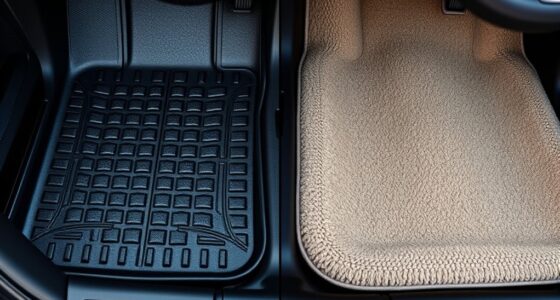

To make your car cabin quieter, start by identifying main noise sources like engine vibrations, exhaust sounds, and wind or tire noise. Choose soundproofing materials with the right density, such as mass-loaded vinyl or foam, and prepare your vehicle by cleaning and removing panels. Apply sound deadening mats carefully, sealing gaps around doors and windows. For more effective noise reduction, explore tips on maintenance and cost-effective upgrades to create a peaceful driving environment.

Get business pricing on garage and car supplies
- Business-only prices and quantity discounts
- Tax-exempt purchasing
- Multiple users, one account, clear invoices
Key Takeaways
- Identify primary noise sources like engine vibrations and exhaust leaks to target effective soundproofing efforts.
- Choose appropriate soundproofing materials based on weight, density, and compatibility with vehicle surfaces.
- Prepare vehicle surfaces by cleaning, removing panels, and measuring insulation for proper installation.
- Apply soundproofing materials firmly, sealing gaps and using rollers to eliminate air pockets for optimal damping.
- Maintain and upgrade insulation regularly, sealing leaks and adding additional layers for improved cabin quietness.
Understanding the Basics of Car Noise

Understanding the basics of car noise is essential if you want to effectively reduce it. Car noise varies across different audio frequencies, which influence how you perceive sound inside the cabin. Low-frequency sounds, like engine rumble and road vibrations, create deep, resonant noise pollution that’s often felt more than heard. High-frequency noises, such as tire squeals or wind whistling, tend to be sharper and more irritating. Recognizing these frequency ranges helps you identify which types of noise need the most attention. By understanding how audio frequency contributes to overall noise pollution, you can target your soundproofing efforts more efficiently. For example, Free Floating techniques can be used to absorb or deflect specific sound waves, making your driving experience quieter and more comfortable. This knowledge allows you to choose the right materials and techniques to block or dampen specific sound waves, making your driving experience quieter and more comfortable. Additionally, understanding the sound absorption properties of various materials can help you select the most effective soundproofing solutions for your vehicle. Knowing about acoustic treatments can further enhance your ability to customize your soundproofing strategy for optimal results, especially when selecting materials with the best soundproofing effectiveness. Exploring different soundproofing materials can provide more options tailored to your specific needs and noise issues.
Identifying Common Sources of Cabin Noise

Have you ever wondered where most of the noise inside your car comes from? Typically, engine vibrations and exhaust noise are the primary culprits. Engine vibrations happen when the engine runs, transmitting shocks through the chassis, which amplifies noise inside the cabin. You might notice rattling or humming sounds during acceleration or idling. Exhaust noise, on the other hand, originates from the exhaust system, producing loud sounds if there’s a leak or damage. These noises can make your drive less comfortable and harder to enjoy. Recognizing these common sources helps you target your soundproofing efforts more effectively. By addressing engine vibrations and exhaust noise, you can markedly reduce the overall cabin noise, making your ride quieter and more pleasant. Understanding how vibration damping works can further enhance your soundproofing strategies. Additionally, incorporating sound-absorbing materials into your vehicle’s interior can significantly decrease noise levels and improve acoustic comfort. Using mass-loaded vinyl barriers is another effective technique to add weight and block sound transmission through panels. Implementing proper installation planning ensures that soundproofing measures are both effective and durable over time. For optimal results, considering the publications on soundproofing methods can also provide valuable insights.
Choosing the Right Soundproofing Materials
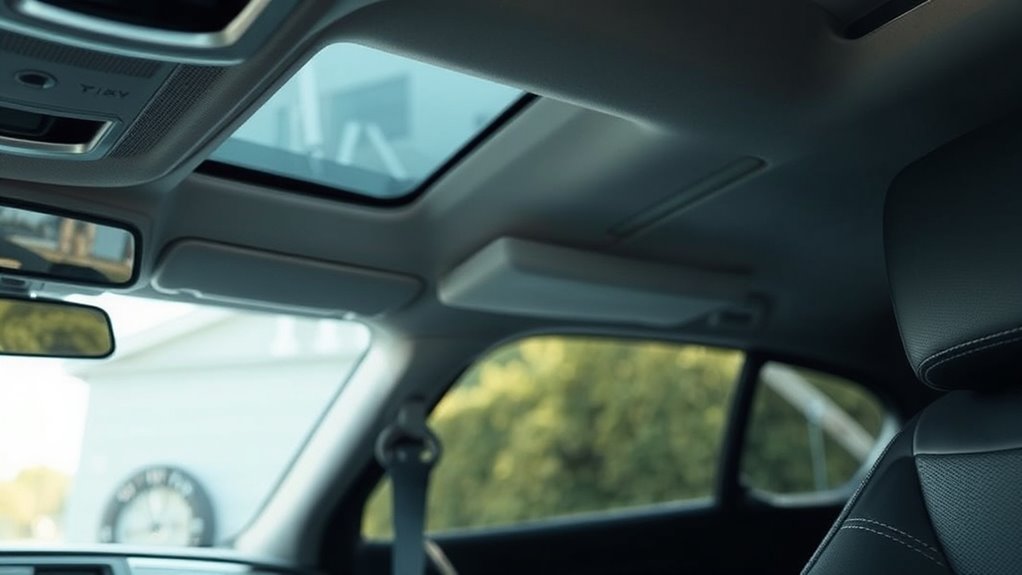
When selecting soundproofing materials, consider their density and weight to guarantee they effectively block noise without adding too much bulk. The weight of materials can influence your vehicle’s overall performance, especially if used extensively. The weight of these materials may also affect vehicle efficiency, so choosing lightweight options can benefit your driving experience. You also want options that are compatible with your car’s surfaces and easy to install, so the process stays straightforward. Balancing these factors helps you choose the best materials for a quieter, more comfortable ride. Incorporating auditory processing considerations can also improve the overall acoustic environment inside your vehicle. Additionally, understanding the horsepower of electric bikes can shed light on how different soundproofing measures might impact vehicle performance and noise levels. Recognizing the regional differences in vehicle usage and noise regulations can help tailor your soundproofing approach for optimal results. Considering material durability can ensure your soundproofing lasts through varying conditions, maintaining effectiveness over time.
Material Density and Weight
Choosing the right soundproofing materials depends heavily on their density and weight, as these factors directly influence their ability to block sound effectively. Higher material density generally means better sound insulation, but increased weight considerations can affect installation and vehicle balance. You should evaluate how much weight your vehicle can handle without compromising safety or performance. For example, incorporating water-related elements like hydrotherapy materials can sometimes add weight, so consider how such additions might impact your vehicle’s dynamics. Additionally, understanding material weight distribution can help optimize both soundproofing effectiveness and vehicle handling. It’s also important to consider how mass-loaded vinyl can provide excellent soundproofing with manageable weight, making it a popular choice among enthusiasts. Consider these points:
- Dense materials like mass-loaded vinyl provide excellent soundproofing with manageable weight.
- Heavier options may require reinforced mounting to prevent sagging or detachment.
- Balance soundproofing benefits against added weight to avoid unnecessary strain on vehicle components.
- Lighter materials may be easier to install but might offer less sound attenuation, so choose wisely based on your priorities.
- The density of materials is a key factor in their ability to reduce noise transmission efficiently.
Compatibility and Ease of Installation
Selecting soundproofing materials that are compatible with your vehicle and easy to install can save you time and frustration. Compatibility issues often arise when materials don’t fit or adhere properly, leading to ineffective soundproofing or damage. To avoid this, check manufacturer recommendations and ensure the materials suit your car’s make and model. Ease of installation matters because complicated setups can deter you from completing the job or cause mistakes. Look for products with clear instructions, self-adhesive backing, or simple cutting requirements. Choosing materials that are compatible and straightforward to install not only streamlines the process but also improves the quality of your soundproofing. When in doubt, consult with experts or forums to verify compatibility and get tips for a smoother installation experience.
Preparing Your Vehicle for Soundproofing

Before you start soundproofing your vehicle, it is vital to thoroughly prepare the space. Clearing out clutter ensures you have easy access to all areas needing insulation. Remove seats, panels, and carpets to inspect for existing damage or rust. Don’t fall for soundproofing myths—many believe extra layers always mean better soundproofing, but proper vehicle insulation is key. Check the condition of your roof, doors, and floors, and repair any leaks or holes. Clean surfaces thoroughly to guarantee adhesives bond properly. This prep step helps prevent future issues and maximizes the effectiveness of your soundproofing efforts. Additionally, verify the ventilation considerations to ensure proper airflow and prevent moisture buildup, which could compromise the insulation and interior condition. Incorporating smart home technology solutions can also help monitor and maintain optimal interior conditions, ensuring your vehicle remains comfortable and protected over time. Being aware of moisture control strategies is essential to prevent mold and deterioration in your insulated vehicle. To further enhance durability, consider inspecting the vehicle’s electrical systems to ensure safety during the insulation process.
Step-by-Step Guide to Applying Sound Deadening Products

Applying sound deadening products requires careful attention to detail to guarantee maximum effectiveness. Start by cleaning the surface thoroughly to ensure proper adhesion. Measure and cut the audio insulation materials to fit each panel precisely, avoiding overlaps or gaps. Peel off the backing and press the sound deadening mats firmly onto the metal surface, focusing on areas prone to vibration damping, like door panels and the floor. Use a roller to eliminate air bubbles and ensure full contact. Proper application reduces vibrations and absorbs noise, creating a quieter cabin. Pay close attention to corners and edges, sealing gaps for ideal soundproofing. Take your time during installation; careful placement maximizes the benefits of vibration damping and enhances overall noise reduction. Incorporating attention to detail can significantly improve the effectiveness of your soundproofing efforts. Integrating smart tools can help monitor noise levels during the process to ensure optimal results.
Additional Tips for Reducing Wind and Tire Noise

To cut down on wind and tire noise, start by sealing any gaps and leaks around your doors and windows. Upgrading your window glazing to double or triple-pane glass can make a big difference. These simple steps help create a tighter, quieter cabin.
Seal Gaps and Leaks
Sealing gaps and leaks is one of the most effective ways to reduce wind and tire noise inside your vehicle. Over time, door seals and weather stripping can wear out or become damaged, allowing noise to enter. Replacing or reinforcing these seals creates a tighter barrier, substantially minimizing sound infiltration.
- Inspect door seals for cracks or gaps regularly
- Replace worn weather stripping promptly
- Use high-quality adhesive to secure loose seals
- Consider adding extra sealant around door edges for enhanced insulation
Upgrade Window Glazing
Upgrading your window glazing is a highly effective way to reduce wind and tire noise inside your vehicle. Installing double glazing provides an extra layer of insulation, dampening external sounds more efficiently than single-pane windows. This upgrade minimizes vibrations caused by wind turbulence and road noise, making your cabin quieter. Additionally, consider window tinting, which not only blocks UV rays and reduces glare but also enhances soundproofing by adding another barrier against noise infiltration. Quality window tinting can complement double glazing, further decreasing the transmission of external sounds. Together, these upgrades profoundly improve your driving comfort by creating a more peaceful interior environment. Investing in upgraded window glazing is a smart step toward a quieter, more enjoyable ride.
Maintenance and Longevity of Soundproofing Materials

Proper maintenance is essential to guarantee your car’s soundproofing materials last and perform effectively over time. Regularly inspecting for damage or wear helps preserve material durability and ensures maximum noise reduction. To extend the lifespan of your soundproofing, follow these maintenance tips:
- Keep the interior clean, avoiding excessive moisture that can degrade materials
- Address leaks promptly to prevent water damage and mold growth
- Avoid sharp objects that could puncture or tear insulation layers
- Use gentle cleaning methods, such as vacuuming or soft brushes, to prevent dislodging soundproofing layers
Cost-Effective Strategies for Enhancing Cabin Quietness
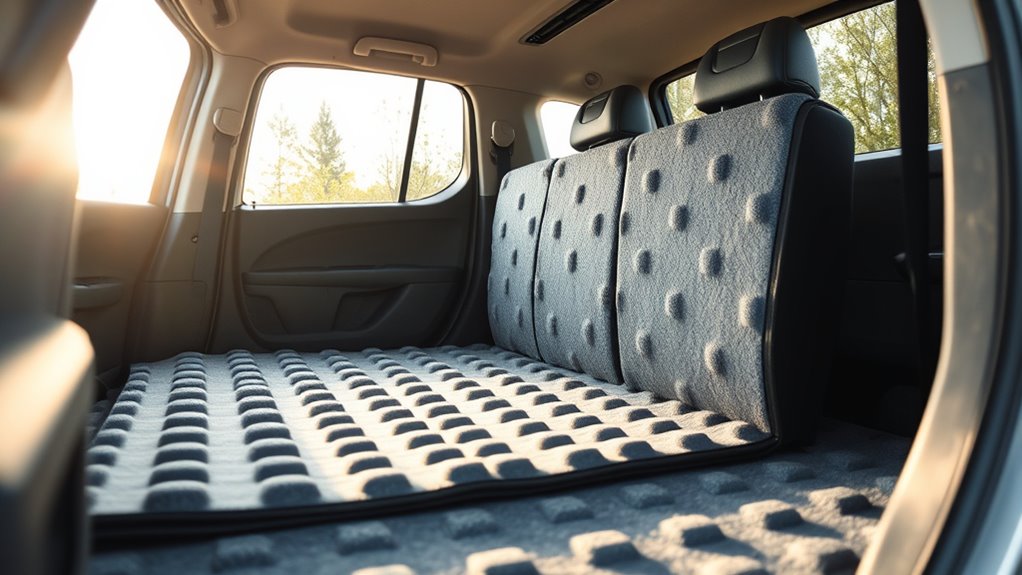
To improve your car’s cabin quietness without breaking the bank, start by focusing on simple, affordable modifications that make a noticeable difference. DIY soundproofing is a cost-effective approach you can easily tackle. Use eco-friendly options like recycled foam or natural wool insulation to add sound absorption. Sealing gaps around doors and windows with weatherstripping or acoustic tape also reduces noise infiltration. You can even add mass-loaded vinyl sheets over existing panels for extra soundproofing. Here’s a quick comparison:
| Method | Cost & Ease | Effectiveness |
|---|---|---|
| Weatherstripping | Low, simple DIY | Moderate noise reduction |
| Recycled foam insulation | Eco-friendly, affordable | Good sound absorption |
| Mass-loaded vinyl | Moderate, DIY-friendly | High soundproofing |
These strategies are budget-friendly and eco-conscious, helping you enjoy a quieter ride.
Frequently Asked Questions
How Often Should I Reapply Soundproofing Materials?
You should reapply soundproofing materials every 5 to 10 years, depending on your maintenance schedule and material longevity. Regular inspections help identify wear or damage that can reduce effectiveness. If you notice increased noise or deterioration, it’s time for reapplication. Keep in mind that high-quality materials tend to last longer, so investing in durable options can extend the intervals between reapplications and maintain a quieter cabin.
Can Soundproofing Affect My Vehicle’s Warranty?
Soundproofing your vehicle can affect your warranty if it impacts warranty coverage or involves modifications that void warranty terms. To avoid warranty implications, verify the soundproofing materials are compatible with your car and follow the manufacturer’s guidelines. Always check your vehicle’s warranty details before applying any materials, and consider consulting your dealer to confirm that your soundproofing efforts won’t void your warranty or cause damage.
Are There Eco-Friendly Soundproofing Options Available?
Yes, eco-friendly soundproofing options are available that won’t compromise your vehicle’s sustainability goals. You can choose materials like recycled cotton, hemp, or soy-based products, which are sustainable and eco-friendly. These options help reduce your environmental footprint while effectively dampening noise. By opting for sustainable materials, you enjoy a quieter ride and contribute positively to the planet, making your car both peaceful and eco-conscious.
Will Soundproofing Reduce My Car’s Resale Value?
Soundproofing generally won’t negatively impact your car’s resale value if done properly, and it might even enhance it by adding comfort. However, poor installation or excessive modifications could raise resale impact concerns among buyers. Consider value considerations carefully—use quality materials and professional installation to guarantee your soundproofing benefits your car without detracting from its resale appeal. Ultimately, thoughtful upgrades can improve your driving experience and retain your vehicle’s worth.
Is Professional Installation Necessary or Can I Do It Myself?
You can definitely try soundproofing your car yourself, but it’s a bit of a double-edged sword. DIY tips can save you money and give you a sense of accomplishment, yet professional benefits often mean better results and longer-lasting quiet. If you’re handy and patient, give it a shot; otherwise, hiring a pro guarantees the job’s done right the first time. Sometimes, it’s better to bite the bullet and call in experts.
Conclusion
By following these steps, you’ll turn your car into a peaceful sanctuary on wheels. Think of soundproofing as giving your vehicle a gentle shield, blocking out the chaos of the outside world. With the right materials and a little effort, you’ll enjoy quieter drives and a more comfortable ride. So, roll up your sleeves and create your personal oasis—because a peaceful cabin is just a few steps away, waiting to be accessed.
Fall Picks
fall essentials
As an affiliate, we earn on qualifying purchases.