TL;DR

Get business pricing on garage and car supplies
- Business-only prices and quantity discounts
- Tax-exempt purchasing
- Multiple users, one account, clear invoices
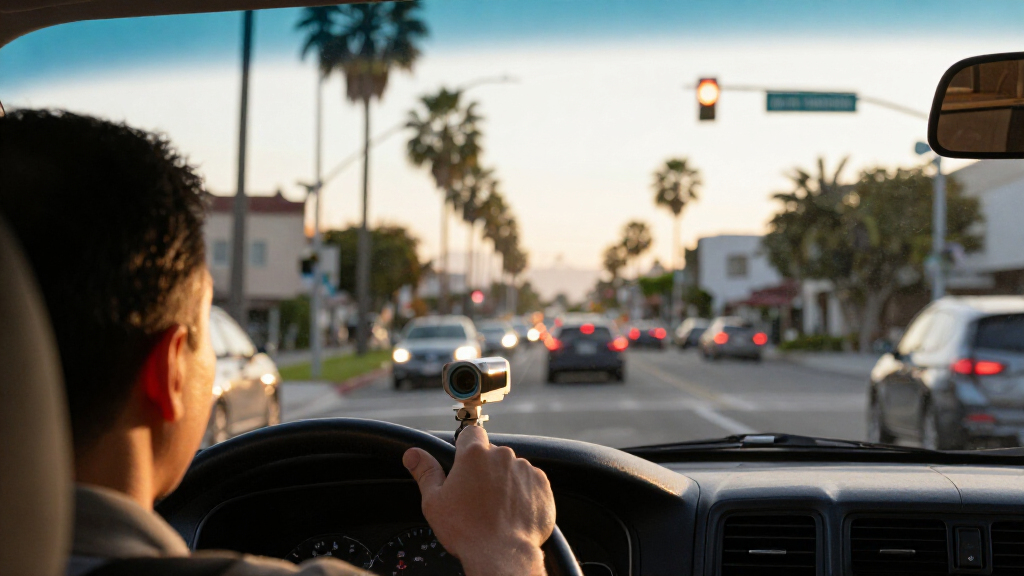
Los Angeles has switched on its first 25 speed cameras, with plans to expand the network to 125 by the end of the year. For the first 60 days, drivers photographed going at least 11 mph over the limit will receive warnings; citations are expected afterward, with fines ranging from $50 to $500 based on speed.
Los Angeles activated its first 25 speed cameras on Monday, starting a 60-day warning period before drivers photographed speeding can receive citations. After the warning period, planned fines range from $50 to $500, depending on how far above the posted limit a vehicle is traveling.
The cameras record vehicles traveling 11 mph or more over the posted speed limit, according to The Drive’s report. Drivers caught during the first 60 days are set to receive warnings rather than fines. The report says citations will be issued after that period, although it does not give a specific first mailing date.
The reported fine schedule is $50 for 11–15 mph over, $100 for 16–25 mph over, and $200 for 26–99 mph over. The maximum listed penalty is $500 for driving more than 100 mph over the limit. The Drive said NBC 4 Los Angeles published a list and interactive map of the first 25 camera locations.
The city plans to expand the network to 125 cameras by the end of the year. The Los Angeles Department of Transportation announced the Speed Safety Systems Program earlier this year. The program is planned as a five-year pilot, after which the city intends to report to the state Legislature on its safety and economic impacts.
How Automated Enforcement Could Affect Drivers
The immediate effect for drivers is a new form of automated speed enforcement at the cameras’ locations. During the initial 60-day period, a detected violation is expected to result in a warning; after that, the stated schedule could bring a fine of up to $500 for the highest listed speed category. The report does not specify how the city will notify vehicle owners or how any citation can be challenged.
LADOT says the purpose is to address dangerous driving and reduce severe crashes. The department reported that around one in five fatal crashes in Los Angeles in 2024 was directly attributed to speeding. That statistic is the city agency’s characterization; the source material does not provide an independent analysis of the crash data or establish how much of any future change would be caused by the cameras.
The program’s five-year evaluation will matter beyond individual fines. Its planned report is intended to assess safety and economic impacts, giving the city and state a basis to judge the system’s results. Until that evaluation is available, the expected effect on crashes, driver behavior and household costs remains to be measured.
Products Worth Considering

Chemical Guys 14-Piece Arsenal Builder Car Wash Kit with Foam Blaster

DEWALT 20V MAX XR Impact Driver, 1/4 Inch High Torque Brushless 3-Speed Cordless with LED Light, Extended Runtime (DCF845B)

DEWALT 20V MAX 1/4-Inch Impact Driver Kit with Battery and Charger (DCF787D1)
As an affiliate, we earn on qualifying purchases.
A Five-Year Pilot Starts in Los Angeles
The camera rollout follows LADOT’s announcement of the program earlier this year. The first 25 units are now active, with a larger network planned by year’s end. The initial warning period gives drivers time to learn that the cameras are operating before the city begins issuing monetary penalties, according to the report.
LADOT has cited results from elsewhere as a reason for using the technology. The department said early data showed a 72% reduction in speeding in San Francisco after speed cameras were introduced. The source material does not specify the measurement period, the definition of speeding used, or the comparison baseline behind that figure, so it should not be treated as a direct forecast for Los Angeles.
In its description of the program, LADOT said speeding is a leading cause of serious injuries and deaths on city streets. The department says the system is intended to increase accountability for excessive and chronic speeding and encourage safer driving. Those are the program’s stated aims, not outcomes yet established by the Los Angeles cameras.
“Speeding is one of the leading causes of serious injuries and deaths on our streets.”
— Los Angeles Department of Transportation
Citation Details Still Need Clarification
The source report does not identify the exact calendar date when the first cameras were activated, the date warnings will end, or when the first citations will be mailed. It also does not provide the locations in its text; readers are directed to a location list and interactive map published by NBC 4 Los Angeles.
Further operational details are not included, including how vehicle owners will receive and contest citations, what evidence will accompany a notice, and how the program will handle mistaken or disputed readings. The account also does not explain how the more-than-100-mph-over category will be applied in practice. The planned expansion to 125 cameras is a city plan; the report does not confirm installation dates for each additional unit.
Finally, the reported San Francisco reduction is not accompanied by its measurement window or baseline in the supplied material. Los Angeles’s own pilot has only just begun, so its effects on speeding and collisions are not yet known.
Warnings Before Paid Citations Begin
Drivers should expect a warning period lasting 60 days from activation, followed by citations under the reported fine schedule. Because the source does not give the activation date or a mailing date, the precise end of the warning period cannot be calculated from the report alone. The city’s next stated expansion target is 125 operating cameras by year’s end.
Over the longer term, Los Angeles plans to run the program as a five-year pilot and report its safety and economic impacts to the state Legislature. That assessment is the next major point at which the city’s stated goals can be compared with reported outcomes. Details about the evaluation method and interim performance measures were not provided in the source material.
Key Questions
When will Los Angeles start mailing speed-camera tickets?
The first 60 days after activation are a warning period, according to The Drive’s report. It says citations will follow, but does not provide the exact mailing date or the calendar date the warning period ends.
How fast must a driver be going to trigger a camera?
The cameras are reported to photograph vehicles traveling 11 mph or more above the posted speed limit. The first 60 days are for warnings rather than fines.
How much are the reported fines?
The reported schedule is $50 for 11–15 mph over, $100 for 16–25 mph over, and $200 for 26–99 mph over. The listed fine for more than 100 mph over the limit is $500.
Where are the first 25 cameras?
The source report says NBC 4 Los Angeles published a list and interactive map of the initial locations. The supplied report does not reproduce the location list.
How many speed cameras does Los Angeles plan to install?
The city plans to have 125 cameras operating by the end of the year, according to The Drive. The source does not give a schedule for each installation.
Source: thedrive.com