Vinyl wraps give you more color choices, custom designs, and an easy way to change your vehicle’s look without damaging the original paint. They’re quicker and simpler to install, and easier to maintain, with less risk of scratches. While wraps are reversible and protect your paint, traditional paint can enhance your vehicle’s value but is more costly and time-consuming to apply. Curious about which option suits your style best? Keep exploring to find out more.
Key Takeaways
- Vinyl wraps offer a wider range of colors, designs, and easier customization compared to traditional paint.
- Wraps are quicker and less invasive to install, while paint typically requires longer, more involved processes.
- Vinyl wraps are more resistant to scratches and easier to maintain, needing only simple cleaning methods.
- Wraps are reversible and protect the original paint, helping preserve resale value better than some paint jobs.
- Wraps provide greater flexibility for temporary or frequent style changes without damaging the vehicle’s surface.

USANOOKS Microfiber Cleaning Cloth Grey - 12 Pcs (12.5"x12.5") - High Performance - 1200 Washes, Ultra Absorbent Microfiber Towel Weave Grime & Liquid for Streak-Free Mirror Shine - Car Washing Cloth
- High Absorbency Microfiber: Locks in 8-10x its weight in liquids
- Durable 2.5mm Thickness: Resists lint, scratches, and shedding
- Long-Lasting Use: Over 1200 washes for extended durability
As an affiliate, we earn on qualifying purchases.
Visual Appeal and Customization Options

When it comes to visual appeal and customization, vinyl wraps offer a wider range of options compared to traditional paint. You can choose from countless color options, including matte, gloss, satin, or metallic finishes, giving your vehicle a unique look. Design versatility is another major advantage; vinyl wraps allow for intricate patterns, images, or even custom graphics that paint can’t easily replicate. With wrapping, you’re not limited to solid colors or simple designs—you can create a one-of-a-kind look that perfectly matches your style. Plus, if you want to change your design later, vinyl wraps are easily removable, making updates simple. This flexibility guarantees your vehicle stands out and reflects your personality more effectively than traditional paint. Additionally, vinyl wraps can provide an extra layer of protective layer for your vehicle’s original paint, helping to preserve its value over time. The ability to easily remove and replace wraps also means you can experiment with different styles without a permanent commitment customization options. Moreover, advances in wrap technology continue to improve durability and appearance, making wraps an increasingly popular choice. As innovations in wrapping materials evolve, the overall quality and longevity of vinyl wraps are expected to keep improving. Furthermore, color accuracy and the wide color gamut of wraps ensure vibrant and consistent hues that can be tailored to your preferences.

Amazon Basics Microfiber Car Drying Towels, Highly Absorbent, Lint Free, Scratch Free, Ultra-Soft, Car Detailing, Buffing and Polishing, 16" x 16", Yellow, 12-Pack
- Pack Size: 12 towels per pack
- Towel Dimensions: 16 x 16 inches
- Design: Double-sided microfiber
As an affiliate, we earn on qualifying purchases.
Cost and Installation Process
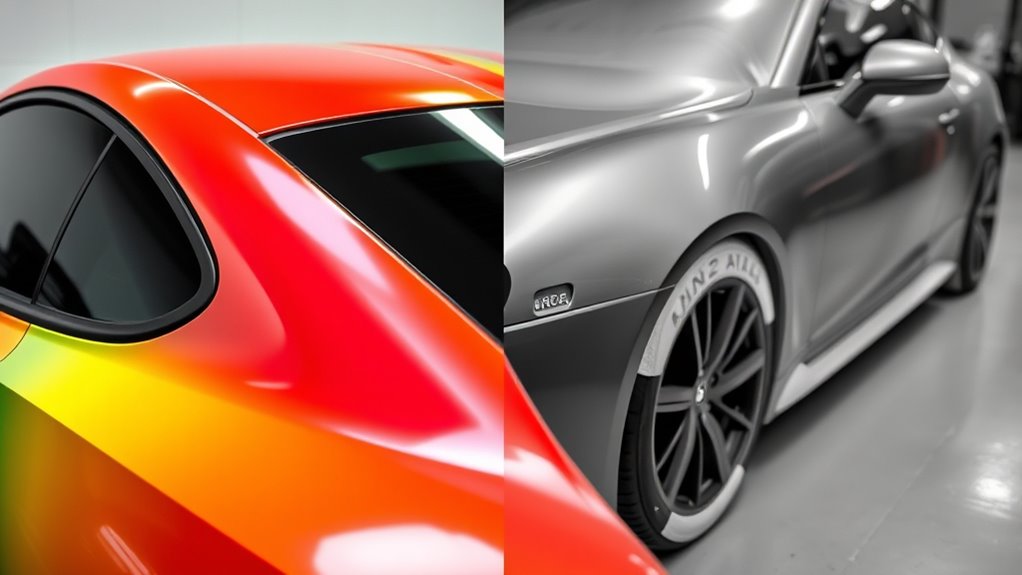
Vinyl wraps generally have a higher upfront cost compared to traditional paint, but they often save you money over time due to their ease of application and removability. When considering the cost comparison, vinyl wrapping can be more economical if you plan to change your vehicle’s look frequently. The installation process for wraps is less complex than traditional paint, often taking a few days and requiring less prep work. You can usually get a professional to install a vinyl wrap more quickly and without the extensive surface preparation needed for paint. However, the initial investment for wrapping might be higher, especially with premium finishes. Overall, the installation complexity favors wraps for a faster, less invasive process, but costs vary depending on the quality and size of your vehicle. Additionally, proper surface preparation and ventilation are important to ensure a smooth, durable finish, especially since the application process typically involves fewer steps than traditional painting. Proper surface preparation also helps prevent issues like bubbling or peeling over time, and understanding adhesion techniques can further enhance the durability of the wrap. Furthermore, selecting the right material quality can significantly impact the longevity and appearance of the wrap over time.

HOMEXCEL Microfiber Cleaning Cloth 12 Pack, 12.5 x 12.5 inch Microfiber Towels for Cars, Ultra Absorbent Washing Cloth, Lint Free Streak Free Cleaning Rags for Car, Kitchen, and Window (Grey)
- High Water Absorption: Excellent at absorbing dirt and liquids
- Gentle on Surfaces: Soft fabric prevents scratches and damage
- Fast Drying: Quickly absorbs water for streak-free drying
As an affiliate, we earn on qualifying purchases.
Durability and Maintenance Requirements
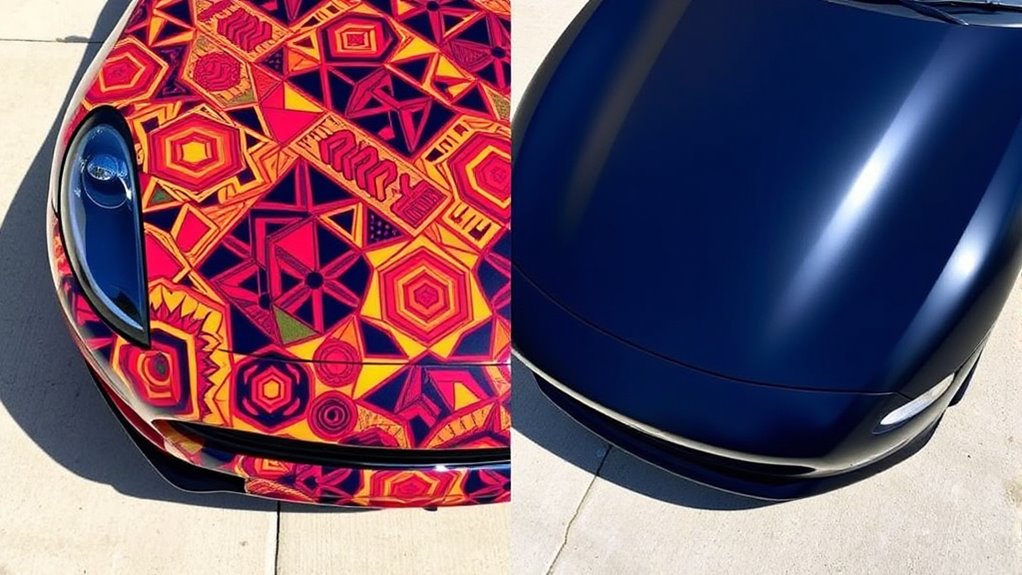
While both vinyl wraps and traditional paint offer durable finishes, their maintenance requirements differ considerably. Vinyl wraps generally have better resistance to scratches, making them easier to maintain without worried about minor abrasions. They’re also simple to clean; a quick wash with soap and water keeps the wrap looking fresh. Traditional paint, on the other hand, can be more susceptible to scratches and chips, requiring careful washing and occasional touch-ups to maintain its appearance. Paint also demands more regular waxing and polishing to preserve its shine and protect the surface. Overall, vinyl wraps tend to be lower maintenance and easier to keep looking new, whereas traditional paint may need more frequent upkeep to sustain its durability and finish. Additionally, cleaning and maintenance techniques for each surface can influence their longevity and appearance over time, especially considering surface protection strategies. Proper surface preparation before applying paint or wrap is essential for optimal adherence and durability, which can significantly impact long-term finish durability. Implementing proper maintenance routines can further extend the lifespan of either finish and keep your vehicle looking its best over the years.

DEFNES Pickup Truck Crane, 3000 LBS Truck Bed Hoist with 12V Winch
- 【13" x 13" Extra-Wide Stable Base】 This truck bed crane features a 13" x 13" extra-wide base, a key advantage for safe operation: It greatly increases the contact...
- 【3-Speed Adjustable Arm & Height】 This jib crane offers high operational flexibility with 3-speed adjustable design: The arm length supports 3-speed...
- 【360° Full-Rotation Maneuverability】 This truck mounted crane is equipped with 360° full-rotation capability, significantly enhancing operational efficiency: It enables complete maneuverability and...
As an affiliate, we earn on qualifying purchases.
Impact on Vehicle Value and Resale

The choice between vinyl wraps and traditional paint can considerably influence your vehicle’s resale value. If you plan to lease your car or sell it in the near future, consider how each option affects lease longevity and resale impact. Vinyl wraps are reversible and typically don’t damage the original paint, which can preserve the vehicle’s appeal to future buyers. Additionally, poorly applied or heavily customized wraps might lower resale value. Traditional paint, especially if professionally done, often adds to a vehicle’s classic appeal and may boost resale value, but chips or scratches can diminish its worth over time. Moreover, understanding vehicle finish terminology and informal language can help you better communicate the condition and modifications of your vehicle when discussing it with potential buyers. Also, market preferences for certain finishes or styles can influence how much buyers are willing to pay. Ultimately, your decision can impact how much you recoup when selling or trading in the vehicle, so weigh the longevity and market demand for different vehicle finishes carefully.
Flexibility and Reversibility

If you’re looking for a vehicle modification that offers greater flexibility, vinyl wraps stand out because they can be removed without damaging the original paint. This makes them ideal for a temporary change, allowing you to switch up your vehicle’s look whenever you want. Vinyl wraps provide excellent design flexibility, enabling complex graphics and custom patterns that can be easily applied or removed. Unlike traditional paint, which is permanent and costly to alter, wraps give you the freedom to experiment with different styles without long-term commitment. When you decide to revert to the original look, simply peel off the wrap. This reversibility makes vinyl wraps a convenient and versatile option if you value adaptability in your vehicle’s appearance. Additionally, advances in air fryer technology have emphasized the importance of innovative solutions that prioritize flexibility and customization.
Frequently Asked Questions
How Long Does a Vinyl Wrap Typically Last Before Replacement?
A vinyl wrap typically lasts between 5 to 7 years before needing replacement, depending on factors like climate and maintenance requirements. You should regularly wash and avoid harsh chemicals to extend its durability comparison with traditional paint. Proper care helps prevent fading and peeling, ensuring your wrap stays vibrant longer. If you notice significant damage or wear, it’s time for a replacement to keep your vehicle looking sharp.
Can Vinyl Wraps Be Removed Without Damaging the Original Paint?
Yes, you can remove vinyl wraps without causing paint damage if the removal process is done correctly. You should heat the wrap to soften the adhesive, then carefully peel it back to avoid scratching or peeling the paint. Rushing or using sharp tools can damage your original paint, so it’s best to have a professional handle the removal. Proper technique guarantees your paint stays pristine, and the wrap comes off smoothly.
Are There Environmental Benefits to Wrapping Versus Painting?
You might think wrapping your car is more eco-friendly than painting, and there’s some truth to it. Vinyl wraps often use eco-friendly materials and require fewer chemicals, reducing environmental impact. Plus, they’re removable, allowing you to change designs without repainting, which cuts down waste. However, consider the lifecycle of the materials used. Overall, wrapping can be a greener option, especially if you choose sustainable, eco-friendly options.
Does Wrapping Affect the Vehicle’s Warranty Coverage?
Wrapping your vehicle generally doesn’t void your warranty, but warranty implications depend on your manufacturer’s policies. You should check coverage concerns, as some warranties may exclude damage caused by improper installation or removal of the wrap. Always choose a professional installer and inform your dealer about the wrap to avoid potential issues. This way, you protect your vehicle’s warranty coverage while enjoying the benefits of wrapping.
How Does Climate Influence the Longevity of Wraps and Paint?
Climate effects and weather resilience directly impact how long your wrap or paint lasts. Hot, sunny climates can cause fading and cracking quicker, while cold, humid environments may lead to peeling or mold growth. You’ll notice that wraps tend to be more sensitive to extreme conditions, losing their vibrancy faster, but good quality paint often withstands harsh weather better. Regular maintenance and choosing the right materials can help extend their lifespan in any climate.
Conclusion
Choosing between vinyl wrap and traditional paint depends on what matters most to you—cost, look, or longevity. Do you want the freedom to change your car’s style easily, or prefer a classic finish that lasts? Think about how each option fits your lifestyle and car goals. Whichever you pick, make sure it reflects your personality and keeps your ride looking amazing. After all, isn’t your car an extension of who you are?