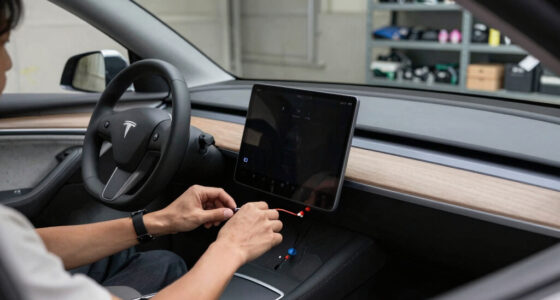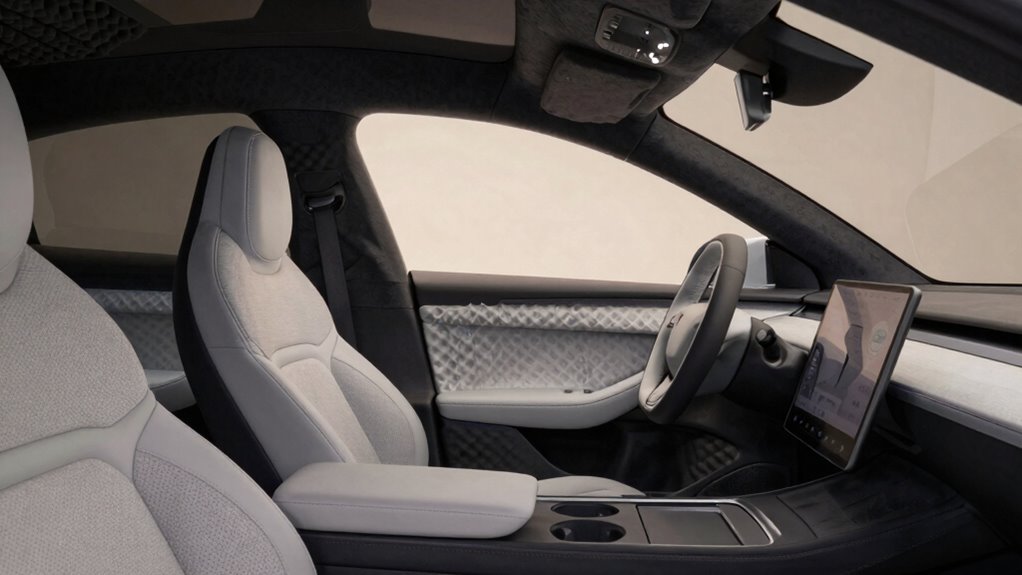

To reduce cabin noise in an electric vehicle, start by adding soundproof mats and foam panels under carpets and inside door panels to absorb vibrations. Seal gaps around windows and doors with weather stripping or sealants to block external sounds. Upgrading to acoustic or laminated windows can markedly dampen noise. For extra insulation, add mass-loaded vinyl or dense mats to key surfaces. Combining these soundproofing methods improves comfort—continue exploring to discover even more effective strategies.
Key Takeaways
- Upgrade to acoustic glass windows to dampen external noise effectively.
- Add soundproof mats and foam panels inside doors, carpets, and trunk for better insulation.
- Seal gaps around windows, doors, and panels with weather stripping or sealants to prevent noise entry.
- Install mass-loaded vinyl or dense mats on floors and doors to increase surface density and block external sounds.
- Regularly inspect and maintain seals and insulation to sustain a quiet cabin environment.
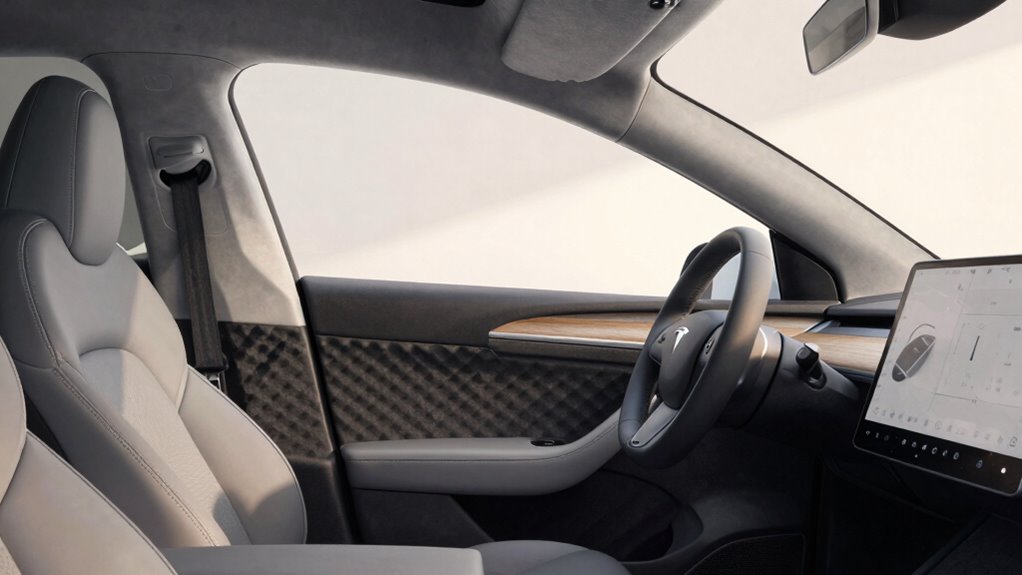
Electric vehicles are becoming more popular, but many still struggle with cabin noise that can detract from the driving experience. Unlike traditional cars, EVs operate more quietly, but other sources of noise—like road and tire sounds—become more noticeable without engine noise masking them. To improve your ride, you can implement soundproofing techniques, which involve blocking or absorbing unwanted sounds inside the cabin. One effective way to start is by enhancing your vehicle’s interior insulation. Adding soundproof mats or foam panels beneath the carpets, inside door panels, and in the trunk can markedly reduce road noise. These materials absorb vibrations and prevent external sounds from penetrating the cabin, making your drive quieter and more comfortable.
Enhance your EV’s comfort by adding soundproof mats and foam panels to reduce road noise and vibrations.
You should also pay attention to gaps and leaks around windows, doors, and panels. Sealing these with weather stripping or specialized sealants prevents noise from entering through small openings. This simple step can make a noticeable difference, especially at higher speeds. Additionally, consider upgrading your window glass if you want a more substantial reduction in sound. Acoustic glass or laminated windows feature layers that dampen sound transmission, creating a quieter environment inside your vehicle. While these upgrades may involve some investment, they’re highly effective for long-term noise reduction.
Another soundproofing technique involves adding mass to key areas of your vehicle’s interior. For example, installing mass-loaded vinyl or dense soundproofing mats on the floors, roof, and doors can help block external noise. These materials work by increasing the overall density of surfaces, making it harder for sound waves to pass through. It’s important to focus on the doors, since they tend to be major conduits for noise. Reinforcing door panels with additional insulation or mass can noticeably diminish the sounds from outside and from the road. Additionally, understanding vehicle soundproofing can help you choose the most effective materials and strategies for your specific model. Incorporating soundproofing techniques used in home theatre projectors, such as damping and insulation, can further enhance noise reduction in your vehicle. Proper installation is crucial, so ensuring that all soundproofing materials are tightly sealed and properly adhered is vital for maximum effectiveness. Loose or poorly installed insulation can create gaps that allow noise to seep in. Regular maintenance and inspection of seals and insulation can keep your cabin quieter over time. Being aware of soundproofing materials can guide you in selecting the best options for your needs. Additionally, researching sound absorption techniques can contribute to a more balanced and effective noise reduction strategy. By combining these soundproofing techniques and upgrading interior insulation, you’ll enjoy a more peaceful, serene driving experience. It’s a worthwhile investment that enhances comfort, reduces fatigue, and lets you focus on the road ahead, all while enjoying the full benefits of your electric vehicle’s quiet operation.
soundproof mats for car interior
As an affiliate, we earn on qualifying purchases.
As an affiliate, we earn on qualifying purchases.
Frequently Asked Questions
How Does Tire Pressure Affect Cabin Noise in Electric Vehicles?
Tire pressure substantially affects cabin noise in electric vehicles. When you maintain proper tire pressure, you reduce the vibrations and rolling resistance, leading to less noise inside the cabin. Overinflated or underinflated tires create more noise due to uneven contact with the road. Ensuring ideal tire pressure is a simple yet effective step for noise reduction, making your ride quieter and more comfortable. Regularly check and adjust your tire pressure for best results.
Can Aftermarket Window Tinting Reduce Noise Levels?
They say, “A stitch in time saves nine,” and that applies here. Aftermarket window tinting can help reduce noise levels, especially if it includes added window insulation or acoustic panels. These enhancements absorb sound and block outside noise, making your ride quieter. While tinting alone isn’t a magic fix, combined with proper insulation, it markedly diminishes cabin noise, providing a more peaceful driving experience.
Do Electric Vehicle Models Differ in Cabin Noise Levels?
Yes, electric vehicle models differ in cabin noise levels. You’ll notice that models with better battery insulation keep noise more contained, providing a quieter ride. Additionally, vehicles with advanced aerodynamic design reduce wind noise at higher speeds. When choosing an EV, consider these factors to enhance your comfort, as a well-insulated battery and streamlined shape considerably lower cabin noise, making your driving experience more peaceful.
Is There a Recommended Cleaning Routine for Soundproofing Materials?
Yes, there’s a recommended cleaning routine for soundproofing materials. You should regularly perform cleaning maintenance by gently vacuuming or wiping the soundproofing surfaces with a damp cloth to remove dust and debris. Avoid harsh chemicals that could harm the materials. For soundproofing upgrades, consider reapplying soundproofing sprays or adding new insulation periodically to maintain effectiveness. Proper upkeep guarantees your cabin stays quieter and your soundproofing remains in top condition.
How Does Driving Speed Influence Cabin Noise?
Driving speed greatly impacts cabin noise because higher speeds increase road noise and vibrations. The road surface you drive on and tire tread design also influence noise levels, especially at higher speeds. Smooth surfaces reduce noise, while rougher roads amplify it. Worn tire treads can cause more noise due to uneven contact, making your cabin noisier. To minimize this, maintain proper tire tread and choose smooth roads when possible, especially at higher speeds.
acoustic glass windows for vehicles
As an affiliate, we earn on qualifying purchases.
As an affiliate, we earn on qualifying purchases.
Conclusion
By applying these tips, you’ll enjoy a quieter ride in your electric vehicle, making every journey more pleasant. Think of it as turning your EV into a cozy carriage, free from the clatter and hum of the outside world. Remember, a peaceful cabin isn’t just about comfort—it’s about reconnecting with the simple joys of driving. So, don’t wait for a knight in shining armor; take control now and transform your EV into a serene sanctuary on wheels.
mass loaded vinyl for car soundproofing
As an affiliate, we earn on qualifying purchases.
As an affiliate, we earn on qualifying purchases.
As an affiliate, we earn on qualifying purchases.