
TL;DR

Get business pricing on garage and car supplies
- Business-only prices and quantity discounts
- Tax-exempt purchasing
- Multiple users, one account, clear invoices
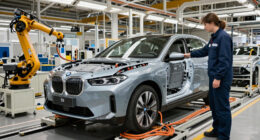
A recently announced electric vehicle branded as a Nissan is actually produced by an external manufacturer. This development signals a potential shift in Nissan’s branding and partnership strategies, but details remain unconfirmed. The story is gaining attention amid broader EV industry trends.
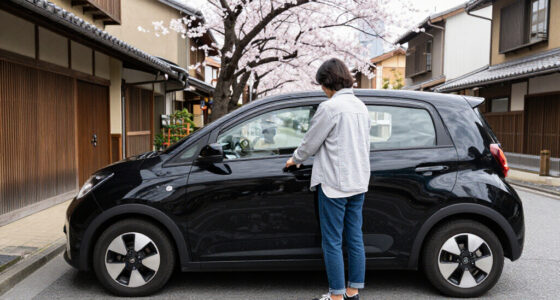
A new electric vehicle (EV) branded as a Nissan is currently in development, but sources confirm it is not manufactured or directly developed by Nissan itself. Instead, the vehicle is being produced by an external manufacturer, marking a notable shift in Nissan’s branding approach. This development is drawing significant attention because it raises questions about how automakers are increasingly collaborating with third-party producers and rebranding vehicles to expand their EV portfolios without direct manufacturing involvement.
According to industry insiders, the upcoming EV bearing the Nissan nameplate is actually produced by a different automaker or contract manufacturer, not Nissan’s in-house facilities. The vehicle is expected to share design elements and technology but will carry Nissan branding for market positioning. This approach mirrors a broader industry trend where established brands partner with or outsource to third-party manufacturers to accelerate EV lineup expansion without the need for extensive new manufacturing infrastructure.
While Nissan has not officially confirmed the details, sources suggest the vehicle is part of a strategic move to boost its EV offerings quickly and cost-effectively. The external manufacturer involved remains unnamed, and it is unclear whether Nissan will retain control over design, technology, or branding decisions. The vehicle’s launch is anticipated within the next 12 months, but specific timelines and specifications are still under wraps.
This shift could influence Nissan’s traditional brand identity, as the vehicle will carry Nissan’s badge but not be directly built by Nissan. Industry analysts note that such arrangements could become more common as automakers seek to meet aggressive EV adoption targets amid supply chain and manufacturing constraints.
Implications for Nissan’s Brand and Industry Trends
This development matters because it highlights a potential shift in how automakers approach EV branding and manufacturing. Using external manufacturers to produce vehicles branded as a traditional automaker can reduce costs and speed up market entry, but it also raises questions about brand integrity, quality control, and consumer perception. For Nissan, this could represent a strategic move to expand its EV lineup without significant capital investment in new factories, but it may also impact customer trust if not managed carefully.
Moreover, this trend reflects broader industry shifts toward flexible manufacturing partnerships, where branding and design are separated from production. Such models could redefine competitive dynamics, especially as legacy automakers face pressure from new entrants and tech companies in the EV space. The approach could influence other brands to pursue similar strategies, further fragmenting traditional automotive manufacturing and branding practices.
Products Worth Considering

Meguiar's G55048 Ultimate Car Care Kit

DEWALT 20V MAX Cordless Drill and Impact Driver Combo Kit (DCK240C2)

Vantrue N4 Pro S 4K 3-Channel Dash Cam with Triple STARVIS 2 HDR
As an affiliate, we earn on qualifying purchases.
Industry-Wide Shift Toward Outsourced EV Production
Over recent years, automakers have increasingly explored partnerships, joint ventures, and outsourcing to accelerate EV development amid supply chain disruptions and the need for rapid market entry. While many brands develop and produce their EVs in-house, several have started to incorporate third-party manufacturing or rebranding agreements. This trend is driven by the desire to reduce capital expenditure and leverage specialized manufacturing expertise.
Specifically, in the case of Nissan, the company has committed to electrification but has faced challenges with scaling production capacity. The emergence of a Nissan-branded EV not directly built by Nissan aligns with broader industry patterns where brands leverage external partners to meet aggressive EV adoption goals. Such arrangements are still relatively uncommon at this scale but are gaining attention as a potential model for future growth.
Industry analysts note that while the strategy offers flexibility and cost advantages, it also introduces risks related to quality assurance and brand consistency, which will be closely watched as more automakers consider similar partnerships.
Unconfirmed Details About Manufacturer and Vehicle Specs
It remains unclear which external manufacturer is producing the vehicle, the specific technical specifications, or whether Nissan will retain control over design and quality standards. Nissan has not officially disclosed any partnership details, and sources are anonymous at this stage. The exact timeline for the vehicle’s launch and its market positioning are also still uncertain.
Next Steps in Nissan’s EV Branding Strategy
Nissan is expected to announce more details about the vehicle, including manufacturer identity and specifications, within the coming months. Industry observers will be watching to see how Nissan manages quality and branding consistency. The vehicle’s market debut will likely provide insights into whether this outsourcing approach becomes a broader trend for the automaker and others in the industry.
Key Questions
Why is Nissan branding a vehicle that it doesn’t produce?
Nissan appears to be using external manufacturing partnerships to expand its EV lineup quickly and cost-effectively, leveraging third-party expertise while maintaining its brand through badge engineering.
Could this affect Nissan’s brand reputation?
Potentially, yes. If the vehicle meets quality expectations, it could strengthen Nissan’s market position. However, any quality issues or consumer perception problems could harm its brand reputation.
Is this a common practice in the auto industry?
While not yet widespread at this scale, outsourcing manufacturing and rebranding are increasingly used strategies among automakers seeking to accelerate EV deployment amid supply chain constraints.
Will Nissan continue to develop EVs in-house?
It is not yet clear. Nissan has historically developed vehicles internally, but this new approach suggests it may adopt more flexible manufacturing models in the future.
When will the vehicle be available for purchase?
The vehicle is expected to launch within the next 12 months, but specific release dates have not been officially announced.
Source: rss