
TL;DR

Get business pricing on garage and car supplies
- Business-only prices and quantity discounts
- Tax-exempt purchasing
- Multiple users, one account, clear invoices
Aptera has announced that its solar-powered electric vehicle could, in theory, travel up to 47 miles solely on solar energy under optimal conditions. While promising, real-world performance remains unconfirmed. This development could influence future solar EV designs, but practical limitations are still being evaluated.
Aptera, the California-based electric vehicle manufacturer, announced that its upcoming solar-powered EV could theoretically achieve a range of up to 47 miles on sunlight alone under ideal conditions. This claim highlights the potential for solar energy to extend EV range without external charging, a development that could influence the future of sustainable transportation. The company emphasizes that this figure is based on theoretical calculations and real-world results may vary, but the announcement marks a significant step in solar EV innovation.
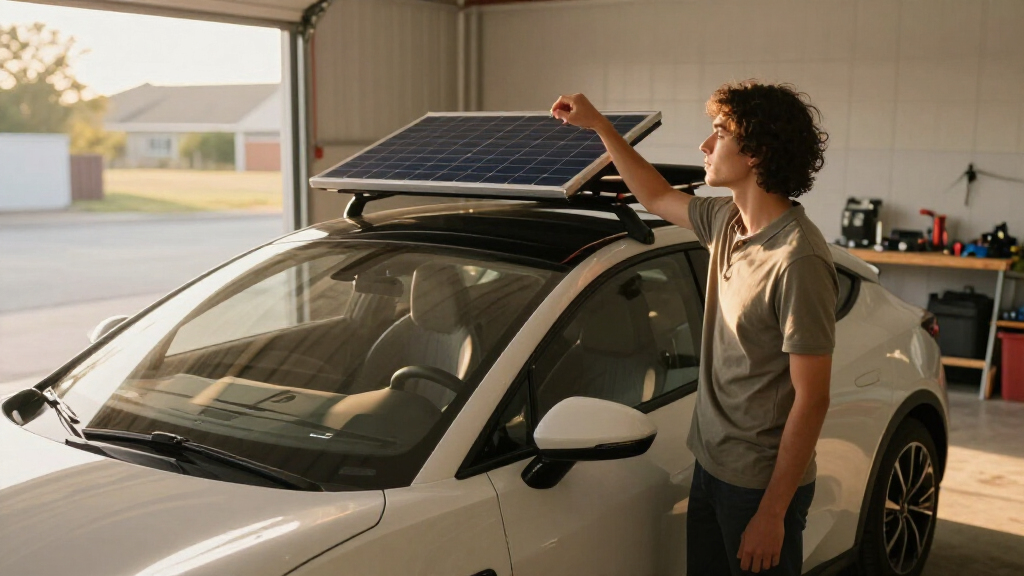
Aptera’s solar EV features a lightweight, aerodynamic design equipped with integrated solar panels covering much of the vehicle’s surface. According to the company, under optimal sunlight conditions, these panels could generate enough energy to power the vehicle for approximately 47 miles without any external charging. The claim is based on laboratory tests and computer modeling, which assume continuous, direct sunlight exposure and ideal conditions.
Company officials clarified that the 47-mile figure is a theoretical maximum, not a typical daily range. Real-world performance will depend heavily on factors such as weather, location, and driving habits. The vehicle’s battery capacity and energy efficiency also influence actual range, and Aptera emphasizes that the solar contribution is supplementary to the main battery power.
Industry experts note that while solar integration in EVs has been explored before, achieving a meaningful range solely from sunlight remains a technical challenge due to limited solar panel efficiency and surface area constraints. Aptera’s design seeks to maximize both, but practical results are yet to be demonstrated outside controlled testing environments.
Implications of Solar-Only Range Claims for EV Innovation
This announcement underscores the potential for solar energy to supplement EV range, which could reduce dependency on charging infrastructure and lower operating costs. If practical, solar EVs could be particularly advantageous in sunny regions, offering a form of renewable, free energy for daily driving. However, the gap between theoretical and real-world performance remains significant, and the actual impact on consumer use is still uncertain. Industry analysts see this as a promising proof of concept but caution that widespread adoption depends on overcoming efficiency and durability challenges.
As an affiliate, we earn on qualifying purchases.
Background on Solar EV Development and Past Efforts
Solar-powered EVs have been explored by various manufacturers over the past decade, with limited commercial success due to technological limitations. Early efforts focused on small solar panels to extend range modestly, primarily as supplementary energy sources. Companies like Lightyear and Sono Motors have developed prototypes emphasizing solar integration, but none have yet achieved significant standalone solar range in everyday conditions. Aptera’s approach aims to push these boundaries by combining high-efficiency panels with a highly aerodynamic design, seeking to maximize solar capture.
Prior to this announcement, most solar EV projects reported small incremental range extensions, often less than 10 miles per day. The concept of a vehicle capable of traveling nearly 50 miles solely on sunlight remains largely theoretical and is considered a significant engineering challenge. The current development by Aptera represents a notable step toward making solar-powered EVs more viable, though it is still in the early stages of validation.
“Our solar panels are designed to optimize energy capture, and while 47 miles is a theoretical maximum, it demonstrates the potential for sunlight to significantly supplement EV range in the future.”
— Aptera spokesperson
electric vehicle solar panel cover
As an affiliate, we earn on qualifying purchases.
As an affiliate, we earn on qualifying purchases.
Uncertainties About Real-World Performance and Practicality
It remains unclear how the 47-mile range will translate outside laboratory or simulation environments. Factors such as cloud cover, seasonal sunlight variations, and vehicle orientation could significantly reduce actual solar contribution. Additionally, the durability and long-term efficiency of the solar panels under daily exposure are still untested in real-world conditions. Experts warn that while the claim is promising, it may not be fully representative of everyday driving experiences, and further testing is needed to validate these projections.
As an affiliate, we earn on qualifying purchases.
Next Steps for Validating Solar Range Claims
Aptera plans to conduct real-world testing of its solar EV in various climates and conditions to assess actual range contributions. The company also intends to release more detailed performance data as prototype development progresses. Industry observers will be watching for independent testing results and user feedback to determine whether the solar range can be reliably achieved in daily use. Further advancements in solar panel efficiency and vehicle aerodynamics could enhance future capabilities.
As an affiliate, we earn on qualifying purchases.
Key Questions
Can the solar panels fully power the vehicle?
Currently, the solar panels are designed to supplement the main battery, providing an estimated 47 miles of range under ideal conditions. They are not intended to fully power the vehicle alone for typical daily driving.
Is the 47-mile range achievable in everyday conditions?
No, the 47-mile figure is based on theoretical maximums under optimal sunlight. Actual range will vary depending on weather, location, and driving habits.
When will the vehicle be available for consumers?
Aptera has announced plans for production in the near future, but a specific release date has not yet been confirmed. The company is currently in prototype testing phases.
How does this compare to other solar EV projects?
Most prior solar EV efforts have resulted in modest range extensions, often less than 10 miles. Aptera’s claim of nearly 50 miles on sunlight alone is significantly higher but remains to be validated in real-world conditions.
What are the main challenges for solar EVs?
Key challenges include improving solar panel efficiency, managing vehicle aerodynamics, ensuring durability over time, and integrating solar energy seamlessly into daily driving routines.
Source: rss
Halloween Picks
halloween
As an affiliate, we earn on qualifying purchases.