
TL;DR

Get business pricing on garage and car supplies
- Business-only prices and quantity discounts
- Tax-exempt purchasing
- Multiple users, one account, clear invoices
A good automotive tool set isn’t about having the most tools. It’s about selecting the right tools for your vehicle, repair tasks, and skill level. Quality, drive size, and safety equipment matter more than sheer piece count.
Imagine trying to fix your car with a set of flimsy, poorly fitting tools. Frustrating, right? Automotive tool sets vary wildly—from tiny roadside kits to massive professional collections—yet most car owners only need a handful of reliable, well-chosen tools. Whether you’re changing a flat tire or tackling a brake pad replacement, the right tools make all the difference. This guide will help you understand what to look for, how to avoid common pitfalls, and which tools truly add value to your collection.
Getting the right set means knowing your vehicle, your repair needs, and your skill level. It’s about choosing quality over quantity, understanding drive sizes, and knowing when to call in a professional. Let’s walk through how to build a smart, effective automotive tool collection that keeps you safe and saves you money.
Prioritize quality over piece count—durable, well-fitting tools save time and prevent damage.
Match socket drive sizes to your repair tasks; start with 3/8-inch for most general work.
Deep sockets are essential for recessed fasteners, while shallow sockets work in tight spaces.
Use a torque wrench for safety-critical fasteners like wheels and spark plugs to prevent damage or accidents.
Invest in safety gear and proper storage to keep your tools effective and your workspace safe.
What’s in a good automotive tool set—and why it matters
A solid automotive tool set should include the essentials: metric sockets, ratchets, wrenches, screwdrivers, pliers, and safety gear. For example, a typical set for daily repairs might have 8–19 mm metric sockets, 1/4-inch and 3/8-inch ratchets, and a handful of screwdrivers and pliers. It’s not just about having lots of tools, but about having the right ones for your vehicle and repair tasks.
Imagine trying to change brake pads with a tiny screwdriver—impossible. The same goes for using a cheap, poorly fitting socket on stubborn lug nuts. Quality tools grip better, last longer, and reduce the risk of rounding fasteners. For instance, chrome-vanadium sockets withstand high torque without cracking, unlike cheap chrome-plated ones. This durability directly translates into fewer broken tools during critical moments, saving you time and money. Moreover, using quality tools minimizes the risk of damaging fasteners, which can lead to costly repairs or delays. Investing in good tools is essentially investing in the reliability and safety of your repairs, ensuring that you won’t be left stranded with broken or worn-out equipment when you need it most.
In practice, a good set includes:
- Metric sockets and wrenches
- Ratchets with limited head play
- Extensions and adapters
- Combination wrenches
- Impact-rated sockets for cordless impact tools
- Torque wrench for safety-critical fasteners
- Safety gear like glasses and gloves
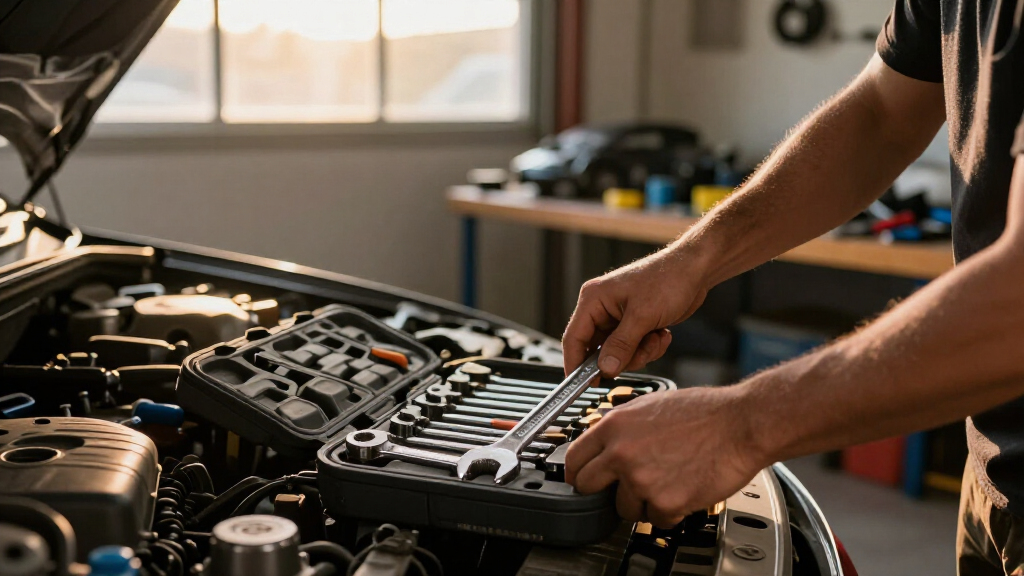
automotive tool set with metric sockets and wrenches
As an affiliate, we earn on qualifying purchases.
As an affiliate, we earn on qualifying purchases.
Drive sizes matter: Which socket size is right for you?
Choosing the right drive size is like picking the right size wrench for a nut. For most car work, 3/8-inch drive offers the best balance of versatility and torque capacity. It’s a sweet spot that handles a wide range of common repairs without being unwieldy. This size is ideal for tasks like oil filters, brake calipers, and suspension components, where you need enough torque but also maneuverability.
But don’t ignore 1/4-inch for small fasteners in tight spots, such as interior panels or electronics, where space is limited, and high torque isn’t necessary. Conversely, 1/2-inch drive is best suited for high-torque applications like removing wheels or suspension bolts, where the extra strength prevents slipping or tool failure. Starting with a 3/8-inch set provides flexibility, and adding 1/4-inch and 1/2-inch options later allows you to tailor your toolkit for specific jobs. For example, swapping a wheel on your sedan likely requires a 1/2-inch socket for lug nuts, while working on delicate electronics benefits from 1/4-inch tools.
Understanding these differences helps you avoid mismatched tools that can damage fasteners or slow down repairs. Using the correct drive size ensures you apply the right amount of torque without risking stripping or breaking fasteners, which could lead to costly repairs or delays. It also means your tools last longer because they’re used within their designed capacity. This careful matching enhances safety, efficiency, and the longevity of your tools and vehicle.
Here’s a quick comparison:
| Drive Size | Best For | Common Uses |
|---|---|---|
| 1/4-inch | Small fasteners, confined spaces | Electronics, interior panels |
| 3/8-inch | Most general repairs | Oil filters, brake calipers, suspension |
| 1/2-inch | High torque, wheels | Lug nuts, suspension bolts |
As an affiliate, we earn on qualifying purchases.
Deep vs. shallow sockets — when and why you need both
Deep sockets reach nuts on long studs or recessed fasteners, such as those found on certain wheel hubs or engine components, where standard sockets cannot fully engage the fastener. Shallow sockets, on the other hand, fit fasteners in tight spaces, like engine bays or behind panels, where clearance is limited. The choice impacts your ability to complete repairs efficiently and without damage.
For example, removing a wheel lug nut on a truck often requires a deep socket because the lug protrudes beyond the wheel hub, and using a shallow socket might slip or fail to grip properly. Conversely, working in tight engine compartments or removing small fasteners like those on electronic modules benefits from shallow sockets, which can fit into confined spaces without hitting surrounding parts.
Having both types ensures you’re prepared for different scenarios. Deep sockets provide better grip and reduce slipping on stubborn fasteners, which minimizes damage and frustration. Shallow sockets are invaluable when space is limited, allowing you to access fasteners without repositioning components excessively. Choosing the right socket type based on the task enhances safety, efficiency, and reduces the risk of damaging fasteners or surrounding parts. Remember to opt for six-point sockets for maximum grip, as they fit the fastener’s flats more securely, reducing rounding and stripping, especially on high-torque or stubborn fasteners.
In essence, understanding when to use deep versus shallow sockets allows you to select the most appropriate tool for each job, ensuring repairs are done correctly, safely, and efficiently.
As an affiliate, we earn on qualifying purchases.
Why a torque wrench is your best friend for safety-critical work
Ever tightened a wheel bolt with a wrench and wondered if it’s tight enough? A torque wrench provides a precise measurement, ensuring fasteners are tightened to manufacturer specifications rather than relying on guesswork. This precision is crucial because over-tightening can cause threads to strip, warp rotors, or damage sensitive components, while under-tightening risks parts coming loose during operation, which can lead to accidents or costly repairs.
For example, most vehicle manufacturers specify wheel lug torque between 80–100 ft-lb. Applying the correct torque ensures the wheel is securely fastened without risking damage to the studs or brake rotors. Proper torque also ensures even load distribution, preventing uneven wear or failure. Using a torque wrench during critical repairs like brake caliper installation or head bolt tightening maintains safety and component longevity.
Types of torque wrenches range from simple click-type models to advanced digital tools. Regular calibration is essential to maintain accuracy. Store your torque wrench properly—preferably in a protective case—and check its calibration annually or after heavy use. Remember, a torque wrench is not a breaker bar; it’s a precision tool meant for final tightening, not for loosening stubborn bolts. Using it correctly guarantees your repairs meet safety standards, reduces the risk of accidents, and prolongs the life of your vehicle’s components.
In short, mastering torque control with the right tools ensures your repairs are safe, reliable, and compliant with manufacturer specifications, which ultimately protects you and your vehicle.
As an affiliate, we earn on qualifying purchases.
Tailoring your set to your vehicle: What you need to check first
Before investing in a set, understanding your vehicle’s fastener types and sizes is essential. Different cars use different standards—most modern vehicles predominantly employ metric fasteners, but some older American models or trailers may use SAE sizes. Recognizing these differences helps you select the right tools, avoiding damage and ensuring efficient repairs.
Inspect your vehicle’s fasteners by examining the lug nuts, spark plugs, and oil filter caps. Use a caliper or a simple measurement tool to determine their size and type. For example, European cars often feature external Torx bolts or specialty fasteners that standard sets do not cover. Knowing these specifics allows you to choose a set that includes the necessary bits or individual tools, saving time and frustration during repairs.
Additionally, check your vehicle’s jacking points and recommended jacking equipment. Some vehicles require specific jack pads or support points to avoid damage. For hybrid or electric vehicles, high-voltage systems require insulated tools; using the wrong equipment can be dangerous. Assessing your vehicle’s unique requirements ensures your tool collection is complete and tailored, making repairs safer and more straightforward.
Taking the time to understand these details prevents the need for multiple trips to buy additional tools, streamlines your repair process, and enhances safety. Proper preparation and tailored tool selection are investments that pay off by reducing repair time, costs, and potential damage.
Power tools versus hand tools: When to use each
Impact wrenches and electric ratchets are invaluable for speeding up tasks like removing stubborn lug nuts or rusted bolts—saving time and reducing physical effort. For example, a cordless impact wrench can loosen a frozen brake rotor bolt in seconds, which would otherwise require significant manual effort. However, these power tools are not substitutes for hand tools when it comes to precision and safety-critical steps.
Final tightening, especially on wheels, brakes, or engine components, requires the control and accuracy only a torque wrench can provide. Over-reliance on impact tools for tightening can lead to over-torqued or damaged fasteners, compromising safety and durability. Impact-rated sockets are also essential; using standard sockets with impact wrenches risks shattering the socket and causing injury or damage.
The key is understanding when to switch between power and hand tools. Use impact tools for initial removal and assembly, then switch to hand tools and torque wrenches for finishing touches. This approach balances efficiency with safety, ensuring fast repairs without risking damage or injury. Recognizing the strengths and limitations of each tool type allows you to work smarter, not harder, and ensures your repairs are both effective and safe.
Safety gear: The unsung hero of your tool collection
Tools alone won’t keep you safe; safety gear is a vital part of your repair arsenal. Proper safety equipment protects you from common hazards like flying debris, hot surfaces, and electrical shocks. For instance, safety glasses shield your eyes from metal shavings or brake dust, while gloves protect your hands from sharp edges and hot components. Adequate lighting, such as a bright LED headlamp, ensures you can see small fasteners and avoid mistakes, especially in poorly lit garages or under the vehicle.
When working under a lifted vehicle, never rely solely on hydraulic jacks. Always use jack stands rated for your vehicle’s weight to prevent accidental falls. A fire extinguisher rated for garage fires adds an extra layer of safety in case of accidents. High-voltage systems in electric vehicles demand insulated gloves and tools to prevent electrical shocks—never attempt high-voltage repairs without proper training and equipment.
Investing in quality safety gear might seem like an extra expense, but it’s a small price compared to potential injuries or accidents. Well-fitting, durable safety equipment not only protects you but also boosts confidence, allowing you to work more efficiently and focus on the task at hand. Remember, safety isn’t optional—it’s an integral part of responsible and effective vehicle maintenance.
Smart storage: How to keep your tools organized and ready
Proper storage prevents damage, extends tool lifespan, and makes your repair process more efficient. Molded cases are excellent for roadside kits—they keep tools organized, protected from the elements, and portable. For home garages, a sturdy tool chest with labeled drawers allows quick access and minimizes time spent searching for the right tool. Labeling compartments helps you remember where each tool belongs, reducing clutter and lost items.
Features like secure latches, corrosion-resistant finishes, and modular design add to the durability and convenience of your storage system. For example, foam inserts can hold each tool securely, preventing rattling and accidental damage during transport or storage. Regularly cleaning your tools and storing them in a dry environment reduces rust and corrosion, ensuring they’re ready when needed.
As your collection grows, leave designated spaces for future additions or specialty tools. Implementing an organized storage system means you’ll spend less time hunting for tools, avoid duplicates, and keep your equipment in top condition. Efficient storage is a small investment that pays off by saving time, reducing frustration, and extending the life of your tools.
Warranty and replacement: Getting the most from your investment
Choosing tools with a lifetime warranty is a smart way to protect your investment. Reputable brands often stand behind their products, offering free replacements or repairs if tools break or wear out under normal use. However, it’s equally important to consider how easy it is to access warranty service—whether through direct manufacturer support, local service centers, or online claims. Understanding this process saves you time and frustration when repairs are needed.
For example, a ratchet with a lifetime warranty can save you money over time, especially if it develops issues like a broken gear or worn-out mechanism. Rebuildable tools or those with replaceable parts extend usability and are more sustainable, reducing waste and long-term costs. Being aware of warranty coverage and service options helps you make informed purchases, ensuring your tools remain functional and reliable for years to come.
Remember: Investing in quality tools with strong warranty support can be more cost-effective than repeatedly replacing cheap, disposable tools that lack coverage. It’s a safeguard that ensures your investment endures through many repairs and projects, offering peace of mind and reliability when you need it most.
Different sets for different purposes: Which one is right for you?
Not all tool sets serve the same purpose. A roadside emergency kit should be compact and include essentials like a lug wrench, inflator, flashlight, jumper cables, and basic hand tools. Such a kit prioritizes portability and quick access to handle common roadside issues, enabling you to address flat tires or dead batteries without delay. The design emphasizes lightweight, space-efficient tools that are easy to store and carry.
Beginners building a DIY repair kit should focus on versatile, mid-range tools—around 50 to 100 pieces—that cover common tasks like oil changes, brake adjustments, and minor electrical repairs. These sets balance quality and variety, providing enough options without overwhelming a novice. They typically include sockets, wrenches, a torque wrench, screwdrivers, and basic electrical testers, offering a solid foundation for most repairs.
Advanced enthusiasts and professionals often invest in specialized tools—impact wrenches, diagnostic scanners, and high-performance equipment—that cater to complex repairs, custom builds, or high-end performance vehicles. These sets are more comprehensive and designed for frequent, demanding use, but may be unnecessary for casual or occasional repairs.
Choosing the right set depends on your skill level, vehicle type, and repair goals. A large professional set isn’t practical for infrequent DIYers, just as a small roadside kit won’t suffice for extensive repairs. Tailoring your collection ensures you have the right tools for the job without unnecessary expense or clutter.
Latest trends: What’s new in automotive tools?
Cordless impact wrenches and electric ratchets are transforming how both DIYers and professionals approach repairs. Thanks to advances in lithium-ion battery technology, these compact tools now deliver high torque and long run times, making tasks like removing stubborn lug nuts faster and less tiring. For example, a small impact wrench can effortlessly loosen rusted bolts that previously required hours of manual effort, significantly improving efficiency.
Diagnostic technology has also advanced rapidly. Affordable OBD-II scanners now provide more than just engine codes—they offer real-time data, ABS diagnostics, and even reset functions for service lights. Some models include bidirectional control, allowing you to test and activate components directly, which streamlines troubleshooting and repairs.
Market innovations focus on modular storage solutions, color-coded tools for quick identification, and rebuildable parts to enhance longevity and sustainability. Additionally, electric and hybrid vehicle repair demands are prompting the development of specialized insulated tools and high-voltage safety equipment. The future of automotive tools is moving toward smarter, safer, and more connected systems, making repairs faster, safer, and more precise than ever before.
Common misconceptions: What you should really know
Many believe that having more pieces in a tool set automatically makes it better. This is a misconception; what truly matters is the quality, relevance, and proper fit of the tools. A focused 50-piece set with high-quality, correctly sized tools will outperform a 300-piece kit filled with duplicates, fillers, and tools that seldom see use. The key is to invest in tools that match your typical repair needs, rather than accumulating unnecessary extras that clutter your workspace and drain your budget.
Another common myth is that all fasteners are the same—most modern vehicles primarily use metric fasteners. SAE tools are mainly for older American cars, trailers, or specific applications. Using the wrong size or type can damage fasteners, leading to stripped heads, rounded corners, or even costly component replacements. Understanding which standards your vehicle uses ensures you select the right tools and avoid damage and delays.
Impact-rated sockets are often mistaken for regular sockets—they are not interchangeable. Using impact sockets with non-impact tools can cause shattering, while using standard sockets with impact wrenches may lead to cracking or failure. Additionally, a socket set alone isn’t enough; safety gear, proper storage, and sometimes specialty tools are necessary for specific jobs. Recognizing these facts helps you avoid costly mistakes, ensures safe repairs, and extends the lifespan of your tools and vehicle components.
Your frequently asked questions answered
What should a basic automotive tool set include? It should have metric sockets, wrenches, ratchets, screwdrivers, pliers, a torque wrench, and safety gear. Tailor it to your vehicle and the repairs you plan to do, focusing on quality and versatility to handle common maintenance tasks effectively.
How many pieces are enough? A focused 50- to 100-piece set with high-quality tools is often more practical than a large, unwieldy kit filled with duplicates and filler bits. Quality over quantity ensures durability and ease of use.
Are expensive tools worth it? For tools you use regularly, yes. They tend to last longer, fit better, and often come with better warranties, reducing replacement costs over time. For occasional repairs, more affordable options can suffice, but investing in reputable brands ensures reliability when it counts most.
Should I buy metric or SAE tools? Prioritize metric for most modern vehicles, as they predominantly use metric fasteners. SAE tools are still useful for older American vehicles, trailers, or specialized applications.
What drive size should I start with? The 3/8-inch drive offers the best versatility for most repairs. You can expand your set with 1/4-inch for small fasteners and electronics, and 1/2-inch for high-torque applications like wheels and suspension work.
Conclusion
Your tool set isn’t just a collection of metal bits; it’s your safety net and time-saver during repairs. Choose wisely—prioritize quality, fit, and relevance to your vehicle. A well-organized, dependable set will serve you for years and make every repair feel less like a chore and more like a job well done.
Remember, the right tools don’t just fix cars—they keep you safe, save money, and turn DIY dreams into reality. So get the essentials, keep them in shape, and enjoy the confidence that comes with being prepared.
Columbus Day / Indigenous Peoples' Day Picks
long weekend sales
As an affiliate, we earn on qualifying purchases.