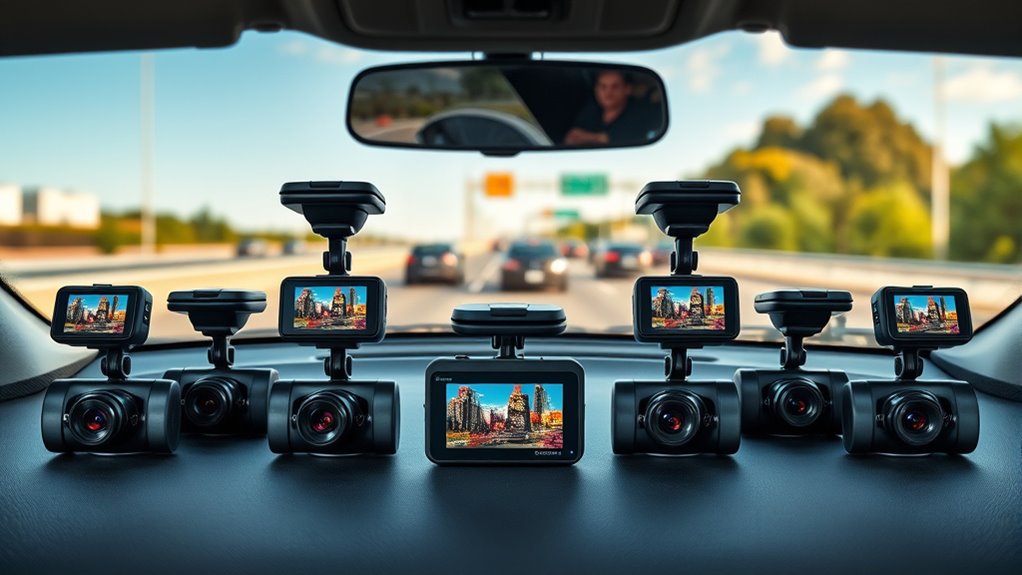

Dual dash cams record the road ahead and the view behind your car, making them a practical choice for documenting incidents from both directions. My best overall pick is the VIOFO A229 Plus, which pairs front and rear 2K STARVIS 2 sensors for balanced image detail across both channels. The ROVE R2-4K Dual stands out for a 4K front camera and included 128GB card, while the 70mai 4K three-channel model adds an interior view for drivers who need more than front-and-rear coverage. The main tradeoffs are resolution versus storage demands, simpler two-camera setups versus added coverage, and feature-rich systems versus ease of installation. Read on for my full comparison, buying criteria, and recommendations by driver type.

Get business pricing on garage and car supplies
- Business-only prices and quantity discounts
- Tax-exempt purchasing
- Multiple users, one account, clear invoices
Complete the kit


Key Takeaways
- The VIOFO A229 Plus is the most balanced pick: its front and rear 2K STARVIS 2 sensors give both recording angles strong attention, rather than concentrating the headline resolution on the front camera.
- Several models lead with 4K front recording, but rear resolution varies: check both camera specifications instead of choosing by the front-camera figure alone.
- Included storage separates some contenders: the ROVE R2-4K Dual includes a 128GB card, while the C5 and 70mai three-channel option include 64GB cards; card capacity matters more as resolution and camera count rise.
- More cameras solve a different problem: the 70mai three-channel and 4-channel 360° models extend coverage into the cabin or side areas, but add more setup and footage to manage than a conventional front-and-rear pair.
- Convenience features do not replace installation planning: Wi-Fi, GPS, touch controls, and parking monitoring can improve day-to-day use, but buyers still need to check power requirements, mounting space, and memory-card compatibility.
| REDTIGER F7NP 4K Dash Cam Front and Rear |  | Best Overall | Video resolution: 4K front / 1080P rear | Image sensor: STARVIS 2 CMOS | Aperture: F1.5 | VIEW ON AMAZON | See Our Full Breakdown |
| Affver 4K+2.5K Dash Cam Front and Rear, Built-in 5G WiFi 6 GPS Dual Dashcam |  | Best for Rear-View Detail | Video resolution: 4K front / 2.5K rear (upgraded version) | Field of view: 160° front / 155° rear | Aperture: F1.5 | VIEW ON AMAZON | See Our Full Breakdown |
| C5 Dash Cam Front and Rear 4K+1080P with 64GB Card |  | Best Compact Pick | Video resolution: 4K front / 1080P rear | Aperture: F1.8 | Connectivity: 5GHz Wi-Fi, USB | VIEW ON AMAZON | See Our Full Breakdown |
| 70mai 4K Dash Cam Front and Rear Inside, 3 Channel Car Dash Camera with GPS, Wi-Fi 6, Voice Control, Parking Monitor, Night Vision, Loop Recording, 64GB SD Card Included |  | Best for Cabin Coverage | Video resolution: 4K front / 1080P interior / 1080P rear | Night recording: Night vision, HDR, switchable interior infrared | GPS: Built-in 5-mode GPS | VIEW ON AMAZON | See Our Full Breakdown |
| ROVE R2-4K Dual Dash Cam Front and Rear, STARVIS 2 Sensor, Free 128GB Card |  | Best for Fast Footage Transfers | Video resolution: 2.5K native front, upscaled to 4K / 1080P rear | Image sensor: Sony STARVIS 2 IMX675 | Aperture: F1.5 front / F1.8 rear | VIEW ON AMAZON | See Our Full Breakdown |
| 4KUHD Dual Dash Cam Front Rear, STARVIS 2, Car Camera, 7 Optional Colors |  | Best for Matching Interior Style | Video resolution: 4K front / 2K rear, 30 fps | Image sensor: Sony IMX675 STARVIS 2 front sensor | Field of view: 150° front / 140° rear | VIEW ON AMAZON | See Our Full Breakdown |
| 70mai A810 Lite 4K Dash Cam Front and Rear, Wi-Fi 6, GPS, Night Vision, Parking Mode, Voice Control |  | Best for Connected Daily Driving | Video resolution: 4K front / 1080P rear | Night vision: HDR with F1.55 aperture | Wi-Fi: 5GHz Wi-Fi 6 | VIEW ON AMAZON | See Our Full Breakdown |
| VIOFO A229 Plus Dual Channel Dash Cam with Front and Rear 2K STARVIS 2 Sensors |  | Best for Low-Light Front-and-Rear Detail | Video resolution: 2K (1440P) front and rear | Sensors: Dual Sony STARVIS 2 IMX675 | Front frame rate: Up to 60fps; lower when HDR is enabled | VIEW ON AMAZON | See Our Full Breakdown |
| 4-Channel 360° Dash Cam with Front, Rear, Left, and Right Cameras, 1080P Night Vision, WDR, 5G WiFi, and 128GB Card |  | Best for All-Side Coverage | Channels: Four: front, rear, left, and right | Video resolution: 1080P Full HD | Field of view: 160° wide-angle lens | VIEW ON AMAZON | See Our Full Breakdown |
| REDTIGER F7N TOUCH 4K Dash Cam Front and Rear |  | Best for On-Device Controls | Video resolution: 4K UHD front / 1080P FHD rear | Sensor: STARVIS 2 | Field of view: 170° front / 140° rear | VIEW ON AMAZON | See Our Full Breakdown |
| GKU 4K Dual Dash Cam Front and Rear Camera, STARVIS 2 Sensor |  | Best for Wide-Angle Night Coverage | Resolution: 4K front / 1080P rear | Field of view: 170° front / 150° rear | Sensor: STARVIS 2 | VIEW ON AMAZON | See Our Full Breakdown |
| ROVE R2-4K Dual PRO Dash Cam Front and Rear, 4K+2K Recording for Cars |  | Best for High-Detail Two-Camera Recording | Resolution: 4K front / 2K rear | Sensors: IMX678 front / IMX675 rear | Field of view: 150° front / 140° rear | VIEW ON AMAZON | See Our Full Breakdown |
| dual dash cam | Video resolution | Connectivity | Field of view | Included storage |
|---|---|---|---|---|
| REDTIGER F7NP 4K Dash Cam Fron | 4K front / 1080P rear | 5.8GHz Wi-Fi, GPS | 170° front / 140° rear | 128GB card; supports up to 512GB |
| Affver 4K+2.5K Dash Cam Front | 4K front / 2.5K rear (upgraded version) | 5GHz Wi-Fi 6, GPS | 160° front / 155° rear | 64GB card |
| C5 Dash Cam Front and Rear 4K+ | 4K front / 1080P rear | 5GHz Wi-Fi, USB | — | 64GB microSD |
| 70mai 4K Dash Cam Front and Re | 4K front / 1080P interior / 1080P rear | Wi-Fi 6 | — | 64GB SD card |
| ROVE R2-4K Dual Dash Cam Front | 2.5K native front, upscaled to 4K / 1080P rear | Dual-band 5.8GHz and 2.4GHz Wi-Fi | — | 128GB microSD card |
| 4KUHD Dual Dash Cam Front Rear | 4K front / 2K rear, 30 fps | 5.8GHz and 2.4GHz Wi-Fi | 150° front / 140° rear | 128GB microSD card; supports up to 512GB |
| 70mai A810 Lite 4K Dash Cam Fr | 4K front / 1080P rear | — | 140° | — |
| VIOFO A229 Plus Dual Channel D | 2K (1440P) front and rear | 5GHz Wi-Fi and Bluetooth | — | No SD card included |
| 4-Channel 360° Dash Cam with F | 1080P Full HD | 5GHz Wi-Fi | 160° wide-angle lens | 128GB card |
| REDTIGER F7N TOUCH 4K Dash Cam | 4K UHD front / 1080P FHD rear | 5.8GHz Wi-Fi | 170° front / 140° rear | — |
| GKU 4K Dual Dash Cam Front and | — | — | 170° front / 150° rear | — |
| ROVE R2-4K Dual PRO Dash Cam F | — | — | 150° front / 140° rear | — |
More Details on Our Top Picks
REDTIGER F7NP 4K Dash Cam Front and Rear
The REDTIGER F7NP is a strong all-round pick for drivers who want high-resolution front footage without leaving the rear camera as an afterthought. Its 4K front and 1080P rear recording, STARVIS 2 sensor, and F1.5 aperture give it a well-rounded low-light setup, while the included 128GB card means it can record out of the box. Compared with the C5 Dash Cam, it offers a larger screen, wider stated viewing angles, and more included storage; the C5 is the better fit when a discreet, lightweight unit matters more. The F7NP’s 5.8GHz Wi-Fi and GPS add practical tools for reviewing and locating clips. Its main compromises are that 24-hour parking coverage needs a separate hardwire kit and stable operation calls for the supplied or a high-quality cable.
Pros:- 4K front and 1080P rear recording pair with a STARVIS 2 sensor and F1.5 aperture for low-light detail.
- Included 128GB card provides ready-to-use storage, with support for cards up to 512GB.
- 5.8GHz Wi-Fi and GPS support convenient clip access and location data.
- Supercapacitor is designed to tolerate heat better than a conventional lithium battery.
Cons:- 24/7 parking mode requires a separately purchased hardwire kit.
- The product calls for original or high-quality cables for stable operation.
- The 3.16-inch display takes more windshield space than the C5’s 0.96-inch screen.
Best for: Drivers who want a balanced front-and-rear setup, useful night recording, GPS, and enough included storage to start using the camera immediately.
Not ideal for: Drivers seeking parking surveillance without extra wiring, or those who want a compact camera with minimal windshield presence.
- Video resolution:4K front / 1080P rear
- Image sensor:STARVIS 2 CMOS
- Aperture:F1.5
- Field of view:170° front / 140° rear
- Connectivity:5.8GHz Wi-Fi, GPS
- Included storage:128GB card; supports up to 512GB
- Power:Supercapacitor
- Display:3.16 inches
- Warranty:18 months
Our verdict“Choose the F7NP for a capable, ready-to-record 4K-and-rear-camera package, provided you are comfortable adding a hardwire kit for parking coverage.”
Affver 4K+2.5K Dash Cam Front and Rear, Built-in 5G WiFi 6 GPS Dual Dashcam
The Affver A4 stands apart in this group by pairing a 4K front camera with a 2.5K rear camera, a meaningful step up in rear resolution from the 1080P units in the REDTIGER F7NP and C5. That extra detail may help when reviewing events behind the vehicle, while built-in GPS adds route and speed data to footage. Its 3.59-inch IPS screen is also the largest specified here, making on-camera playback and menu reading easier than on the ROVE R2-4K Dual. The advertised Wi-Fi 6 and included 64GB card round out a feature-rich package, though the rear upgrade is described as applying to units upgraded since June 1, 2026, so buyers should verify the version they receive. Parking coverage is not described as a built-in, no-wiring solution.
Pros:- 2.5K rear recording offers more stated detail than the 1080P rear cameras on the REDTIGER F7NP and C5.
- Large 3.59-inch IPS screen gives menus and playback more room.
- Built-in GPS records speed, route, and coordinates for journey playback.
- Includes a 64GB card and a car charger with an extra USB port.
Cons:- The 2.5K rear-camera upgrade is specified as applying to units upgraded since June 1, 2026, so version details matter.
- Included 64GB storage is less than the 128GB cards supplied with the REDTIGER F7NP and ROVE R2-4K Dual.
- The supplied information does not clearly specify the parking-mode wiring requirements.
Best for: Drivers who prioritize sharper rear footage and want a large built-in screen for setup and quick clip review.
Not ideal for: Buyers who need confirmed 2.5K rear recording regardless of production version, or who want a compact display and clearly specified parking-mode hardware.
- Video resolution:4K front / 2.5K rear (upgraded version)
- Field of view:160° front / 155° rear
- Aperture:F1.5
- Connectivity:5GHz Wi-Fi 6, GPS
- Display:3.59-inch IPS
- Included storage:64GB card
- Recording features:Loop recording, G-sensor event locking
- Warranty:24 months
Our verdict“Pick the Affver A4 if rear-camera resolution and a large screen matter most, but confirm the upgraded hardware version before buying.”
C5 Dash Cam Front and Rear 4K+1080P with 64GB Card
The C5 is the discreet choice in this set: its 65-gram body and 0.96-inch screen keep the unit less visually prominent than the REDTIGER F7NP or Affver A4. It still records 4K ahead and 1080P behind, with 5GHz Wi-Fi and a preinstalled 64GB card for straightforward setup. That makes it a sensible fit for drivers who want dual-camera coverage without a large display occupying the windshield. Its F1.8 aperture is a more modest light-gathering specification than the F1.5 apertures listed for the F7NP and ROVE R2-4K Dual, so buyers focused on night detail may prefer one of those alternatives. The small screen also limits convenient on-camera viewing, and parking mode requires a separate hardwire kit.
Pros:- Compact 65-gram design helps limit windshield obstruction.
- Records 4K front and 1080P rear video.
- Includes a 64GB microSD card for immediate recording.
- 5GHz Wi-Fi supports smartphone app control and footage transfer.
Cons:- F1.8 aperture is less wide than the F1.5 apertures specified for the REDTIGER F7NP and ROVE R2-4K Dual.
- The 0.96-inch screen is small for menu use or reviewing clips in the vehicle.
- 24/7 parking mode requires a separate hardwire kit, and the camera must stay connected to power.
Best for: Drivers who want front-and-rear recording in a small, lightweight windshield unit and are comfortable reviewing footage on a phone.
Not ideal for: Night-driving-focused buyers who prioritize a wider aperture, or drivers who need parking recording without hardwiring.
- Video resolution:4K front / 1080P rear
- Aperture:F1.8
- Connectivity:5GHz Wi-Fi, USB
- Included storage:64GB microSD
- Maximum supported storage:256GB
- Screen:0.96 inches
- Weight:65 g
- Dimensions:0.78 × 3.35 × 1.18 inches
Our verdict“Choose the C5 if a low-profile dual-camera setup matters more than a large screen or the strongest listed low-light aperture.”
70mai 4K Dash Cam Front and Rear Inside, 3 Channel Car Dash Camera with GPS, Wi-Fi 6, Voice Control, Parking Monitor, Night Vision, Loop Recording, 64GB SD Card Included
Although this roundup centers on dual dash cams, the 70mai T800E earns a distinct place for buyers who need more than road-facing coverage: it records 4K front, 1080P rear, and 1080P interior video. The cabin channel can be useful for rideshare drivers or families who want a record of activity inside the vehicle, a role the REDTIGER F7NP and ROVE R2-4K Dual do not fill. HDR, night vision, switchable interior infrared, voice control, GPS, and Wi-Fi 6 add flexibility, while the supercapacitor suits varied cabin temperatures. The extra camera also means more footage to manage than with a conventional dual setup, and the supplied information says continuous parking monitoring needs a hardwire kit. Buyers who only need front-and-rear evidence may find the simpler C5 easier to justify.
Pros:- Three channels cover the road ahead, cabin, and rear of the vehicle.
- Switchable infrared interior camera supports recording in low-light cabin conditions.
- Built-in GPS, Wi-Fi 6, and voice control provide several ways to manage and contextualize footage.
- Supercapacitor power and support for cards up to 512GB suit continuous recording needs.
Cons:- The added interior channel creates more footage to review and manage than a dual-camera system.
- Continuous parking monitoring requires a separate hardwire kit.
- No 4G connectivity support is specified.
Best for: Rideshare drivers, family-car owners, and other drivers who want cabin footage alongside front and rear road coverage.
Not ideal for: Drivers who only need front-and-rear recording, want a simpler two-camera installation, or require parking monitoring without hardwiring.
- Video resolution:4K front / 1080P interior / 1080P rear
- Night recording:Night vision, HDR, switchable interior infrared
- GPS:Built-in 5-mode GPS
- Connectivity:Wi-Fi 6
- Voice control:Yes
- Included storage:64GB SD card
- Maximum supported storage:512GB
- Power:Supercapacitor
- Temperature range:14°F to 140°F
Our verdict“Choose the T800E when cabin recording is as important as front and rear coverage; skip it if a straightforward two-camera setup is all you need.”
ROVE R2-4K Dual Dash Cam Front and Rear, STARVIS 2 Sensor, Free 128GB Card
The ROVE R2-4K Dual suits drivers who expect to pull clips onto a phone often: its dual-band Wi-Fi is advertised with downloads up to 20MB/s, faster than the stated 5.8GHz Wi-Fi on the REDTIGER F7NP. It also includes GPS, a 3-inch screen, a 128GB card, and support for storage up to 1TB, giving frequent road-trippers room to retain more footage. There is an important resolution caveat, though: the front image is captured at native 2.5K and upscaled to 4K, rather than recorded in native 4K like the F7NP. STARVIS 2, an F1.5 front aperture, and HDR support low-light recording, while three optional parking modes add flexibility if you install the required hardwire kit.
Pros:- Advertised Wi-Fi downloads up to 20MB/s can speed up frequent phone transfers.
- STARVIS 2 sensor, F1.5 front aperture, and HDR are geared toward low-light footage.
- Includes a 128GB card and supports microSD cards up to 1TB.
- GPS data and three optional parking modes add useful context and parked-vehicle coverage.
Cons:- Front footage is captured at native 2.5K and upscaled to 4K, unlike the F7NP’s listed 4K front recording.
- Parking modes require a separately purchased hardwire kit.
- The advertised transfer rate depends on Wi-Fi and phone conditions and is not a guaranteed result in every setup.
Best for: Drivers who regularly transfer clips to a phone, want GPS-tagged footage, and value generous storage support.
Not ideal for: Buyers who specifically require native 4K front recording, or who want parking monitoring without a separate hardwire kit.
- Video resolution:2.5K native front, upscaled to 4K / 1080P rear
- Image sensor:Sony STARVIS 2 IMX675
- Aperture:F1.5 front / F1.8 rear
- Connectivity:Dual-band 5.8GHz and 2.4GHz Wi-Fi
- Advertised download speed:Up to 20MB/s
- GPS:Built-in; records route, location, and speed data
- Included storage:128GB microSD card
- Maximum supported storage:1TB
- Display:3-inch IPS
Our verdict“Choose the ROVE R2-4K Dual for fast clip access and expandable storage, but favor the REDTIGER F7NP if native 4K front capture is your priority.”
4KUHD Dual Dash Cam Front Rear, STARVIS 2, Car Camera, 7 Optional Colors
The LHSYJ stands out among these dual dash cams for pairing 4K front and 2K rear recording with a choice of seven housing colors. Its Sony STARVIS 2 front sensor, wide apertures, and stated 150-degree front and 140-degree rear views are aimed at keeping useful detail in low light and across multiple lanes. Compared with the 70mai A810 Lite, it records higher-resolution rear footage and includes a 128GB card, while the 70mai offers Wi-Fi 6 and voice control. The 3.18-inch screen, GPS, and 5.8GHz Wi-Fi give drivers several ways to review and retrieve clips. The tradeoff is that parking monitoring needs a separate hardwire kit, and the product information gives less detail on voice control and GPS modes than some rivals. Its decorative finish may appeal to buyers who want equipment that fits their cabin, but appearance should not outweigh the two-camera recording needs.
Pros:- Records 4K video at the front and 2K at the rear.
- Sony STARVIS 2 front sensor and wide apertures are suited to low-light recording.
- Includes a 128GB microSD card and supports cards up to 512GB.
- Built-in GPS, 5.8GHz Wi-Fi, and a 3.18-inch IPS display offer several ways to manage footage.
Cons:- Parking monitoring requires a separately purchased hardwire kit.
- The listing does not specify voice control or detailed GPS modes.
- The decorative finish and multiple color choices may matter less to buyers focused on function and a discreet mount.
Best for: Drivers who want high-resolution footage from both ends, built-in GPS, and a dash cam available in colors that better suit their car interior.
Not ideal for: Drivers who want hands-free voice controls or a clearly specified parking setup included; parking monitoring requires an extra hardwire kit.
- Video resolution:4K front / 2K rear, 30 fps
- Image sensor:Sony IMX675 STARVIS 2 front sensor
- Field of view:150° front / 140° rear
- Display:3.18-inch IPS
- Connectivity:5.8GHz and 2.4GHz Wi-Fi
- GPS:Built-in GPS
- Included storage:128GB microSD card; supports up to 512GB
- Parking mode:Time-lapse monitoring; hardwire kit required
Our verdict“Choose the LHSYJ if you want 4K-and-2K coverage, GPS, and a choice of finishes, but plan separately for hardwired parking monitoring.”
70mai A810 Lite 4K Dash Cam Front and Rear, Wi-Fi 6, GPS, Night Vision, Parking Mode, Voice Control
The 70mai A810 Lite is the connectivity-focused choice here: Wi-Fi 6, GPS, voice control, and HDR night vision are bundled with 4K front and 1080P rear recording. That combination makes it a natural fit for drivers who regularly check routes or transfer clips to a phone. Against the LHSYJ 4KUHD, the 70mai gives up rear resolution—the LHSYJ records 2K at the back—but adds voice control and specifies a three-system GPS setup. Its 140-degree field of view is also narrower than the LHSYJ’s stated front coverage. The supercapacitor is designed for better heat tolerance than a conventional battery, though installation still takes some work. Buyers should account for the hardwire kit needed for 24-hour parking mode; the included 64GB card also leaves less initial storage than the 128GB cards supplied with some alternatives.
Pros:- Records 4K front and 1080P rear video.
- Wi-Fi 6 supports fast phone connections and file transfers.
- HDR night vision and an F1.55 aperture support low-light recording.
- Includes voice control, GPS, and a supercapacitor.
Cons:- The rear camera records at 1080P, below the LHSYJ’s 2K rear resolution.
- 24-hour parking mode requires a separate hardwire kit.
- The included 64GB card provides less starting capacity than the 128GB cards supplied with some alternatives.
Best for: Commuters and rideshare drivers who want app-based clip transfers, voice commands, GPS route records, and clear 4K front footage.
Not ideal for: Buyers who prioritize higher-resolution rear video or want 24-hour parking monitoring without adding a hardwire kit.
- Video resolution:4K front / 1080P rear
- Night vision:HDR with F1.55 aperture
- Wi-Fi:5GHz Wi-Fi 6
- GPS:GPS, GLONASS, and BDS
- Parking mode:24-hour mode with G-sensor and time-lapse; hardwire kit required
- Storage:64GB card included; supports microSD up to 512GB
- Display:3.18-inch screen
- Field of view:140°
- Controls and power:App, push button, and voice control; supercapacitor
Our verdict“Pick the 70mai A810 Lite for connected daily use and voice control, not for the highest rear-camera resolution or kit-free parking surveillance.”
VIOFO A229 Plus Dual Channel Dash Cam with Front and Rear 2K STARVIS 2 Sensors
The VIOFO A229 Plus takes a balanced approach to dual-camera evidence: 2K recording at both ends and a Sony STARVIS 2 IMX675 sensor for each camera. Rather than prioritizing 4K front resolution as the REDTIGER F7N TOUCH does, this model gives rear footage equal resolution and offers front capture up to 60fps. That can suit drivers who want consistent detail from both directions, especially with HDR and the three selectable parking modes. Quad-mode GPS and 5GHz Wi-Fi add useful route and transfer tools, while Bluetooth and voice commands provide more than one control path. The price of that flexibility is a less ready-to-install package: there is no SD card included, and a hardwire cable is needed for parking mode. Front frame rate also drops when HDR is enabled, so buyers must choose between those recording priorities.
Pros:- Two Sony STARVIS 2 sensors record 2K video at both the front and rear.
- Front recording supports up to 60fps when HDR is not enabled.
- Three parking modes cover event detection, time-lapse, and low-bitrate recording.
- Quad-mode GPS, 5GHz Wi-Fi, Bluetooth, and voice commands provide varied controls and connectivity.
Cons:- No SD card is included, and the model calls for a high-endurance card.
- A separate hardwire cable is needed for parking mode.
- Front frame rate drops when HDR is enabled.
Best for: Drivers who value matched 2K front-and-rear footage, low-light sensors, and multiple parking-recording modes over 4K front resolution.
Not ideal for: Drivers who want an included memory card or a simple, ready-to-use parking setup, or who need 4K front footage.
- Video resolution:2K (1440P) front and rear
- Sensors:Dual Sony STARVIS 2 IMX675
- Front frame rate:Up to 60fps; lower when HDR is enabled
- Connectivity:5GHz Wi-Fi and Bluetooth
- GPS:GPS, BeiDou, Galileo, and GLONASS
- Parking modes:Auto event detection, time-lapse, and low bitrate
- Voice control:12 voice commands
- Included storage:No SD card included
Our verdict“Choose the VIOFO A229 Plus for matched 2K dual-camera detail and configurable parking modes if you are comfortable sourcing storage and hardwiring it.”
4-Channel 360° Dash Cam with Front, Rear, Left, and Right Cameras, 1080P Night Vision, WDR, 5G WiFi, and 128GB Card
Unlike the other picks in this dual-dash-cam roundup, this system adds left- and right-side cameras to the usual front and rear pair. Four simultaneous 1080P feeds can help document incidents alongside the vehicle, a different priority from the VIOFO A229 Plus, which records higher-resolution 2K footage from front and rear only. The tradeoff is a lower resolution at each camera and a more involved multi-camera installation. Night vision with infrared lights and WDR is intended to help in changing light, while the included 128GB card gives it usable storage from the outset. Five-gigahertz Wi-Fi supports app access, but GPS is optional, and 24-hour parking mode needs a separate ACC hardwire kit. This makes most sense when side coverage matters more than maximizing image detail or keeping the setup simple.
Pros:- Four cameras record front, rear, left, and right views at the same time.
- Includes a 128GB memory card and 5GHz Wi-Fi for app access.
- Infrared night vision and WDR are designed for low-light and uneven lighting.
- Supercapacitor power is designed to handle cabin heat better than a battery-based unit.
Cons:- All four channels are limited to 1080P, below the 2K recording of the VIOFO A229 Plus.
- GPS requires a separate purchase.
- 24-hour parking mode requires an optional ACC hardwire kit.
Best for: Drivers of vehicles exposed to side-impact disputes, such as frequent urban parkers, who want simultaneous front, rear, and side-camera coverage.
Not ideal for: Drivers seeking high-resolution evidence from front and rear, built-in GPS, or a straightforward two-camera installation.
- Channels:Four: front, rear, left, and right
- Video resolution:1080P Full HD
- Field of view:160° wide-angle lens
- Included storage:128GB card
- Connectivity:5GHz Wi-Fi
- Power:Supercapacitor
- Recording features:Night vision, WDR, loop recording, incident lock, and time-lapse
- GPS:Optional; sold separately
- Parking mode:Supported with optional ACC hardwire kit
Our verdict“Select this system when recording the sides of the vehicle matters more than higher front-and-rear resolution or a simpler installation.”
REDTIGER F7N TOUCH 4K Dash Cam Front and Rear
The REDTIGER F7N TOUCH is the most screen-forward option in this group, pairing a touchscreen with voice control so drivers can manage common functions without relying only on a phone app. Its 4K STARVIS 2 front camera, 1080P rear camera, built-in GPS, and included 128GB card cover the core needs of a two-camera setup. Compared with the VIOFO A229 Plus, REDTIGER prioritizes sharper front resolution and an included card, while VIOFO provides 2K rear recording and more distinct parking modes. The 170-degree front view is broad, but the rear camera remains 1080P. Fast 5.8GHz Wi-Fi helps with clip transfers, though the stated speed does not remove the need to wire cameras through the vehicle. Parking monitoring requires a separate hardwire kit, and installation may take patience.
Pros:- Records 4K UHD at the front with a STARVIS 2 sensor.
- Touchscreen and voice control offer direct alternatives to app-only operation.
- Includes built-in GPS and a 128GB memory card.
- 5.8GHz Wi-Fi supports fast downloads through the companion app.
Cons:- Rear recording is 1080P, while the VIOFO A229 Plus offers 2K rear footage.
- 24-hour parking monitoring requires a separate hardwire kit.
- Wired installation can be cumbersome.
Best for: Drivers who prefer a built-in touchscreen and voice commands, and want GPS and included storage with 4K front recording.
Not ideal for: Drivers who want 2K rear footage, the simplest installation, or parking surveillance without buying a separate hardwire kit.
- Video resolution:4K UHD front / 1080P FHD rear
- Sensor:STARVIS 2
- Field of view:170° front / 140° rear
- Connectivity:5.8GHz Wi-Fi
- Storage:128GB card included
- Controls:Touchscreen, voice control, and app
- Recording features:GPS, WDR/HDR, G-sensor, and loop recording
- Parking monitoring:Optional 24-hour mode; separate hardwire kit required
- Warranty:18 months
Our verdict“Choose the REDTIGER F7N TOUCH if you want easy access to on-device controls and 4K front footage, and can accept 1080P rear video and a wired setup.”
GKU 4K Dual Dash Cam Front and Rear Camera, STARVIS 2 Sensor
The GKU D600 Pro Max pairs 4K front recording with 1080P rear footage, giving drivers sharper forward detail while still recording what happens behind the car. Its 170° front and 150° rear views cover more of the surrounding road than the ROVE R2-4K Dual PRO’s 150° front and 140° rear angles, a useful difference on busy multi-lane roads. The STARVIS 2 sensor and front HDR target difficult low-light scenes, though HDR is limited to the front camera, and rear footage has lower resolution than ROVE’s 2K recording. Built-in GPS and WiFi 6 support route records and wireless access. Parking protection is available, but it needs a separately purchased hardwire kit; the memory card is also not included.
Pros:- 4K front recording preserves fine road details, paired with a dedicated rear camera.
- Wide 170° front and 150° rear coverage captures more of the surrounding scene.
- STARVIS 2 sensor and front HDR support recording in challenging light.
- Built-in GPS and WiFi 6 provide route data and wireless footage access.
Cons:- Rear resolution is 1080P, below the ROVE R2-4K Dual PRO’s 2K rear recording.
- Memory card is not included, adding a separate storage purchase.
- 24/7 parking protection requires a separately sold hardwire kit, and HDR applies only to the front camera.
Best for: Drivers who want broad front-and-rear coverage, strong front-camera night features, and GPS records for regular commuting or road trips.
Not ideal for: Buyers who want higher-resolution rear footage or a ready-to-use memory card, since rear recording is 1080P and storage must be purchased separately.
- Resolution:4K front / 1080P rear
- Field of view:170° front / 150° rear
- Sensor:STARVIS 2
- Night imaging:Super Night Vision; HDR on front camera only
- WiFi:WiFi 6, 5.8GHz and 2.4GHz dual-band
- GPS:Built-in; records route, speed, and location data
- Parking protection:24/7 modes; hardwire kit sold separately
- Memory card support:Up to 512GB; card not included
Our verdict“Choose the GKU if wide viewing angles and front-camera night features matter more than higher-resolution rear footage or included storage.”
ROVE R2-4K Dual PRO Dash Cam Front and Rear, 4K+2K Recording for Cars
The ROVE R2-4K Dual PRO stands out for recording 4K in front and 2K at the rear, a more balanced resolution pairing than the GKU D600 Pro Max’s 4K-and-1080P setup. That extra rear detail may help when reviewing incidents behind the vehicle, while the included 128GB card and CPL filter make its package more ready to record than the GKU, which includes no card. Sony STARVIS 2 sensors and HDR support low-light capture, and dual-band WiFi 6 plus quad-mode GPS add convenient transfer and location data. Its 150° front and 140° rear views are narrower than the GKU’s, however, and the higher-resolution files can fill storage faster. Parking monitoring also requires a separately sold hardwire kit, and setup may take more effort.
Pros:- 4K front and 2K rear recording give both camera views more detail than the GKU’s 4K-and-1080P combination.
- Sony STARVIS 2 sensors and HDR support recording in low-light conditions.
- Includes a 128GB microSD card and CPL filter.
- WiFi 6 and quad-mode GPS support wireless transfers and route tracking.
Cons:- Its 150° front and 140° rear field of view are narrower than the GKU’s coverage.
- High-resolution recordings can use storage quickly, despite the included 128GB card.
- Parking mode requires a separately sold hardwire kit, and setup may feel complex to some buyers.
Best for: Drivers who want detailed footage from both ends of the vehicle and value included storage for getting started.
Not ideal for: Drivers who prioritize the widest possible viewing angles, simple setup, or parking monitoring without buying a hardwire kit separately.
- Resolution:4K front / 2K rear
- Sensors:IMX678 front / IMX675 rear
- Field of view:150° front / 140° rear
- Lens aperture:F1.7 front / F1.55 rear
- WiFi:WiFi 6 dual-band
- GPS:Quad-mode GPS: GPS, BEIDOU, GALILEO, and GLONASS
- Included memory card:128GB microSD
- Memory card support:Up to 1TB
- Parking mode:24-hour motion, collision, and time-lapse detection; hardwire kit required
Our verdict“Pick the ROVE if rear-camera detail and included storage matter more than wider coverage or the simplest installation.”

How We Picked
I compared these 12 dual dash cams by looking at what affects useful front-and-rear evidence: the resolution and sensor specification of each channel, stated night-vision features, and whether the camera setup records only front and rear or extends to the cabin and sides. I also weighed practical ownership details such as included memory, Wi-Fi and GPS, voice or touch controls, and stated parking-monitor features. A high front-camera resolution alone did not earn a top position if the rear channel, included accessories, or ease of everyday use offered less balance.
The order reflects coverage, recording balance, and ownership practicality, not a claim that every driver needs the most cameras or the highest resolution. The VIOFO A229 Plus leads for its matched 2K STARVIS 2 front and rear sensors; front-4K models follow when their feature mix offers a clear advantage for buyers prioritizing detailed forward footage. Three- and four-camera systems are included for drivers with broader coverage needs, but rank behind simpler dual-channel choices for shoppers who mainly want dependable front-and-rear recording without extra installation and file-management demands.
Factors to Consider When Choosing Dual Dash Cams
Choosing a dual dash cam is about more than finding the largest resolution number. I would match camera coverage and recording demands to the way the car is used, then check what installation, storage, and parking features require before buying.
Compare Both Camera Channels, Not Just the Front
Product names and headlines often emphasize the front camera, but an incident behind the car is only as well documented as the rear unit can capture it. Check the listed resolution for each channel separately, along with whether a rear camera connects by cable and where it must be mounted. A 4K front camera paired with a lower-resolution rear camera may suit drivers who prioritize forward detail, while matched 2K sensors can make more sense when balanced footage matters. Do not assume that a high resolution guarantees readable plates in every condition; focus, lighting, motion, and camera placement all affect the result. Before choosing, measure the cable route from the windshield to the rear glass so the installation fits your vehicle.
Match Camera Count to the Incidents You Want to Record
A conventional dual setup covers the road ahead and the view behind, which is enough for many drivers. An interior camera can help rideshare or taxi drivers document cabin events, while side-facing coverage may suit owners seeking a wider record around a parked or moving vehicle. Each added camera also means more footage, more wiring, and more storage use; broader coverage is not automatically a better fit. Check whether the product’s camera count reflects actual separate views and whether all channels record at the advertised quality at the same time. If your main concern is a rear-end collision, a straightforward front-and-rear system may be easier to position and manage than a 360-degree arrangement.
Plan Storage Around Resolution and Recording Time
High-resolution and multi-channel recording can fill a memory card faster than a basic two-camera setup. An included card is convenient, but its capacity is only a starting point: estimate how many hours of footage you want available before older files loop over. Verify the maker’s supported card type and capacity rather than assuming any card will work reliably. Loop recording typically replaces older footage, so important clips may need to be locked or copied before they are overwritten. If you drive long shifts or want parking coverage, plan for frequent recording and consider how you will retrieve and back up clips.
Treat Parking Mode as an Installation Requirement
A parking-monitor feature can record while a car is unattended, but the camera needs a suitable power source after the ignition is off. Many setups require a hardwire kit or another compatible power arrangement, and that can add installation work beyond mounting the cameras. Check whether the needed kit is included, sold separately, or subject to vehicle-specific limits. Think through battery protection and recording triggers before enabling continuous monitoring, particularly if the car sits for long periods. Buyers who only need evidence while driving may be better served by a simpler installation.
Choose Controls You Will Actually Use
Wi-Fi can make it easier to view or transfer clips without removing the card, while GPS may add location or speed data to recordings. Voice control and touchscreens can reduce button presses, but neither substitutes for checking that a clip has saved correctly. Consider where the camera screen will sit and whether it could distract or obstruct your view. App-based access also depends on a workable phone connection and a setup process you are comfortable repeating when needed. Prioritize simple clip retrieval and clear controls over a long feature list you may rarely use.
Account for Windshield Fit and Camera Placement
Before buying, check the front unit’s size, the mounting position, and any rules that apply to windshield placement where you drive. A large display or bulky camera may compete with mirrors, sensors, or the driver’s sightline. The rear camera also needs a clear view through the back window; tinted glass, defroster lines, and hatchback layouts can affect mounting choices. Measure cable paths and check whether a powered rear hatch makes the installation more involved. Good placement on both ends often matters more to usable footage than adding a feature that cannot be mounted cleanly.
Frequently Asked Questions
Is a 4K front camera with a lower-resolution rear camera better than matched 2K cameras?
It depends on which direction matters most to you. A 4K front camera can give extra detail on the road ahead, while a lower-resolution rear unit may record less detail behind the car than a matched pair. The VIOFO A229 Plus is the standout in this lineup for front-and-rear 2K STARVIS 2 sensors, while several other models emphasize 4K front recording. Compare the exact resolution of both channels and think about where incidents are most likely in your driving. Also remember that lighting, mounting, and motion affect how useful recorded detail is.
Do I need a three-channel or 360-degree dash cam instead of a dual dash cam?
Choose more than two cameras when the extra angle addresses a real coverage gap. An interior view can help drivers who carry passengers for work, and side coverage may matter to someone seeking a broader record around the vehicle. The 70mai three-channel model and the 4-channel 360° option in this roundup offer those wider views, but they also create more footage and installation work. If your goal is simply to record the road ahead and behind, a standard dual setup is usually the more direct choice. Check how each channel records at once, rather than relying on the total camera count.
Will the included memory card be enough for my driving?
It may be enough to get started, but capacity needs depend on recording resolution, camera count, and how many hours you want before older footage loops over. In this roundup, included cards range from 64GB on some models to 128GB on the ROVE R2-4K Dual and the 4-channel camera. More channels and higher resolutions can use storage more quickly. Confirm the camera’s supported card specifications before upgrading, and learn how to lock or export an important clip. Drivers who spend many hours on the road should plan for regular file checks rather than assuming the included card will preserve footage indefinitely.
Can I use parking monitoring without hardwiring the camera?
Parking monitoring often needs power after the vehicle is switched off, so a standard accessory socket may not provide what the feature requires. Check the specific model’s power method and whether a compatible hardwire kit is included or sold separately. A hardwired setup can add installation time and needs to suit the vehicle’s electrical system. If you do not want that work, confirm whether the camera offers another supported power option or simply use it while driving. Do not leave parking features enabled until you understand their power needs and battery-protection behavior.
What should I check before installing a rear camera in a hatchback or SUV?
Check the rear camera’s mounting location, cable route, and the amount of clear glass available before settling on a model. Hatchback wiring can be more involved because the cable may need to pass through a moving tailgate, and the camera must stay clear of defroster lines or the wiper’s path. Tinted glass can also affect the rear view, so check the manufacturer’s guidance for mounting behind tint. Measure the distance from the front camera to the rear window and leave enough slack for the hatch to open safely. A clean, stable view is more useful than a quick installation that leaves the camera poorly aimed.
Conclusion
For most drivers wanting a dependable front-and-rear setup, I recommend the VIOFO A229 Plus as the best overall because its front and rear 2K STARVIS 2 sensors give both views a clear role. The ROVE R2-4K Dual is my value-minded pick for shoppers who want 4K front recording and an included 128GB card; check its rear-channel details against your needs before choosing it over matched-resolution options. For a premium feature mix and wider coverage, consider the 70mai three-channel model, while beginners who prefer a more conventional two-camera arrangement can compare the REDTIGER F7NP or 70mai A810 Lite. Drivers who need cabin or side views should look at the 70mai three-channel or 4-channel 360° system, accepting the extra installation and storage demands. Match the cameras to the angles you need, then confirm power, card support, and fit in your vehicle before deciding.
Fall Picks
fall essentials
As an affiliate, we earn on qualifying purchases.