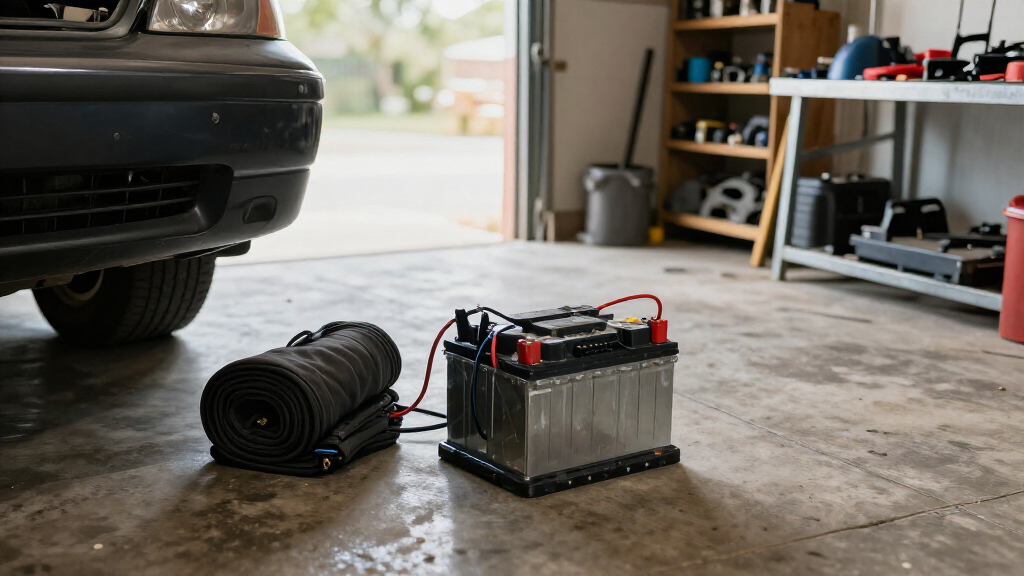

Finding the right automotive battery charger means balancing raw amperage, smart maintenance features, and portability. My top recommendation for most drivers is the NOCO GENIUS1, which offers exceptional reliability and safety for standard 12V vehicles without breaking the bank. For those needing higher power or multi-vehicle support, the Schumacher SC1364 provides a robust wheeled design suitable for larger batteries, while the E-FAST 0-20A stands out for its versatility with LiFePO4 compatibility. The main tradeoff you will face is between simple, low-amp maintainers for long-term storage and high-amp boosters for emergency starts. Continue reading to see how these fifteen models compare in build quality, charging speed, and specific use-case suitability.

Get business pricing on garage and car supplies
- Business-only prices and quantity discounts
- Tax-exempt purchasing
- Multiple users, one account, clear invoices
Complete the kit


Key Takeaways
- Smart maintenance mode is now standard across all price points, but only premium models offer true desulfation recovery for older batteries.
- High-amp engine starters (100A+) require dedicated heavy-duty wiring and are distinct from standard trickle chargers.
- LiFePO4 compatibility is becoming a critical differentiator, as many legacy lead-acid chargers cannot safely manage lithium chemistry.
- Wheeled designs add significant bulk but are necessary for chargers exceeding 15 amps to manage heat dissipation and cable weight.
- Micro-processor controlled chargers protect vehicle electronics better than older transformer-based models, which can spike voltage during the initial charge phase.
| Schumacher Electric SC1364 Wheeled 6A Battery Charger and Maintainer |  | Best for On-Site Starting Support | Model: SC1364 | Battery voltage: 12V | Charge rate: 2A to 6A | VIEW LATEST PRICE | See Our Full Breakdown |
| NEXPEAK 15A 12V/24V Smart Battery Charger and Maintainer |  | Best for 12V and 24V Coverage | Output voltage: 12V and 24V | Input voltage: 110V | Charging current: 12V: 15A; 24V: 8A | VIEW LATEST PRICE | See Our Full Breakdown |
| E-FAST Battery Charger 0‑20A 12/24V LiFePO4 & Lead Acid Automatic Smart Car Battery Charger |  | Best for Faster 12V/24V Charging | Model: TK-1200 | Output voltage: 12V and 24V | Charging current: 12V: 20A; 24V: 10A | VIEW LATEST PRICE | See Our Full Breakdown |
| NOCO GENIUS1 1A 6V/12V Smart Battery Charger and Maintainer |  | Best for Long-Term Low-Rate Maintenance | Output voltage: 12V output; supports 6V and 12V batteries | Input voltage: 120V | Amperage: 1A | VIEW LATEST PRICE | See Our Full Breakdown |
| 12V 15A Smart Automatic Car Battery Charger and Maintainer |  | Best for Seasonal 12V Charging Modes | Output voltage: 15V DC | Input voltage: 110–240V AC | Current: 15A | VIEW LATEST PRICE | See Our Full Breakdown |
| Schumacher Electric SC1280 15A Car Battery Charger and Maintainer, 6V/12V |  | Best for Versatile Automatic Charging | Model: SC1280 | Charging voltage: 6V and 12V | 12V charge rate: 15A | VIEW LATEST PRICE | See Our Full Breakdown |
| Schumacher Electric SC1361 12V Battery Charger, Maintainer, and Engine Starter |  | Best for 12V Vehicles with Occasional Starting Needs | Model: SC1361 | Voltage: 12V | Charge rate: 2A–6A | VIEW LATEST PRICE | See Our Full Breakdown |
| Schumacher Electric SC1281 6V/12V Battery Charger and Maintainer with 100A Engine Start |  | Best Automatic Charger with Strong Engine-Start Support | Model: SC1281 | Battery voltage: 6V and 12V | Charging current: 2A–6A | VIEW LATEST PRICE | See Our Full Breakdown |
| Schumacher Electric SC1445 Wheeled 6V/12V 250A Battery Charger and Engine Starter |  | Best Manual Heavy-Duty Engine Starter | Model: SC1445 | Battery voltage: 6V and 12V | Engine start: 250A | VIEW LATEST PRICE | See Our Full Breakdown |
| Schumacher Electric SC1446 10A Battery Charger and 200A Engine Starter |  | Best for Manual 6V/12V Garage Charging | Model: SC1446 | Battery voltage: 6V and 12V | Charge mode: 10A | VIEW LATEST PRICE | See Our Full Breakdown |
| TowerTop 12V Smart Battery Charger and Maintainer with Engine Start |  | Best for Emergency Engine Starts | Output Voltage: 12 Volts | Max Charging Current: 25A | Engine Start Current: 100A | VIEW LATEST PRICE | See Our Full Breakdown |
| E-FAST 25A Smart Car Battery Charger and Maintainer |  | Best for Mixed Fleet Maintenance | Output Voltage: 12V, 24V | Max Output: 25A (12V); 15A (24V) | Compatible Batteries: Lead-Acid (AGM, GEL, SLA, Flooded, EFB), LiFePO4 | VIEW LATEST PRICE | See Our Full Breakdown |
| Clore Automotive PL2320 20-Amp Smart Battery Charger and Maintainer |  | Best for 6V and 12V Lead-Acid Systems | Supported Voltages: 6V and 12V | Charge Rates: 2A, 10A, 20A | Weight: 1.3 lb | VIEW LATEST PRICE | See Our Full Breakdown |
| PLXX 12V/24V 15A Smart Car Battery Charger and Maintainer |  | Best for Large Capacity Batteries | Output Voltage: 12V/24V | Max Current: 15A | Battery Capacity: 4–300Ah | VIEW LATEST PRICE | See Our Full Breakdown |
| NOCO Genius10 10A 6V/12V Smart Battery Charger and Maintainer |  | Best for Deep Discharge Recovery | Output Voltage: 6V and 12V | Amperage: 10 A | Min. Recovery Voltage: 0V (with Force Mode) | VIEW LATEST PRICE | See Our Full Breakdown |
| automotive battery charger | Output voltage |
|---|---|
| Schumacher Electric SC1364 Whe | — |
| NEXPEAK 15A 12V/24V Smart Batt | 12V and 24V |
| E-FAST Battery Charger 0‑20A 1 | 12V and 24V |
| NOCO GENIUS1 1A 6V/12V Smart B | 12V output; supports 6V and 12V batteries |
| 12V 15A Smart Automatic Car Ba | 15V DC |
| Schumacher Electric SC1280 15A | — |
| Schumacher Electric SC1361 12V | — |
| Schumacher Electric SC1281 6V/ | — |
| Schumacher Electric SC1445 Whe | — |
| Schumacher Electric SC1446 10A | — |
| TowerTop 12V Smart Battery Cha | 12 Volts |
| E-FAST 25A Smart Car Battery C | 12V, 24V |
| Clore Automotive PL2320 20-Amp | — |
| PLXX 12V/24V 15A Smart Car Bat | 12V/24V |
| NOCO Genius10 10A 6V/12V Smart | 6V and 12V |
More Details on Our Top Picks
Schumacher Electric SC1364 Wheeled 6A Battery Charger and Maintainer
The SC1364 is the pick here for drivers who want a charger that can also help start a vehicle, rather than a compact unit focused only on charging. Its 150A engine-start function and 20A boost mode give it a role the NEXPEAK 15A and E-FAST 20A chargers do not fill. It also maintains standard and AGM batteries and offers desulfation, so it can serve vehicles that sit between trips. The wheels and retractable handle make its steel-cased design easier to move around a garage, though it is less convenient to store than a small portable charger. The main compromise is charging speed: output tops out at 6A, and it supports only 12V batteries. Choose it for starting assistance and versatility, not fast routine charging.
Pros:- Combines charging, maintenance, desulfation, boost, and 150A engine-start functions
- Works with standard and AGM 12V batteries across several vehicle types
- Smart trickle charging supports long-term battery maintenance
- Wheels and a retractable handle help move the steel-cased unit
Cons:- The 6A maximum charging rate is modest compared with the NEXPEAK 15A and E-FAST 20A
- Limited to 12V batteries
- Wheeled steel-case design takes more storage space than compact chargers
Best for: Home-garage owners with 12V cars, trucks, motorcycles, or boats who want charging, maintenance, and engine-start assistance in one wheeled unit
Not ideal for: Drivers who need a compact charger, support for 6V or 24V batteries, or faster charging than a 6A maximum can provide
- Model:SC1364
- Battery voltage:12V
- Charge rate:2A to 6A
- Engine start:150A
- Boost charge:20A
- Battery compatibility:Standard and AGM
- Power cord:6 ft
- Booster cables:8-gauge, 6 ft
- Features:Desulfation, reverse hook-up protection, LED indicators, steel case, wheels, retractable handle
Our verdict“Choose the SC1364 if engine-start assistance matters more than fast charging or compact storage.”
NEXPEAK 15A 12V/24V Smart Battery Charger and Maintainer
The NEXPEAK earns its place for buyers who need one charger for both 12V and 24V lead-acid systems. Its 15A output at 12V is a faster charging option than the Schumacher SC1364’s 6A ceiling, while its 8A 24V mode covers batteries that several other picks in this group cannot. A nine-stage process, LCD, pulse repair, and trickle maintenance make it more informative and flexible than a basic charger. But its battery-chemistry guidance is inconsistent: product information lists LiFePO4 support, while the use notes say lithium batteries cannot be charged. I would treat it as a lead-acid charger unless the manufacturer confirms compatibility for the specific battery. It also cannot activate completely dead batteries, unlike the NOCO GENIUS1’s Force Mode.
Pros:- Supports both 12V and 24V battery systems
- Provides 15A charging at 12V and 8A at 24V
- LCD displays charging information and battery status
- Includes trickle maintenance, pulse repair, and several electrical protections
Cons:- LiFePO4 compatibility conflicts with the use notes stating lithium batteries cannot be charged
- Cannot activate completely dead batteries
- One charging port does not support simultaneous charging of multiple batteries
Best for: Owners of 12V and 24V lead-acid vehicles or equipment who want a higher 12V charging current and an LCD status display
Not ideal for: Buyers who need dependable lithium-battery support or a charger capable of activating a completely dead battery
- Output voltage:12V and 24V
- Input voltage:110V
- Charging current:12V: 15A; 24V: 8A
- Trickle charging current:1.75A
- Charging stages:9
- Compatible batteries:Lead-acid; LiFePO4 compatibility is unclear in the product information
- Cord length:8.9 ft
- Dimensions:8.46 x 7.28 x 4.13 in
- Weight:2.4 lb
Our verdict“Pick the NEXPEAK for mixed 12V and 24V lead-acid needs, but avoid relying on its disputed lithium compatibility.”
E-FAST Battery Charger 0‑20A 12/24V LiFePO4 & Lead Acid Automatic Smart Car Battery Charger
For buyers who need substantial charging output across two system voltages, the E-FAST offers a clear step up from the Schumacher SC1364: it lists 20A at 12V and 10A at 24V, compared with the Schumacher’s maximum 6A and 12V-only coverage. Its seven-stage charging process adjusts to battery status, while the LCD reports voltage, current, temperature, and charging stage—useful when a vehicle or piece of equipment needs more than occasional maintenance. It also combines charging, trickle maintenance, and desulfation with several protective shutoffs. Unlike the SC1364, though, it has no engine-start function; it cannot replace a jump starter or revive a completely dead battery. One port also means it handles one battery at a time. I would choose it for routine charging capacity, not emergency starting.
Pros:- Provides up to 20A at 12V and 10A at 24V
- Seven-stage automatic charging adapts to battery condition
- LCD shows voltage, current, temperature, and charging stage
- Combines maintenance and desulfation with reverse-polarity, overheat, overcurrent, and short-circuit protections
Cons:- Cannot jump-start a vehicle or revive a completely dead battery
- Single charging port limits it to one battery at a time
- Does not offer the wheeled mobility and engine-start support of the Schumacher SC1364
Best for: Owners of 12V or 24V cars, trucks, boats, and equipment who want higher charging output and detailed charging readouts
Not ideal for: Drivers seeking engine-start assistance, a multi-battery charger, or a unit to revive a completely dead battery
- Model:TK-1200
- Output voltage:12V and 24V
- Charging current:12V: 20A; 24V: 10A
- Input voltage:110V
- Charging process:7-stage automatic charging
- Compatible batteries:LiFePO4 and lead-acid
- Number of ports:1
- Dimensions:4.9 x 7.8 x 3.7 in
- Protections:Reverse polarity, overheating, overcurrent, and short circuit
Our verdict“Choose the E-FAST when higher 12V/24V charging output and detailed status information matter more than starting assistance.”
NOCO GENIUS1 1A 6V/12V Smart Battery Charger and Maintainer
The NOCO GENIUS1 takes the opposite approach from the higher-output NEXPEAK and E-FAST: its 1A output prioritizes gentle maintenance over quick charging. That makes it a better fit for a motorcycle, ATV, or seasonal vehicle kept on a monitored charge than for restoring a large car battery quickly. It stands out in this group by supporting 6V as well as 12V batteries, adjusting for ambient temperature, and offering Force Mode for batteries down to zero volts. The Schumacher SC1364 is more useful when engine-start assistance is needed; the GENIUS1 is smaller in purpose and better suited to extended upkeep. Its included clamps and eyelet terminals offer two connection options, while its limits are clear: charging can be slow, and LiFePO4 support is specified only up to 30Ah.
Pros:- Supports 6V and 12V lead-acid batteries and LiFePO4 batteries
- Temperature compensation adjusts charging to ambient conditions
- Force Mode can charge batteries down to zero volts
- Includes battery clamps, eyelet terminals, and a three-year warranty
Cons:- The 1A output can make charging larger batteries slow
- LiFePO4 battery capacity is limited to 30Ah
- Does not provide the engine-start function found on the Schumacher SC1364
Best for: Owners of motorcycles, ATVs, scooters, or seasonal vehicles who need monitored long-term maintenance for 6V or 12V batteries
Not ideal for: Drivers who need fast charging for a large battery, engine-start assistance, or LiFePO4 support above 30Ah
- Output voltage:12V output; supports 6V and 12V batteries
- Input voltage:120V
- Amperage:1A
- Battery types:Lead-acid (AGM, Gel, SLA, VRLA) and LiFePO4
- LiFePO4 capacity:Up to 30Ah
- Low-voltage charging:Down to 1V, or zero volts with Force Mode
- Included accessories:Battery clamps and integrated eyelet terminals
- Warranty:3 years
Our verdict“Choose the GENIUS1 for gentle, long-term care of smaller 6V or 12V batteries, not for fast charging.”
12V 15A Smart Automatic Car Battery Charger and Maintainer
This 15A charger is aimed at owners who want more than basic charging for a 12V lead-acid or LiFePO4 battery. Its LCD displays charging data and temperature, while winter and summer modes tailor operation to seasonal conditions. That gives it a useful middle ground beside the NEXPEAK: both list 15A charging and maintenance features, but the NEXPEAK adds 24V support, while this model emphasizes seasonal modes and eight layers of protection. Its product information also lists lead-acid formats including AGM, GEL, SLA, and VRLA. The tradeoff is limited flexibility: it is 12V only, and the instructions say not to leave it operating unattended for more than 12 hours. Its short listed output cable may also restrict placement relative to a vehicle battery. This is a focused option for supervised charging, not a leave-on maintainer.
Pros:- Supports 12V lead-acid formats and LiFePO4 batteries
- 15A output is suited to quicker charging than the NOCO GENIUS1’s 1A rate
- LCD reports charging data and temperature, with winter and summer modes
- Lists eight safety protections, including reverse connection and overheating protection
Cons:- Limited to 12V batteries, unlike the NEXPEAK and E-FAST 12V/24V models
- Should not be left operating unattended for more than 12 hours
- Listed 60 cm output cable may limit how far the charger can sit from the battery
Best for: 12V vehicle owners who want 15A charging, seasonal modes, and a display for supervised charging of lead-acid or LiFePO4 batteries
Not ideal for: Owners of 24V systems or anyone seeking a charger they can leave operating unattended beyond 12 hours
- Output voltage:15V DC
- Input voltage:110–240V AC
- Current:15A
- Compatible batteries:12V lead-acid (AGM, GEL, SLA, VRLA) and LiFePO4
- Input cable length:102 cm
- Output cable length:60 cm
- Dimensions:2 x 5 x 9 in
- Safety protections:8 layers, including reverse connection, short circuit, overcurrent, and overheating protection
- Operating guidance:Do not leave operating unattended for more than 12 hours
Our verdict“Choose this model for supervised 12V charging with seasonal modes, but skip it if you need 24V support or extended unattended maintenance.”
Schumacher Electric SC1280 15A Car Battery Charger and Maintainer, 6V/12V
The SC1280 is a flexible choice for owners who want one AC-powered unit to charge or maintain both 6V and 12V batteries. Its 15A 12V charge rate is higher than the SC1361’s 2A–6A charging range, making it better suited to routine charging when speed matters; it does not, however, offer that model’s engine-start function. Automatic voltage detection, testing, restoration, and support for standard, AGM, gel, and deep-cycle batteries make it useful across different vehicles and battery needs. Desulfation and reverse-clamp protection add practical safeguards, while the 3A maintenance rate supports ongoing care. The tradeoff is that it needs household AC power, and its faster 15A rate applies only to 12V batteries; its 6V charge rate is 2A.
Pros:- Charges and maintains both 6V and 12V batteries, with support for several common battery types
- 15A 12V charging is faster than the SC1361’s stated 2A–6A charge range
- Combines charging, maintenance, testing, and restoration
- Automatic voltage detection and reverse-clamp protection help simplify safer operation
Cons:- Requires an AC power source
- The 15A charge rate is for 12V batteries; 6V charging is limited to 2A
- Does not provide an engine-start function
Best for: Drivers and garage owners who need an automatic charger for both 6V and 12V batteries, including AGM, gel, or deep-cycle types.
Not ideal for: Anyone needing emergency engine starting or a charger for use away from AC power; the SC1281 adds an engine-start function, while this model requires an outlet.
- Model:SC1280
- Charging voltage:6V and 12V
- 12V charge rate:15A
- 12V maintenance rate:3A
- 6V charge rate:2A
- Battery types:Standard, AGM, gel, and deep-cycle
- Functions:Charging, maintaining, testing, and restoring
- Power and cable lengths:AC powered; 6 ft power cord and 6 ft booster cables
Our verdict“Choose the SC1280 if you want broad 6V/12V battery support and faster 12V charging, but not engine starting.”
Schumacher Electric SC1361 12V Battery Charger, Maintainer, and Engine Starter
The SC1361 suits drivers who want a 12V charger that can also provide a 50A engine start when a battery needs help getting a vehicle going. Its 2A–6A charging range is slower than the SC1280’s 15A 12V mode, so I’d favor the SC1280 for faster routine charging or 6V coverage. The SC1361 earns its place through a different mix: charging, maintenance, a 10A boost, and starting support in one unit. It works with standard, AGM, and 12V LiFePO4 batteries, while reverse-polarity protection, spark-proof clamps, automatic shutoff, and float-mode monitoring add useful safeguards for regular garage use. Its main limitation is its 12V-only design, and the available charge-rate range is modest compared with higher-output chargers.
Pros:- Combines charging, maintenance, boost charging, and a 50A engine-start function
- Supports standard, AGM, and 12V LiFePO4 batteries
- Float-mode monitoring supports battery maintenance after charging
- Reverse-polarity protection, spark-proof clamps, and automatic shutoff provide useful safety features
Cons:- Works with 12V batteries only
- The 2A–6A charging range is slower than the SC1280’s 15A 12V rate
- The 50A engine-start rating is lower than the SC1281’s 100A rating
Best for: Owners of 12V cars or light vehicles who want routine charging and maintenance plus a built-in engine-start option.
Not ideal for: Drivers maintaining 6V batteries or seeking faster charging; the SC1280 supports 6V and offers a higher stated 12V charge rate.
- Model:SC1361
- Voltage:12V
- Charge rate:2A–6A
- Boost charge:10A
- Engine start:50A
- Battery compatibility:Standard, AGM, and 12V LiFePO4
- Charging and maintenance:Automatic multistage charging with float-mode monitoring
- Safety features:Reverse-polarity protection, spark-proof clamps, and automatic shutoff
Our verdict“Pick the SC1361 for a 12V vehicle when you value built-in starting support and safety features more than faster charging or 6V compatibility.”
Schumacher Electric SC1281 6V/12V Battery Charger and Maintainer with 100A Engine Start
The SC1281 is the strongest fit here for buyers who want automatic charging and a substantial 100A engine start without stepping up to the large wheeled manual units. It handles both 6V and 12V batteries and adds testing, restoration, and maintenance; compared with the SC1361, it also covers 6V systems and has double the stated engine-start amperage. Its 2A–6A charging range is much less assertive than the SC1280’s 15A 12V charging, so this is a better match for owners prioritizing versatility and starting assistance over quicker routine charging. Standard, AGM, deep-cycle, and 12V LiFePO4 support broadens its use, while automatic shutoff and reverse-polarity protection help keep operation straightforward. The tradeoff is that its regular charge rate remains modest despite its high starting output.
Pros:- Supports both 6V and 12V batteries and several battery chemistries
- 100A engine start offers more starting output than the SC1361’s 50A rating
- Combines charging, maintenance, testing, restoration, and engine starting
- Automatic shutoff and reverse-polarity protection support safer operation
Cons:- The 2A–6A charging range is modest for routine charging
- Its high engine-start output does not translate into a higher stated charge rate
- No included cable lengths or other physical dimensions are specified in the supplied product data
Best for: Garage owners who maintain both 6V and 12V batteries and want automatic charging, battery checks, and stronger engine-start assistance.
Not ideal for: Drivers chiefly seeking faster routine charging; the SC1280 has a stated 15A 12V charge rate compared with this model’s 2A–6A range.
- Model:SC1281
- Battery voltage:6V and 12V
- Charging current:2A–6A
- Boost charge:12A–30A
- Engine start:100A
- Supported battery types:Standard, AGM, deep-cycle, and 12V LiFePO4
- Functions:Charging, maintaining, testing, restoring, and engine starting
- Safety features:Reverse-polarity protection and automatic shutoff
Our verdict“Choose the SC1281 if you need 6V/12V flexibility and substantial engine-start assistance in an automatic charger, rather than a high routine charge rate.”
Schumacher Electric SC1445 Wheeled 6V/12V 250A Battery Charger and Engine Starter
For a garage where high-output starting power matters more than automatic charging, the wheeled SC1445 is the standout. Its 250A engine-start rating exceeds the SC1446’s 200A, while its 25A and 50A boost modes give users manual charging options beyond the 10A charge mode. A 135-minute timer and analog ammeter make the process visible and adjustable, but they also place more responsibility on the operator than the automatic SC1281. Support for 6V and 12V standard, AGM, gel, and deep-cycle batteries makes it broadly useful in a workshop. Its steel case, wheels, and retractable handle help move the unit around a garage, though they cannot make it compact. Choose this for hands-on control and strong starting output, not unattended maintenance or small-space storage.
Pros:- 250A engine-start rating is higher than the SC1446’s 200A
- Supports 6V and 12V batteries across standard, AGM, gel, and deep-cycle types
- 25A and 50A boost modes supplement the 10A charge mode
- Wheels and a retractable handle make the steel unit easier to move around a garage
Cons:- Manual timer requires the operator to manage charging time
- Wheeled steel construction takes up more storage space than compact automatic chargers
- Does not offer the automatic maintenance and shutoff approach of the SC1281
Best for: Home mechanics and garage owners who need a movable, high-output starter for 6V and 12V vehicles and are comfortable controlling charging manually.
Not ideal for: Drivers wanting automatic charging, low-effort maintenance, or compact storage; the SC1281 offers automatic operation, and the SC1445 has a wheeled steel chassis.
- Model:SC1445
- Battery voltage:6V and 12V
- Engine start:250A
- Boost charge:25A and 50A
- Charge mode:10A
- Timer:Manual, up to 135 minutes
- Battery compatibility:Standard, AGM, gel, and deep-cycle
- Construction and mobility:Heavy-duty steel case, wheels, and retractable handle
Our verdict“Choose the SC1445 for a garage needing strong 6V/12V starting output and manual control, but skip it if you want automatic charging or compact storage.”
Schumacher Electric SC1446 10A Battery Charger and 200A Engine Starter
The SC1446 is a wheeled manual charger and starter for buyers who want broad battery compatibility and adjustable boost modes, but not the SC1445’s higher 250A starting output. It provides a 200A engine start, a 40A boost for 12V batteries, and a 20A boost for 6V or 12V systems, alongside a 10A charge mode. That mix gives garage users more control over charging than the SC1281’s automatic 2A–6A range, while the SC1281 is a better choice for automatic maintenance and battery testing. The manual timer and analog ammeter make charging progress observable, but demand attention rather than offering a set-and-forget approach. Its steel case, wheels, and retractable handle suit workshop use; the size and manual operation are less appealing for everyday compact storage.
Pros:- Supports both 6V and 12V batteries and four common battery types
- 40A 12V boost and 20A 6V/12V boost provide more charging options than a single-rate charger
- 200A engine-start function adds emergency starting support
- Wheels and a retractable handle help move the steel unit around a garage
Cons:- Manual timer means charging requires operator monitoring
- The wheeled steel unit may be bulky to store
- Its 200A starting rating is lower than the SC1445’s 250A
Best for: Garage users who want manual control, 6V/12V compatibility, and multiple boost modes for standard, AGM, gel, or deep-cycle batteries.
Not ideal for: Drivers who want automatic shutoff and maintenance or the highest starting output in this pair; the SC1281 is automatic, and the SC1445 is rated at 250A for engine starting.
- Model:SC1446
- Battery voltage:6V and 12V
- Charge mode:10A
- Engine start:200A
- Boost modes:40A at 12V; 20A at 6V/12V
- Battery types:Standard, AGM, gel, and deep-cycle
- Timer and display:Manual timer up to 135 minutes; analog ammeter
- Mobility and cables:Steel case, retractable handle, wheels, 6 ft booster cables, and 6 ft power cord
Our verdict“Pick the SC1446 if you want a manual, movable 6V/12V garage charger with several boost modes, but choose an automatic model for unattended maintenance.”
TowerTop 12V Smart Battery Charger and Maintainer with Engine Start
This unit stands out primarily for its 100A engine-start capability, a feature rarely found in standard maintainers. While the Clore Automotive PL2320 offers excellent maintenance features, it cannot jump-start a car, making the TowerTop a more versatile tool for stranded drivers. The 25A charging current is aggressive, significantly reducing recharge time compared to slower 6A or 10A models. However, this power comes with size and complexity. The LCD screen provides clear feedback, but the device is bulkier than compact options like the NOCO Genius10. It is strictly for 12V lead-acid batteries, so users with lithium setups must look elsewhere. The desulfation mode helps revive older batteries, but it cannot fix physically damaged cells. This is a robust, all-in-one solution for those who want charging and starting in one box.
Pros:- Includes a powerful 100A engine-start function
- High 25A maximum charging current speeds up recharging
- 8-stage smart charging with desulfation mode
- Clear LCD display for real-time status monitoring
Cons:- Cannot repair batteries that are completely dead or damaged
- Bulky form factor compared to compact maintainers
- Limited to 12V lead-acid batteries only
Best for: Drivers who want a single device for both slow charging and emergency engine jumping.
Not ideal for: Users with lithium-ion or LiFePO4 batteries, as this model only supports lead-acid chemistries.
- Output Voltage:12 Volts
- Max Charging Current:25A
- Engine Start Current:100A
- Compatible Batteries:STD, AGM, GEL, Wet, MF, EFB, Calcium, Deep-Cycle
- Charging Modes:8-Stage Smart, Repair, Winter, Auto
- Dimensions:7.68 x 10.04 x 4.92 inches
- Certifications:ETL, FCC
Our verdict“Choose this if you need a dual-purpose tool that can maintain your battery and jump-start your engine in a pinch.”
E-FAST 25A Smart Car Battery Charger and Maintainer
The E-FAST 25A distinguishes itself by supporting both 12V and 24V systems alongside LiFePO4 compatibility. This dual-voltage flexibility makes it far more useful than the PLXX 12V/24V 15A, which caps out at 15A and lacks lithium support. The aluminum alloy housing aids in heat dissipation during high-amperage charging, a practical advantage over plastic-bodied competitors. Its 200-second booster mode offers a quick top-up for 12V batteries, though it does not replace a dedicated jump starter like the TowerTop. The temperature-adjusted charging protects cells during extreme weather, extending battery life. While the 15A limit on 24V batteries is a compromise, the build quality and broad chemistry support make this a strong contender for workshops or households with diverse vehicle types.
Pros:- Supports 12V, 24V, and LiFePO4 batteries
- Durable aluminum housing with active cooling fan
- Includes a 12V booster mode for quick top-ups
- UL certified with comprehensive safety protections
Cons:- Booster mode is restricted to 12V batteries only
- 24V charging speed is limited to 15A
- Heavier than plastic-cased alternatives
Best for: Garage owners or mechanics servicing both standard cars and larger trucks with mixed battery chemistries.
Not ideal for: Users needing a jump starter, as the booster mode is for topping up, not cranking engines.
- Output Voltage:12V, 24V
- Max Output:25A (12V); 15A (24V)
- Compatible Batteries:Lead-Acid (AGM, GEL, SLA, Flooded, EFB), LiFePO4
- Booster Mode:Up to 200 seconds (12V only)
- Housing Material:Aluminum Alloy
- Weight:3.7 lb
- Certification:UL
Our verdict“This is the best choice for versatility, handling everything from modern lithium EVs to older 24V diesel trucks.”
Clore Automotive PL2320 20-Amp Smart Battery Charger and Maintainer
This model earns its spot by supporting 6V and 12V lead-acid batteries, a niche often ignored by modern 12V-only chargers. If you maintain classic cars, motorcycles, or lawn equipment with 6V batteries, this is superior to the TowerTop, which lacks 6V support. The 20A charge rate is efficient for standard automotive batteries, though it falls short of the 25A offered by the E-FAST. It features a stable-power-supply mode, allowing it to act as a power source for vehicle electronics during battery swaps, a feature missing in many budget chargers. The lightweight 1.3 lb design makes it easy to store. However, it offers no lithium support and no engine-start function. It is a reliable, no-frills workhorse for traditional lead-acid maintenance.
Pros:- Supports both 6V and 12V lead-acid batteries
- Includes stable-power-supply mode for electronics
- Lightweight and compact at 1.3 lbs
- Wide compatibility with flooded, AGM, and gel types
Cons:- No support for lithium-ion or LiFePO4 batteries
- Lower maximum current (20A) compared to high-end models
- No engine-start or jump-start capability
Best for: Enthusiasts with classic cars, motorcycles, or small engines that use 6V batteries.
Not ideal for: Modern vehicle owners with AGM or LiFePO4 batteries who need higher amperage or lithium compatibility.
- Supported Voltages:6V and 12V
- Charge Rates:2A, 10A, 20A
- Weight:1.3 lb
- Battery Types:Flooded, AGM, Gel, Spiral-Wound, Marine, Deep-Cycle
- Special Mode:Stable Power Supply
- Warranty:1 Year
- Dimensions:8 x 9.4 x 4.5 in
Our verdict“Ideal for collectors and hobbyists who need reliable maintenance for older or smaller 6V and 12V lead-acid batteries.”
PLXX 12V/24V 15A Smart Car Battery Charger and Maintainer
The PLXX is designed for heavy-duty applications, supporting batteries up to 300Ah. This makes it a better fit for RVs, boats, and large trucks than the Clore PL2320, which targets standard automotive sizes. Its 15A output is modest compared to the 25A offered by the E-FAST, meaning charge times will be longer for massive batteries. However, the 3-year warranty provides peace of mind that many budget competitors lack. The orange casing makes it easy to spot in a cluttered garage. While it supports both 12V and 24V lead-acid systems, it does not handle lithium batteries. The LCD display shows voltage, current, and percentage, offering good visibility. It is a solid, durable choice for large-capacity lead-acid maintenance where lithium compatibility is not a concern.
Pros:- Supports high-capacity batteries up to 300Ah
- Long 3-year warranty for added security
- Detailed LCD display with charging percentage
- Functions as a 12V DC power supply
Cons:- Repair mode ineffective on batteries below 3V
- No support for LiFePO4 or lithium-ion batteries
- Heavier at 12.8 lbs than portable alternatives
Best for: RV owners, boaters, and fleet managers maintaining large 12V or 24V lead-acid battery banks.
Not ideal for: Users with lithium-ion batteries or those needing quick charging for small car batteries.
- Output Voltage:12V/24V
- Max Current:15A
- Battery Capacity:4–300Ah
- Warranty:3 Years
- Weight:12.8 lb
- Display Type:LCD (Voltage, Current, %)
- Charging Stages:7-Stage
Our verdict“A robust, long-warranty option for maintaining large lead-acid battery banks in RVs and marine applications.”
NOCO Genius10 10A 6V/12V Smart Battery Charger and Maintainer
The NOCO Genius10 excels in battery recovery, capable of charging from 1V and using Force Mode for batteries at 0V. This is a critical advantage over the TowerTop, which cannot repair completely drained batteries. The thermal sensor automatically adjusts output based on ambient temperature, protecting the battery from overheating or undercharging in extreme climates. While its 10A output is slower than the 25A E-FAST, it is sufficient for overnight charging and indefinite maintenance. The 3-year warranty and included mounting hardware make it a premium, set-and-forget solution. It supports both lead-acid and LiFePO4, offering broad compatibility. The learning curve for the Force Mode and proper setup is slightly steeper than plug-and-play competitors, but the recovery capabilities justify the extra attention for users with older or neglected batteries.
Pros:- Can recover batteries down to 0V with Force Mode
- Thermal sensor optimizes charging for ambient temperature
- Supports both lead-acid and LiFePO4 batteries
- Includes mounting hardware and 3-year warranty
Cons:- Slower 10A charge rate compared to 25A models
- Requires reading the manual to use Force Mode correctly
- No engine-start or jump-start function
Best for: Owners of older vehicles or stored equipment with deeply discharged or sulfated batteries.
Not ideal for: Users who need to jump-start a car or require the fastest possible charge times for large batteries.
- Output Voltage:6V and 12V
- Amperage:10 A
- Min. Recovery Voltage:0V (with Force Mode)
- Max Battery Capacity:230 Ah
- Warranty:3 Years
- AC Cable Length:72 inches
- DC Cable Length:80 inches
Our verdict“The best choice for reviving deeply discharged or sulfated batteries with precision temperature-controlled charging.”
How We Picked
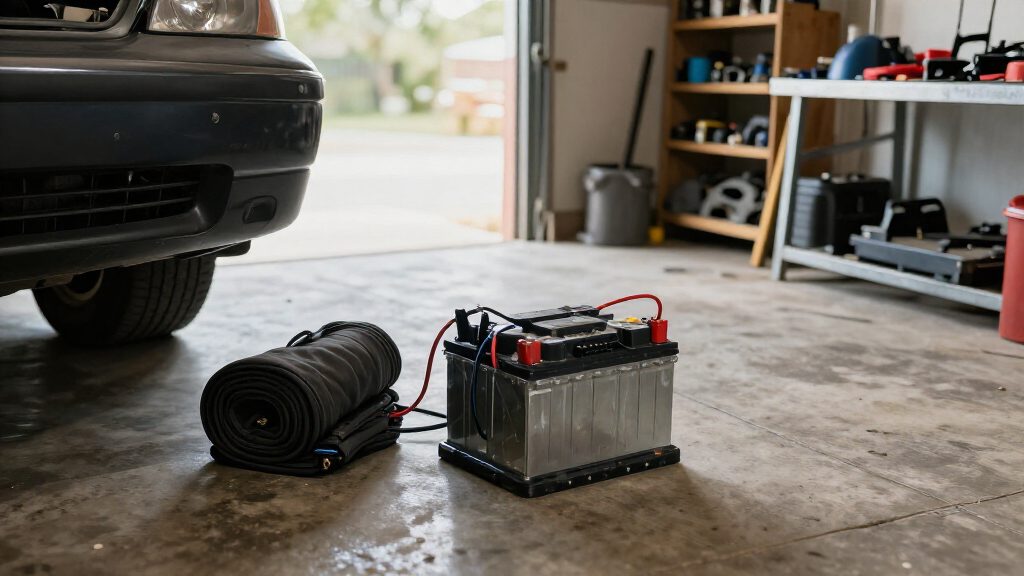
I evaluated these fifteen automotive battery chargers based on three core pillars: charging efficiency, safety features, and build durability. I prioritized models with multi-stage charging algorithms (bulk, absorption, float) because they extend battery life more effectively than simple constant-current chargers. Safety mechanisms such as reverse polarity protection, short-circuit protection, and overcharge prevention were non-negotiable requirements for inclusion in this list.
Ranking was determined by matching performance to specific buyer needs. A compact 1-amp maintainer ranks highly for motorcycle owners but poorly for truck owners needing engine starting assistance. I also weighed brand reputation and warranty support, as electronic components in chargers are prone to failure over time. Models with clear, intuitive displays and robust casing materials scored higher for usability and longevity.
Factors to Consider When Choosing Automotive Battery Chargers
Choosing the right charger requires understanding your vehicle’s electrical demands and your usage patterns. A device that is perfect for keeping a classic car topped off might be dangerously inadequate for jump-starting a diesel truck.
Amperage Output and Charging Speed
The amp rating dictates how quickly a charger replenishes power. 1-2 amp chargers are ideal for maintenance and preventing sulfation in stored vehicles, but they can take 24-48 hours to fully charge a standard car battery. 10-15 amp chargers strike a balance for most passenger cars, restoring a dead battery in a few hours. Avoid excessive amperage on small batteries, as high current can overheat plates and reduce overall battery lifespan. Match the charger’s output to the battery’s capacity (Ah); a general rule is to charge at 10-20% of the battery’s amp-hour rating.
Battery Chemistry Compatibility
Modern vehicles increasingly use Lithium-Iron Phosphate (LiFePO4) or AGM (Absorbent Glass Mat) batteries, which require specific charging profiles. Standard lead-acid chargers apply higher voltages that can damage lithium cells or cause AGM batteries to vent gas. Look for chargers with dedicated modes for each chemistry or automatic detection features. If you own a newer hybrid or EV, verify the charger supports 12V auxiliary lithium batteries, as these are sensitive to voltage spikes. Using the wrong profile is the most common cause of premature battery failure in modern cars.
Smart Maintenance vs. Engine Starting
Decide whether you need a charger, a maintainer, or a jump starter. Maintainers operate at low amps (1-2A) and are designed to be left connected for weeks without damaging the battery. Engine starters provide high burst amps (100A+) to crank an engine but are not designed for long-term connection. Many units, like the Schumacher SC1361, combine both functions, but the jump-starting feature often adds bulk and cost. If you primarily store a vehicle, a pure maintainer is safer and more efficient than a hybrid unit.
Portability and Form Factor
Consider where you will store the device. Compact handheld models are easy to keep in a glove box or garage shelf, making them convenient for quick top-ups. Wheeled or bench-style units offer higher power and better cooling but require significant storage space and are heavier to move. If you have multiple vehicles or a large battery bank, a wheeled unit with long cables provides more flexibility. For single-vehicle owners with limited space, a wall-mountable or small-form-factor charger is the practical choice.
Safety Protections and User Interface
Reliable safety features protect both the charger and your vehicle’s ECU. Reverse polarity protection prevents sparks and damage if you connect the clamps incorrectly, a common mistake for beginners. Look for clear LED indicators or digital displays that show charging status, battery health, and error codes. Complex interfaces can be confusing, so choose a model that matches your technical comfort level. Cheaper units may lack robust surge protection, risking damage during grid fluctuations or lightning strikes.
Frequently Asked Questions
Can I leave a smart battery charger connected to my car for months?
Yes, but only if the charger has a dedicated maintenance or float mode designed for long-term connection. These modes reduce amperage to a trickle that counteracts self-discharge without overcharging. However, you should disconnect the charger during thunderstorms or if the vehicle will be unused for more than three months, as prolonged connection can sometimes drain the charger’s own standby power. Always verify the specific manufacturer’s guidelines for continuous use, as some high-amp smart chargers are not rated for indefinite connection.Why won’t my smart charger start charging my completely dead battery?
Most smart chargers have a safety feature that prevents charging if the battery voltage is below a certain threshold (often 1-2 volts) to avoid damage to the battery or charger. If your battery is completely dead, the charger may not recognize it as a valid load. Some models include a ‘force’ or ‘repair’ mode to bypass this check, but you should proceed with caution. If your charger lacks this feature, you may need to use a traditional transformer charger to bring the voltage up to a detectable level before the smart charger can take over.Is it worth paying extra for a charger with engine starting capabilities?
This depends entirely on your usage scenario. If you live in a cold climate where batteries fail frequently, or you have older vehicles that sit for long periods, a hybrid unit with starting power provides peace of mind and eliminates the need for jumper cables and another vehicle. However, if you primarily use the device for maintenance during winter storage, the extra cost and bulk of the starting feature are unnecessary. A dedicated, high-quality maintainer is often more reliable and efficient for storage purposes than a hybrid unit.How does temperature affect battery charging performance?
Batteries charge more slowly in cold temperatures and require higher voltage compensation to reach full capacity. Conversely, in hot weather, batteries accept charge faster but are more susceptible to overheating and water loss. High-quality smart chargers include temperature sensors that adjust the output voltage accordingly, protecting the battery from damage. If you charge in a garage that experiences extreme temperature swings, choose a charger with automatic temperature compensation. Without this feature, you risk undercharging in winter and overcharging in summer.What is the difference between a trickle charger and a smart maintainer?
A traditional trickle charger delivers a constant low current regardless of the battery’s state of charge, which can lead to overcharging and plate damage if left connected too long. A smart maintainer uses microprocessors to monitor battery voltage and current, adjusting the output automatically. It switches to a float mode once the battery is full, maintaining it at an optimal voltage without overcharging. For modern vehicles with sensitive electronics, a smart maintainer is the safer and more effective choice, as it prevents the voltage spikes associated with older trickle chargers.Conclusion
Selecting the right automotive battery charger depends on your specific maintenance needs and vehicle type. For the average driver seeking reliable, safe maintenance, the NOCO GENIUS1 remains the best overall choice due to its compact size and intelligent charging algorithms. If you need a robust solution for larger batteries or multiple vehicles, the Schumacher SC1364 offers the power and durability required for heavier duty tasks. Budget-conscious users should look at the 12V 15A Smart Automatic Car Battery Charger, which provides solid performance at a lower entry price. For those with newer lithium-based systems, the E-FAST 0-20A is the standout option for its chemistry versatility. Match the amperage and features to your actual usage habits to avoid paying for capabilities you will never use.
Halloween Picks

Haunted Hill Farm 4.6-Ft. Spinning Beatrix Halloween Animatronic

MGparty 14.5 ft Halloween Inflatable Walk-In Pumpkin House with LED Lights

Gemmy 5.4 ft The Nun Animatronic Halloween Decoration
As an affiliate, we earn on qualifying purchases.