
TL;DR

Get garage and car supplies delivered free — and shop member deals
- Fast, free delivery on millions of items
- Access to Prime Big Deal Days deals on October 6–7
- Prime Video, Amazon Music and more included
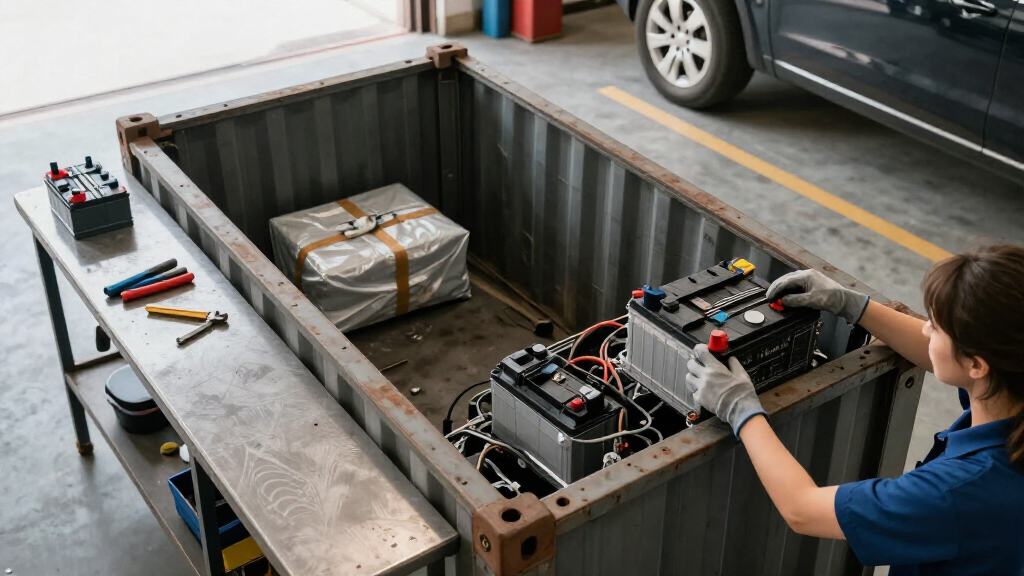
Renewance adopted DGeo’s reusable, stackable Obexion AG containers to ship multiple damaged, defective or recalled batteries in a single container. The company says the packaging lets it consolidate shipments and handle higher volumes at reduced risk; the source does not provide quantified cost, time or safety results.
Battery-management company Renewance has changed how it packages damaged, defective or recalled batteries for transport, adopting DGeo’s reusable Obexion AG containers to consolidate multiple batteries in one purpose-built container. The approach addresses a shipping challenge that the company says can raise costs and handling time when each battery must be packed separately.
The development is described in a Charged EVs case study sponsored by Labelmaster. It focuses on Renewance, which manages end-of-life batteries from electric vehicles and energy-storage systems. The report says damaged, defective or recalled batteries, referred to as DDR batteries, are classified as dangerous goods and that shipping them safely usually requires one battery per container.
Renewance adopted Obexion AG, a reusable, stackable container made by DGeo specifically for shipments involving multiple DDR batteries. According to the case study, the packaging allows the company to consolidate batteries into fewer shipments rather than relying on an individual container for each battery.
Sterling Picton, who leads solutions development for end-of-life projects at Renewance, described the packaging as a product designed for the specific application. He said it enables the company to manage higher volume at reduced risk. The published source, however, does not provide measured shipment volumes, cost savings, handling-time reductions or safety data to quantify those outcomes.
How Consolidated Battery Shipments Help
The change speaks to a practical constraint in end-of-life battery management: batteries that are damaged, defective or recalled may require specialized packaging and careful handling, making transport more complicated than shipping batteries in ordinary condition. If each battery must travel in its own container, packaging and handling demands can add expense and slow work at a time when operators are managing larger volumes of retired EV and energy-storage equipment.
A container built for multiple DDR batteries offers a way to consolidate shipments while keeping the packaging intended for that hazardous-goods application. Renewance says the option supports higher-volume handling at reduced risk. That is the company’s assessment, not a published independent finding, and the case study does not establish the size of any reduction or compare incident rates before and after adoption.
The development matters to other operators because packaging decisions can affect how batteries are collected, staged and moved through end-of-life processes. Still, the available report describes one company’s approach, rather than evidence that the same container or process fits every battery type, shipment or regulatory situation.
reusable hazardous materials shipping containers
As an affiliate, we earn on qualifying purchases.
As an affiliate, we earn on qualifying purchases.
The Packaging Constraint Renewance Faced
The case study frames the challenge around DDR batteries’ dangerous-goods classification. It says safe shipping usually means one battery per container, a requirement that Renewance found could increase both transportation cost and handling time while managing end-of-life batteries at scale. The source does not detail the rules, exceptions or technical specifications behind that packaging requirement.
Renewance’s alternative was a purpose-built product rather than a general-purpose shipping container. DGeo’s Obexion AG is described as reusable and stackable, and designed to carry multiple DDR batteries. The report presents that design as a way to consolidate loads while addressing the risks associated with transporting these batteries. It does not provide a wider adoption timeline or say whether the approach has changed industry practice beyond Renewance.
““It’s a more advanced product, designed for this specific application.””
— Sterling Picton, who leads solutions development for end-of-life projects at Renewance
stackable battery shipping containers
As an affiliate, we earn on qualifying purchases.
As an affiliate, we earn on qualifying purchases.
Savings and Safety Data Not Published
The supplied case study does not state how much money or time Renewance saved, how many batteries can fit in each Obexion AG container, or how many shipments were consolidated. It also offers no before-and-after data on incidents or other safety measures, so Picton’s description of reduced risk remains an attributed company assessment rather than a quantified result.
Details about the container’s technical specifications, the battery conditions it can accommodate, and the regulations or approvals relevant to particular shipments are not included. The source also does not say when Renewance began using the containers or whether the approach has been adopted by other operators. Those gaps limit how broadly the reported experience can be applied.
As an affiliate, we earn on qualifying purchases.
Further Results Would Show the Impact
The case study invites readers to review more detail about Renewance’s packaging approach, but the supplied material does not identify a forthcoming report, rollout date or next operational milestone. The company’s use of the containers is the latest development confirmed in the source.
To assess the practical effect, readers would need additional information from Renewance or DGeo on shipment volumes, cost and handling time, as well as measured safety outcomes and operating requirements. Until those details are published, the confirmed takeaway is that Renewance adopted reusable, stackable containers designed for multiple DDR batteries and says they support higher-volume handling at reduced risk.
purpose-built battery shipping boxes
As an affiliate, we earn on qualifying purchases.
As an affiliate, we earn on qualifying purchases.
Key Questions
What changed in Renewance’s battery-shipping approach?
Renewance adopted DGeo’s reusable Obexion AG containers, which are designed to hold multiple damaged, defective or recalled batteries instead of packaging each battery in a separate container.
What are DDR batteries?
DDR refers to damaged, defective or recalled batteries. The case study describes them as dangerous goods.
What benefits does Renewance report?
Renewance says the containers let it consolidate shipments and handle higher volumes at reduced risk. The case study does not publish quantified savings or safety results.
How much time or money does the packaging save?
The available source gives no figures for cost savings, reduced handling time or the number of shipments avoided.
Can every operator use the same containers?
The report describes Renewance’s use of the product but does not provide enough technical or regulatory detail to establish whether it suits every battery, shipment or operator.
Source: rss
Fall Picks
fall essentials
As an affiliate, we earn on qualifying purchases.